




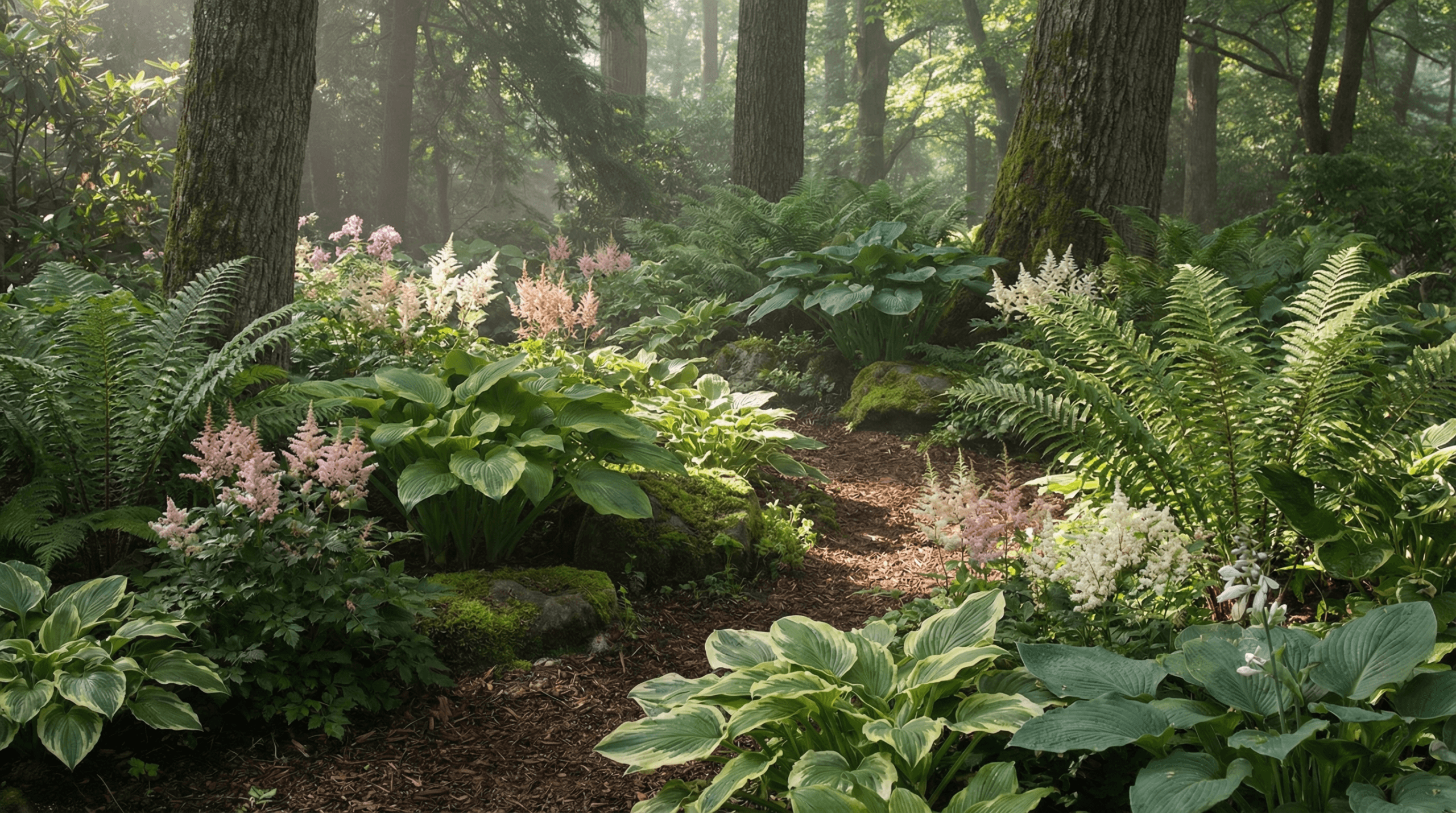
So your garden has more shade than sun, and you’re wondering if anything beautiful can possibly grow there. The answer is a resounding yes — shade-tolerant plants thrive where sun-loving plants struggle — and some of the most elegant, texture-rich gardens are made precisely in those dappled, cool spaces that full-sun plants simply can’t handle. In this comprehensive simple guide, we’ll cover everything you need to know.
Shop Related Products: Gardening Gloves • Watering Can
For more on essential summer gardening:, see our guide.
For more on essential mulching: single, see our guide.
Related: Garden Planning 101: Mapping Out Your Garden Space Natural Pest Deterrents: Plants That Repel Pests
Shade gardening simply requires a shift in perspective. Instead of fighting the conditions, work with them. The plant kingdom is full of magnificent species evolved precisely for life beneath tree canopy and along north-facing walls.
Looking for quality gardening tools and supplies? Browse our recommended garden products — hand-picked by the GardenWizz team.
Shade Gardening: Plants: Simple: Understanding Your Shade Type
Not all shade is equal, and knowing what you have will help you choose the right plants:
– Full shade / deep shade — Less than 2–3 hours of direct sunlight. Found beneath dense tree canopy or on the north side of buildings. The most challenging conditions, but still very gardenable.
– Partial shade / dappled shade — 3–6 hours of direct sun, or bright indirect light all day. The most versatile category — many plants thrive here.
– Light shade / open shade — Bright light with no direct sun, or brief periods of morning sun. Easiest to garden with; most shade-tolerant plants will also handle this.
The Best Plants for Shade Gardens
Woodland Favourites
Hostas are the quintessential shade plant. Their bold, architectural foliage comes in an extraordinary range of sizes and colours — from powder blue to chartreuse to deeply variegated green and white. They’re largely grown for their leaves, though they do send up spikes of white or lavender flowers in summer.Slugs can be an issue, RHS pest and disease guide has detailed guidance on this topic.so choose slug-resistant varieties with thicker leaves if this is a problem in your garden.
Ferns bring a prehistoric elegance that’s impossible to replicate in sun-loving planting schemes. Native ferns like the hart’s tongue fern (Asplenium scolopendrium) are fully UK-hardy and thrive in consistently moist shade. Deciduous ferns die back in winter but return vigorously each spring.
Astilbes add a splash of colour to the shade garden with their feathery plumes of pink, red, white, or purple in mid to late summer. They’re remarkably unfussy, provided they get enough moisture.
Brunnera (Siberian bugloss) produces forget-me-not-like blue flowers in spring atop a mat of large, heart-shaped leaves. The variety ‘Jack Frost’ has stunning silver-veined foliage that lights up dark corners.
Flowering Shade Plants
Hellebores (Christmas and Lenten roses) bloom from late winter through spring, often when little else is stirring. Their nodding flowers in deep burgundy, pink, green, or near-black are quietly extraordinary. They’re happy in dry shade once established — perfect under trees.
Foxgloves (Digitalis) are biennial plants that naturalise beautifully in partial shade.Their tall spires of tubular flowers attract bumblebees effortlessly and add real drama to a woodland planting scheme. Buglife pollinator resources has detailed guidance on this topic.
Bleeding heart (Lamprocapnos spectabilis) produces arching stems strung with heart-shaped pink or white flowers in spring. It’s a plant of real romantic charm that dies back gracefully after flowering.
Hydrangeas thrive in partial shade and reward you with enormous mophead or lacecap blooms from summer into autumn. They’re particularly useful on north-facing walls where few other shrubs perform well.
Structural and Foliage Plants
Fatsia japonica (Japanese aralia) is an architectural evergreen with deeply lobed, glossy leaves. It brings a tropical feel to the garden and thrives in shade, even dry shade.White spherical flower clusters appear in autumn, followed by black berries. RHS soft fruit guide has detailed guidance on this topic.
Bergenia (elephant ears) is a tough, evergreen ground cover with large, leathery leaves that often turn reddish in winter. Spring flowers range from white through to deep magenta, held on sturdy stems.
Improving Shade Conditions
A few steps can dramatically improve how well plants perform in shade:
– Thin tree canopies — Professionally lifting the crown of trees allows more light through without removing the tree entirely
– Improve the soil — Shade borders often have impoverished, RHS soil testing guide has detailed guidance on this topic.dry soil from competition with tree roots. Dig in plenty of organic matter (well-rotted compost or leaf mould) before planting
– Mulch consistently — A deep mulch mulch (5–8cm) suppresses weeds and helps retain what little moisture the soil has
Shade Gardening: Common Mistakes
The biggest error is trying to grow sun-loving plants in shade and blaming the site when they fail. An equally common mistake is underestimating how much moisture shade plants need — use a watering can for gentle, deep watering — particularly those under tree canopies, which act as powerful sponges for available water.
FAQ: Shade Gardening
Can you grow vegetables in shade?
Some vegetables tolerate or even prefer shade, particularly leafy crops like lettuce, spinach, chard, and herbs like mint and parsley. Root vegetables and fruiting vegetables (tomatoes, peppers) need more sun.
What plants flower in deep shade?
Hellebores, snowdrops, cyclamen, and bleeding heart are among the best performers in deep shade. Most will have more modest flowering in full shade compared to dappled conditions.
How do I deal with dry shade under trees?
Mulching with a thick layer of organic matter and planting drought-tolerant species like hellebores, epimedium, and brunnera is the best approach. For more on mulching, the RHS mulching advice covers when. The RHS watering guidelines cover efficient watering techniques for gardens of all sizes.. and how to apply mulch for best results… Gardeners’ World has an excellent mulching guide that covers materials and techniques… Water newly planted specimens regularly until established.
Do hostas grow in full shade?
Hostas will survive in full shade but grow more vigorously in dappled or partial shade. Their flowering will also be reduced in deeper shade.
What ground cover plants work in shade?
Epimedium, pachysandra, vinca (periwinkle), and bergenia all make excellent evergreen ground covers in shade, suppressing weeds and adding year-round structure.
Final Thoughts
Shade gardens have a quiet, contemplative quality that bright, sunny gardens simply can’t match. They’re cooler in summer, often require less watering, and reward the gardener with a lush, layered feel that’s deeply satisfying. The key is choosing plants evolved for low light — once you do, you’ll find your shaded spaces become the most beloved parts of your garden.
For more on working with challenging garden conditions, read our guide to Garden Design & Planning: Create Your Dream Garden. And if you’re dealing with overly sunny spots, our Mulching guide covers techniques for moisture retention that work in any garden.
Continue Reading
- 5-Step Essential Garden Tools: What Every UK Gardener Needs
- Complete Guide to Week 12 Spring Garden Jobs: May 17-23
- Complete Guide to Week 11 Spring Garden Jobs: May 10-16
- Complete Guide to Week 10 Spring Garden Jobs: May 3-9
- Complete Guide to Week 9 Spring Garden Jobs: April 26 – May 2
Frequently Asked Questions
When is the best time to do this?
The best time depends on your climate zone and what you are growing, but generally early morning or late afternoon when temperatures are cooler works best for most garden tasks.
How often should I check on my garden?
Regular attention is key — check your garden every few days during the growing season. This helps you catch problems early before they become serious.
Can beginners do this?
Absolutely! Start with a few simple tasks and build up gradually. Most garden jobs are beginner-friendly with the right guidance.
What is the most important thing to remember?
Consistency matters more than perfection. Little and often beats occasional marathon sessions. Even 10-15 minutes of daily attention yields great results.


