




Looking for quality gardening tools and supplies? Browse our recommended garden products — hand-picked by the GardenWizz team.
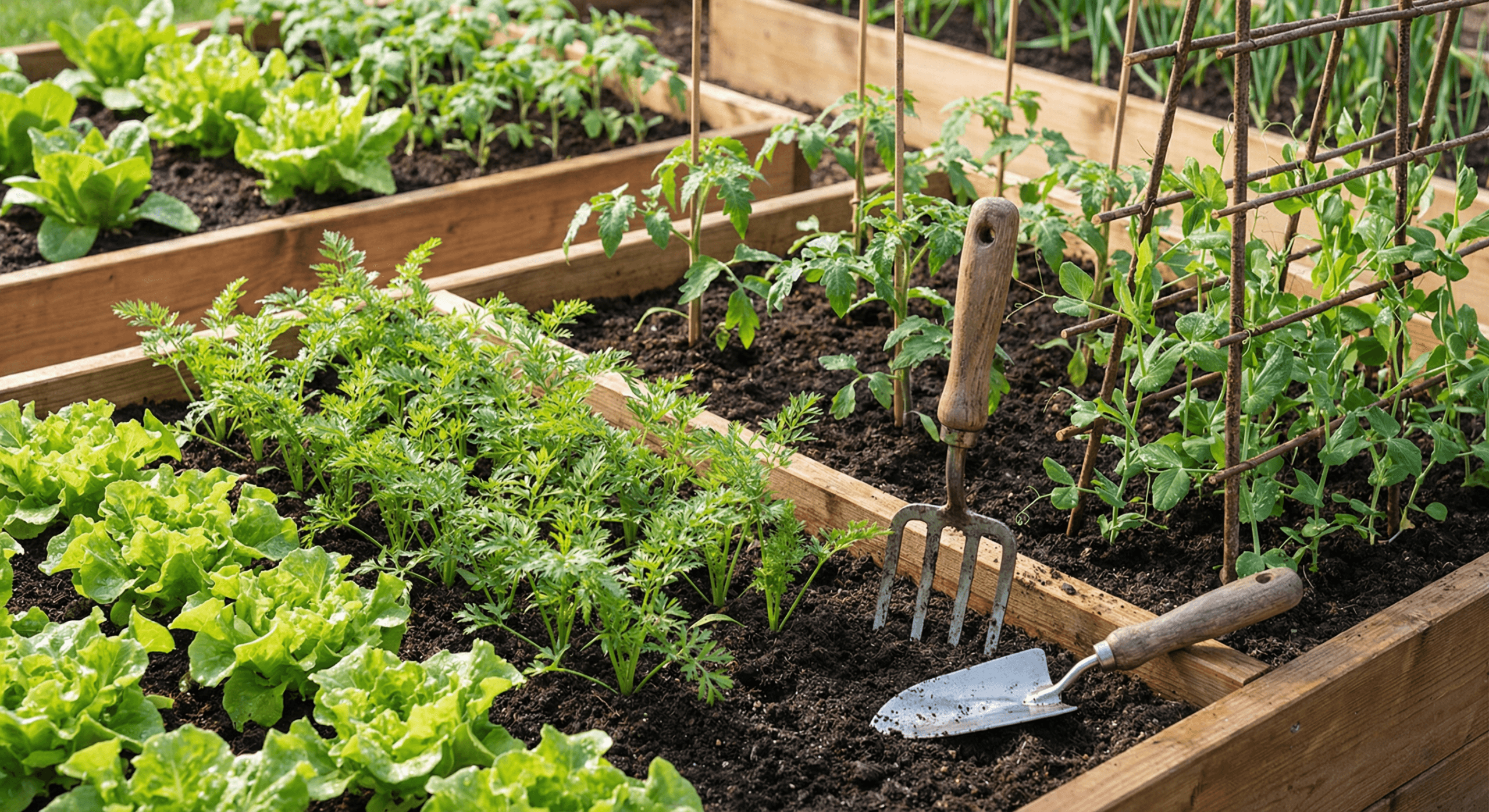
Spring is the season of possibility. After months of cold, grey days, the garden is calling you back — and honestly, there’s no better place to be.Whether you have a sprawling backyard patch or a couple of containers on a balcony, spring is prime time to get your vegetable garden firing on all cylinders. RHS vegetables growing guide has detailed guidance on this topic.
Shop Related Products: Plant Support • Tomato Cage
For more on essential summer gardening:, see our guide.
For more on essential mulching: single, see our guide.
Related: Garden Planning 101: Mapping Out Your Garden Space Natural Pest Deterrents: Plants That Repel Pests
The key to a productive spring vegetable garden? Knowing what to plant when. Timing your sowings correctly means the difference between a garden that hums and one that struggles. Here’s your complete guide to spring vegetable planting.
Spring: Understanding Your Last Frost Date
Before you sow a single seed, you need to know one critical piece of information: your average last spring frost date. This is the date after which it’s generally safe to assume frost won’t return. In the UK, this typically falls between late April and mid-May depending on your region. In the US, it varies dramatically — from February in Florida to June in Colorado. Your local garden center or agricultural extension office can give you an exact date.
Once you know your last frost date, you can plan your sowing schedule accordingly.
6-8 Weeks Before Last Frost: Start Indoors
These crops need a long growing season and warm soil — so we give them a head start indoors under lights:
- Peppers — Slow-growing and heat-loving.The RHS soil testing guide provides detailed advice on understanding your soil type… Start 8-10 weeks before last frost. RHS soil testing guide has detailed guidance on this topic. Seeds germinate best at 70-85°F. Be patient — peppers can take 14-21 days to sprout.
- Tomatoes — Start 6-8 weeks before last frost. They’ll rocket away once planted out into warm soil.
- Eggplant — Similar to peppers, they want warmth and plenty of time. Start 8 weeks before last frost.
- Brassicas — Broccoli, cauliflower, and cabbage can also be started early, though they tolerate cool weather better than tomatoes or peppers.
4 Weeks Before Last Frost: Cool-Season Crops Direct Sow
These tough cookies can handle a bit of chill — in fact, they actually prefer cool weather and will bolt (go to seed) if things get too hot. Get them in the ground as soon as the soil is workable:
- Peas — Sweet, delicious, and impossibly easy. Direct sow 1 inch deep, 2 inches apart in rows. They like cool weather but won’t tolerate heat. Plant early and harvest before summer kicks in.
- Lettuce & Salad Greens — Scatter seeds thinly or sow in rows. Keep the soil moist and you’ll be harvesting baby leaves in as little as 30 days. Sow little and often for continuous harvests.
- RHS watering guidelines has detailed guidance on this topic..trong>Spinach — Another cool-season champion. Direct sow and keep well-watered. Harvest outer leaves to extend production.
- Radishes — The fastest vegetable in the garden. Some varieties go from seed to harvest in as little as 25 days.Kids love growing these — the instant gratification is unbeatable. RHS bulbs guide has detailed guidance on this topic.
- Onion Sets & Leeks — If starting from seed, give them 8-10 weeks indoors. Sets (small immature bulbs) can go directly outside 4 weeks before last frost.
- Broad Beans (Fava Beans) — One of the most cold-tolerant beans. In mild climates, sow in late autumn for a spring harvest. In cold areas, sow 4 weeks before last frost.
- Kale & Swiss Chard — Both are remarkably tolerant of cold. Kale actually gets sweeter after a light frost. Direct sow or transplant.
On Last Frost Date: Warm-Season Crops Go Outside
This is the big day. Once the frost risk has passed and the soil has warmed up (at least 50°F/10°C for most of these), it’s time to plant out your tender seedlings and direct sow your heat-lovers:
- French Beans & Runner Beans — Direct sow outdoors after last frost. These are tender and won’t tolerate any cold at all. Plant 4-6 inches apart at the base of support canes or a trellis.
- Squash & Courgettes (Zucchini) — Direct sow 2-3 seeds per mound, spacing mounds 3 feet apart. Thin to the strongest seedling. Alternatively, plant indoors in biodegradable pots 3 weeks before last frost.
- Cucumbers — Love warmth. Either direct sow after last frost or transplant from indoors. Grown on a trellis saves space and keeps fruits cleaner.
- Sweetcorn — Direct sow in blocks (not rows) — they’re wind-pollinated and need to be close together. Plant 9 inches apart in blocks of at least 3×3.
- Courgettes, Pumpkins & Marrows — Give them space. A single courgette plant can spread 3-4 feet. Plant out when night temperatures consistently stay above 50°F.
After Last Frost: Succession Planting
Just because the first rush of spring planting is done doesn’t mean you stop sowing. Succession planting keeps the harvests coming:
- Sow more lettuce and salad greens every 2-3 weeks for continuous harvest
- Plant out another round of beetroot, carrots, and radishes
- In warmer climates, start autumn brassicas (cabbage, Brussels sprouts) in late summer for a fall harvest
Spring Feeding Schedule
As your vegetables burst into growth, they’ll need fuel. Most vegetables are “heavy feeders” — meaning they pull a lot of nutrients from the soil:
- Apply a balanced organic fertiliser at planting time (like blood, fish, and bone) at planting time
- Side-dress growing plants with compost or compost bin every 4-6 weeks every 4-6 weeks
- Tomatoes, peppers, and squash benefit from a high-potash feed (like liquid seaweed) once they start flowering
Spring gardening is an act of optimism — you’re trusting that the weather will cooperate, the seeds will germinate, and in a few months, you’ll be eating your own produce. That trust is almost always rewarded. Get out there, get your hands dirty, and enjoy every minute of it.
Frequently Asked Questions
When is the best time to do this in the UK?
The ideal timing depends on your location and the specific task. Spring (March-May) is generally the busiest gardening season in the UK, though autumn is perfect for planting and soil improvement.
Do I need expensive equipment to get started?
No. A few quality basic tools — a trowel, hand fork, watering can, and gloves — will see you through most beginner gardening tasks.
Is this suitable for small spaces or containers?
Most gardening tasks can be adapted for small spaces. Containers, grow bags, and raised beds all work well on patios, balconies, and even windowsills.
Can beginners do this successfully?
Absolutely. UK gardens are full of challenging conditions — clay soil, shade, slugs — but beginners achieve great results every year by starting small and learning as they grow.


