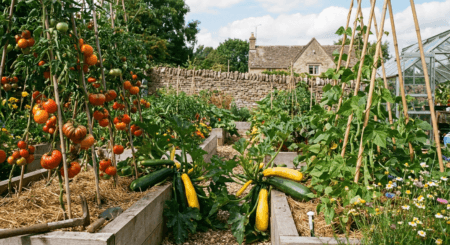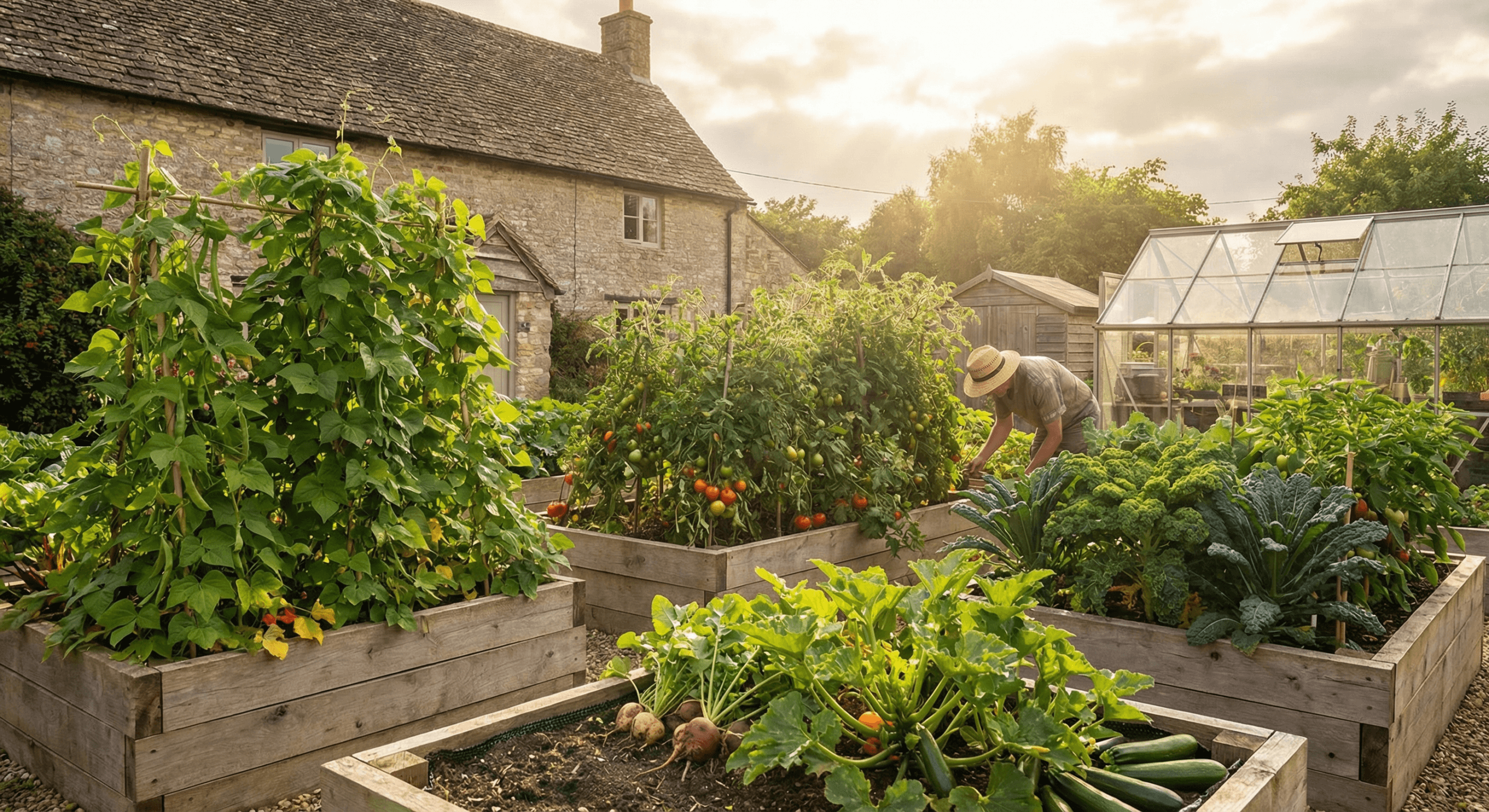
Summer is the season every kitchen gardener looks forward to all year. After months of patient sowing and careful nurturing under cover, the vegetable garden finally hits its stride – producing an almost overwhelming abundance of fresh produce from June right through to the first autumn chills.
5-Step Summer Vegetable: What You’ll Need
Before you start, gather these essentials:
- Vegetable seed collection — Summer vegetable seed collection for UK growers
- Garden kneeler pad — Comfortable kneeling pad for garden tasks
- Watering can — 10-litre watering can with detachable rose head
- Plant labels — Reusable plant labels for vegetable beds
But a successful summer vegetable garden does not happen by accident. It requires planning, timing, and knowing exactly what to sow and when. Miss a sowing window and you will have gaps in your harvest; sow too early and tender seedlings get zapped by a late frost.
This complete guide walks you through the entire summer vegetable growing calendar, from early June through to September, so you can maximise your harvest and keep the kitchen supplied with fresh, homegrown produce all season long.
June: The Garden Hits Its Stride
June is the month when everything happens at once. Frost risk has largely passed across most of the UK, and the longer days trigger explosive growth. Your key tasks this month centre on transplanting, feeding, and keeping on top of watering.
What to sow outdoors: French beans, runner beans, beetroot, carrots, courgettes, cucumbers, marrows, parsnips, peas, radishes, rocket, spinach, spring onions, Swiss chard, and tender herbs like basil and coriander.
What to transplant: Outdoor tomatoes, peppers (in a sheltered spot or greenhouse), aubergines, celery, celeriac, brassicas, leeks, lettuce, and Florence fennel.
Essential June tasks:
- Feed tomatoes, peppers, and aubergines weekly with a high-potassium liquid feed once the first fruits set
- Pinch out side shoots on cordon tomatoes to direct energy into fruit production
- Stake tall plants before wind damage occurs
- Mulch around the base of plants to conserve moisture
July: Peak Production Begins
July typically marks the beginning of the main harvest season. Early sowings of broad beans, peas, and lettuce should be ready, while courgettes, bush beans, and the first outdoor tomatoes start to fruit.
What to sow outdoors: French beans (second crop for autumn harvest), beetroot, carrots (maincrop for winter storage), kale, pak choi, radishes, rocket, spinach, spring onions, Swiss chard, and turnips.
Harvesting priorities:
- Courgettes: Pick every 2-3 days when fruits are 10-15cm
- Beans: Pick little and often to encourage continued production
- Salad leaves: Cut-and-come-again lettuce, rocket, and spinach should be harvested regularly
- Garlic: If leaves yellow in July, lift, dry, and store in a cool, airy place
August: The Glut Season
August is the month when gardeners are suddenly drowning in produce. Courgettes pile up, beans threaten to take over, and tomatoes need harvesting daily.
What to sow: Spring cabbage, kale, winter lettuces, spinach, rocket, lamb’s lettuce, and radishes.
Key tasks:
- Tie in and side-shoot greenhouse tomatoes; pinch out growing tips in early August
- Harvest onions and shallots when leaves yellow; dry thoroughly before storing
- Pinch out basil flowers regularly to keep leaves growing and plants bushy
September: The Season Turns
September marks the transition – summer crops are still producing but autumn is approaching. Early frosts are possible in northern and exposed areas.
What to sow: Overwintering broad beans (Aquadulce Claudia), garlic cloves, autumn-planting onion sets, pak choi, spinach, and lamb’s lettuce.
Harvesting and clearing:
- Maincrop potatoes should be lifted by mid-September and stored in hessian sacks
- Pumpkins and winter squash: cut with a generous stalk and cure for two weeks before storing
- Allow remaining tomatoes to ripen on the plant; pick green tomatoes and ripen indoors if frost threatens
Summer Growing Tips
Water consistently – irregular moisture causes more problems than almost anything else in the vegetable garden. Feed little and often. Practice succession sowing – stagger sowings every 2-3 weeks.
Common Problems
- Blossom end rot: Caused by irregular watering – water consistently and mulch
- Aphids: Check growing tips weekly; squash by hand or spray with soapy water
- Bolting: Lettuce, spinach, and coriander bolt in hot, dry conditions – keep well watered
A well-planned summer vegetable garden is one of the most rewarding things a UK gardener can cultivate. Follow this monthly guide and you will be rewarded with an abundant, continuous harvest from early summer right through to the first autumn frosts.
Frequently Asked Questions
When is the best time to do this?
The ideal time depends on your climate and the specific plants involved. Generally, early morning or late afternoon are best to avoid the heat of the day.
How often should I check on this?
Check your garden at least once a week during the growing season to catch any issues early and keep on top of tasks.
Can I do this in a container instead?
Many garden tasks can be adapted for containers. Use a good quality potting compost and ensure containers have adequate drainage holes.
What if I don’t have the right tools?
Start with the basics — a trowel, fork, gloves, and watering can will get you a long way. Add tools as you need them.
Related Articles
For more help with your garden, check out these related guides:
- Summer Vegetable Garden: What to Grow and When
- Summer Vegetable Garden: What to Grow and When
- Beginner’s Guide to Sweet Peas
- Best Plants for Pollinators
- Herb Garden Guide
Continue Reading
- 5-Step Essential Garden Tools: What Every UK Gardener Needs
- Complete Guide to Week 12 Spring Garden Jobs: May 17-23
- Complete Guide to Week 11 Spring Garden Jobs: May 10-16
- Complete Guide to Week 10 Spring Garden Jobs: May 3-9
- Complete Guide to Week 9 Spring Garden Jobs: April 26 – May 2
Frequently Asked Questions
When is the best time to do this?
The best time depends on your climate zone and what you are growing, but generally early morning or late afternoon when temperatures are cooler works best for most garden tasks.
How often should I check on my garden?
Regular attention is key — check your garden every few days during the growing season. This helps you catch problems early before they become serious.
Can beginners do this?
Absolutely! Start with a few simple tasks and build up gradually. Most garden jobs are beginner-friendly with the right guidance.
What is the most important thing to remember?
Consistency matters more than perfection. Little and often beats occasional marathon sessions. Even 10-15 minutes of daily attention yields great results.