




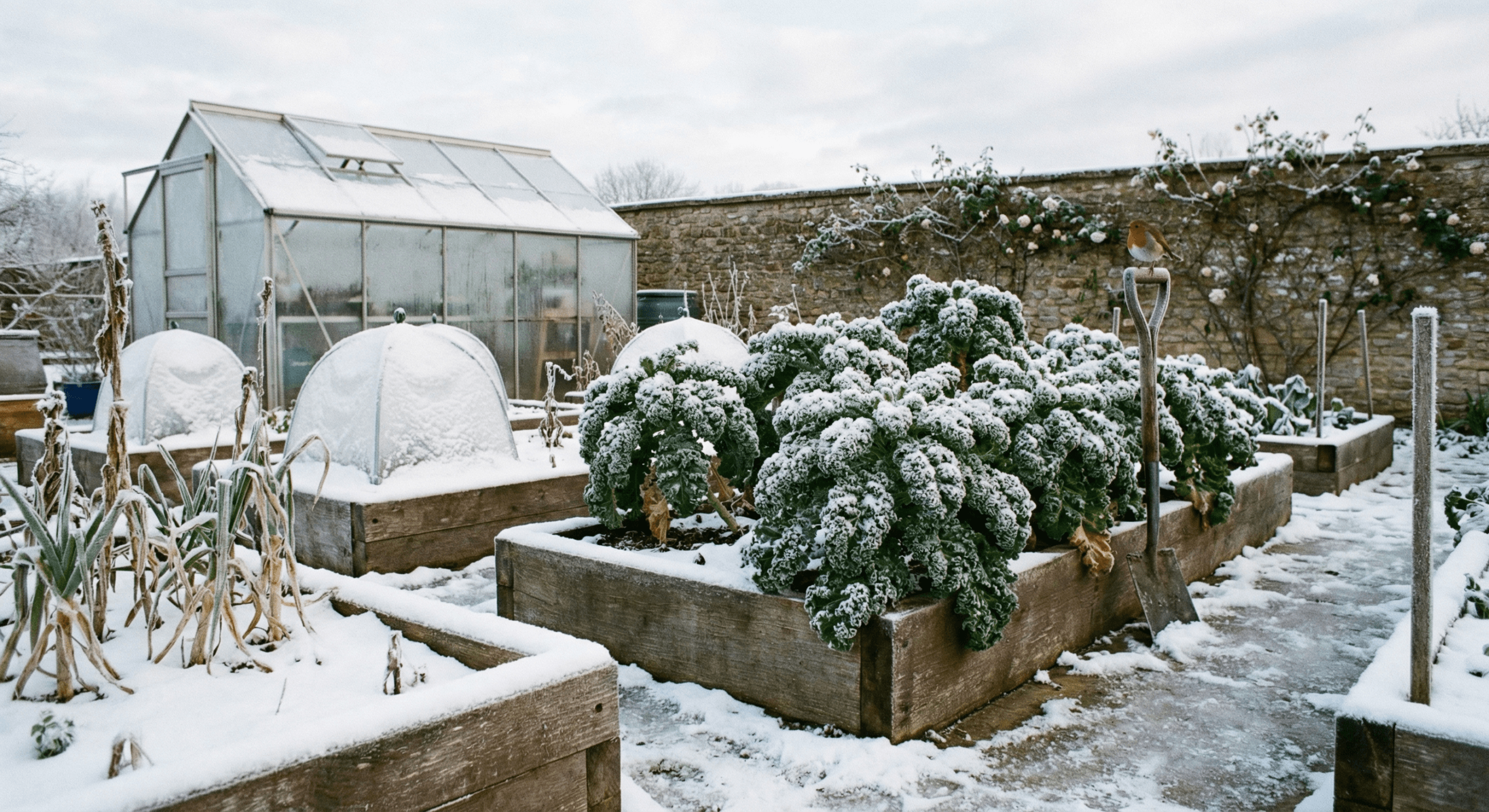
Winter can feel like a fallow period in the UK garden, but there’s more going on than you might think. With a little planning and effort, you can keep harvesting, protect your plants from the worst weather, and get ahead for the coming year. Here’s how to keep your garden alive through the cold months.
Winter Gardening Keeping: What You’ll Need
Before you start, gather these essentials:
- Horticultural fleece — Protect tender plants from frost and cold winds
- Cold frame — Hardened-off seedlings and overwintering plants
- Winter veg seeds — Seeds for kale, sprouts, and winter salads
- Gardening gloves — Thick gloves for cold-weather gardening
Winter Crops to Harvest
One of the most satisfying things about winter gardening is harvesting fresh produce on the coldest days. Several vegetables are at their best after a frost — the cold converts starches to sugars, intensifying flavour.
- Brussels sprouts: Harvest from the bottom of the stalk up. The best ones are slightly frosted.
- Kale: One of the hardiest crops available. Pick outer leaves and the plant keeps producing.
- Leeks: Left in the ground, they can be dug up as needed right through to spring.
- Parsnips: A hard frost works magic on their sweetness. Leave in ground until needed.
- Cabbage: Winter cabbages like ‘January King’ stand well in cold weather.
- Jerusalem artichokes: Dig up tubers as needed — they’ll keep producing for years.
Protecting Plants from Frost
Frost is the defining challenge of winter gardening. A few simple measures can make the difference between a garden that survives and one that thrives:
- Horticultural fleece: Drape fleece over delicate plants on frosty nights. Unlike plastic, it breathes, preventing condensation and fungal problems. Remove it during the day to allow light and air in.
- Mulching: Apply a thick mulch (8-10cm) of straw, compost, or leaf mould around the base of vulnerable plants. This insulates the soil and protects roots.
- Pot feet and covers: Raise containers off the ground on pot feet to prevent waterlogging and freezing in the compost.
- Move containers: Terracotta pots are particularly prone to frost cracking. Move them to a sheltered spot against a wall — the residual heat from the house can help.
Greenhouse Jobs
If you have a greenhouse, winter is your chance to get ahead. Even an unheated greenhouse provides enough protection to grow a surprising range of crops and get seeds started early:
- Sow early seeds under cover: broad beans and sweet peas can go in as early as January in a cold greenhouse
- Force rhubarb by covering crowns with a bucket or forcing jar — you’ll have tender pink stems in 8-10 weeks
- Check structural integrity — glass panels can crack under snow weight, and wind can shift framing
- Keep on top of algae and condensation — good ventilation prevents fungal problems
- Plant garlic cloves in modules for a head start — they’ll be ready to plant out in spring
Planning for Spring
Winter’s quiet days are perfect for looking ahead. Use this time productively:
- Order seed catalogues and plan your vegetable rotation for the coming year
- Clean, repair, and sharpen tools — well-maintained tools make spring work much easier
- Check supports and structures: replace worn stakes, repair netting, and tidy raised beds
- Test seed viability: place a few seeds on damp kitchen roll to see if they germinate
- Plan any new beds or garden changes — winter is the time to order materials and prepare ground for spring
Pruning Fruit Trees
Winter is the traditional time to prune top fruit — apples and pears — while they’re dormant. The aim is to create an open goblet shape that allows light and air to reach all the fruit-bearing branches:
- Remove dead, damaged, or diseased wood first
- Cut out crossing or rubbing branches
- Reduce leaders by about a third to encourage branching
- Make clean cuts just above an outward-facing bud
- Stone fruits (plums, cherries, apricots) should NOT be pruned in winter — wait until late spring or summer to avoid silver leaf disease
Winter gardening is quieter than summer, but no less rewarding. A well-tended winter garden provides fresh harvests when shop prices are high, protects your investment in perennial plants, and sets you up beautifully for spring. Wrap up warm and get outside — there’s more to do than you’d think.
Frequently Asked Questions
When is the best time to winter gardening?
Focus on protection and planning from November through February.
Do I need any special equipment?
Fleece, cloches, and mulch for plant protection.
Can beginners do this?
Winter gardening is mostly maintenance and planning – very beginner friendly.
How long does it take?
Regular checks take 10-20 minutes. Major tasks a few hours.
Related Articles
For more help with your garden, check out these related guides:
- Best Plants for Pollinators: Bee-Friendly Guide for UK Garde
- Best Plants for Pollinators: UK Bee Guide
- Beginner’s Guide to Sweet Peas
- Best Plants for Pollinators
- Herb Garden Guide
Continue Reading
- 5-Step Essential Garden Tools: What Every UK Gardener Needs
- Complete Guide to Week 12 Spring Garden Jobs: May 17-23
- Complete Guide to Week 11 Spring Garden Jobs: May 10-16
- Complete Guide to Week 10 Spring Garden Jobs: May 3-9
- Complete Guide to Week 9 Spring Garden Jobs: April 26 – May 2
Frequently Asked Questions
When is the best time to do this?
The best time depends on your climate zone and what you are growing, but generally early morning or late afternoon when temperatures are cooler works best for most garden tasks.
How often should I check on my garden?
Regular attention is key — check your garden every few days during the growing season. This helps you catch problems early before they become serious.
Can beginners do this?
Absolutely! Start with a few simple tasks and build up gradually. Most garden jobs are beginner-friendly with the right guidance.
What is the most important thing to remember?
Consistency matters more than perfection. Little and often beats occasional marathon sessions. Even 10-15 minutes of daily attention yields great results.


