




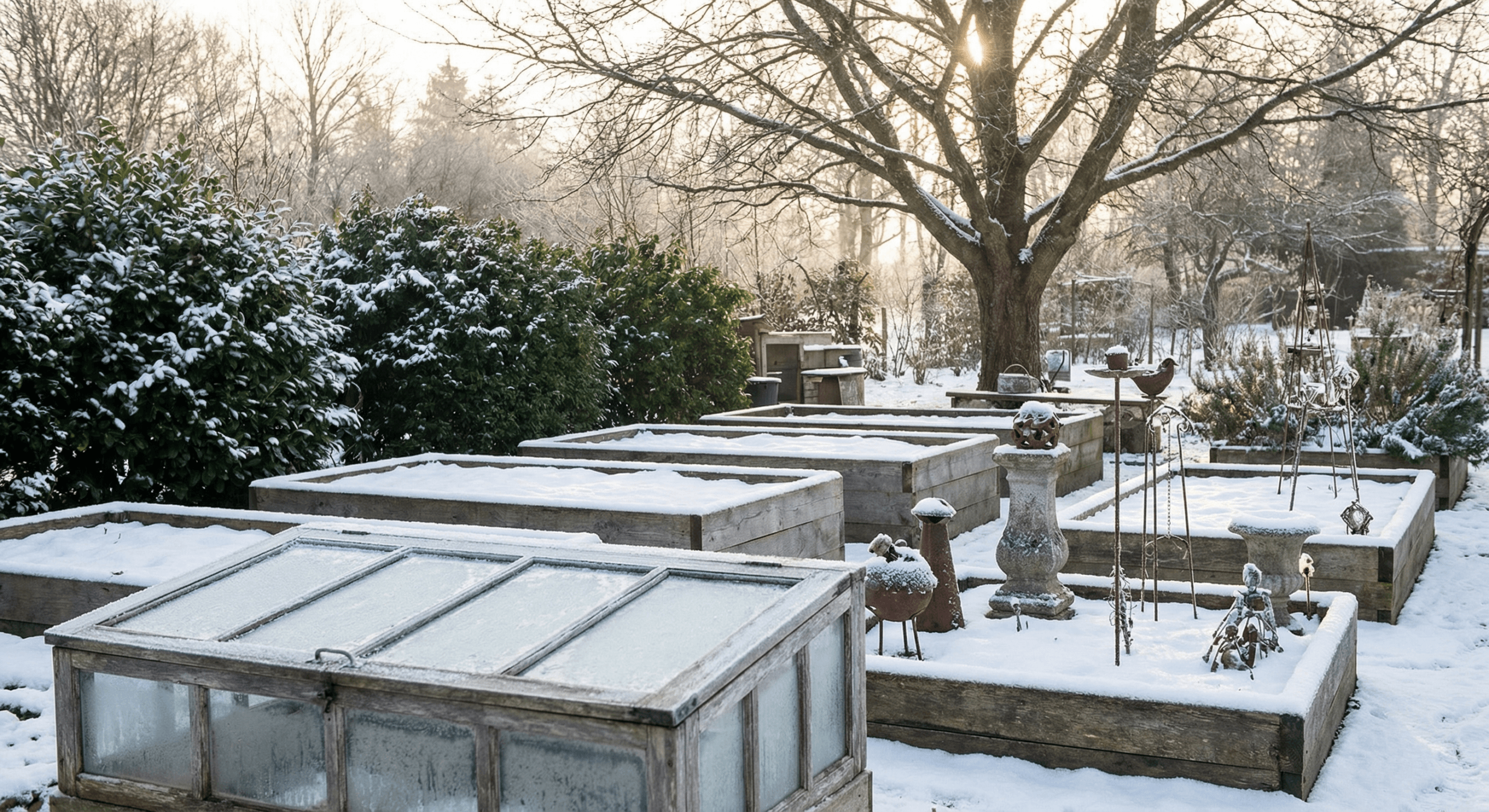
Winter might look like a quiet time for gardens, but there’s more you can do than you might think! With a bit of planning and the right techniques, the growing season doesn’t have to end when the temperature drops.Here’s your complete guide to winter gardening — yes, RHS winter garden tasks has detailed guidance on this topic.even in the cold.
Related: Garden Planning 101: Mapping Out Your Garden Space Natural Pest Deterrents: Plants That Repel Pests
For more on essential summer gardening:, see our guide.
For more on essential mulching: single, see our guide.
Looking for quality gardening tools and supplies? Browse our recommended garden products — hand-picked by the GardenWizz team.
What to Do in Winter (December – February)
The key to successful winter gardening starts long before winter arrives. In the colder months, your focus shifts to planning, protection, and season extension.
Late Winter Prep: As February rolls around, start ordering seed catalogs and planning your spring garden. This is also the time to clean, sharpen, and repair your garden tools so they’re ready when the ground thaws — sharpen garden secateurs so they’re ready when the ground thaws.
Indoor Seed Starting in seed trays on a sunny windowsill or under grow lights: February is prime time to start slow-growing seeds indoors — peppers, eggplants, and leeks all benefit from an early start under grow lights.
Protecting Plants from Frost
Frost is winter’s biggest challenge. Here’s how to protect your precious plants:
– Row covers: Lightweight spun fabric (like Reemay) can protect plants from light frosts, adding 2-4°F of warmth.
– Cold frames: These bottomless boxes — try a garden cold frame to extend the growing season with transparent lids trap solar heat and can add 10-20°F of protection.
– Mulch heavily with garden mulch sheets around perennial roots for winter protection: Apply 4-6 inches of straw or shredded leaves around perennial roots to insulate them through freeze-thaw cycles.
– Water before a freeze: Moist soil holds heat better than dry soil, RHS soil testing guide has detailed guidance on this topic RHS watering guidelines has detailed guidance on this topic..believe it or not! Water your garden the day before an expected frost. The RHS watering guidelines cover efficient watering techniques for gardens of all sizes… The RHS soil testing guide provides detailed advice on understanding your soil type…
Cold-Hardy Vegetables for Winter Harvest
Believe it or not, some vegetables laugh at frost:
– Kale: Flavor actually improves after a light frost — it’s one of the hardiest crops there is.
– Spinach: RHS leafy crops guide has detailed guidance on this topic.Survives down to 20°F with simple protection.
– Leeks: Stand in the ground all winter and taste sweeter after cold weather.
– . For more on mulching, the RHS mulching advice covers when and how to apply mulch for best results… Gardeners’ World has an excellent mulching guide that covers materials and techniques..Carrots and parsnips: Leave them mulched in the garden and dig as needed through winter.
– Swiss chard: Tougher than it looks — handles light frosts with ease.
Overwintering Perennials
Don’t tidy everything away in fall. Leave ornamental grasses standing, as their foliage protects the crown. Apply extra mulch around rose bushes, fig trees, and other marginally hardy plants once the ground freezes — this prevents thaw-freeze cycles that heave roots out of the soil.
Indoor Gardening in Winter
Of course, you don’t even have to go outside to garden in winter. Grow herbs on a sunny kitchen windowsill, start microgreens on a countertop, or try your hand at indoor dwarf citrus. Succulents and tropical houseplants also thrive indoors during the cold months.
The Winter Gardener’s Mindset
Winter gardening is really about working with nature’s rhythm. Yes, many plants are dormant — and that’s a good thing. That rest period builds strength for spring growth. But with cold frames, row covers, and a few hardy crops, you can harvest fresh food well into December and January. And if you’re starting seeds indoors in February, spring feels a lot closer than it did a month earlier.
The quiet months of winter give you time to plan, prepare, and dream about what’s coming next. Before you know it, those seed packets will be arriving and the garden will come alive again. Get ready — the growing season is closer than you think!
Frequently Asked Questions
When is the best time to winter gardening?
Focus on protection and planning from November through February.
Do I need any special equipment?
Fleece, cloches, and mulch for plant protection.
Can beginners do this?
Winter gardening is mostly maintenance and planning – very beginner friendly.
How long does it take?
Regular checks take 10-20 minutes. Major tasks a few hours.


