




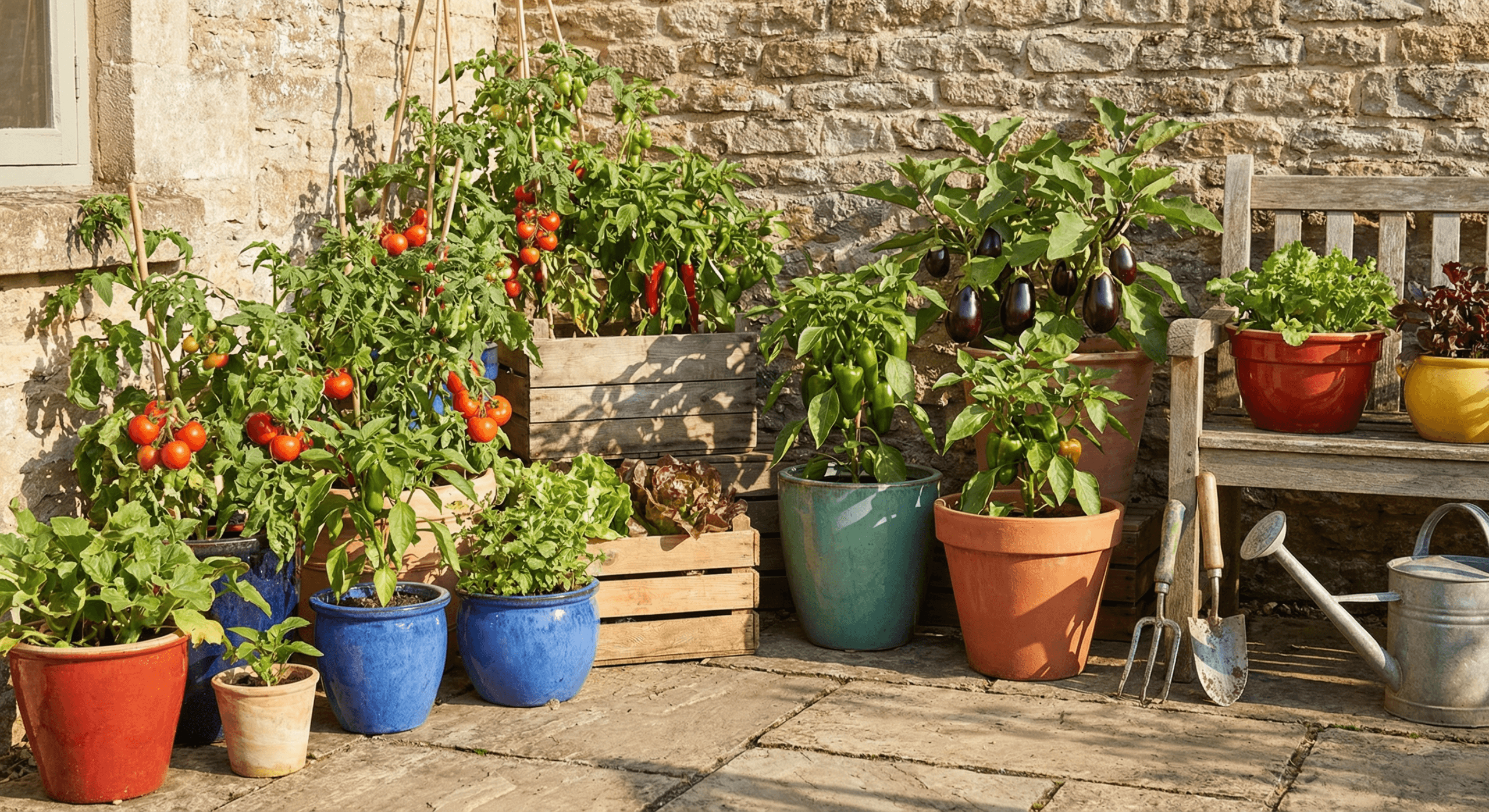
You do not need a large garden to grow your own vegetables. Container gardening has transformed what was once a niche practice into one of the most accessible ways to produce fresh, homegrown food. A sunny patio, balcony, or even a doorstep can become a productive kitchen garden with the right containers, compost, and plant choices.
Containers Vegetables:: What You’ll Need
Before you start, gather these essentials:
- Large growing pots — Set of 4 large 40cm growing pots with drainage and saucers
- Grow bags — Pack of 3 heavy-duty vegetable grow bags
- Container compost — Quality multi-purpose compost for containers and grow bags
- Self-watering planter — Self-watering planter with water indicator for vegetables
The appeal of container growing goes beyond the obvious advantage of not needing a plot of land. Containers allow you to move plants to follow the sun, escape soil-borne diseases, garden on paved surfaces, and bring crops closer to the kitchen. They also offer total control over soil quality – invaluable if you garden on heavy clay, chalk, or other challenging soil types.
Choosing the Right Container: Size Matters
The most important rule of vegetable container gardening is: the bigger the pot, the better the results. Roots need space, water, and nutrients, and a small pot restricts all three. A container that is too small is the single most common reason for poor results in container vegetable growing.
Minimum container sizes for common crops:
- Tomatoes: Minimum 40cm diameter, 40 litres volume. A 40cm pot or grow bag per plant.
- Peppers and aubergines: 30cm pot, minimum 15 litres compost
- Courgettes: 45cm pot, 25 litres – these are hungry, thirsty plants
- Beans (climbing): 30cm pot, 15 litres minimum, with support stakes
- Salad leaves: Window box or shallow pot, 15cm deep minimum
- Carrots: 30cm deep minimum, 20cm for shorter varieties
- Herbs: 15-20cm pot per plant is generally sufficient
The container needs adequate drainage holes. No matter how attractive a pot is, if it does not drain freely, your vegetables will suffer. Always check for drainage holes before planting, and raise pots off the ground on pot feet or bricks to ensure holes cannot become blocked.
Container Materials Compared
Terracotta: Traditional and attractive, with the advantage of porous walls that aerate the compost and help regulate moisture. However, terracotta dries out faster than other materials and is heavy to move. In winter, terracotta can crack in frost. Best for herbs and Mediterranean plants that prefer drier conditions.
Plastic and polypropylene: Lightweight, inexpensive, and durable. Plastic pots retain moisture better than terracotta – useful for thirsty vegetables like tomatoes and cucumbers. Look for UV-stabilised plastic that will not become brittle in sunlight over time.
Grow bags: The classic vegetable container. A grow bag provides the volume (typically 40 litres) that tomatoes and other hungry crops need. Flat-backed grow bags are better than those with a defined bottom shape – they are more stable and easier to position. Empty grow bags can be reused for a second season if still intact.
Self-watering containers: A reservoir at the base holds water and feeds it to the roots via a wicking system. These dramatically reduce the frequency of watering needed – useful for busy gardeners or in hot weather. They are particularly effective for tomatoes, peppers, and salad leaves.
Wooden planters: Attractive and durable. A good quality hardwood planter (oak or cedar) will last 10-15 years. Cedar naturally resists rot and does not require chemical treatment. Wooden planters retain moisture reasonably well and insulate roots from temperature extremes.
Metal containers: Decorative and long-lasting, but heat up and cool down rapidly, which can stress roots. Use a liner or choose for plants that tolerate temperature variation.
Compost for Containers
Never use garden soil in containers – it compacts, drains poorly, and harbours pests and diseases. Use a quality potting compost specifically formulated for containers.
Multi-purpose compost is fine for most vegetable crops, but for hungry plants like tomatoes, peppers, and courgettes, add a slow-release fertiliser or mix in 25% well-rotted garden compost to improve moisture retention and nutrition.
John Innes No. 2 or No. 3 is excellent for most container vegetables, particularly those with deeper root systems. Seedlings and salad leaves do better in a lighter compost mixed with perlite for improved drainage.
Watering and Feeding Container Vegetables
Container vegetables are entirely dependent on you for water. In summer, a single tomato plant in a 40cm pot can need watering twice a day in hot weather. Never let containers dry out completely – once plants wilt, they have already suffered significant stress.
The best approach is to water thoroughly until water runs freely from the drainage holes, then check daily by inserting a finger into the compost. Water again when the top 2-3cm feels dry.
Feeding is equally critical. Nutrients wash through compost faster in containers than in open soil, so container vegetables need regular feeding during the growing season. Use a high-potassium liquid feed (such as liquid seaweed or a dedicated tomato feed) every 10-14 days once the first flowers appear.
Best Vegetables for Containers
Almost any vegetable can be grown in a container given sufficient size and care. But these are the most reliable and rewarding:
- Tomatoes: The classic container crop. Bush varieties (tumbling tom, romello) are ideal for hanging baskets and smaller pots. Cordon varieties need larger containers and support stakes.
- Salad leaves: Cut-and-come-again mixes are perfect for window boxes. Fast-growing and space-efficient.
- Beans: Climbing French beans are productive and ornamental. They climb up a wigwam of bamboo canes in a large pot.
- Peppers: Both sweet peppers and chillies grow well in pots. They need a warm, sheltered spot to crop well in the UK.
- Courgettes: One plant per large pot, fed and watered regularly, will produce abundantly through summer.
- Spinach and chard: Productive, attractive, and tolerant of partial shade. One of the best choices for less sunny spots.
- Radishes: Quick to mature (4-6 weeks from sowing) and require minimal space. Perfect for beginners.
- Herbs: Basil, parsley, chives, coriander, mint – all thrive in containers. Keep basil warm and mint in its own pot to contain its spread.
Container vegetable gardening is genuinely accessible to everyone. With a few decent pots, some compost, and regular attention to watering and feeding, you can produce a surprisingly large amount of fresh food from a balcony, patio, or even a sunny windowsill.
Frequently Asked Questions
When is the best time to do this?
The ideal time depends on your climate and the specific plants involved. Generally, early morning or late afternoon are best to avoid the heat of the day.
How often should I check on this?
Check your garden at least once a week during the growing season to catch any issues early and keep on top of tasks.
Can I do this in a container instead?
Many garden tasks can be adapted for containers. Use a good quality potting compost and ensure containers have adequate drainage holes.
What if I don’t have the right tools?
Start with the basics — a trowel, fork, gloves, and watering can will get you a long way. Add tools as you need them.
Related Articles
For more help with your garden, check out these related guides:
- Best Rooftop Gardening: Challenges and Rewards
- Easy Small Space Gardening: Maximising a Tiny Garden
- Beginner’s Guide to Growing Sweet Peas
- Best Plants for Pollinators
- Herb Garden Hub
- How to Build a Raised Bed
Continue Reading
- 5-Step Essential Garden Tools: What Every UK Gardener Needs
- Complete Guide to Week 12 Spring Garden Jobs: May 17-23
- Complete Guide to Week 11 Spring Garden Jobs: May 10-16
- Complete Guide to Week 10 Spring Garden Jobs: May 3-9
- Complete Guide to Week 9 Spring Garden Jobs: April 26 – May 2
Frequently Asked Questions
When is the best time to do this?
The best time depends on your climate zone and what you are growing, but generally early morning or late afternoon when temperatures are cooler works best for most garden tasks.
How often should I check on my garden?
Regular attention is key — check your garden every few days during the growing season. This helps you catch problems early before they become serious.
Can beginners do this?
Absolutely! Start with a few simple tasks and build up gradually. Most garden jobs are beginner-friendly with the right guidance.
What is the most important thing to remember?
Consistency matters more than perfection. Little and often beats occasional marathon sessions. Even 10-15 minutes of daily attention yields great results.


