Looking for quality gardening tools and supplies? Browse our recommended garden products — hand-picked by the GardenWizz team.
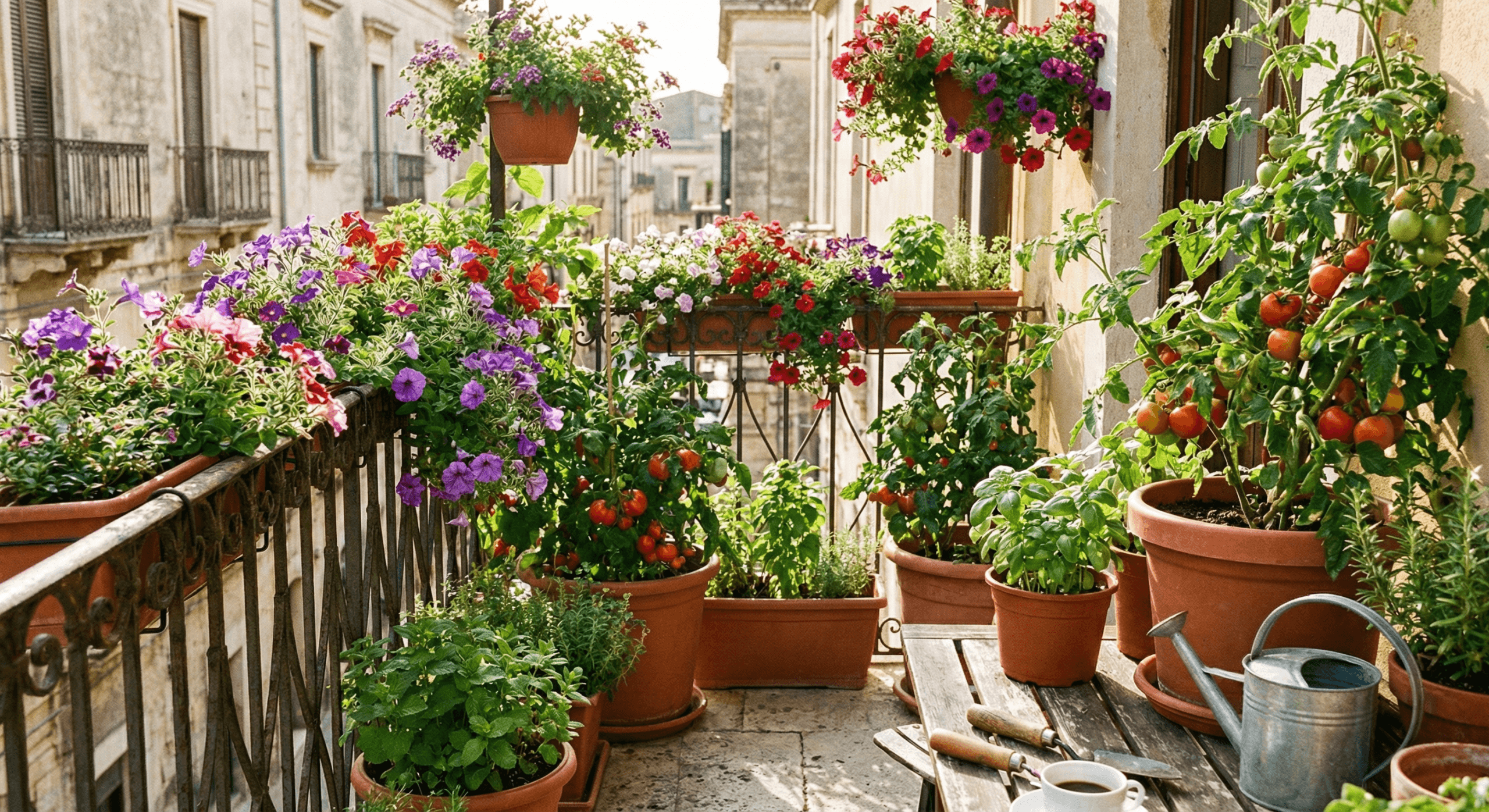
No garden? No problem. Some of the most productive gardens in the world are grown in pots, containers, and window boxes.Whether you have a tiny apartment balcony, a paved courtyard, or just a sunny doorstep, container gardening opens up a world of growing possibilities that would otherwise be completely off-limits. RHS container gardening guide has detailed guidance on this topic.
Shop Related Products: Terracotta Pot • Grow Bag • Hanging Basket
For more on essential summer gardening:, see our guide.
For more on essential mulching: single, see our guide.
Related: Garden Planning 101: Mapping Out Your Garden Space Natural Pest Deterrents: Plants That Repel Pests
The beauty of containers is their flexibility. You can move them to follow the sun, rearrange them for a garden party, or bring tender plants under cover when winter bites. Ready to get started? Let’s dig in.
Choosing the Right Container
Almost anything that holds soil and has drainage holes can be a container — but some choices are better than others. The RHS soil testing guide provides detailed advice on understanding your soil type…
Size Matters
As a general rule, bigger is better for vegetables. A tomato plant needs at least a 5-gallon (18-litre) container. Root vegetables like carrots need at least 12 inches of depth.Herbs can get away with much smaller pots — 6 inches is fine for basil or chives. Kew Gardens herb database has detailed guidance on this topic.
- Terra cotta/clay pots: Classic and attractive, but they dry out quickly and can crack in freezing temperatures. Great for herbs, succulents, and drought-tolerant plants.
- Plastic or fibreglass pots: Lightweight, inexpensive, and retain moisture better than clay. Many now look surprisingly like natural materials.
- Fabric grow bags: An increasingly popular choice, especially for potatoes and tomatoes.The breathable fabric promotes excellent root development and prevents overwatering. RHS watering guidelines has detailed guidance on this topic.
- Wooden barrels and whiskey barrels: Large, attractive, and perfect for deep-rooted vegetables. Drill drainage holes if they don’t already have them.
- Window boxes: Ideal for herbs, salads, and trailing strawberries. Make sure they’re well secured — a gust of wind can send them flying.
The Perfect Container Soil Mix
This is one area where you absolutely cannot cut corners. Garden soil does NOT work in containers — it compacts too easily, drains poorly, and harbours diseases. Instead, use a high-quality potting mix:
DIY Container Mix Recipe:
- 1 part peat moss or coconut coir (for moisture retention)
- 1 part perlite or coarse horticultural sand (for drainage)
- 1 part well-rotted compost or commercial potting compost (for nutrients)
Mix these together thoroughly before filling your containers. According to Gardeners’ World, Instead, is one of the most rewarding skills a gardener can develop… The Instead, process is explained in detail by the RHS composting guide, which covers everything from starting your bin to troubleshooting common problems… The result should be light, fluffy, and moisture-retentive without becoming waterlogged.
Watering in Containers: The 1 Challenge
Container plants have one major enemy: drying out.Because containers are elevated from the ground and exposed to more air, soil in pots dries out far faster than garden beds. RHS soil testing guide has detailed guidance on this topic. During hot summer weather, some containers may need watering twice a day.
How to Know When to Water
- Stick your finger 2 inches into the soil. If it feels dry at that depth, water.
- Lift the pot — a light pot means a dry pot. Heavy means moisture still present.
- Wilting in the afternoon heat is normal for some plants, but if leaves don’t perk back up by morning, they need water.
. Gardeners’ World has an excellent mulching guide that covers materials and techniques..
Watering Technique
Water slowly and deeply at the base of the plant, not over the leaves. Water until you see it flowing freely from the drainage holes. This encourages deep root growth rather than shallow surface roots.
Mulching Helps
Add a 1-inch layer of straw, bark chips, or even gravel on top of the soil surface. This reduces evaporation dramatically and keeps the roots cooler during hot spells.
Best Vegetables for Containers
You might be surprised by just how much you can grow in containers:
- Tomatoes — Cherry and bush varieties work best. You need a 5-gallon minimum pot, a stake or cage for support, and consistent watering.
- Courgettes & Squash — Compact bush varieties like ‘Patio Star’ or ‘Bush Baby’ are bred specifically for containers.
- Salad Leaves & Lettuce — Shallow containers (6 inches deep) work perfectly. Harvest little and often from the outside.
- Chard & Kale — Beautiful enough to double as ornamental plants. Both tolerate partial shade.
- Beans — Dwarf or bush varieties are best for containers. You still need a small trellis or support stakes.
- Potatoes — fabric grow bags are excellent for vegetables like tomatoes and potatoes are perfect for spuds. As the green shoots grow, add more soil (“earthing up”) until the bag is full.
- Strawberries — Perfect for hanging baskets or window boxes. They look gorgeous trailing over the edges.
- Herbs — Basil, parsley, mint (keep mint in its own pot — it’s a bully!), chives, thyme, and rosemary all thrive in containers.
Feeding Container Plants
Container plants need more frequent feeding than garden plants because nutrients leach out with each watering. Use a liquid organic fertilizer every 2-3 weeks during the growing season:
- Tomatoes & fruiting vegetables: high-potash feed (liquid seaweed or tomato fertilizer)
- Leafy greens: balanced liquid feed (fish emulsion or liquid seaweed)
- Herbs: go easy on nitrogen — too much produces lush leaves with less flavour
Positioning Tips
- Most vegetables need 6-8 hours of direct sun — south-facing is ideal in the northern hemisphere
- Rotate containers weekly so all sides get equal light exposure
- Group pots together — they create a microclimate, retaining humidity better than isolated containers
- Elevate pots on pot feet or small stones — this prevents drainage holes from becoming blocked and ensures air circulation underneath
Container gardening is proof that you don’t need a country estate to grow your own food. A sunny balcony, a few pots, and some decent soil are enough to produce an impressive harvest of fresh vegetables and herbs. Start small, learn as you go, and don’t be afraid to experiment. The best garden is the one you actually use — and containers make that easier than ever.
Frequently Asked Questions
When is the best time to gardening in the UK?
Most tasks can be done spring through autumn. Check specific plant requirements.
Do I need any special equipment?
Basic tools: spade, fork, watering can, and gloves.
Can beginners do this?
Yes! Start small and learn as you grow.
How long does it take?
Varies by task from 30 minutes to several hours.