




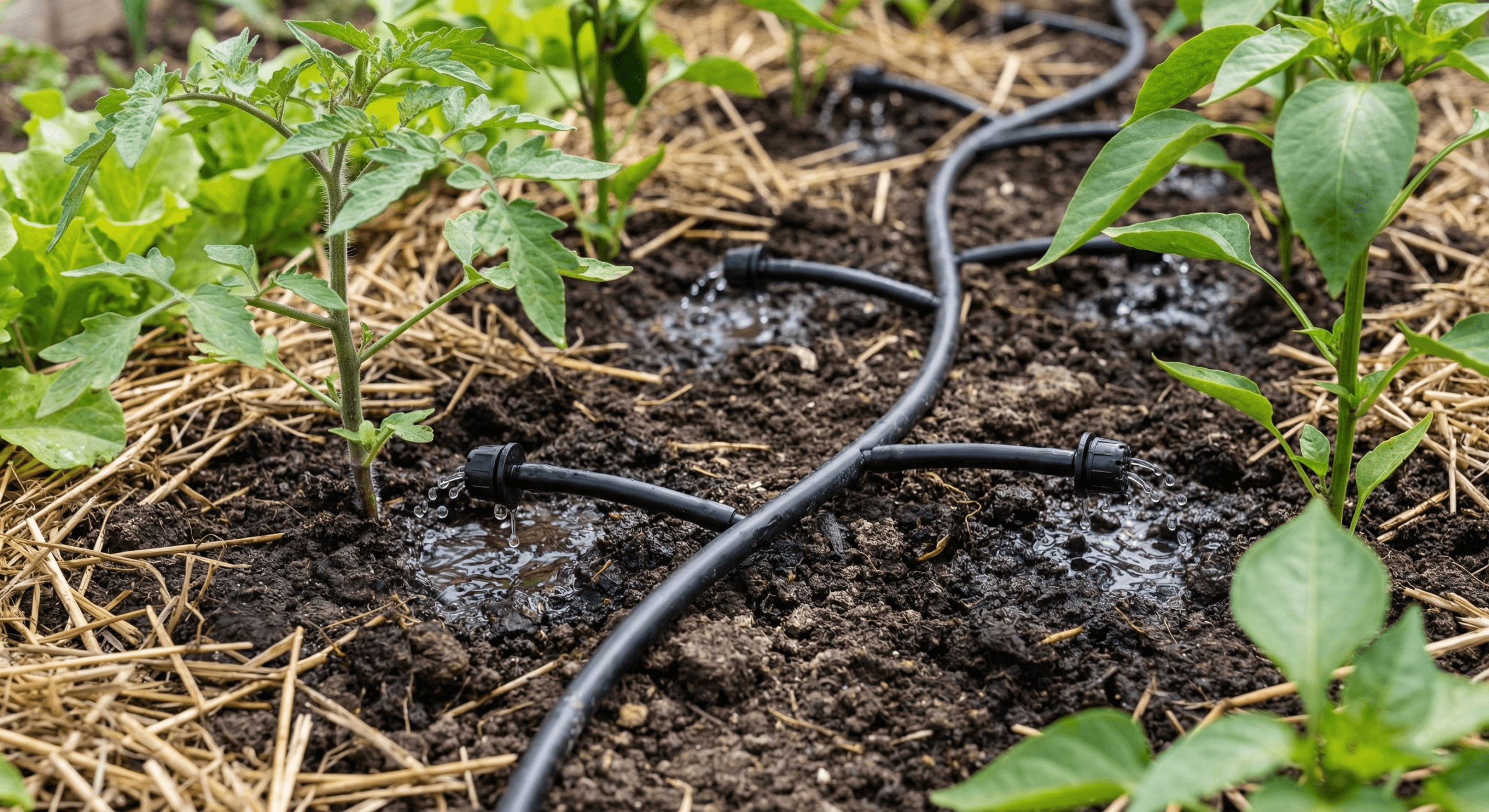
There is a reason experienced gardeners rate drip irrigation as one of the best investments for any serious vegetable or kitchen garden: it delivers water precisely where plants need it – at soil level, directly to the root zone – while eliminating the labour and waste of hand watering.
5-Step Drip Irrigation: What You’ll Need
Before you start, gather these essentials:
- Drip irrigation kit — Complete drip irrigation kit for raised beds and containers, up to 50 drippers
- Garden tap timer — Automatic garden tap timer for drip irrigation systems
- Soaker hose — Porous soaker hose for even ground-level watering
- Water butt pump — Mains-water pressure compensator for gravity-fed irrigation
Watering by hand is time-consuming, inconsistent, and inefficient. A sprinkler throws water into the air where half of it evaporates before reaching the soil. Overhead watering encourages fungal diseases on leaves. But drip irrigation solves all of these problems simultaneously.
Why Drip Irrigation is Worth It
Research consistently shows that drip systems use 30-50% less water than conventional overhead sprinklers, while producing better results in vegetable and container gardens.
Water delivered directly to the soil surface around each plant root zone penetrates deeply and evenly. There is no runoff on slopes, no evaporation from leaf surfaces, and no water landing on foliage where it can encourage blight and other fungal diseases.
For the busy gardener, perhaps the greatest benefit is time. Once installed and connected to a timer, a drip system waters automatically, even when you are away.
How Drip Irrigation Works
At its simplest, a drip irrigation system consists of a water source connected to a network of pipes or tubing with small holes or emitters placed at each plant. Water flows under low pressure from the tap through the tubing and drips slowly onto the soil.
The two main system types are:
- Inline drip tubing: Pipes with pre-installed drippers at regular intervals (typically every 30cm). Ideal for rows of vegetables.
- Individual emitters: Small nozzles punched into solid poly tubing at specific points. More flexible for irregular plantings or containers.
Installing a Basic Drip System for Raised Beds
Components needed:
- 25m of 13mm drip tubing or 4mm micro-tubing
- Tap connector fitting standard garden tap with 3/4 inch thread
- Pressure regulator reducing mains pressure to safe levels for drip systems
- Filter preventing particles from blocking drippers
- Run start connectors and end caps
- Adjustable drippers (flow rate 0-8 litres per hour)
- Stake holders to secure tubing in position
- Optional: automatic tap timer for fully automated watering
Installation steps:
- Connect the filter and pressure regulator to your tap, followed by the main supply line running from tap to the bed
- Lay the main line along one edge of the bed, securing with ground stakes every 50cm
- Snake the tube in a serpentine pattern through the bed, placing drippers near each plant base
- Seal the end of the tubing with an end cap
- Turn on the water and check every emitter is working
Using a Tap Timer for Automation
Pairing your drip system with an automatic tap timer transforms it from a manual system into a truly automated one. The timer fits between the tap and the supply line, and can be programmed to water at specific times and durations on chosen days.
For most vegetable gardens, watering once a day in hot summer weather is sufficient – early morning is ideal. In cooler periods or under cover, every 2-3 days may be enough.
Drip Irrigation for Containers and Greenhouses
For a patio with container plants, individual emitters per pot connected to a main feeder line works well. In greenhouses, drip irrigation is almost essential during summer. A drip system with a timer ensures consistent moisture even on the hottest days.
Maintenance Tips
- Check emitters monthly for blockages
- Flush the system at the start of each season to clear any accumulated sediment
- Store tap connectors, timers, and pressure regulators indoors over winter to prevent frost damage
- In hard water areas, use a vinegar flush annually to dissolve lime scale deposits
Drip irrigation is one of those investments that pays for itself quickly – in saved water bills, saved time, and improved plant health. Once it is set up and automated, you will wonder how you ever managed without it.
Frequently Asked Questions
When is the best time to do this?
The ideal time depends on your climate and the specific plants involved. Generally, early morning or late afternoon are best to avoid the heat of the day.
How often should I check on this?
Check your garden at least once a week during the growing season to catch any issues early and keep on top of tasks.
Can I do this in a container instead?
Many garden tasks can be adapted for containers. Use a good quality potting compost and ensure containers have adequate drainage holes.
What if I don’t have the right tools?
Start with the basics — a trowel, fork, gloves, and watering can will get you a long way. Add tools as you need them.
Related Articles
For more help with your garden, check out these related guides:
- Drip Irrigation Systems: Save Time and Water
- Drip Irrigation Systems: Save Time and Water
- Beginner’s Guide to Sweet Peas
- Best Plants for Pollinators
- Herb Garden Guide
Continue Reading
- 5-Step Essential Garden Tools: What Every UK Gardener Needs
- Complete Guide to Week 12 Spring Garden Jobs: May 17-23
- Complete Guide to Week 11 Spring Garden Jobs: May 10-16
- Complete Guide to Week 10 Spring Garden Jobs: May 3-9
- Complete Guide to Week 9 Spring Garden Jobs: April 26 – May 2
Frequently Asked Questions
When is the best time to do this?
The best time depends on your climate zone and what you are growing, but generally early morning or late afternoon when temperatures are cooler works best for most garden tasks.
How often should I check on my garden?
Regular attention is key — check your garden every few days during the growing season. This helps you catch problems early before they become serious.
Can beginners do this?
Absolutely! Start with a few simple tasks and build up gradually. Most garden jobs are beginner-friendly with the right guidance.
What is the most important thing to remember?
Consistency matters more than perfection. Little and often beats occasional marathon sessions. Even 10-15 minutes of daily attention yields great results.


