




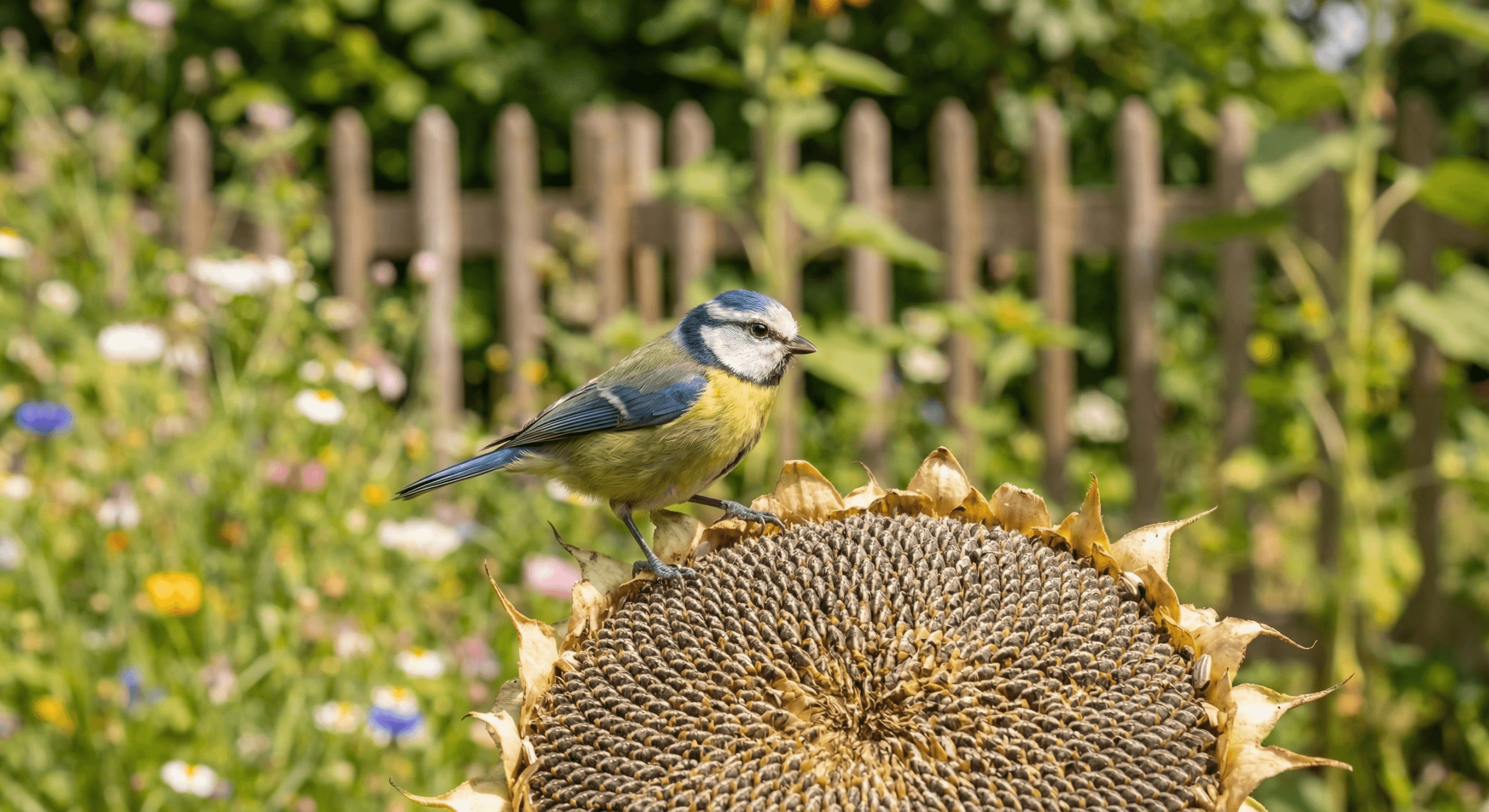
A garden alive with birdsong is one of the great pleasures of British garden life. Beyond the sheer joy of watching blue tits flit around a feeder or a blackbird tugging an earthworm across the lawn, garden birds provide genuine benefits: they pollinate flowers, control insect pests, and bring a dynamic, ever-changing natural element to even the smallest urban garden.
5-Step Attract Birds: What You’ll Need
Before you start, gather these essentials:
- Bird seed mix — Premium bird seed mix for year-round UK garden feeding
- Bird feeder station — Multi-feeder bird station with hanger and feeding ports
- Nest box with camera — Wooden nest box with built-in camera for observing nesting birds
- Bird bath — Stone bird bath for drinking and bathing birds
Attracting birds to your garden is straightforward once you understand what they need: food, water, shelter, and places to nest. Provide these four essentials and the birds will come.
Feeding Birds: What, When, and How
Bird feeding is the most effective single thing you can do to attract birds to your garden. In winter, when natural food is scarce, supplementary feeding can be genuinely life-saving for birds.
Year-round feeding:
- Seed mixes: A good quality mixed seed attracts goldfinches, greenfinches, chaffinches, and sparrows. Avoid cheap mixes with excessive wheat, barley, and maize.
- Peanuts: A blue tit favourite. Always buy from reputable sources to avoid aflatoxin-contaminated peanuts, which can be fatal to birds.
- Mealworms: Highly nutritious for robins and blackbirds. Particularly valuable in spring and summer when birds are feeding nestlings.
- Sunflower hearts: The ultimate bird food. Almost every garden bird loves them, and they are easy to eat with no husks.
- Fat balls: High-energy suet balls are excellent in winter. Avoid those wrapped in plastic mesh – use a dedicated fat ball feeder instead.
Feeding tips:
- Position feeders at least 1.5m from dense cover where cats can lurk
- Clean feeders fortnightly with a weak disinfectant solution to prevent disease spread
- Provide several small feeders rather than one large one to reduce dominance by larger birds
- In summer, switch to softer foods like mealworms and fruit
Water: The Essential Element
Birds need water for drinking and bathing. A bird bath is one of the simplest and most effective wildlife additions you can make to any garden.
Bird bath essentials:
- Choose a shallow basin – birds need to be able to stand in water no deeper than 2-3cm
- Place on a pedestal or hang at least 1m off the ground away from dense cover
- Clean and refill daily in summer to prevent algae and mosquito larvae
- In winter, prevent freezing by adding a ping-pong ball to the surface to keep water moving
Providing Shelter
Birds need places to hide from predators and shelter from harsh weather. Dense shrubs and hedges provide essential cover for roosting and nesting. Native plants like hawthorn, holly, dog rose, and ivy are particularly valuable – they provide shelter and natural food in the form of berries and seeds.
Nest Boxes
Installing nest boxes increases your chances of hosting breeding birds. Different species need different-sized entrance holes: 32mm for house sparrows, 28mm for blue tit, 25mm for great tit, and open-fronted boxes for robins and blackbirds.
Mount boxes 1.5-3m above ground, facing between north and east. Put up boxes from October onwards so birds can inspect them over winter before breeding season begins in March.
Plants That Attract Birds
Plants that produce berries, seeds, and fruits are invaluable:
- Berries: Holly, rowan, pyracantha, cotoneaster, dog rose, hawthorn
- Seeds: Sunflowers, teasels, coneflowers, knapweed, poppy
- Fruit: Strawberries, raspberries, blackberries, currants
A garden designed with birds in mind does not require much extra space. Even a balcony with a feeder, a pot of teasels, and a small water dish can attract goldfinches and blue tits in urban areas.
Frequently Asked Questions
When is the best time to do this?
The ideal time depends on your climate and the specific plants involved. Generally, early morning or late afternoon are best to avoid the heat of the day.
How often should I check on this?
Check your garden at least once a week during the growing season to catch any issues early and keep on top of tasks.
Can I do this in a container instead?
Many garden tasks can be adapted for containers. Use a good quality potting compost and ensure containers have adequate drainage holes.
What if I don’t have the right tools?
Start with the basics — a trowel, fork, gloves, and watering can will get you a long way. Add tools as you need them.
Related Articles
For more help with your garden, check out these related guides:
- How to Attract Birds to Your Garden
- How to Attract Birds to Your Garden
- Beginner’s Guide to Sweet Peas
- Best Plants for Pollinators
- Herb Garden Guide
Continue Reading
- 5-Step Essential Garden Tools: What Every UK Gardener Needs
- Complete Guide to Week 12 Spring Garden Jobs: May 17-23
- Complete Guide to Week 11 Spring Garden Jobs: May 10-16
- Complete Guide to Week 10 Spring Garden Jobs: May 3-9
- Complete Guide to Week 9 Spring Garden Jobs: April 26 – May 2
Frequently Asked Questions
When is the best time to do this?
The best time depends on your climate zone and what you are growing, but generally early morning or late afternoon when temperatures are cooler works best for most garden tasks.
How often should I check on my garden?
Regular attention is key — check your garden every few days during the growing season. This helps you catch problems early before they become serious.
Can beginners do this?
Absolutely! Start with a few simple tasks and build up gradually. Most garden jobs are beginner-friendly with the right guidance.
What is the most important thing to remember?
Consistency matters more than perfection. Little and often beats occasional marathon sessions. Even 10-15 minutes of daily attention yields great results.


