




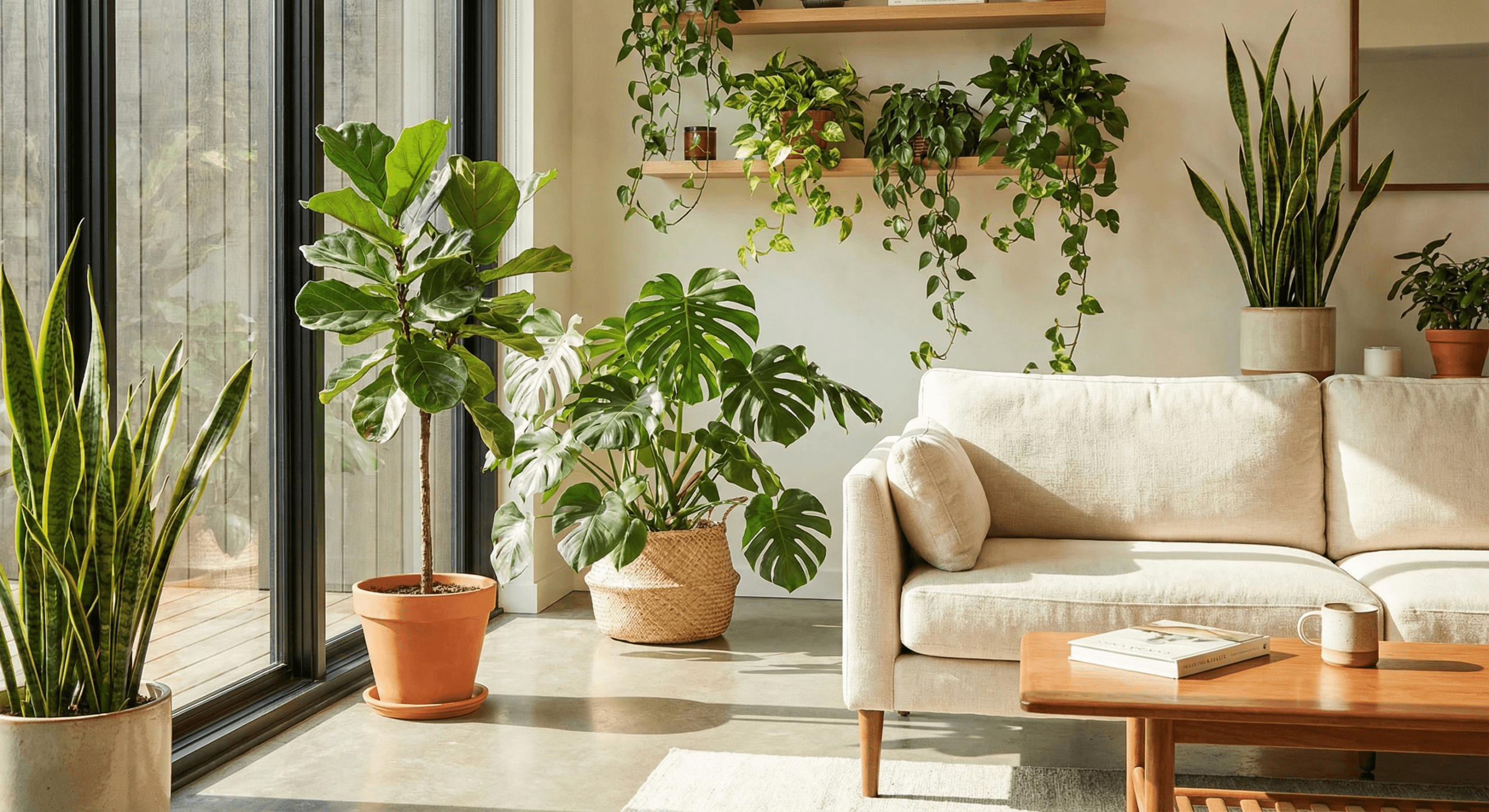
You don’t need a yard to be a gardener.Indoor gardening opens up a world of green possibilities — from fragrant herbs on your windowsill to lush tropicals that transform your living space. Kew Gardens herb database has detailed guidance on this topic. Here’s how to bring the garden inside and keep it thriving, no matter the weather outside.
Shop Related Products: Tomato Cage
For more on essential summer gardening:, see our guide.
For more on essential mulching: single, see our guide.
Related: Garden Planning 101: Mapping Out Your Garden Space Natural Pest Deterrents: Plants That Repel Pests
Looking for quality gardening tools and supplies? Browse our recommended garden products — hand-picked by the GardenWizz team.
Understanding Indoor Light Conditions
Light is the biggest challenge for indoor gardeners. Before you buy a single plant, spend a week watching how light moves through your home:
– Direct sun (6+ hours): South-facing windows. Great for succulents, cacti, herbs, and vegetable seedlings.
– Medium light (3-6 hours): East or west-facing windows, or a few feet from a bright south window. Ideal for most tropical houseplants.
– Low light (< 3 hours): RHS shade-loving plants has detailed guidance on this topic.North-facing windows or interior rooms. Choose pothos, snake plants, ZZ plants, or peace lilies.
Pro tip: Windows get about 50% less light in winter. Move plants closer to windows or consider supplemental grow lights during darker months.
- Choosing Plants for Indoors
Some plants are better suited to indoor life than others:
- Easy Winners
– Pothos (Epipremnum aureum): Tolerates low light and irregular watering like a champ. The RHS watering guidelines cover efficient watering techniques for gardens of all sizes…
– Snake plant (Sansevieria/Dracaena trifasciata): Nearly indestructible, thrives on neglect.
– Spider plant (Chlorophytum comosum): Fast-growing, produces baby “plantlets” you can propagate. RHS plant propagation guide has detailed guidance on this topic.
– Peace lily (Spathiphyllum): Flowers in low light, tells you when it’s thirsty by drooping dramatically.
- Edible Indoor Plants
– Herbs: Basil, mint, chives, parsley, and thyme all grow well on a sunny windowsill.
– Microgreens: Harvest fresh greens from a tray on your counter in under two weeks.
– Cherry tomatoes: Compact varieties like ‘Tumbling Tom’ thrive in a sunny window.
– Lettuce: RHS leafy crops guide has detailed guidance on this topic.Shallow-rooted varieties grow surprisingly well in indoor conditions.
- Water indoor plants with a watering can with a long spout for precision Indoor Plants
This is where most people go wrong. Indoor plants need watering far less frequently than outdoor plants — they have no rainfall, and pots dry out more slowly, especially in winter.
The finger test: Stick your finger into the soil up to the first knuckle. The RHS soil testing guide provides detailed advice on understanding your soil type… If it’s dry, water. If it’s moist, wait. Overwatering is the 1 killer of indoor plants.
Water indoor plants with a watering can with a long spout for precision best practices:
– Water thoroughly until it drains from the bottom, then empty saucers.
– Use room-temperature water — cold water can shock roots.
– Most plants prefer to dry out slightly between waterings rather than sit in soggy soil.
- Humidity: The Secret Factor
Homes, especially in winter with heating, are often drier than deserts. Tropical plants hate this. Boost humidity by:
– Grouping plants together (they create a microclimate)
– Placing pots on a tray of pebbles and water (below, not in, the pot)
– Misting tropical plants daily
– Running a humidifier in the room
- Feeding and Fertilizing
Indoor plants grow more slowly than outdoor plants and need less food. Feed actively growing plants (usually spring through summer) with a balanced liquid fertilizer diluted to half strength. Stop feeding in fall and winter when most plants go semi-dormant.
- Repotting
When roots grow out of drainage holes or circle the inside of the pot, it’s time to repot. Spring is the best time. Go up only one or two pot sizes — too much soil holds moisture and can cause root rot. Use a quality potting mix, not garden soil.
- Common Indoor Plant Problems
– Yellow leaves: Usually overwatering. Check soil moisture first.
– Brown leaf tips: Often low humidity or salt buildup from tap water. Try filtered water or flushing the pot.
– Leggy growth: Not enough light. Move closer to a window or add grow lights.
– Dropping leaves: Sudden temperature change, overwatering, or too cold. Check the environment.
- Start Small, Go Green
Indoor gardening is one of the most rewarding ways to keep your green thumb active year-round. Start with two or three easy plants, get to know their needs, and expand from there. Before you know it, you’ll have a thriving indoor jungle — no coat required.
Frequently Asked Questions
When is the best time to do this in the UK?
The ideal timing depends on your location and the specific task. Spring (March-May) is generally the busiest gardening season in the UK, though autumn is perfect for planting and soil improvement.
Do I need expensive equipment to get started?
No. A few quality basic tools — a trowel, hand fork, watering can, and gloves — will see you through most beginner gardening tasks.
Is this suitable for small spaces or containers?
Most gardening tasks can be adapted for small spaces. Containers, grow bags, and raised beds all work well on patios, balconies, and even windowsills.
Can beginners do this successfully?
Absolutely. UK gardens are full of challenging conditions — clay soil, shade, slugs — but beginners achieve great results every year by starting small and learning as they grow.


