A well-planned summer vegetable garden is one of the most rewarding things a UK gardener can create. With the right timing, a modest plot can produce an astonishing abundance — from the first early peas of June through to climbing beans and ripe tomatoes in August. The key is knowing what to sow, when to plant it, and how to keep everything fed and watered through the season.
Summer Vegetable Garden:: What You’ll Need
Before you start, gather these essentials:
- Vegetable seeds — Summer vegetable seed collection for UK growers
- Watering can — Essential garden watering can for daily plant care
- Plant food — Balanced organic plant food for vegetables
- Gardening gloves — Durable gardening gloves for all tasks
- Tomato feed — High-potassium tomato feed for bumper crops
Early Summer (June–July)
Early summer is the time to plant out tender vegetables that have been hardening off under cover. Frost risk should have passed by mid-May in most of the UK, but always keep horticultural fleece to hand in colder regions or unexpected cold snaps.
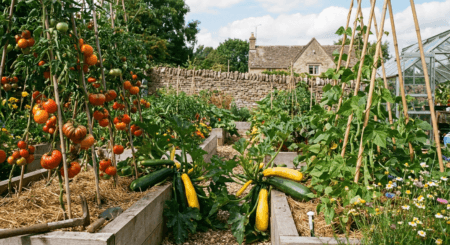
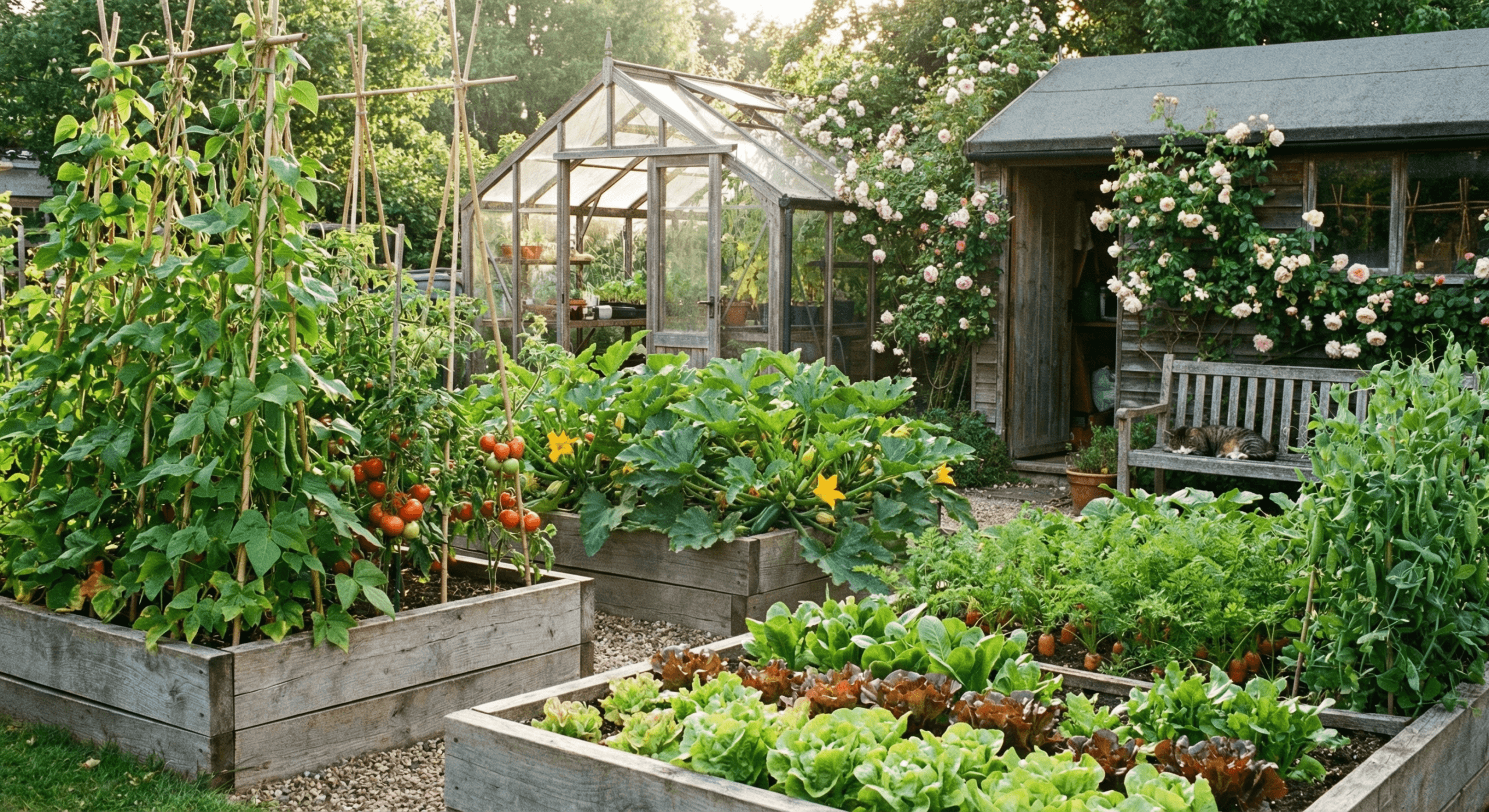
Runner beans and French beans planted now will romp away in warm soil, producing heavy crops from late July through to the first frosts. Runner beans need support — wigwams of bamboo canes or a traditional row of poles — and they love being watered consistently. French beans can be grown in similar conditions or in containers.
Courgettes and summer squash planted out in June will be producing by late July. One well-fed plant can produce 3-4 courgettes per week at peak season, so three or four plants is plenty for most households. Keep them well watered and harvest frequently to prevent fruits turning into marrows.
Outdoor tomatoes can go outside in June in a sheltered spot. Plant deeply — up to the first true leaves — as tomatoes root freely from buried stems, giving a stronger plant. Pinch out side shoots on cordon varieties and feed weekly once the first fruits set.
Sweetcorn should be planted in blocks rather than rows — it’s wind-pollinated, and a block gives far better cob formation than a single row. Plant out from June and expect harvest from August.
Succession Sowing for Continuous Harvest
The mistake many new vegetable gardeners make is sowing everything at once. A single row of carrots or lettuces all sown together will all mature simultaneously, leaving you with a glut followed by nothing. Instead, adopt a succession sowing approach:
- Sow a short row or half-row of lettuce every two weeks from March through September. Different varieties suit different seasons — cos lettuces tolerate some heat, while butterhead and oak-leaf types perform better in cool weather.
- Radishes and spring onions are quick: sow every three weeks for a constant supply. Radishes are ready in as little as four weeks from sowing.
- Beetroot sown every month from March to July gives you a steady harvest rather than a once-only dig.
- Succession-sow basil in pots on a warm windowsill or windowsill-scale greenhouse to have fresh leaves all summer.
Maincrop Vegetables for Long-Term Harvests
Potatoes planted in March or April will be ready to harvest as earlies from June, with maincrop varieties ready from August. Earth up the foliage as it grows to prevent greening and to encourage more tuber formation.
Brassicas planted in spring (cabbage, kale, broccoli, Brussels sprouts) will be ready from late summer through winter. Kale is one of the easiest and most productive winter crops — pick the leaves as needed and the plant keeps producing for months.
Parsnips and leeks are slow developers sown in spring but harvested through winter when the cold improves their flavour. They are remarkably low-maintenance — sow once and leave them to it.
Onions and garlic planted in autumn or early spring will be ready from midsummer. Garlic is almost effortless — plant in autumn, keep weeded, and harvest when the leaves turn yellow in July.
Watering for Maximum Yield
Watering is the single biggest factor between an average summer harvest and a spectacular one. Most vegetables need around 2-3cm of water per week, more during hot weather. The critical times to water:
- When sowing or transplanting — seeds and young plants need consistently moist soil to germinate and establish.
- When flowering and fruiting — irregular watering at this stage causes blossom end rot in tomatoes, bolting in lettuces and brassicas, and split roots in carrots.
- Beans and peas — water well when flowering begins or pods won’t set properly.
The best approach is infrequent, deep watering rather than little and often. Water at the base of plants in the morning or evening, avoiding foliage to reduce disease risk. A drip irrigation system with a timer is ideal — consistent moisture at root level without wasted water.
Feeding Through the Season
Most vegetable crops are hungry feeders. A balanced organic fertiliser applied as a top-dressing around plants every 3-4 weeks keeps them productive. High-potassium feeds — such as liquid seaweed or tomato feed — are particularly valuable once flowering begins, promoting better fruit and flower formation.
Apply feed after rain or watering, when the soil is moist — applying to dry soil can cause root stress and the nutrients won’t be taken up effectively.
Pest Management
Summer brings an array of pest challenges. The key is prevention and early intervention rather than reactive spraying:
- Slugs and snails — most damaging in damp weather and at night. Use beer traps, copper tape, or organic slug pellets sparingly.
- Aphids — check under leaves weekly and squash colonies before they spread. Ladybirds and lacewings will do much of the work if you avoid broad-spectrum pesticides.
- Caterpillars — Inspect brassica leaves regularly. Pick off caterpillars by hand or use fine insect netting to exclude cabbage white butterflies.
- Carrot fly — a significant problem as the scent released by thinning carrots attracts the fly from considerable distances. Use companion planting (with alliums) and fine mesh barriers.
When to Harvest
Harvest vegetables first thing in the morning when they’re at their crispest and most hydrated. Pick beans, courgettes, and tomatoes regularly — every couple of days at peak season — to encourage continued production. Leaving overripe fruits on plants signals the plant to slow down.
Summer vegetable gardening in the UK is a marathon, not a sprint. The gardener who keeps on top of watering, feeding, and little-and-often harvesting will be rewarded with one of the most productive seasons of the gardening year.
Frequently Asked Questions
When is the best time to do this?
The ideal time depends on your climate and the specific plants involved. Generally, early morning or late afternoon are best to avoid the heat of the day.
How often should I check on this?
Check your garden at least once a week during the growing season to catch any issues early and keep on top of tasks.
Can I do this in a container instead?
Many garden tasks can be adapted for containers. Use a good quality potting compost and ensure containers have adequate drainage holes.
What if I don’t have the right tools?
Start with the basics — a trowel, fork, gloves, and watering can will get you a long way. Add tools as you need them.
Related Articles
For more help with your garden, check out these related guides:
- Summer Vegetable Garden: What to Grow and When
- Summer Vegetable Garden: What to Grow and When
- Beginner’s Guide to Sweet Peas
- Best Plants for Pollinators
- Herb Garden Guide
Continue Reading
- 5-Step Essential Garden Tools: What Every UK Gardener Needs
- Complete Guide to Week 12 Spring Garden Jobs: May 17-23
- Complete Guide to Week 11 Spring Garden Jobs: May 10-16
- Complete Guide to Week 10 Spring Garden Jobs: May 3-9
- Complete Guide to Week 9 Spring Garden Jobs: April 26 – May 2
Frequently Asked Questions
When is the best time to do this?
The best time depends on your climate zone and what you are growing, but generally early morning or late afternoon when temperatures are cooler works best for most garden tasks.
How often should I check on my garden?
Regular attention is key — check your garden every few days during the growing season. This helps you catch problems early before they become serious.
Can beginners do this?
Absolutely! Start with a few simple tasks and build up gradually. Most garden jobs are beginner-friendly with the right guidance.
What is the most important thing to remember?
Consistency matters more than perfection. Little and often beats occasional marathon sessions. Even 10-15 minutes of daily attention yields great results.