




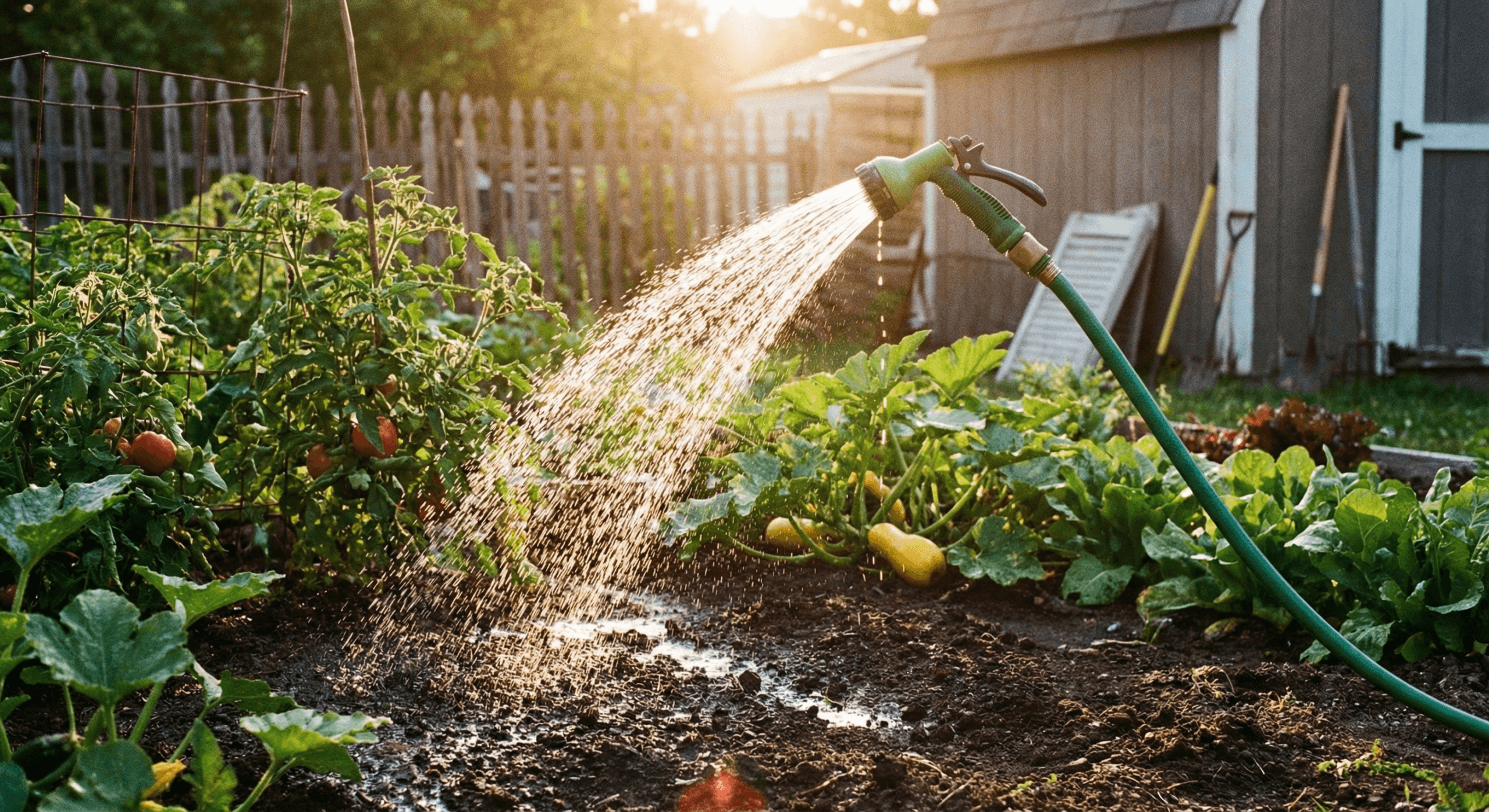
If there’s one skill that separates good gardeners from great ones, it’s watering. The RHS watering guidelines cover efficient watering techniques for gardens of all sizes… It sounds simple — just add water, right? But there’s real science and art to it. Overwatering drowns roots and invites disease. Under-watering stresses plants and reduces yields. Get watering right, and everything else in your garden becomes easier. In this comprehensive expert guide, we’ll cover everything you need to know.
Shop Related Products: Watering Can
For more on essential summer gardening:, see our guide.
For more on essential mulching: single, see our guide.
Related: Garden Planning 101: Mapping Out Your Garden Space Natural Pest Deterrents: Plants That Repel Pests
Looking for quality gardening tools and supplies? Browse our recommended garden products — hand-picked by the GardenWizz team.
Expert: The Golden Rule of Watering
Water deeply and less frequently, not a little bit every day.Deep watering encourages roots to grow down into the soil where they can access moisture and nutrients more reliably. RHS soil testing guide has detailed guidance on this topic. The RHS soil testing guide provides detailed advice on understanding your soil type… Shallow, frequent watering trains roots to stay near the surface, making plants more vulnerable to drought.
Target: 1-2 inches of water per week for most established garden plants.This can come from rain or irrigation combined. RHS watering guidelines has detailed guidance on this topic.
How to Check If You’re Watering Right
The touch test: Stick your finger into the soil 2-3 inches deep. If it feels dry, water. If it’s moist, wait.
The wilting test: Some plants wilt in afternoon heat even when soil is moist. If a plant wilts in the morning, it genuinely needs water.
Signs of overwatering: Yellow leaves, soft stems, fungus gnats, mold on soil surface.
Signs of underwatering: Wilting, dry soil pulling away from container edges, brown crispy leaf edges, flower/fruit drop.
Watering Methods Compared
Hand Watering: Precise and lets you spot other garden issues. Water at the base of plants, not over foliage. Best for containers and small gardens.
Soaker Hoses: Inexpensive, efficient, wa.For more on mulching, RHS mulching advice has detailed guidance on this topic.the RHS mulching advice covers when and how to apply mulch for best results… Gardeners’ World has an excellent mulching guide that covers materials and techniques..ters at soil level reducing evaporation and disease. Lay along plant rows beneath mulch. Run 30-60 minutes per session.
Drip Irrigation: drip irrigation kit is the most efficient method for water-wise gardening — delivers water directly to root zones with up to 90% efficiency.Perfect for vegetable gardens and raised beds. RHS vegetables growing guide has detailed guidance on this topic. A typical vegetable garden uses 0.5-1 gallon per hour per emitter.
Sprinklers: Good for lawns but less precise. High evaporation and wets foliage (disease risk). Water early morning if using sprinklers.
Soil Type Matters
Sandy soil: Drains fast — water more frequently but for shorter durations. Add compost bin compost to improve soil water retention to improve water retention.
Clay soil: Drains slowly — water less frequently but more slowly to allow soaking in.
Loamy soil: The sweet spot — holds moisture but drains well.
When to Water: Timing Matters
Morning (6-10 AM): The BEST time to water. Water has time to soak in before evaporating. Leaves dry quickly.
Evening: Acceptable if watering at soil level. Avoid wet foliage overnight.
Midday: Generally wasteful due to evaporation. Avoid unless necessary.
Smart Watering Strategies
– Group plants by water needs: Don’t mix drought-tolerant plants with water-loving ones in the same irrigation zone.
– Mulch heavily: 2-4 inches of organic mulch reduces water evaporation by up to 50%. This is the single biggest thing you can do to reduce watering frequency.
– Water the soil, not the leaves: Most plants absorb water through roots.
– Check your system regularly: Inspect irrigation lines and emitters for leaks or clogs.
– New plantings need more water: Water every 1-2 days until established. Established plants can go longer between waterings.
– Containers need daily attention: Check pots every day in summer.
Signs Your Garden Needs Water NOW
– Plants wilting in the morning
– Soil pulling away from raised bed edges
– Leaf edges turning brown and crispy
– Blossom end rot on tomatoes (irregular watering causes calcium deficiency)
Master watering, and you’ll master gardening. Pay attention, water deeply, mulch heavily, and your plants will reward you with health, vigor, and bumper harvests!
Frequently Asked Questions
When is the best time to do this in the UK?
The ideal timing depends on your location and the specific task. Spring (March-May) is generally the busiest gardening season in the UK, though autumn is perfect for planting and soil improvement.
Do I need expensive equipment to get started?
No. A few quality basic tools — a trowel, hand fork, watering can, and gloves — will see you through most beginner gardening tasks.
Is this suitable for small spaces or containers?
Most gardening tasks can be adapted for small spaces. Containers, grow bags, and raised beds all work well on patios, balconies, and even windowsills.
Can beginners do this successfully?
Absolutely. UK gardens are full of challenging conditions — clay soil, shade, slugs — but beginners achieve great results every year by starting small and learning as they grow.


