
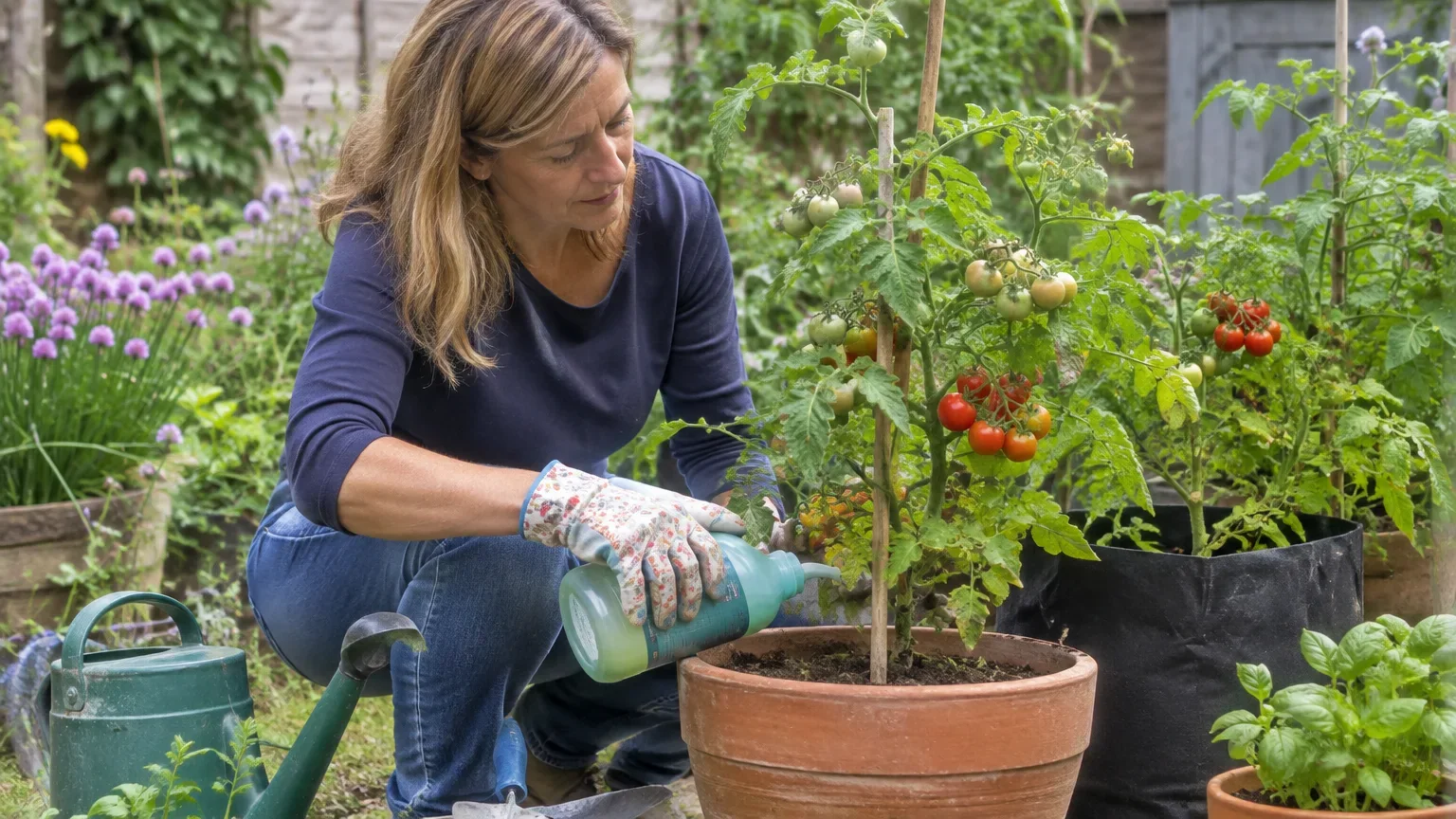
The best container for a tomato plant gives its roots enough space, drains freely and stays manageable to water through summer. A tomato grow bag can work well, but so can a substantial plastic pot, a deep planter or a suitably prepared recycled container. The important choice is not the smartest-looking pot: it is one that suits the tomato's growth habit and your growing space.
Choose the plant, container and support together. A compact patio tomato needs a different arrangement from a tall cordon trained up a greenhouse string, while a shallow grow bag needs different watering attention from a roomy pot.
At a glance
- Position: Choose a warm, sunny, sheltered spot and use an outdoor variety if the pot will stay outside.
- Containers: Start with a roomy pot with drainage holes, or follow the grow bag's planting instructions.
- Planting out: Harden plants off gradually and plant outdoors when the risk of frost has passed.
- Watering: Keep compost evenly moist as plants grow and let excess water drain away.
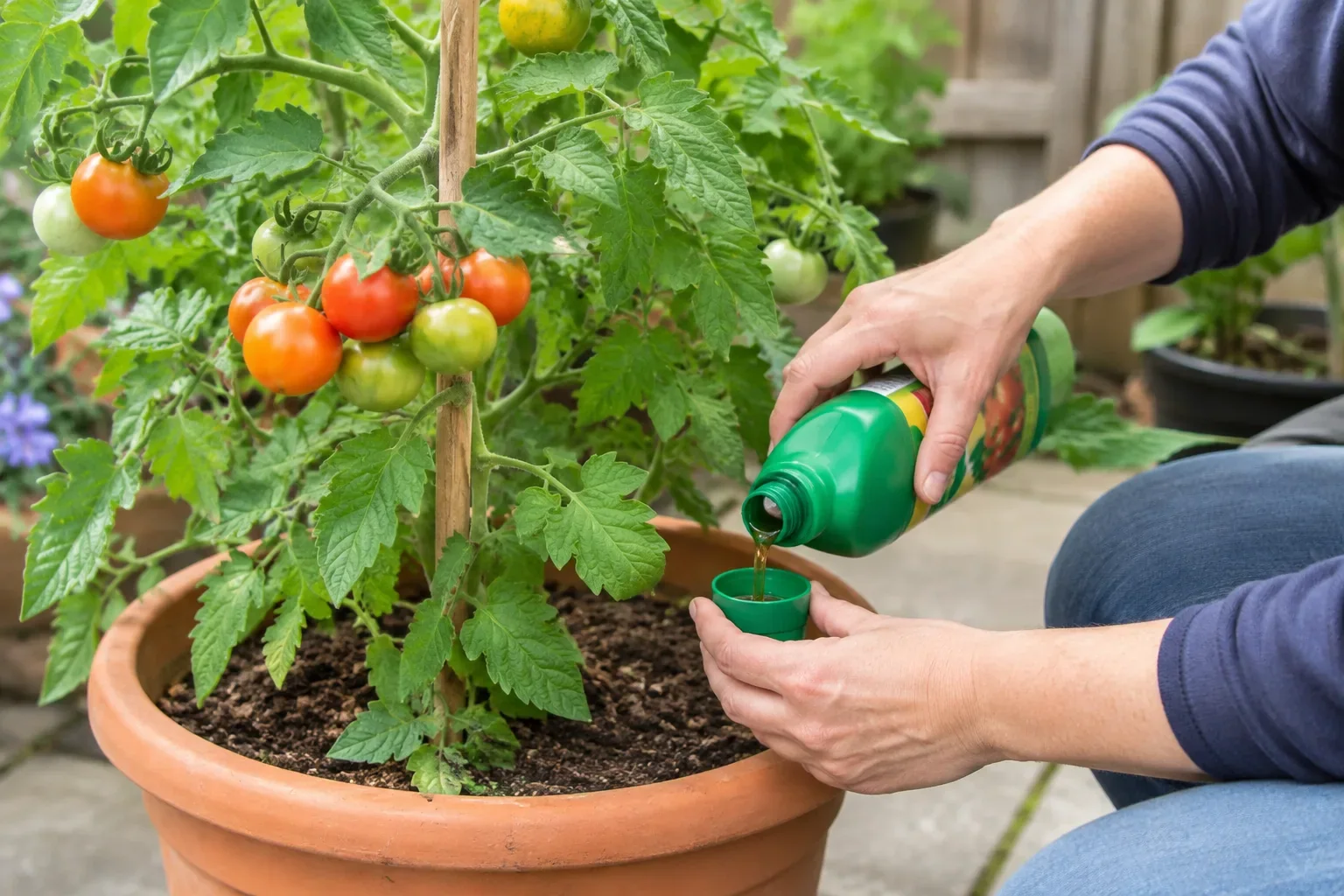
- Feeding: Use a high-potassium liquid tomato feed once the first fruits begin to swell. Follow the label.
Variety selection: match the tomato to its container
Fruit size does not reliably indicate plant size. A cherry tomato may grow into a tall, vigorous plant, so check the variety's growth habit before buying its pot.
Cordon, or indeterminate, tomatoes grow tall and are usually trained as a single main stem. They need a secure cane, string or other upright support. A large pot or a grow bag with a separate support frame is suitable, provided there is enough headroom.
Bush, or determinate, tomatoes form a more branching plant. They generally retain their side shoots and need room around the container, not simply above it. Fruit-laden branches may still need support.
Dwarf and patio varieties are better suited to smaller spaces, but their container requirements vary. Follow variety-specific guidance rather than assuming every compact tomato will thrive in a small decorative pot.
Trailing tomatoes suit large hanging baskets or raised containers where stems can hang freely. Check the loaded weight of the container and the suitability of its bracket or stand before planting.
Site, soil and conditions
Choose the final position before filling a large pot: wet compost is heavy. Allow access for watering, feeding, tying in and picking, and leave enough space between plants for their foliage to develop without becoming tightly packed.
A sunny patio, sheltered courtyard or greenhouse can all work. Exposed balconies need particular care over container stability and supports. Do not assume a heavy pot alone will prevent a tall tomato from catching the wind.
Use fresh, good-quality peat-free multipurpose or vegetable-growing compost suitable for containers. Ordinary garden soil is not a straightforward substitute: its drainage and structure can be unsuitable in a pot.
Which container material is best?
Plastic pots are practical, relatively light and retain moisture better than unglazed terracotta. Check that large pots are sturdy and have unobstructed drainage holes.
Terracotta pots are attractive and substantial, but their porous sides allow moisture to escape. Expect closer watering attention in warm or windy weather.
Fabric containers are easy to store when empty, but can dry through their sides. Use them where you can check moisture regularly and where drainage will not damage the surface beneath.
Reused containers can be economical. Choose clean, sound containers that have not held hazardous substances, and make drainage holes before filling them. Avoid narrow-necked shapes that make the rootball difficult to remove afterwards.
Decorative outer pots are best treated as covers, not as drainage systems. Empty any water collecting around the inner pot.
Tomato grow bag or large pot?
Neither is automatically better. Choose according to the space available and the watering routine you can maintain.
| Container | Useful when | Main consideration | |---|---|---| | Large individual pot | You want to give each plant its own root space and watering attention | Needs enough compost and a secure support | | Tomato grow bag | You want a ready-filled option for a greenhouse or sunny sheltered position | Planting capacity varies; the limited compost needs careful moisture checks | | Deep trough or planter | You want several plants in one container | Judge usable volume per plant, not overall length | | Self-watering planter | You want a reservoir-based system | Follow its filling, establishment and feeding instructions | | Hanging basket | You are growing a suitable trailing variety | Watering access and safe loaded weight are essential |
A large pot is often the simplest choice for a single full-sized plant. For a full-sized tomato, a pot about 30 cm wide and deep is a useful starting point. Check the variety's needs and use a larger pot for vigorous growth.
A grow bag is convenient, but do not plant extra tomatoes simply because another planting hole will fit. The plants share a finite amount of compost. Equally, avoid combining several different growing methods without planning them: bottomless pots placed into grow bags change the planting arrangement and need appropriate filling and watering.
Preparation: what you need

Gather:
- Your chosen tomato plants and containers.
- Fresh peat-free container compost, or purpose-made grow bags.
- Canes, strings or a suitable support frame where required.
- Soft plant ties.
- A watering can or hose with a gentle flow.
- Tomato fertiliser for use once fruit begins swelling.
- Pot feet or another suitable way to keep drainage outlets clear, if needed.
Clean previously used pots and remove old roots and debris. Check supports, ties and drainage before planting.
Sowing or planting: set up the container step by step
These steps are for young tomato plants ready to move into their final containers. Indoor sowing is an earlier, separate stage; outdoor direct sowing is not the usual reliable approach for UK container tomatoes.
-
Prepare the position and drainage.
Stand the pot on a firm, level surface. Check that water can escape through its holes. On paving, raise it slightly if the outlets would otherwise sit flush against the surface. Do not add a layer of crocks or gravel as a substitute for effective drainage holes. -
Prepare the compost or grow bag.
Moisten dry compost before planting so it is evenly damp rather than saturated. Fill pots while leaving watering space below the rim. For a grow bag, loosen compacted compost gently and follow its instructions for orientation, drainage openings and planting holes. -
Install the main support.
Position a cane or frame before the roots spread. For tall cordons, secure the support to something dependable rather than relying on a shallow bag to anchor it. Greenhouse strings need a suitably strong fixing above. -
Plant without crowding.
Water the young plant if its rootball is dry, then ease it from its nursery pot. Set it into a hole large enough to accommodate the roots and firm gently. Tomatoes can form roots from buried stem, so a slightly deeper planting can suit a leggy plant; keep foliage clear of the compost. -
Water in and check the arrangement.
Water thoroughly, allowing excess to drain. Add a loose tie where needed and label the variety. Check that you can reach the compost for watering without constantly wetting or disturbing the foliage.
Care and troubleshooting
Check moisture frequently, particularly once plants are large or fruiting. Feel the compost rather than watering solely by the calendar. Water thoroughly when needed, then allow excess to drain; do not keep roots standing in collected water.
Grow bags and small containers can dry quickly in hot weather. Larger pots offer more leeway, but none is maintenance-free. Reservoir planters require their own checks: follow the system's instructions rather than assuming the reservoir always supplies a newly planted rootball.
Begin using a high-potassium liquid tomato fertiliser once the first fruits start to swell. Follow the label for dilution and feeding frequency. Fresh compost's starter nutrients do not last indefinitely, but extra-strong feed is not a remedy for poor growth.
Train cordons and remove their side shoots as required. Do not apply that routine automatically to bush or trailing varieties.
Common mistakes and genuine problems
- Repeated wilting: Check moisture below the surface. Dry compost is one possibility, but persistently wet roots or other root problems can also cause wilting.
- Blossom-end rot: A dark, sunken patch at the blossom end of fruit is associated with disrupted calcium supply, often linked to uneven water availability. Improve watering consistency rather than automatically adding calcium.
- Splitting fruit: Sudden changes in water availability can contribute. Avoid allowing compost to become very dry before a heavy watering.
- Yellow leaves or weak growth: Check watering, drainage, feeding and root space before deciding on a cause. Yellowing alone is not a diagnosis.
- An unstable plant: Improve the support anchorage. Adding a taller cane to an inadequately supported grow bag does not solve the underlying problem.
UK seasonal timing
Tomatoes raised from seed are usually started indoors in spring. Final planting depends on the growing destination: an unheated greenhouse is not frost-free simply because it is under glass.
Before outdoor planting, harden plants off gradually through increasing exposure to sheltered conditions. Keep them protected from frost and cold winds. Plant out when local frost risk has passed and conditions are suitable, not on a fixed national date. Northern, Scottish, upland and exposed gardens may need to wait longer than sheltered southern sites.
During summer, review watering as the canopy expands. Ventilate greenhouses in warm conditions. Towards autumn, outdoor ripening slows as temperatures and light decline; protect plants from impending frost or pick suitable fruit to finish ripening indoors.
Harvest and storage

Pick tomatoes as they reach their variety's ripe colour and feel, supporting the truss while harvesting. Regular picking also makes it easier to inspect fruit and ties.
Keep ripe tomatoes at room temperature for best eating quality and use them promptly. Sound, mature unripe fruit can be brought indoors to ripen; discard fruit showing rot rather than storing it with healthy tomatoes.
Related growing guides
For the next stage, explore GardenWizz guides to growing tomatoes from seed, training cordon tomatoes, watering greenhouse crops and recognising common tomato problems. Keep variety-specific pruning advice alongside this container guide, especially when growing bush and trailing plants.
Frequently asked questions
Can I grow tomatoes in a bucket?
Yes, if it is clean, suitably large and has effective drainage holes. Check its previous use and actual capacity; a small household bucket may provide too little root space for a vigorous full-sized tomato. A bucket that has held paint, oil or other chemicals is not suitable, even after washing.
How many tomato plants should I put in a grow bag?
Follow the bag's instructions, taking account of compost volume and the varieties you are growing. Do not add plants simply because there is spare surface space: their roots must share the compost beneath. A bag with a small volume of compost will support fewer plants than a deeper, larger one.
Do tomato pots need gravel in the bottom?
No. Use suitable container compost and clear drainage holes instead. Gravel does not compensate for a container that cannot drain, and a gravel layer can raise the water table within the pot rather than improving drainage.
Can I reuse tomato compost next year?
For this method, start tomatoes in fresh compost rather than relying on exhausted material from the previous crop. Old compost from healthy plants can be used elsewhere in the garden as a soil improver; material associated with suspected disease needs separate consideration.
Useful tools and supplies
Affiliate links may earn GardenWizz a commission at no extra cost to you.