
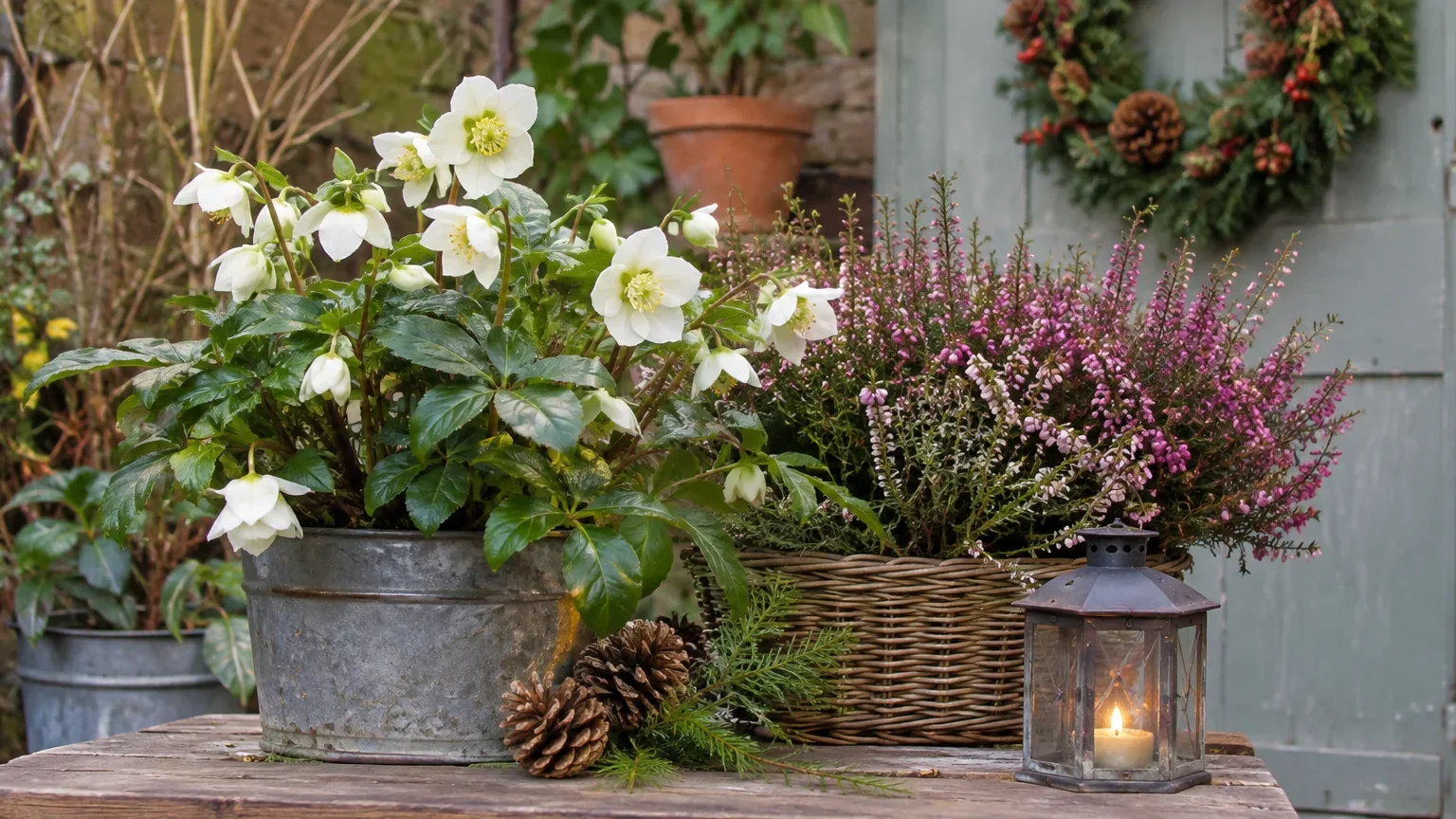
A Christmas garden does not need to compete with the tree indoors. A well-planted pot beside the door, a wreath of gathered greenery and a few carefully placed lights can create a welcoming entrance while keeping living plants at the heart of the display.
For December 2026, plan around the conditions in your garden rather than a fixed festive timetable. Mild spells offer opportunities to plant; frozen compost, saturated soil and strong winds call for a pause. Choose plants that will suit their position beyond Christmas, and make decorations easy to dismantle, reuse or compost.
The UK garden in December
December gardening is as much about protecting and maintaining as planting. Daylight is limited, growth is slow, and containers can be either persistently wet or unexpectedly dry beneath a porch.
Winter flowers are also weather-dependent. Christmas roses may flower around Christmas, but their name is not a guarantee. Skimmia often provides coloured flower buds rather than open flowers in December, while the performance of winter violas varies with temperature and exposure.
For a display that looks finished immediately, buy healthy plants already carrying the flowers, buds, foliage or berries you want. Do not rely on small plants filling gaps before Christmas.
Start with three priorities:
- Make the entrance safe: clear slippery leaves, check pot stability and keep steps unobstructed.
- Prepare the planting: choose suitable containers, check drainage and match plants to the position.
- Add decorations last: use removable details that do not bury crowns, obstruct drainage or damage branches.
What to plant now: festive container choices
Keep the planting simple. One evergreen for structure, a flowering plant and some trailing foliage are usually enough. Choose plants with compatible compost, moisture and light requirements rather than combining them solely for colour.
- Skimmia japonica: glossy foliage and, on some cultivars, conspicuous winter flower buds. Suits sheltered partial shade and acidic growing conditions; use ericaceous compost in containers.
- Winter-flowering heathers such as Erica carnea and Erica × darleyensis: low-growing flowers and fine evergreen foliage. Choose these winter-flowering types rather than assuming all heathers flower in winter; give them good drainage.
- Hellebores: flowers or developing buds above handsome foliage. Flowering time varies by species and cultivar; buy in flower if Christmas colour is essential.
- Winter-flowering violas: colour around the edge of a pot. Flowering can slow in cold weather; avoid persistently wet compost.
- Small evergreen shrubs or conifers: a permanent outline for lights or simple ornaments. Check eventual size and hardiness; a small plant is not necessarily a dwarf variety.
- Ivy: trailing evergreen foliage. Choose a compact cultivar and keep vigorous growth under control.
For an uncomplicated doorstep pot, combine winter-flowering violas with a compact ivy in multipurpose container compost. Alternatively, let a skimmia stand alone in an ericaceous planting, dressed with a reusable ribbon around the outside of the pot.
Berried plants can provide instant colour, but berries are not assured every year. Some hollies need a compatible male plant nearby for female plants to fruit. If berries are central to this year's display, choose a plant already carrying them.
December is generally a buying-and-planting opportunity for festive containers, not a time to sow plants for Christmas colour. Hardy container-grown plants can be planted during suitable mild spells, provided neither their rootballs nor the receiving compost are frozen.
How to plant a Christmas doorstep container
1. Choose the position and pot together
Check whether the entrance is sunny, shaded, exposed or sheltered from rain. Avoid placing a pot where an opening door will catch it or where runoff will regularly cross a walking route.
Use a stable container with drainage holes. If you use a decorative outer pot, make sure it cannot hold water around the planted inner container. Frost-resistant containers are useful outdoors, but check the material and manufacturer's guidance rather than assuming every decorative pot will withstand freezing conditions.
2. Prepare the compost and plants
Use fresh container compost suited to the plants. Keep acid-loving skimmias in ericaceous compost rather than adding them to an unsuitable mixed planting.
Water dry rootballs before planting and allow them to drain. Remove nursery pots carefully, loosening tightly circling roots gently where necessary.
Do not add a layer of stones or broken pots as a substitute for drainage holes. Keep the holes clear and use pot feet where needed to allow water to escape freely.
3. Arrange before planting
Set the plants in their nursery pots first and view the arrangement from the approach to the house. Put the tallest plant where it will not hide smaller flowers.
Plant for a reasonably full winter display, but do not force rootballs together or pile compost over crowns. Keep plants at approximately their previous planting depth, with space beneath the container rim for watering.
4. Water, then decorate
Firm the compost gently and water to settle it. Allow excess water to drain.
Finish with a few clean cones or a ribbon tied around the container. Keep loose decorations clear of plant crowns and remove anything that becomes mouldy or traps persistent moisture against stems.
Treat a closely planted festive pot as a temporary arrangement. In spring, separate plants that need more room and move them into suitable long-term positions.
Natural wreaths and sustainable festive displays
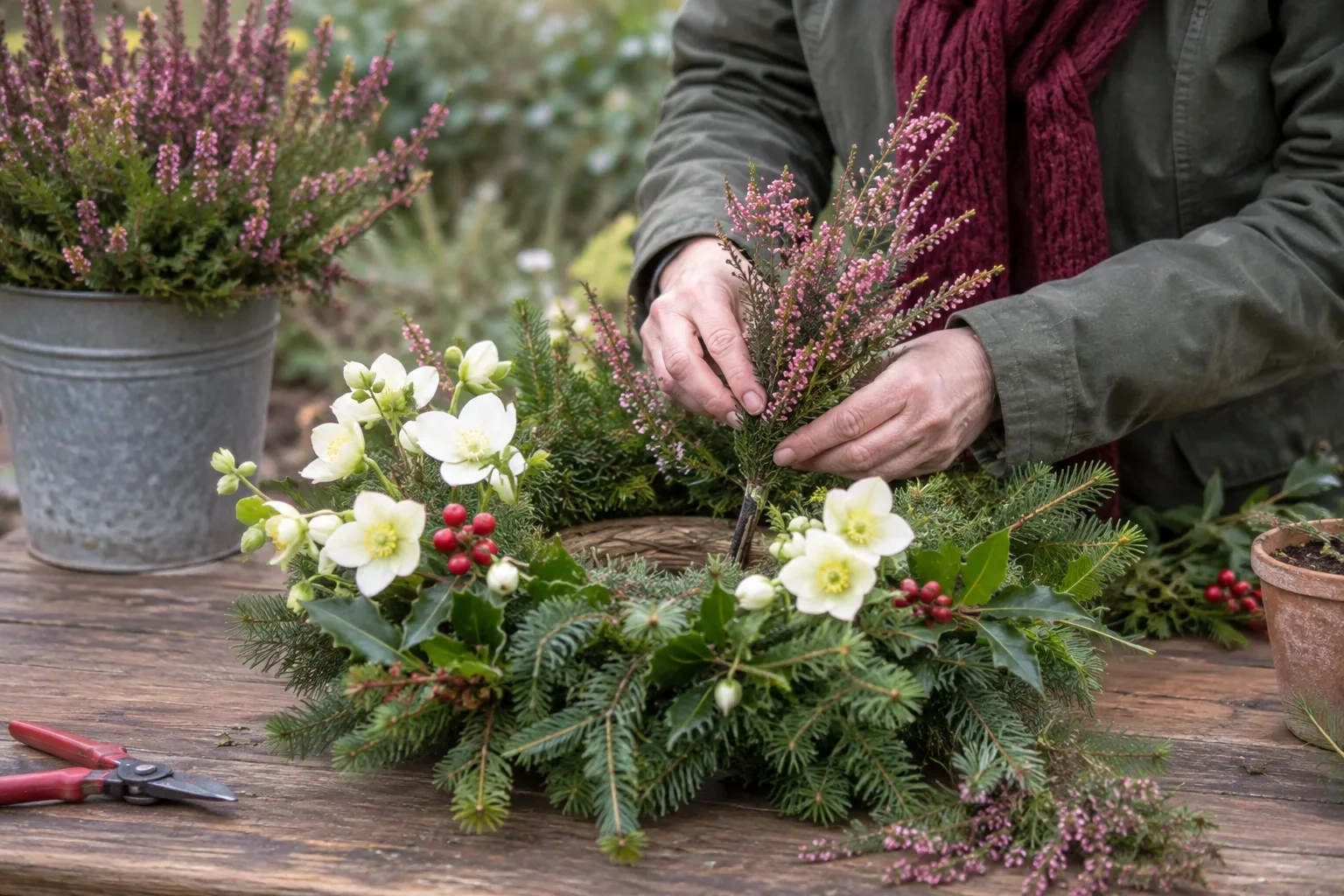
A reusable wreath frame gives you a practical starting point. Add small bundles of prunings, securing each firmly with reusable wire or suitable twine and covering the previous bundle's stems as you work around the frame.
Useful materials include ivy, holly and conifer foliage from plants you can identify and are entitled to cut. Take modest amounts, retain the plant's shape and avoid stripping branches bare. Do not cut someone else's plants or assume material in parks and woodland is available to collect.
Leave plenty of berry-bearing growth in the garden for birds. Fallen cones, saved ribbons and decorations already in storage can provide detail without taking more living material.
For a lower-waste display:
- Avoid floral foam, glitter sprays and artificial snow on natural materials.
- Keep wire, ribbons, batteries and plastic decorations removable.
- Use locally grown foliage where practical.
- Compost suitable undecorated plant material once the display is dismantled.
Hang wreaths away from radiators, fires and other heat sources. Outdoor foliage generally lasts better in a cool, sheltered position than in a warm room. Use battery-powered candles rather than a naked flame beside dry greenery.
Caring for a living Christmas tree
A living tree is a longer-term gardening commitment, not simply a cut tree with roots attached. A container-grown tree has been grown in its pot; a recently lifted tree sold as potted may have lost substantial roots.
Before buying, check the species, likely mature size and whether you have a suitable outdoor home for it. Most familiar Christmas-tree conifers eventually become substantial trees.
Keep the tree outdoors until close to Christmas, then move it through a cool, sheltered space if possible. Indoors, choose a bright position away from radiators, fires and heated air.
Check the compost regularly and water when needed, allowing excess water to drain. Do not leave the pot standing in water. Keep its indoor stay brief—ideally no longer than about ten days—and move it back through a cool transitional space before returning it outdoors.
After Christmas, maintain watering according to conditions. Plant out only when the ground is workable, neither frozen nor waterlogged, and the species suits the site. A tree kept in a container will need ongoing watering and eventual repotting; the original pot is not a permanent home.
December care and maintenance
Check water rather than following a schedule
Feel the compost before watering. Rain may not reach pots beneath porches, while exposed containers may remain wet for days. Water when the rootball needs it and avoid watering frozen compost.
Routine feeding is usually unnecessary for hardy plants making little growth in December. Resume feeding according to the plant's requirements when active growth returns.
Keep displays tidy without over-clearing
Remove collapsed flowers and decaying leaves from pots. Clear wet leaves from steps, but retain undisturbed habitat elsewhere where practical. Leave useful seedheads and some shelter beneath hedges rather than making the whole garden spotless.
Keep bird feeders clean and refresh drinking water. During freezing weather, replace ice with fresh water; do not add salt or antifreeze.
Check after wind and heavy weather
Inspect hanging decorations, container stability and trailing cables. Gently remove heavy accumulations of snow from vulnerable evergreen branches where you can do so safely. Avoid knocking or bending frozen stems.
Common mistakes and festive safety
Drooping does not always mean thirst. Both dry roots and waterlogged compost can cause wilting. Check moisture and drainage before adding water.
Yellow leaves are a symptom, not a diagnosis. Shade, root problems, unsuitable compost and other stresses can look similar. Review the plant's position and growing conditions before reaching for a treatment.
Indoor and outdoor festive plants are not interchangeable. Poinsettias are tender houseplants, not December doorstep plants. Florist's cyclamen also need different treatment from hardy garden cyclamen.
Decorative does not mean edible. Holly, ivy, mistletoe, yew and hellebores include plants harmful if eaten. Keep unidentified foliage, berries and fallen plant material away from young children and pets; do not use garden greenery to garnish food.
Use only lights and electrical equipment rated for their intended location, following the manufacturer's instructions. Keep cables away from walking routes and avoid tightly winding lights around growing stems.
Adapt the display to local weather
In mild, sheltered gardens, planting opportunities may continue through December. Colder northern, Scottish, upland and exposed sites may have longer periods when containers or ground remain frozen. Coastal gardens can be mild yet demanding because of wind and salt exposure.
There is no reliable fixed regional delay: respond to the conditions around the roots and the forecast for your site.
During severe cold, move manageable pots into shelter where appropriate, keeping hardy outdoor plants outside rather than bringing them into a heated room. In prolonged rain, concentrate on drainage. In strong winds, simplify tall arrangements and remove unstable decorations.
The most successful Christmas garden is not necessarily the most elaborate. A healthy evergreen, a few seasonal flowers and thoughtfully reused decorations can welcome visitors now—and leave you with plants worth keeping when Christmas is over.
Useful tools and supplies
Affiliate links may earn GardenWizz a commission at no extra cost to you.