

Basil grows well in pots, provided you give it warmth, good light and careful watering. A sunny windowsill, greenhouse or sheltered patio can all work, but this tender herb is less forgiving of cold nights and wet compost than many Mediterranean herbs.
For most UK gardeners, the simplest approach is to start basil indoors in spring, then keep it under cover or move it outside once summer conditions are suitable. Choose a container you can move easily, harvest the shoot tips regularly and aim for steady leafy growth rather than one large crop.
At a glance
- Position: Warm, bright and sheltered; outdoor basil needs protection from cold winds and frost.
- Compost: Peat-free multipurpose compost in a container with drainage holes.
- Sowing: Start indoors in spring. Outdoor sowing is only suitable once conditions are reliably warm and frost-free.
- Planting out: Harden off indoor-grown plants first, then move outside after the last frost when nights are consistently mild.
- Harvest: Pick leafy shoot tips once plants are established, cutting just above a pair of leaves.
- Winter: Common sweet basil is usually grown as an annual in the UK; outdoor plants will not withstand frost.
Variety selection: which basil suits a pot?
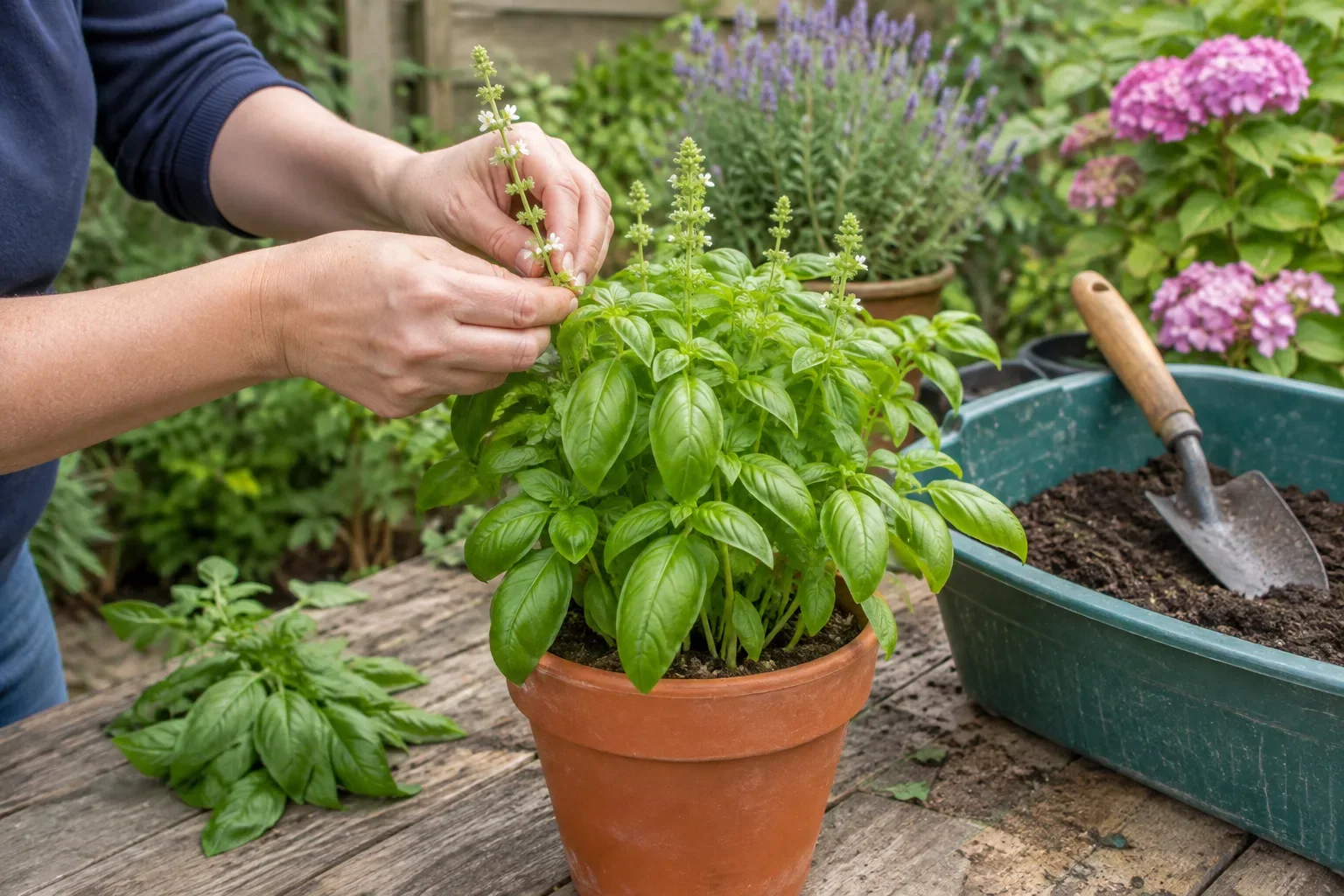
Common sweet basil, Ocimum basilicum, is a useful starting point. Its broad, aromatic leaves suit salads, sauces and pesto, and it grows happily in containers when conditions are warm enough.
Choose according to how you intend to use it:
- Genovese-type sweet basil: A good choice for classic basil flavour and generous leaves.
- Greek or bush basil: Typically compact, with smaller leaves; useful where windowsill space is limited.
- Purple-leaved basil: Adds colour to containers as well as edible leaves. Give it a bright position.
- Thai basil: Offers a more anise-like flavour for cooking. It still needs warmth and frost protection.
Check the packet or plant label for the variety's eventual size. Not all basils remain compact, and unusual perennial types should not be treated as hardy outdoor herbs simply because they are described as perennial.
For a first crop, choose a sweet or compact bush basil rather than trying to accommodate several different growing habits in one pot.
Site, compost and container preparation
Basil needs a brighter position than a dim kitchen corner. Indoors, choose a sunny windowsill away from cold draughts. In a greenhouse or conservatory, provide ventilation during hot weather and watch for compost drying quickly.
Outdoors, use a sunny, sheltered spot rather than an exposed balcony edge. A position beside a sunny wall can work well, provided the pot is not left standing in water.
Basil does not need the lean, gritty conditions used for some woody Mediterranean herbs. Use fresh peat-free multipurpose compost that retains moisture but drains freely.
What you will need
- Basil seed, young plants or a healthy shop-bought pot
- Small pots or a seed tray for sowing
- A larger container with drainage holes
- Peat-free seed compost for sowing, or a suitable fine-textured multipurpose compost
- Peat-free multipurpose compost for potting on
- Labels, a watering can with a fine rose and clean scissors
- A propagator or clear cover if you need help maintaining warmth during germination
For one young sweet basil plant, a pot around 15–20cm across is a practical starting container. Vigorous plants may need a larger pot later. If several plants share a trough, leave room for each to branch instead of packing them tightly together.
There is no need for a layer of stones in the bottom. Clear drainage holes and suitable compost are what matter.
How to sow and plant basil in pots
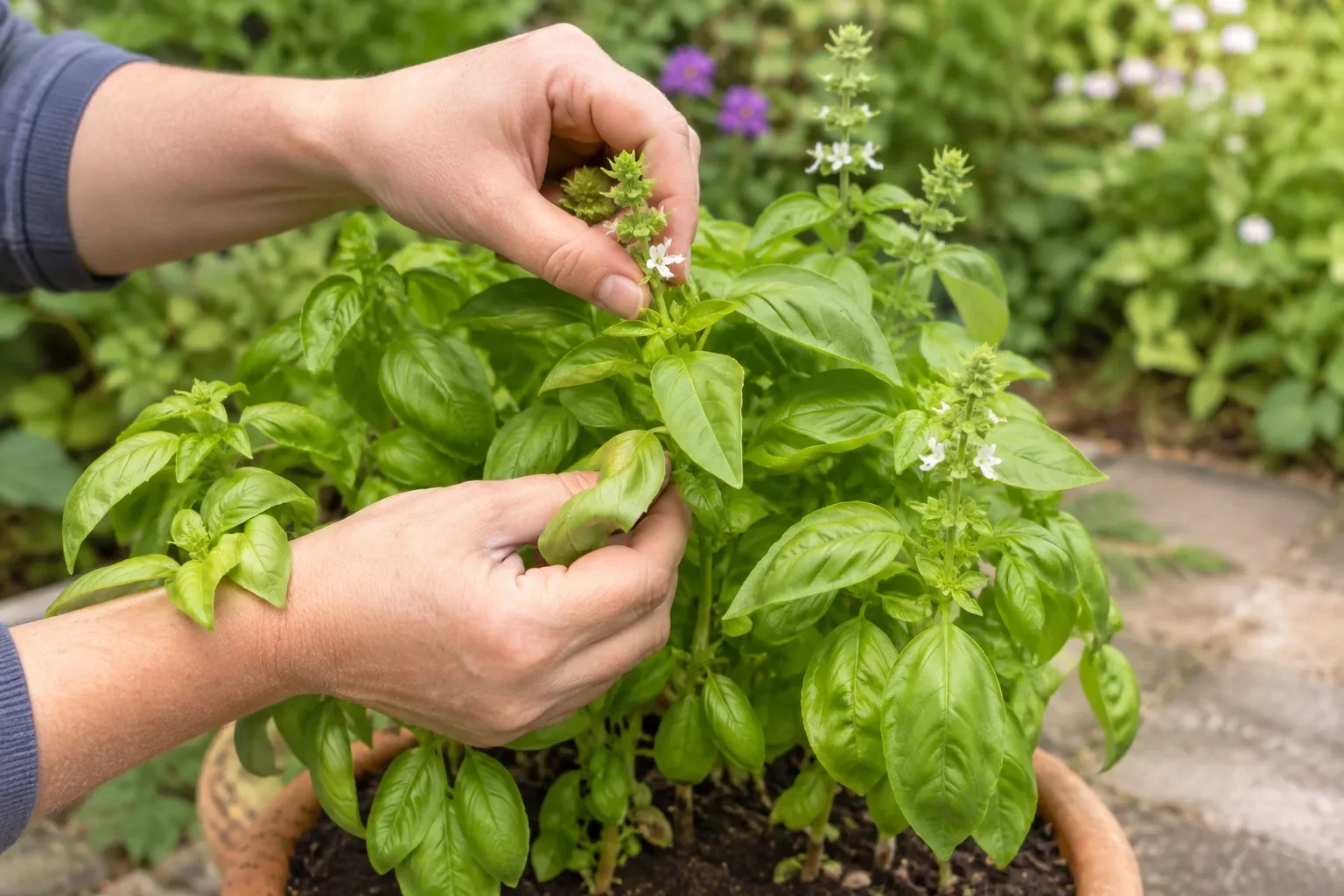
Start from seed or buy plants?
Seed offers a choice of varieties and makes repeat sowing straightforward. Young nursery plants give you a head start.
Supermarket basil can also be grown on, but a typical pot contains many seedlings crowded together. Treat it as a group of young plants rather than assuming it is one established specimen.
Step-by-step planting
-
Prepare the sowing pot. Fill a clean small pot or seed tray with sowing compost. Firm it gently and water, allowing excess water to drain before sowing.
-
Sow thinly and cover lightly. Scatter the basil seed sparingly over the surface and add a light covering of fine compost, following the packet's depth guidance. Avoid burying it deeply or sowing a dense mat.
-
Keep warm and evenly moist. Place the pot somewhere warm and bright, but avoid fierce sunshine beneath a clear cover. Keep the compost moist rather than saturated. Remove the cover once seedlings emerge and ensure they have plenty of light.
-
Pot on when seedlings are manageable. Once seedlings have developed true leaves beyond their first seed leaves, ease them apart carefully. Handle them by a leaf rather than squeezing the stem. Move them into individual small pots or well-spaced small groups, keeping them at their previous planting depth.
-
Move established plants into their growing containers. When roots are filling the small pot, transfer the basil into a slightly larger container of fresh multipurpose compost. Water it in and allow it to drain. Avoid putting a tiny seedling straight into a very large volume of wet compost.
-
Harden off before placing outdoors. Introduce indoor-grown plants to sheltered outdoor conditions gradually. Start with mild daytime spells, bringing them back under cover at night. Leave them out permanently only after frost risk has passed and nights are reliably mild.
You can sow directly into the final outdoor container in warm summer conditions. However, indoor sowing is generally more dependable in the UK, particularly where summers start slowly.
Growing on supermarket basil
Water the original pot if it is dry, then slide out the rootball and gently divide it into a few manageable clumps. Repot these separately into fresh compost, disturbing the roots as little as practical.
Keep the divisions warm and out of harsh sun while they settle. Do not combine substantial root disturbance with a heavy harvest; allow fresh growth before picking generously.
Care and maintenance
Water according to the compost
Check pots frequently in warm weather, but do not water automatically every day. Feel the compost surface and lift the pot to judge its weight. Water when the surface begins to dry, before the whole rootball becomes parched.
Apply water to the compost and let surplus drain away. Empty saucers and decorative outer pots rather than leaving the roots standing in water.
Small pots may dry rapidly on a sunny windowsill. Conversely, compost can remain wet for a long time during dull, cool weather. Adjust watering to those conditions.
Feed plants that are actively growing
Fresh multipurpose compost normally contains some fertiliser. Once that initial supply is used, feed established, actively growing basil with a suitable balanced liquid fertiliser, following its label.
Do not try to correct cold damage or waterlogged roots by adding more feed. Restore suitable growing conditions first.
Pinch out for a bushier plant
Once basil is established and growing strongly, pinch or snip off the growing tip just above a pair of leaves. Subsequent shoots can be harvested in the same way.
Remove developing flower spikes if your priority is a continuing supply of leaves. If you want flowers for visiting insects, allow a separate plant or a few shoots to bloom.
Common mistakes and troubleshooting
Yellow leaves
Yellowing is a symptom, not a diagnosis. Check whether the compost is persistently wet, the pot drains poorly, the plant is cold or an established plant has exhausted its feed supply.
Correct the most likely cause rather than watering and feeding more by default. A few ageing lower leaves are less concerning than widespread yellowing with stalled growth.
Wilting despite wet compost
A wilted basil plant does not always need water. Cold conditions and damaged or waterlogged roots can also leave it drooping.
Check the rootball before reaching for the watering can. If it is already wet, let it drain and improve the growing conditions. Recovery depends on how much damage has occurred.
Blackened or damaged leaves
Cold exposure can damage basil, especially after an abrupt move outdoors. Bring affected plants into a warmer, bright position and remove badly damaged leaves once the extent is clear.
Marks may also have other causes. Inspect the whole plant and its conditions rather than assuming every dark patch is a disease.
Tall, sparse growth
Insufficient light, crowding and repeated removal of individual lower leaves can leave basil thin and leggy. Give it a brighter position, separate overcrowded plants where practical and harvest shoot tips above leaf pairs.
Pests
Check tender shoots and leaf undersides for aphids or whitefly, particularly under cover. Inspect new plants before placing them beside an existing collection, and remove small pest colonies by hand where practical.
Slugs and snails can damage outdoor basil. Check pots and their surroundings, especially after dark, and remove any you find.
Harvest and storage

Begin picking once plants are established and have enough growth to retain several healthy leaves after harvesting.
Cut leafy shoot tips just above a pair of leaves rather than stripping a stem bare. Take modest amounts from several shoots and let the plant regrow between larger harvests. If you regularly need handfuls for pesto, grow several pots.
Basil is best used fresh. For a surplus, freeze washed, dried leaves or chopped basil in small portions. Drying is possible, although the flavour differs from fresh basil. Avoid treating homemade basil-in-oil mixtures as shelf-stable preserves.
UK seasonal timing
Spring: Sow indoors where warmth and good light are available. Early sowings struggle on cold, poorly lit windowsills, so waiting for brighter conditions can be more useful than starting as early as possible.
Late spring to early summer: Harden plants off as conditions improve. Do not use a calendar date alone to decide when to leave them outside. In colder northern, Scottish, upland or exposed gardens, keep plants protected until local conditions are suitable.
Summer: Harvest regularly, check container moisture and make another sowing if you want replacement plants.
Autumn and winter: Bring healthy pots indoors before cold nights damage them. Give them your brightest suitable position and reduce watering as growth slows. Common sweet basil often declines in winter, so treat any continuing harvest as a bonus rather than expecting year-round outdoor-style growth.
Related growing guides
For a productive container herb collection, explore growing parsley and chives in pots alongside basil. Keep rosemary and thyme in separate containers so their watering needs can be managed independently.
Guides to windowsill herbs and hardening off seedlings are also useful companions to this project.
Frequently asked questions
Can basil stay outside all year in the UK?
Common sweet basil cannot tolerate frost and is normally grown as an annual. Move a healthy pot indoors before cold weather arrives, but remember that winter light levels can make continued growth difficult.
Why does supermarket basil die so quickly?
Crowding, changing light levels, cold and unsuitable watering can all contribute. Divide a healthy pot into smaller clumps, repot into fresh compost and keep it warm and bright while it establishes.
Should I pick basil leaves or cut the stems?
For regular harvesting, cut tender shoot tips just above a pair of leaves. This leaves foliage on the plant and allows further branching, unlike repeatedly stripping leaves from otherwise bare stems.
Can I grow basil on a kitchen windowsill?
Yes, provided the windowsill is warm and receives good light. Avoid cold draughts and water collecting inside decorative pots; if growth becomes stretched and pale, the position may be too dark.