

Flat-leaf parsley — Italian parsley — is the more robustly flavoured of the two parsleys commonly grown in Britain, and it takes well to container growing. A pot gives you control over drainage and position, keeps the plant within easy reach of the kitchen door, and sidesteps the heavy, wet soils that parsley dislikes. The main challenges are getting germination going, keeping the compost moist without waterlogging it, and harvesting in a way that keeps fresh leaves coming rather than stripping the plant bare.
At a glance
- Seed: Choose a packet labelled flat-leaf or Italian parsley if you want the flat-leaved type.
- Position: A bright spot in sun or light shade, sheltered from the worst drying wind.
- Pot: A container with drainage holes, filled with fresh peat-free multipurpose compost.
- Water: Keep the compost evenly moist while seed germinates, then water when the surface begins to dry.
- Picking: Cut a few outer stems near the base and leave the growing centre to make new leaves.
Variety selection
For flat-leaf parsley, look for named varieties rather than unlabelled seed. 'Giant of Italy' is a well-known large-leaved type, and 'Titan' is another commonly listed flat-leaf variety. Both are grown for their leaf rather than their root. Catalogue descriptions vary, so treat any claim about vigour or bolt resistance as a guide rather than a promise, and expect differences between seasons and growing conditions.
There is also a distinction worth knowing: flat-leaf parsley is generally considered to have the stronger, more savoury flavour of the two main leaf types, while curly parsley is the more decorative garnish. If you want the flat-leaf type specifically, check the packet carefully — some mixed or generic "parsley" packets are curly.
You can raise plants from seed or buy young plants. Seed is cheaper and gives more choice of variety; young plants save time and avoid the slow, sometimes patchy germination stage. Either is workable in a pot.
Site, soil and conditions
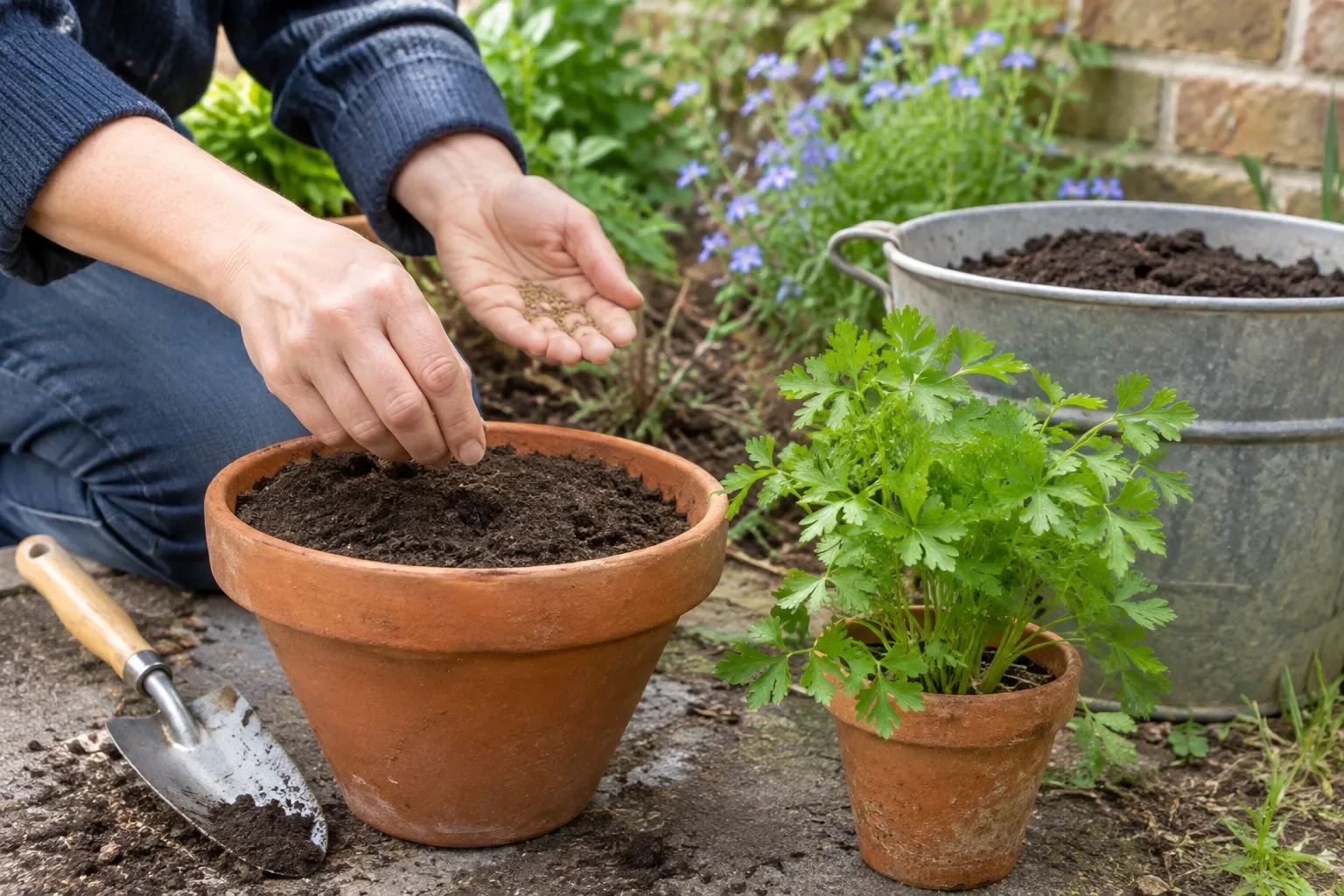
Parsley does best in a sunny or lightly shaded spot. In a UK summer, a position that gets sun for much of the day suits it well; in hotter, sheltered spots some light afternoon shade can help prevent the compost drying out too fast. A pot on a patio, by a door, or on a windowsill with good light all work.
Use a container with drainage holes — this is not optional. Parsley resents waterlogged roots, and a pot without drainage will hold water after rain. A reasonably deep pot gives the taproot room; a pot that is too shallow dries out quickly and restricts the plant. Choose a roomy container if you want several plants. Thin seedlings or space bought plants so each has room for leaves and roots.
Use a good-quality multipurpose or peat-free potting compost rather than garden soil. Garden soil in a pot becomes heavy, compacts and drains poorly. Potting compost also carries some initial nutrients. If you are reusing a pot, wash it out first.
How to sow or plant flat-leaf parsley, step by step

- Prepare the container. Fill a pot with peat-free multipurpose compost and water it gently before sowing. Let the excess drain away.
- Sow thinly. Scatter seeds with room to grow and cover lightly at the depth on the packet. Use a gentle spray or fine rose if the surface needs watering again.
- Keep the compost moist. Put the pot somewhere sheltered and bright. Parsley can take several weeks to come up, especially when conditions are cool.
- Thin once the seedlings are distinct. When true leaves develop, remove the weaker or crowded seedlings to give the remaining plants room. Hold a small seedling by a leaf if you need to move it.
- Pot up a young plant if starting with one. Water it before you lift it out. Set the rootball at its previous depth, fill around it, firm gently and water in. Gradually harden off a plant raised indoors before leaving it outside.
Care and troubleshooting
Watering is the central skill with potted parsley. Containers dry out faster than open ground, especially in wind and summer sun, so check the compost regularly — by touch, not by timetable. Water when the surface is starting to dry, and water thoroughly so it reaches the roots, letting excess drain away. In hot spells you may need to water more than once a day; in cool, wet weather, ease off. The aim is consistently moist compost, never sodden.
Feeding: potting compost contains some nutrients, but a plant cropped repeatedly through the season will benefit from occasional feeding. A balanced liquid feed at the strength and interval on the product label is the straightforward approach. Apply feed only as directed, and check watering and root space first if plants look weak.
Flowering and bolting: parsley is a biennial, typically flowering in its second year, and stress — drought, heat, root restriction — can push it to flower sooner. Once a plant runs to flower, leaf production declines and the leaves can turn tougher and more bitter. Pinching out flower stems as they appear can delay this, but it will eventually happen. For a continuous supply, sow a fresh pot each year rather than relying on an old plant.
Common problems in pots:
- Yellowing lower leaves often points to overwatering or poor drainage. Check the holes are clear and let the compost dry slightly between waterings.
- Wilting despite wet compost suggests the roots are sitting in waterlogged conditions and rotting. Improve drainage and reduce watering.
- Pale, weak growth can indicate too little light or overcrowding; thin and move to a brighter spot.
- Aphids can cluster on soft new growth. Check the undersides of leaves and growing tips, and deal with them promptly — a strong jet of water dislodges light infestations, and repeated checks keep numbers down.
- Powdery mildew can appear in still, humid conditions or where plants are crowded. Good air movement and sensible spacing help; remove affected leaves.
- Carrot fly can attack parsley as well as carrots. Keeping it in a pot does not remove the risk. If carrot fly is a recurring problem, fine insect mesh can help exclude adults.
Harvest and storage

Start harvesting once the plant is established and has a good number of leaves — taking a few leaves from a young plant too early sets it back. The reliable method is to cut whole outer stems low down, near the base, rather than plucking individual leaves from the growing tips. Cutting outer stems leaves the centre of the plant to keep producing. Take a modest share at a time and let the plant recover between pickings.
Use parsley fresh where you can — its flavour fades with drying. For short-term storage, stand stems in a glass of water in the fridge or wrap them loosely and keep them cool. For longer storage, chopping and freezing preserves more of the fresh character than drying, though texture changes. Flat-leaf parsley also freezes reasonably well in ice-cube trays with a little water, ready for cooking.
UK seasonal timing
Sowing indoors or in a warm, sheltered spot from early spring gives plants a head start; sowing outdoors in a pot can wait until the soil and air have warmed and the risk of hard frost has passed. In most of the UK, late spring is a sensible outdoor sowing window, with successional sowings through early summer for a longer supply. Autumn sowings are possible in mild areas or under cover, but growth slows as light and warmth fall away.
Through winter, a pot in a cold, wet, exposed position may struggle. Moving pots to a sheltered spot, or growing under cover, protects them from the worst of the weather. Remember that parsley is biennial: a plant that has overwintered will tend to flower the following season, so plan a fresh sowing each year to keep young, leafy plants coming.
Related growing guides
- Growing herbs in containers
- How to grow curly parsley
- Growing coriander in pots
- Making the most of a sunny patio for edible crops
- Watering and feeding container plants through the UK summer
Frequently asked questions
How long does parsley seed take to germinate?
It can take several weeks, so keep the compost evenly moist and give the pot time before assuming the seed has failed. Germination usually takes longer in cool conditions. Check the packet for the conditions recommended for your seed.
Should I cut the outer stems or the growing tips?
Cut some of the larger outer stems near the base once plants are established. Leave the small central leaves and shoots to grow, and pick lightly from a young plant.
Will a pot of flat-leaf parsley last another year?
Plants can survive winter in a sheltered spot, but established parsley often flowers in its second year. Sow a fresh pot if you want a steady supply of tender leaves as older plants go to seed.
Useful tools and supplies
Affiliate links may earn GardenWizz a commission at no extra cost to you.