
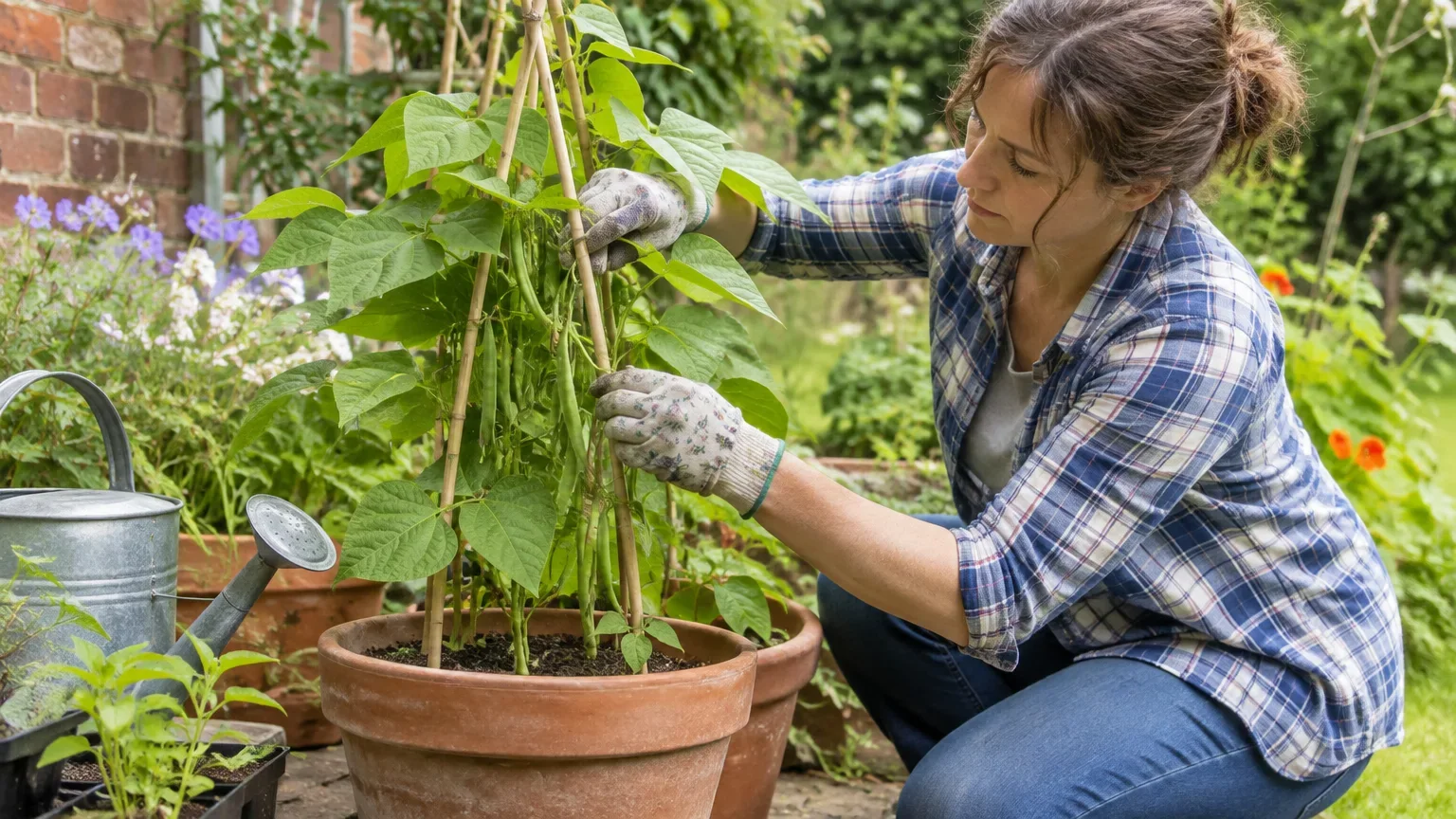
French beans are well suited to container growing, whether you want a few compact plants beside the kitchen door or a leafy tower of climbing beans on a sunny patio. Dwarf varieties need less support and suit smaller spaces; climbing varieties need a substantial pot and a sturdy framework.
The essentials are warmth, good drainage and steady moisture. French beans are frost-tender, so getting them outside at the right moment matters more than following a fixed planting date.
At a glance
- Position: A sunny, sheltered spot, protected from strong winds.
- Sowing: Sow indoors in spring for planting out after frost, or directly into the final container once the compost and weather are reliably warm.
- Containers: Use pots with drainage holes. Choose a pot 30–45cm wide for dwarf beans, or a heavy container at least 75cm wide and 45cm deep for climbing beans.
- Compost: Fresh, peat-free multipurpose compost suitable for container vegetables.
- Harvest: Pick pods regularly while young and tender, before the seeds become prominent.
Variety selection: dwarf or climbing French beans?
Check the seed packet carefully: French beans come in two distinct growth habits, and their container requirements differ.
Dwarf French beans
Dwarf varieties form compact, bushy plants. They are a practical choice for exposed patios, low growing spaces and gardeners who do not want to build a tall support.
Dwarf beans can trail over the edge of a pot. They tend to crop over a shorter period than climbing beans, so sow a second batch a few weeks after the first to extend the harvest.
Climbing French beans
Climbing varieties grow upwards around canes, strings or other suitable supports. They make good use of vertical space, but the combination of tall foliage and a container can become unstable in wind.
Choose a variety whose stated height suits your available support. Install that support before planting rather than trying to push canes through an established root system later.
Both types include green, purple and yellow-podded varieties. Pod colour does not tell you whether a bean is dwarf or climbing: check the growth habit on the packet. Most purple-podded varieties turn green when cooked.
Site, compost and container preparation

Choose the sunniest sheltered position available. Avoid a narrow rain shadow beneath an overhanging roof unless you can check watering closely, and leave enough room to reach the plants for picking.
For dwarf beans, choose a pot 30–45cm wide. For climbing beans, choose a heavy container at least 75cm wide and 45cm deep so it can support a tall frame and stay upright in wind.
Larger containers are generally easier to keep evenly moist than small ones. Make sure drainage holes are open, and do not leave outdoor pots standing in water-filled saucers.
Fill with fresh, peat-free multipurpose compost, leaving a watering gap below the rim. There is no need to add a layer of stones at the bottom. If the container will be difficult to move once filled, put it in its final position first.
What you will need
- Dwarf or climbing French bean seeds, or healthy young plants
- Suitable containers with drainage holes
- Peat-free multipurpose compost
- Small pots for indoor sowing, if using that method
- Canes or another secure framework for climbing beans
- Labels, a watering can and soft plant ties
UK seasonal timing
French beans need warm conditions and cannot tolerate frost. Separate the four stages of growing rather than treating "sowing time" as a single date.
- Indoor sowing: April or May is a common starting point. Sow only when you can provide a bright, frost-free growing position and expect to plant out before the plants become crowded in their pots.
- Hardening off: Gradually acclimatise indoor-grown plants to outdoor conditions before planting them permanently outside.
- Planting out: Often possible from late May into June, but only after the local risk of frost has passed and conditions are warm enough.
- Direct sowing: Usually from late May through June, with early July possible for suitable quick-maturing dwarf varieties where the remaining season allows.
In colder northern, Scottish, upland or frost-pocket gardens, wait for suitable conditions rather than applying a fixed delay to these dates. A sheltered coastal patio and an inland frost pocket can behave very differently.
Later sowings have less time to crop before autumn cold. Check the variety's sowing guidance, especially if you are starting climbing beans late.
Sowing or planting: step by step

Choose either indoor sowing followed by transplanting, or direct sowing into the final container. You do not need to do both.
- Prepare the final container and support. Fill the pot with compost and water it if dry. For climbing beans, arrange sturdy canes into a secure wigwam or position the container beside a suitable fixed climbing framework. Make sure the structure cannot easily topple.
- For an indoor start, sow into individual small pots. Sow one bean per pot, about 5cm deep, using pots with enough depth for early root growth. Water, allow excess water to drain, and keep somewhere warm and frost-free. Once seedlings emerge, give them plenty of light. Keep the compost moist rather than saturated.
- Alternatively, sow directly into the final container. Wait until the compost is warm and the risk of frost has passed. Sow about 5cm deep. Allow about 15cm between dwarf plants. For climbing beans, sow two seeds beside each cane and thin to one strong seedling per cane if both come up.
- Harden off indoor-grown plants. Begin on mild days in a sheltered spot, bringing plants back under cover at night initially. Gradually increase their exposure over roughly a fortnight, taking longer if the weather turns cold or windy. Do not leave tender plants outside through frost.
- Plant out without disturbing the roots unnecessarily. Water the young plants first, then ease each rootball from its pot. Plant at approximately the same depth as before, firm gently and water in. If roots are already circling densely, avoid delaying planting once outdoor conditions are suitable.
- Guide climbing shoots towards their supports. Help young shoots reach a cane or string, using a loose soft tie if needed. Keep ties clear of growing tips and check that they do not tighten around stems. Dwarf plants do not need a tall framework.
Protect newly emerging seedlings and fresh transplants from slugs and snails, and check them frequently during establishment.
Care and troubleshooting
Keep moisture steady
Check the compost regularly, especially in warm, windy weather and once plants are flowering and forming pods. Feel beneath the surface rather than judging by the dry-looking top alone.
Water thoroughly when needed, allowing excess water to drain. A light shower may wet the foliage without reaching much of the compost, particularly beneath a dense climbing plant. Conversely, persistently wet compost is a warning to check drainage and reduce watering.
Avoid letting containers dry out completely. Repeated wilting can interrupt growth and reduce cropping.
Feed according to growth and compost
Fresh multipurpose compost normally contains an initial supply of nutrients. Follow its guidance rather than adding fertiliser automatically at planting.
Once the first flowers open, give container-grown beans a high-potassium liquid feed, such as tomato feed, about every two weeks. Follow the label for dilution.
Manage climbing growth
Check supports and ties after strong winds. When climbing shoots reach the top of their framework, pinch out the growing tips rather than allowing a tangled mass to extend beyond reach.
Dwarf beans do not require routine pruning. Remove damaged or diseased material where necessary, but do not strip healthy leaves from plants.
Common problems and mistakes
Seeds fail to emerge. Cold, wet compost can cause beans to rot. Check the conditions before resowing; adding more water is not necessarily the answer. Mice may also take seeds.
Seedlings disappear or develop ragged holes. Slugs and snails are likely suspects, but inspect plants and the surrounding area rather than assuming the cause. Check sheltered places around pots and remove pests you find.
Leaves wilt despite damp compost. Wilting does not always mean drought. Waterlogged roots, root damage and other problems can produce similar symptoms. Check drainage and root-zone moisture before watering again.
Flowers fall without producing pods. Heat, dry compost and other growing stresses can interrupt pod set. Keep moisture more consistent and assess the plant's overall condition. French beans are largely self-pollinating, so a lack of visiting bees is not usually the first explanation.
Leaves become pale or yellow. Possible causes include depleted compost, excessive wetness and damaged roots. Look at watering, drainage and feeding history together rather than treating yellowing as a diagnosis.
Aphids gather on soft growth. Inspect growing tips and leaf undersides. Small colonies can be rubbed off or washed away carefully; avoid damaging tender shoots. If an infestation is heavy and you decide to use a pesticide, choose a product currently authorised for edible crops in the UK and follow its label exactly.
Harvest and storage
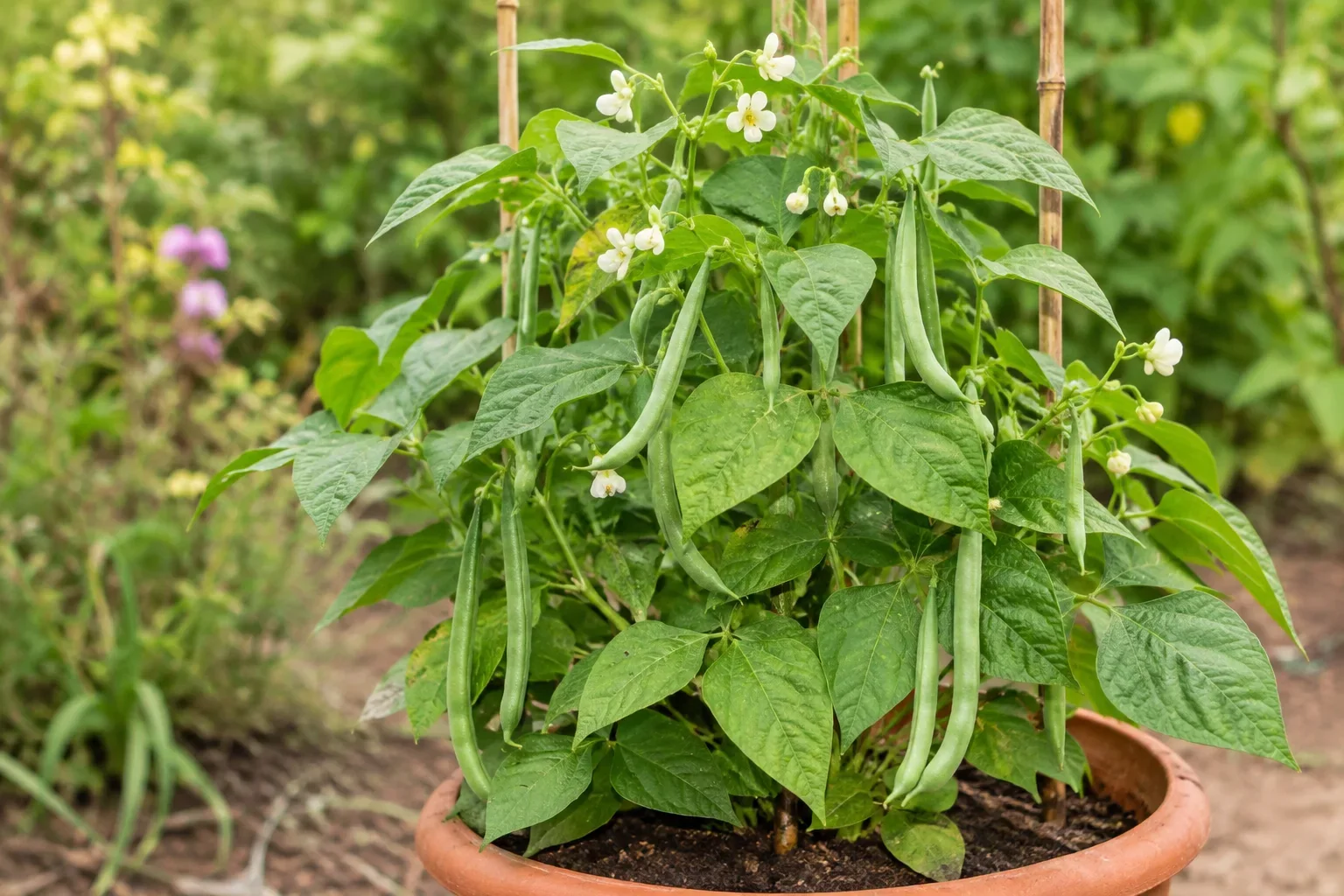
Pick French beans while the pods are tender and before the developing seeds make pronounced bulges. The ideal length varies with the variety, so use pod condition rather than a universal measurement.
Hold the stem with one hand and pick with the other, or snip pods off. Pulling roughly can damage stems and dislodge a lightly rooted container plant.
Check plants frequently once harvesting begins. Pods can hide behind leaves, especially on climbing varieties, and regular picking helps keep the plant producing rather than maturing seed.
Use beans promptly for the best texture. Keep unwashed pods in the fridge for short-term storage. For a larger surplus, blanch and freeze using an established food-preservation method. Cook French beans before eating.
When cropping finishes, remove the plants and supports. Compost healthy plant material; keep clearly diseased material out of a cool home compost heap. Refresh the growing medium before using the container for another demanding crop.
Related growing guides
For your next container project, consider dwarf peas for an earlier-season crop, salad leaves for smaller pots, or runner beans where you have space for another substantial climbing framework. Choose each crop's container, timing and support separately: their requirements are not interchangeable.
Frequently asked questions
Can I grow French beans in a grow bag?
Yes, but check the bag's compost volume and planting guidance rather than assuming it can support several vigorous plants. Dwarf beans are easier to accommodate; climbing beans need a secure support that does not rely on a lightweight bag for stability.
How many French bean plants can I put in one pot?
Use the variety's spacing guidance and the container's usable width and depth. A broad, deep tub can support more plants than a narrow tapered pot, but overcrowding makes watering harder. Allow about 15cm between dwarf plants and keep one climbing plant per cane.
Do French beans need full sun?
Choose a warm, sunny spot sheltered from strong winds. Put the pot somewhere you can reach easily for watering and picking.
Can French beans stay outside over winter?
French beans are grown as annual crops in the UK and are killed by frost. Clear finished plants in autumn and sow fresh seed the following spring, timing outdoor growth to local frost conditions.
Useful tools and supplies
Affiliate links may earn GardenWizz a commission at no extra cost to you.