
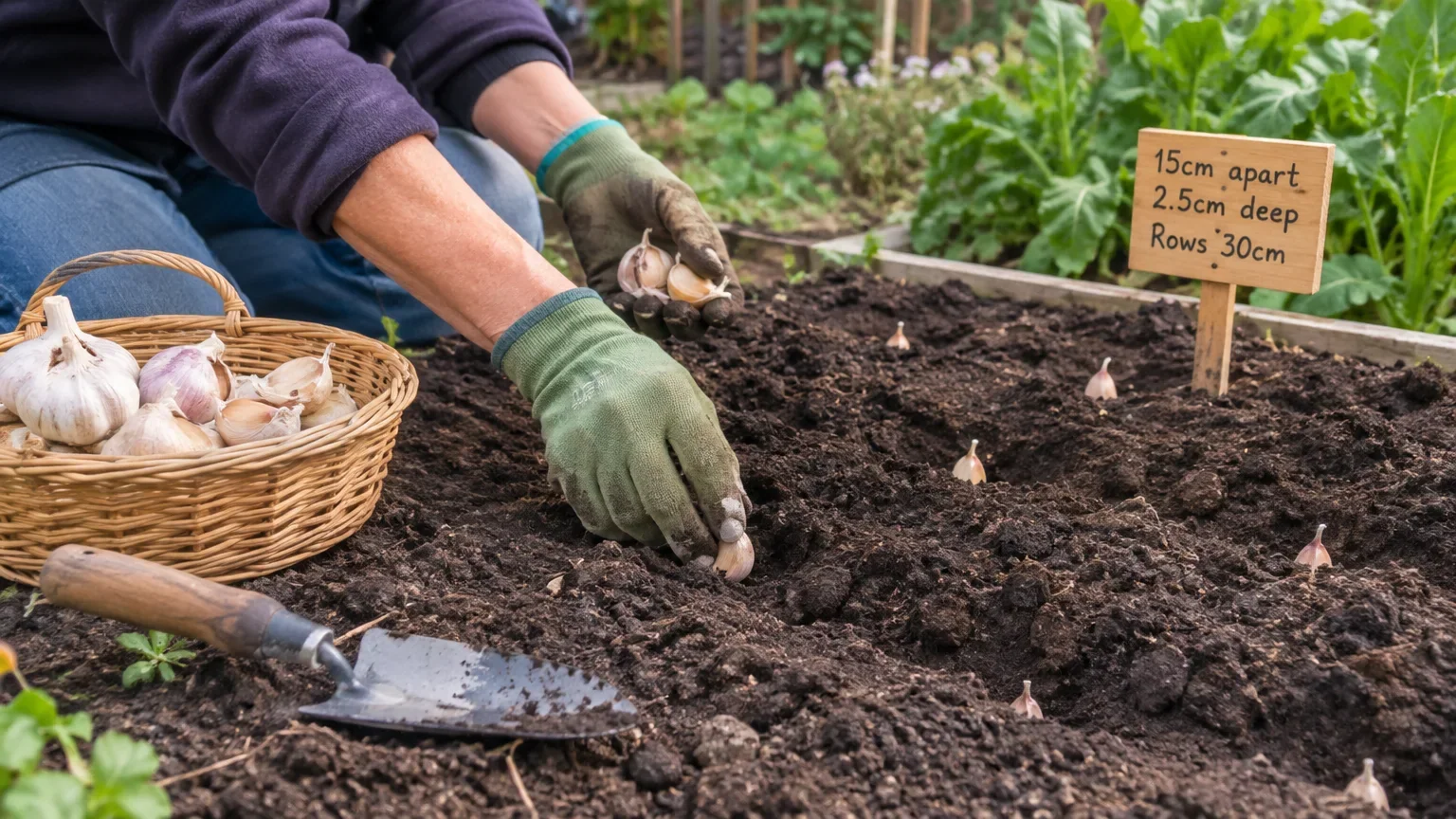
Growing garlic starts with an important distinction: “seed garlic” usually means bulbs grown for planting, not packets of botanical seed. You separate those bulbs into cloves, plant each clove and grow it into a new bulb.
True garlic seed is a specialist proposition. Most familiar culinary garlic varieties do not readily produce viable seed, and the small structures sometimes sold as garlic “seeds” are actually bulbils. For a dependable kitchen crop in a UK garden, planting cloves is the practical route.
This guide explains how to choose seed garlic, plant it in the ground or containers, care for the crop and recognise when the bulbs are ready to harvest.
At a glance
- Planting material: Use certified, disease-free seed garlic bulbs from a reputable supplier, separating them into cloves shortly before planting.
- Position: Choose an open, sunny, sheltered spot with fertile, well-drained soil.
- Timing: Many varieties are best planted in late autumn or early winter, as the cloves need a period of cold to produce good bulbs. If your soil is heavy, early spring planting may suit better. Follow the variety’s planting window and avoid frozen or waterlogged ground.
- Spacing: In open ground, plant individual cloves about 15cm apart, with roughly 30cm between rows.
- Depth: Set cloves with the pointed tip about 2.5cm below the soil surface, or deeper in free-draining soils or raised beds.
- Harvest: From early summer onwards, once the leaves have turned yellow; timing varies with variety, planting date and conditions.
- True seed: Rare in ordinary seed catalogues and unsuitable as a straightforward substitute for planting cloves.
What are garlic seeds for planting?
Three different types of planting material can appear under this description. Check what you are buying before choosing a method.
Seed garlic cloves
These are the individual cloves inside a mature garlic bulb. Each healthy clove can produce a new bulb, making this the standard method for growing culinary garlic, Allium sativum.
Buy certified, disease-free bulbs specifically offered for planting. Supermarket garlic may be a variety poorly suited to UK conditions, and it carries a risk of virus infection that properly sold planting stock should not.
Garlic bulbils
Some hardneck garlic produces small bulbils in the flower head. These are vegetative structures, not true seeds.
Bulbils can be grown on, but they take longer than full-sized cloves to produce useful divided bulbs. A first crop may consist of small, single-cloved “rounds”, which are replanted to continue growing. Treat bulbils as a propagation project rather than a shortcut to a quick harvest.
True garlic seed
True seed results from sexual reproduction. Its production and availability are limited, and seedlings need not be identical to their parents.
If you obtain genuine botanical seed from a specialist breeder, use the supplier’s germination and growing instructions. Do not apply clove-planting depths or assume that seedlings will produce normal-sized bulbs in their first season. The practical instructions below are for seed garlic planted as cloves.
Variety selection
Choose garlic suited to your intended planting season and local growing conditions. A spring-planting variety is not simply an autumn variety planted several months late.
Hardneck garlic develops a firm central flowering stem, called a scape. Hardneck varieties are generally hardier than softneck types and can be grown throughout the UK. They usually have fewer cloves per bulb, often ten or fewer, and generally store for less time than good storing softnecks.
Softneck garlic usually has a softer neck and often more numerous cloves, sometimes up to 18 per bulb. Many varieties store well once properly cured, but softneck garlic is less tolerant of prolonged cold. It is best suited to milder southern counties, although it can be grown elsewhere with winter protection.
Neither group has one universal planting date. Check the named variety’s guidance, especially if you garden on an exposed northern site, in a mild coastal area or in a garden with heavy winter soil.
Elephant garlic is a different crop, more closely related to leeks. Its large cloves and spacing requirements should not be used as a guide for ordinary garlic.
Site, soil and conditions
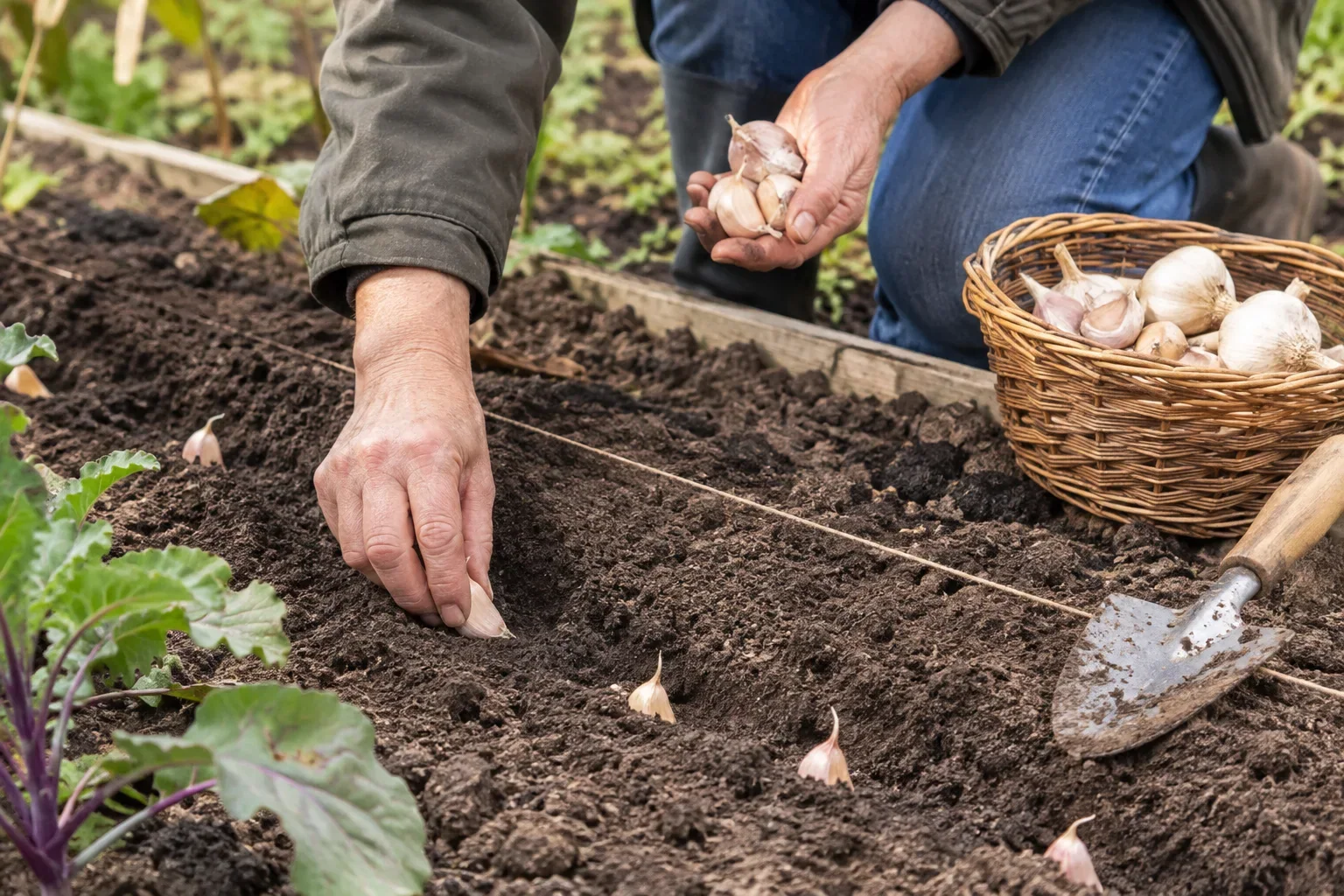
Garlic needs sunshine and good drainage. Choose a warm, sunny, sheltered spot with fertile, well-drained soil that does not get too wet in winter. Persistent winter wet is a greater concern than ordinary frost for established autumn-planted cloves.
Choose ground that has not recently grown onions, shallots, leeks or garlic. Rotation is useful, although it cannot make soil affected by persistent allium diseases safe again.
Clear perennial weeds and the remains of summer crops before planting. Dig in some homemade compost or well-rotted manure and rake the surface level, but avoid planting into fresh manure. Aim for a workable, crumbly surface rather than a rich, soggy bed.
On heavy soil, use a raised bed or grow in containers rather than pushing cloves into waterlogged ground.
What you will need
- Certified, disease-free seed garlic bulbs
- A trowel or dibber
- Plant labels
- A sunny, prepared bed, or containers with drainage holes
- Suitable peat-free compost for container growing
- Bird netting or horticultural fleece if birds disturb newly planted cloves
For containers, choose a pot at least 20cm wide and 20cm deep, filled with peat-free multi-purpose compost. A 20cm-wide pot takes about three cloves; a 30cm pot takes five or six. Keep drainage holes clear and avoid leaving the pot standing in a water-filled saucer.
Sowing or planting: step by step

Garlic cloves are planted, rather than sown. They do not need indoor germination, soaking or removal of their papery skins.
-
Wait for suitable conditions.
Plant within your variety’s recommended autumn or spring window, when the soil is workable. Delay if the bed is frozen or saturated. Late-autumn or early-winter planting allows suitable varieties to experience the cold period they need before their main spring growth. -
Separate the bulb shortly before planting.
Gently break it into individual cloves, keeping each clove’s skin and basal plate intact. Select firm, healthy cloves and reject any that are mouldy, soft or damaged. Larger outer cloves are generally the best choice for the main crop. -
Set out the planting positions.
In open ground, allow about 15cm between cloves and 30cm between rows. In containers, space cloves as the pot size allows, following the pot sizes above rather than packing them tightly together. -
Plant each clove upright.
Place the flat basal end down and the pointed tip upwards. For ordinary garlic, set the tip about 2.5cm below the soil surface, or deeper in free-draining soils or raised beds, unless the supplier specifies otherwise for that variety. Make a hole first rather than forcing the clove into compacted soil. -
Firm gently and label.
Settle the soil around each clove without compacting it heavily. Label the variety and planting date. Water if the soil or compost is dry; already moist autumn ground does not need drenching. -
Protect and check establishment.
Birds may pull out newly planted cloves, especially if they are planted too shallow. Lay securely supported netting or horticultural fleece over the area immediately after planting, checking beneath it and removing it once the young plants are well rooted enough to resist pulling. Replant displaced cloves promptly if they remain healthy.
Starting in modules
If winter soil stays too wet, individual cloves can be started in small pots or modules in late autumn and grown on in a cold frame.
Keep the compost moist, not saturated, and plant out in spring once the soil has dried out a little and roots hold the compost together, before plants become badly restricted. Acclimatise sheltered plants gradually to outdoor conditions. Garlic raised in cool protection does not need the warm indoor treatment used for tender crops.
Care and troubleshooting
Water according to conditions
Autumn-planted garlic often needs little additional water over winter. Water regularly in spring and early summer, particularly during dry spells while bulbs are swelling.
Containers dry out more quickly than garden soil, so check the compost regularly. Water thoroughly when needed, allowing excess to drain away.
Once the foliage begins to turn yellow, reduce watering. Do not keep a ripening crop continually wet.
Keep weeds down and feed appropriately
Garlic competes poorly with weeds. Hand-weed between the plants, taking care not to damage developing bulbs or shallow roots; hoeing can cause damage.
On reasonably fertile ground, garlic needs little care. Container crops may benefit from feeding from April, when strong spring growth appears, using a suitable vegetable feed according to its label. Stop feeding in mid-May. Avoid heavy late nitrogen feeding as the crop approaches maturity.
Remove hardneck scapes if growing for bulbs
Hardneck varieties may produce curling flower stems in late spring or summer. Remove the scape as soon as it appears if your priority is bulb production, so the plant puts its energy into a larger bulb. The young scapes are edible.
Common problems
Yellow leaves: A few yellowing lower leaves near maturity are normal. Earlier yellowing can indicate waterlogging, drought, nutrient shortage or root damage. Check the soil and roots before deciding that fertiliser is the answer.
Orange pustules on leaves: These may indicate leek rust, a fungal infection that is more common in wet weather. There is no cure, but the infection rarely seriously affects the crop. The bulbs are safe to eat. Remove affected foliage or harvest and eat affected bulbs promptly to limit spread, and bin or burn the rest of the affected plant material rather than composting it. In future, choose a variety with some resistance to rust and plant cloves with larger spacings to improve airflow.
Wilting plants with rotting bases: Several problems can cause this. White fluffy fungal growth around the bulb base, sometimes with tiny black resting bodies, is characteristic of onion white rot. Dig up all affected plants and bin or burn them rather than composting them. Take care not to spread contaminated soil around the garden on boots and tools, as the disease can affect the whole allium family and persists for years. Avoid growing further alliums in affected ground; in future, grow garlic in containers of fresh soil that has not come from the garden.
Small or undivided bulbs: Possible causes include late planting, unsuitable planting material, competition or insufficient growth. Garlic normally needs a period of cold for proper bulb development, although requirements vary between varieties. Use garlic sold for your planting season rather than trying to correct the problem with extra feed.
UK seasonal timing
Autumn: Plant suitable varieties in late autumn or early winter while the soil is workable. In wet gardens, prepare raised beds or start cloves in modules under unheated protection.
Winter: Check drainage and replace any frost-heaved cloves. In cold areas, you may need to cover plants with cloches over winter to encourage root growth. Do not work saturated soil.
Late winter and spring: Plant varieties sold for spring planting as conditions allow, and plant out module-raised cloves once the soil has dried a little. In colder northern and Scottish gardens, use soil readiness rather than a fixed calendar deadline. Check watering as growth strengthens.
Summer: Remove hardneck scapes if required, watch for ripening foliage and harvest when the bulbs are ready. Spring-planted crops may mature later than autumn-planted ones.
There is no single reliable UK harvest week: variety, planting date and the season all matter.
Harvest and storage
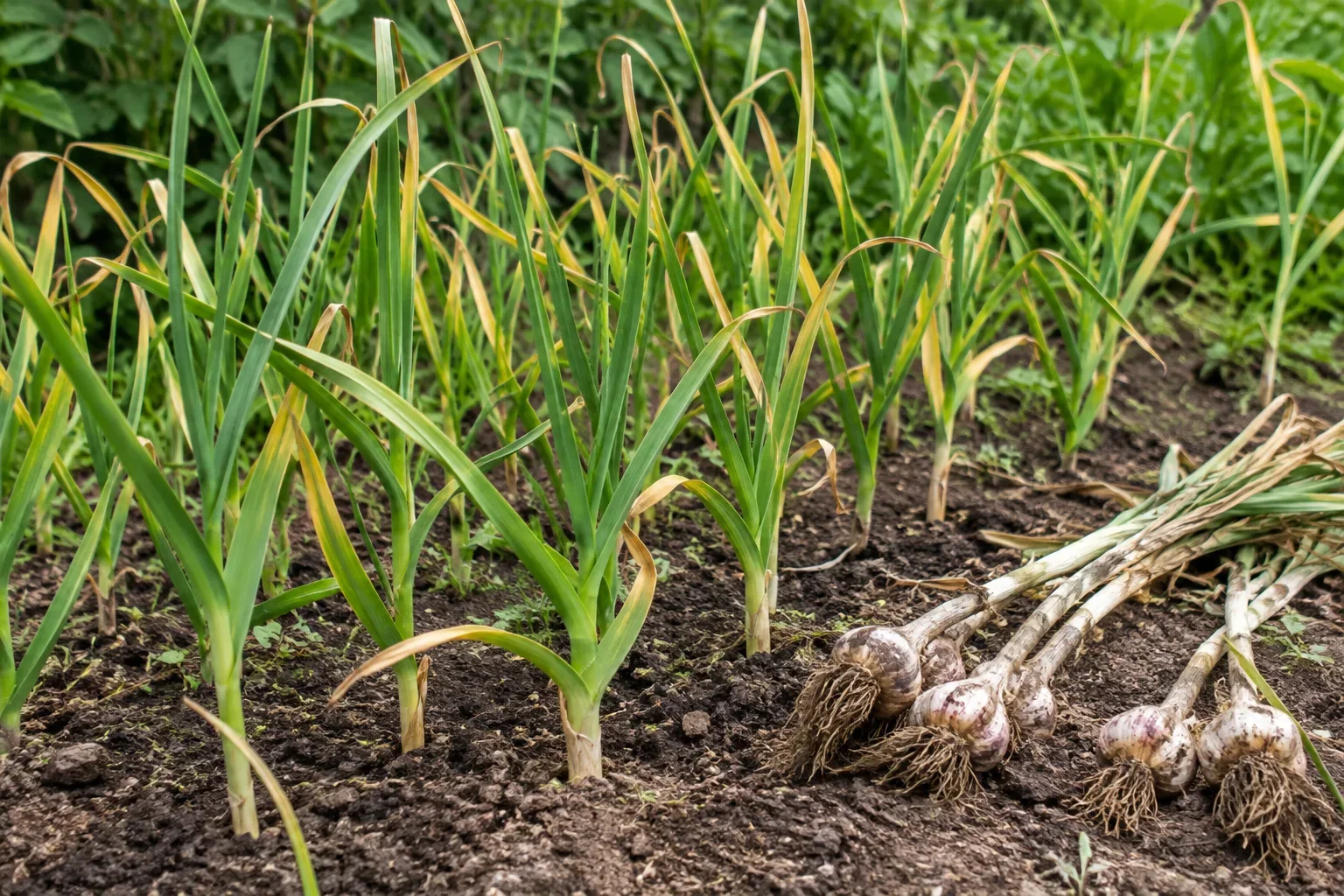
Harvest from early summer onwards, once the leaves have turned yellow. Lift a sample to assess its size and condition.
Loosen the soil with a fork and lift carefully rather than pulling hard on the stems. Handle bulbs gently and brush off loose soil; do not wash garlic intended for storage.
Dry, or cure, the crop in a dry, airy place protected from rain, laying bulbs out on a table or racks for a few weeks. Once the bulbs are dry and feel papery to the touch, trim roots and foliage as appropriate, or plait the foliage into a string of bulbs.
Store sound bulbs somewhere cool, dry and ventilated. Take care not to bruise them, as damage makes them deteriorate in storage. Softneck varieties store better than hardnecks and should keep for several months, so eat the hardneck varieties first. Check stored garlic periodically and remove deteriorating bulbs.
Related growing guides
For a wider allium plot, explore growing onions from sets, raising shallots and growing leeks. Their planting and harvesting methods differ, but plan them together when deciding crop rotation.
If space is limited, a guide to growing vegetables in containers is also useful, particularly for managing watering and compost fertility.
Frequently asked questions
Can I grow garlic from a packet of seeds?
Genuine garlic seed exists, but it is specialist material rather than the usual starting point for UK gardeners. Check whether the seller actually means cloves or bulbils. For an ordinary crop of culinary garlic, buy certified, disease-free seed garlic bulbs and plant the individual cloves.
Can I plant supermarket garlic that has sprouted?
A sprouting clove may grow, but supermarket bulbs are not the best planting stock. Their variety and suitability for UK conditions may be unclear, and there is a risk of virus infection. Purpose-sold, certified planting stock is the better choice.
Does garlic need frost to grow?
Many garlic varieties need a period of cold to develop divided bulbs properly, but this is not the same as requiring a particular hard frost. Choose a variety suitable for your planting season rather than relying on frost alone.
Can I save my own garlic for planting?
Yes, you can retain healthy, well-grown bulbs from a successful crop and plant sound cloves in the appropriate season. Do not save planting material from plants showing rot or unexplained decline, and rotate the next crop to different ground.
Useful tools and supplies
Affiliate links may earn GardenWizz a commission at no extra cost to you.