
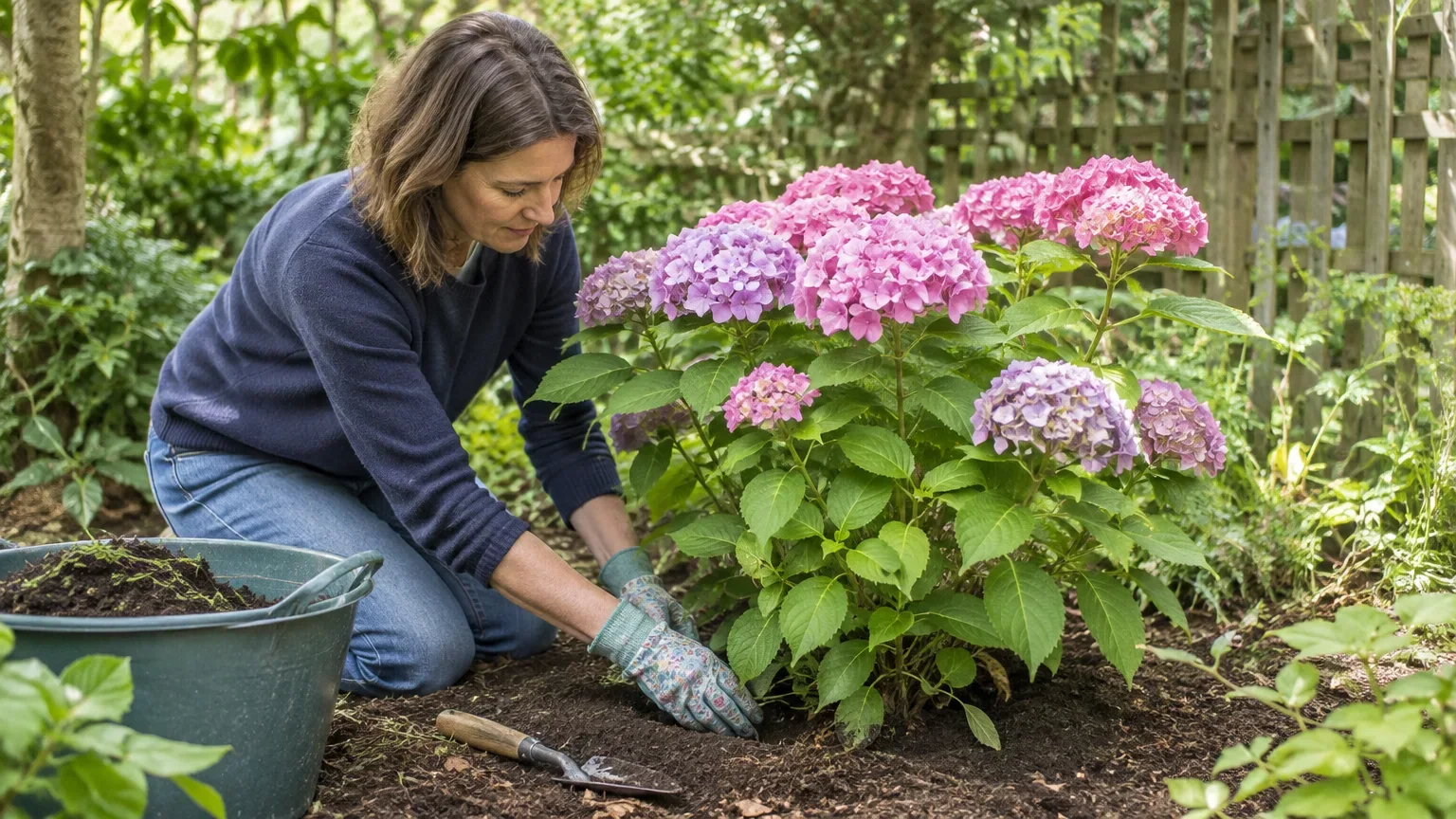
Hydrangeas bring generous summer flowers to borders, courtyards and shady garden corners. Most are straightforward to grow once their roots have dependable moisture, but choosing the right type matters: a mophead, a panicle hydrangea and a climbing hydrangea do not all need the same position or pruning.
The route to success is to match the plant to your space, prepare the ground well and keep it watered while it establishes. After that, the most important decision is when—and how much—to prune.
At a glance
- Position: Most hydrangeas do best in moist, free-draining soil and dappled shade. Avoid very sunny, south-facing positions, especially where the soil is dry. Panicle hydrangeas tolerate sunnier positions if the soil stays moist.
- Soil: Moisture-retentive but well-drained soil is ideal. Avoid ground that regularly becomes waterlogged.
- Planting time: Spring or autumn is usually best, provided the soil is workable and neither frozen nor waterlogged.
- Flowering: Mainly summer into autumn, depending on the species and cultivar.
- Pruning: Identify your hydrangea first. Mopheads and lacecaps need different treatment from panicle and smooth hydrangeas.
- Flower colour: Soil conditions can influence some pink and blue mopheads and lacecaps, but not every hydrangea changes colour.
Choose the right hydrangea for your garden
Check the plant label for its botanical name, mature size and preferred position. A compact plant bought in flower can eventually become a substantial shrub.
Mopheads and lacecaps
Forms of Hydrangea macrophylla have either rounded mophead flowers or flatter lacecaps, with small central flowers surrounded by larger florets. They are useful for lightly shaded borders with reliably moist soil.
Their flower buds can be damaged by late frosts, so avoid exposed frost pockets where possible. Mountain hydrangeas, Hydrangea serrata, offer similar lacecap flowers, with some cultivars suited to smaller spaces.
Panicle and smooth hydrangeas
Hydrangea paniculata carries cone-shaped flower heads and is a good option for a brighter border. Many varieties open creamy white and develop pink tones as the flowers age; the extent of this varies by cultivar.
Hydrangea arborescens, including 'Annabelle', produces broad, rounded flower heads. Both species flower on new growth, making their pruning more straightforward than that of traditional mopheads.
Climbing hydrangeas
For a shaded wall or substantial fence, consider Hydrangea anomala subsp. petiolaris. This deciduous climber needs space and can take several years to settle before growing strongly. It is not a compact substitute for a border shrub, and its pruning requirements are different.
Prepare the site and gather your materials
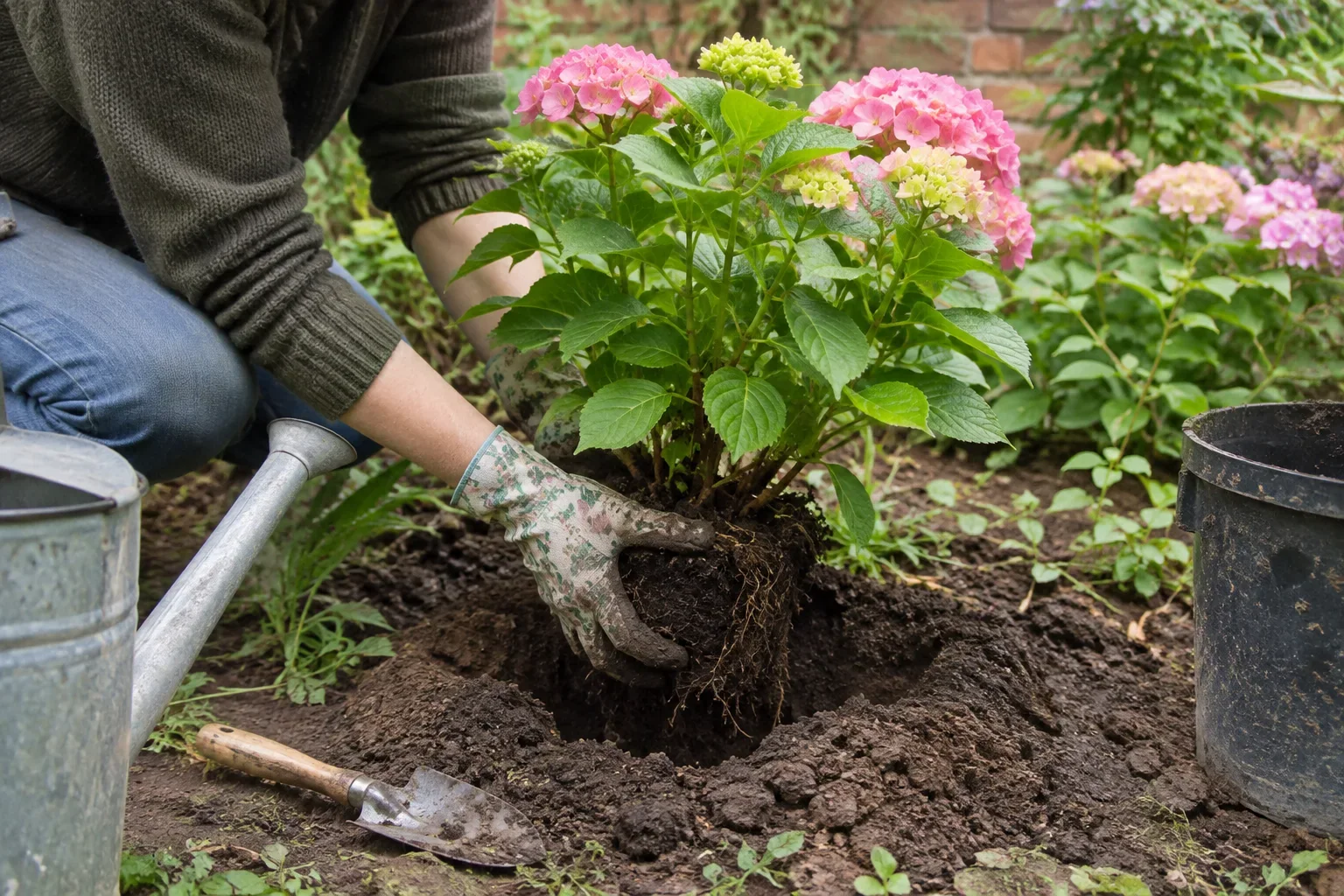
Before digging, check how the chosen spot behaves after rain. Hydrangeas enjoy moisture, but persistently saturated soil is unsuitable. If the site stays boggy, choose another position or grow a suitable compact variety in a container.
Allow enough room for the plant's expected spread without relying on severe annual pruning to contain it. Beside walls and fences, remember that the soil can be surprisingly dry.
You will need:
- A hydrangea suited to the available space
- A spade and hand fork
- Well-rotted garden compost or another suitable organic soil improver
- A watering can or hose
- Organic mulch, such as composted bark or garden compost
- Gloves, as contact with the foliage may aggravate skin allergies
- For container growing, a substantial pot with drainage holes and suitable potting compost
Remove weeds from the planting area. On poor or compacted ground, improve a broad patch rather than filling a small planting hole with rich compost.
How to plant a hydrangea
-
Water the plant before planting. Thoroughly moisten the rootball while it is still in its nursery pot. Let excess water drain away.
-
Prepare a broad planting hole. Dig a hole comfortably wider than the rootball, but no deeper than needed to keep the plant at its existing soil level. Loosen the surrounding ground and incorporate organic matter where appropriate.
-
Check the roots. Slide the plant from its pot. If roots are tightly circling the outside, gently loosen them so they are not left in a dense, pot-shaped mass.
-
Set the planting depth. Position the hydrangea with the top of its rootball level with the surrounding soil. Do not bury the base of the stems.
-
Backfill and water thoroughly. Return the soil around the roots, firming gently to remove large air pockets. Water the whole planting area rather than giving a small splash around the stems.
-
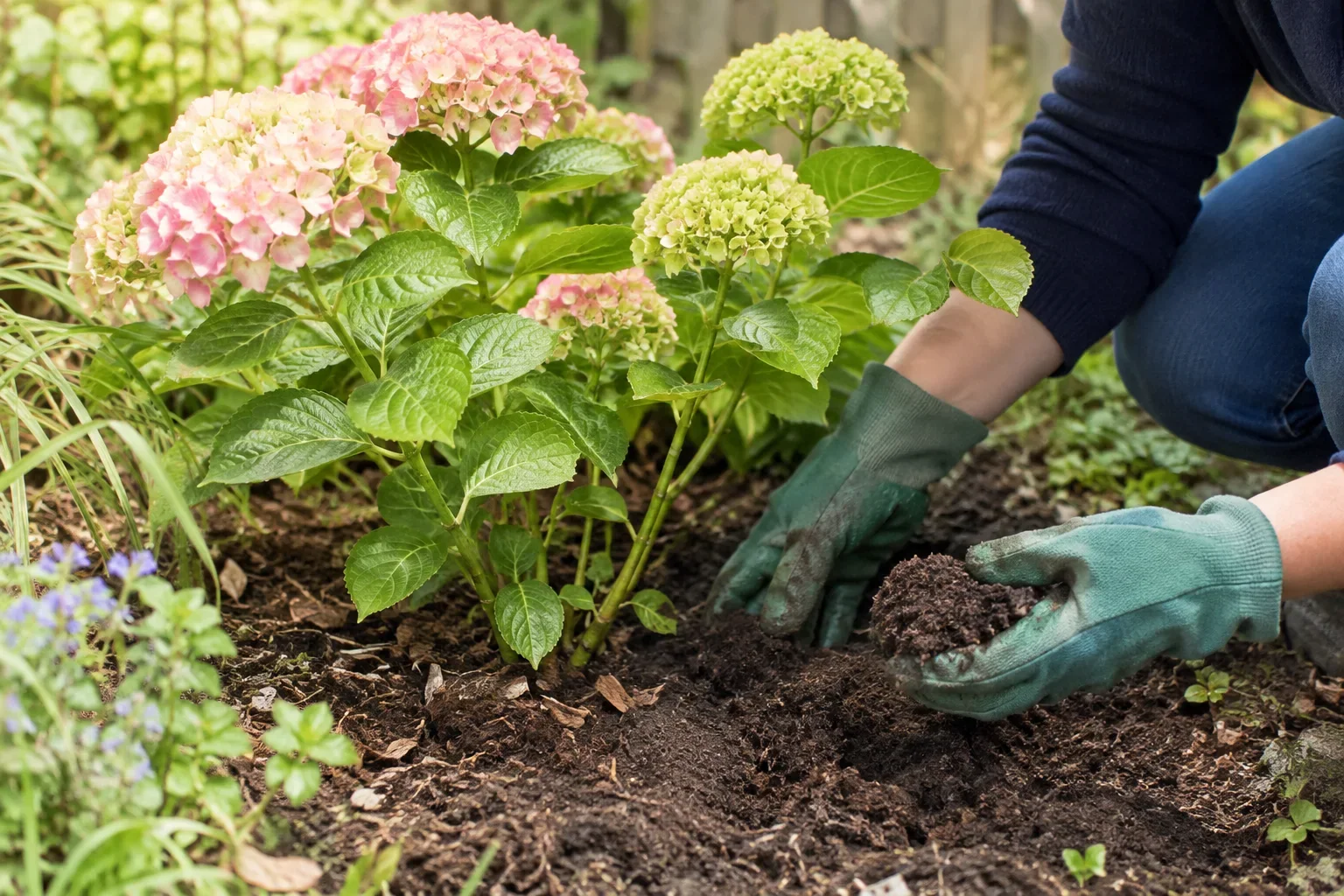
Apply mulch. Spread an organic mulch over the surrounding soil, keeping it clear of the stems. Check beneath it regularly during dry weather: mulch helps retain moisture but does not replace watering.
Spring-planted hydrangeas need close attention through their first summer. Autumn planting can work well while the soil remains warm, but avoid planting into cold, sodden ground simply to meet a calendar date. In colder northern and Scottish gardens, spring planting often gives roots more time to settle before winter, though a sheltered autumn planting on well-drained soil can still succeed.
Watering, feeding and routine aftercare
Keep moisture consistent
Check newly planted hydrangeas regularly, especially during warm, windy or rainless spells. Feel the soil around the rootball rather than judging only by the surface. Water thoroughly when needed, allowing moisture to reach the roots.
Established plants also need help during prolonged drought. A mature shrub beneath trees may face substantial competition for water, even in a shaded position.
Wilting is a prompt to investigate, not an automatic instruction to water. If the ground is already wet, adding more water may worsen the problem.
Feed without overdoing it
Regular feeding of established plants is not generally needed. Too much fertiliser encourages excessive soft, leafy growth, so avoid feeding as a remedy for poor flowering.
Renew organic mulch in spring when the soil is moist. Keep it away from the stem bases and remove weeds competing around young plants.
Protect vulnerable spring growth
Most commonly grown deciduous hydrangeas are hardy in UK gardens, but fresh shoots and developing flower buds can still suffer in late frosts. In frost-prone gardens, choose a sheltered position and use horticultural fleece temporarily when frost threatens vulnerable growth. Remove it when conditions improve.
Growing hydrangeas in pots
Choose a compact cultivar rather than expecting a large-growing shrub to remain small indefinitely. Use a sturdy container with drainage holes and a compost suitable for long-term container planting; a loam-based mix is a useful option.
Pots dry out faster than garden soil. Check them frequently in summer, including during light rain, which may not thoroughly wet the compost beneath the leaves.
Feed container plants according to the fertiliser instructions. As growth becomes crowded, move the hydrangea into a larger pot or review whether it would be better planted in the garden.
Do not leave the pot standing in water through winter. In colder areas, sheltering the container helps protect roots, which are more exposed to freezing than roots in the ground.
Prune according to the type
The commonest pruning mistake is treating every hydrangea alike. Keep the label or record the name before making major cuts.
Mopheads and lacecaps
Traditional Hydrangea macrophylla and H. serrata flower largely from buds formed on older growth. Cutting every stem hard back in spring can remove that summer's flowers.
For mopheads, leave faded heads in place over winter, then remove them in spring, cutting back to a strong pair of healthy buds below the old flower. Remove dead wood and, on established crowded shrubs, take out selected older stems at the base.
Lacecaps can be deadheaded after flowering if you wish, but mopheads should be deadheaded in milder areas only. In colder or exposed gardens, avoid unnecessary autumn cutting and assess the plant in spring.
Some modern cultivars can also flower on new growth, but that is not a reason to assume every mophead tolerates hard pruning.
Panicle and smooth hydrangeas
Prune H. paniculata and H. arborescens in early spring, before the shrubs start actively growing. They flower on the current season's shoots.
Remove weak, damaged and crossing growth, then shorten the remaining stems to a framework of healthy buds. The severity of pruning affects the resulting growth and flower display; young plants need a sound framework rather than indiscriminate hard cutting.
Climbing hydrangeas
Prune established climbing hydrangeas after flowering, shortening shoots that project too far from their support. Avoid cutting the whole plant back simply to tidy it. Major renovation can reduce flowering while replacement growth develops.
Flower colour: what you can and cannot change
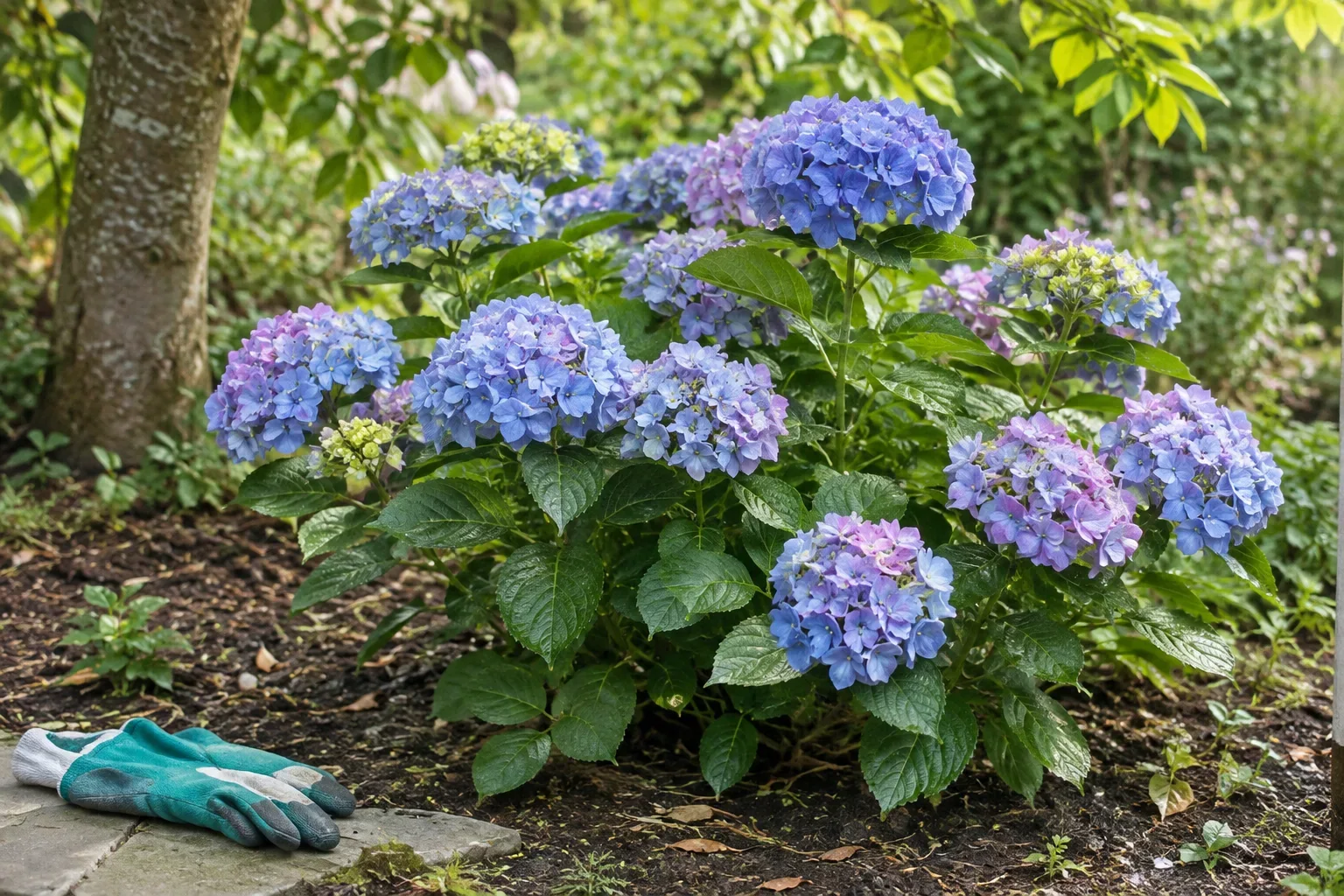
Some pink- and blue-flowered mopheads and lacecaps respond to soil chemistry. Blue flowers are associated with acidic conditions where aluminium is available to the plant; alkaline conditions generally favour pink.
This is not a universal hydrangea trait. White varieties do not simply become blue in acidic soil, and the pink colouring of ageing panicle flowers is not controlled in the same way.
Test your soil before trying to change flower colour. If your garden is chalky or alkaline, maintaining a blue-flowered cultivar is usually more manageable in a container with ericaceous compost than by repeatedly treating the border. Even then, colour depends on the cultivar and growing conditions.
Avoid improvised treatments with household chemicals or buried metal.
Common problems and mistakes
Plenty of leaves but no flowers: Check pruning first. Hard cutting of traditional mopheads can remove flower-bearing growth. Late frost damage, deep shade and an immature plant are other possibilities.
Brown, crisp leaf edges: Drought, strong sun or drying winds may be involved. Check root-zone moisture and exposure before reaching for fertiliser.
Yellow leaves with greener veins: On alkaline soil, some hydrangeas struggle to obtain iron. However, yellowing can also accompany root problems or poor drainage. Check the growing conditions before treating a presumed deficiency.
Drooping despite wet soil: Inspect drainage. Roots in persistently wet ground cannot function normally, and further watering is unlikely to help.
Leaf spots or a powdery coating: Remove badly affected fallen material, avoid crowding and water at soil level where practical. Identify a persistent problem before choosing treatment; a marked leaf alone does not establish the cause.
A shrub that outgrows its position: Repeated severe clipping is rarely the best long-term answer. Consider moving it while dormant, if practical, or replacing it with a smaller cultivar.
A simple UK seasonal routine
In spring, assess frost damage once growth becomes clear, prune according to type, renew mulch and feed container plants where needed.
Through summer, monitor moisture, particularly around new plants and pots. Enjoy the flowers without assuming fading heads must immediately be removed.
In autumn, plant while conditions remain suitable, clear unhealthy fallen leaves and reduce feeding as growth slows.
During winter, check container drainage and avoid unnecessary pruning of mopheads. Plan any changes around the plant's identity, mature size and flowering habit.
Frequently asked questions
Can hydrangeas grow in full sun?
Some can, particularly Hydrangea paniculata, provided the soil retains enough moisture. Many mopheads perform better with dappled shade, especially away from very sunny, south-facing positions and drying winds.
Should I cut hydrangeas back every year?
Not all types need the same annual pruning. Mopheads and lacecaps generally need restrained pruning, while panicle and smooth hydrangeas can be pruned more substantially in early spring, before active growth begins.
Can I plant a hydrangea in summer?
Yes, container-grown plants can be planted in summer if you can keep the rootball adequately watered. Avoid planting during a heatwave or into very dry ground; spring or autumn is usually easier.
Why has my blue hydrangea turned pink?
The growing conditions may no longer favour blue flowers, particularly if the plant has moved into alkaline soil. Check the cultivar and soil conditions before trying to alter the colour; not every variety responds equally.