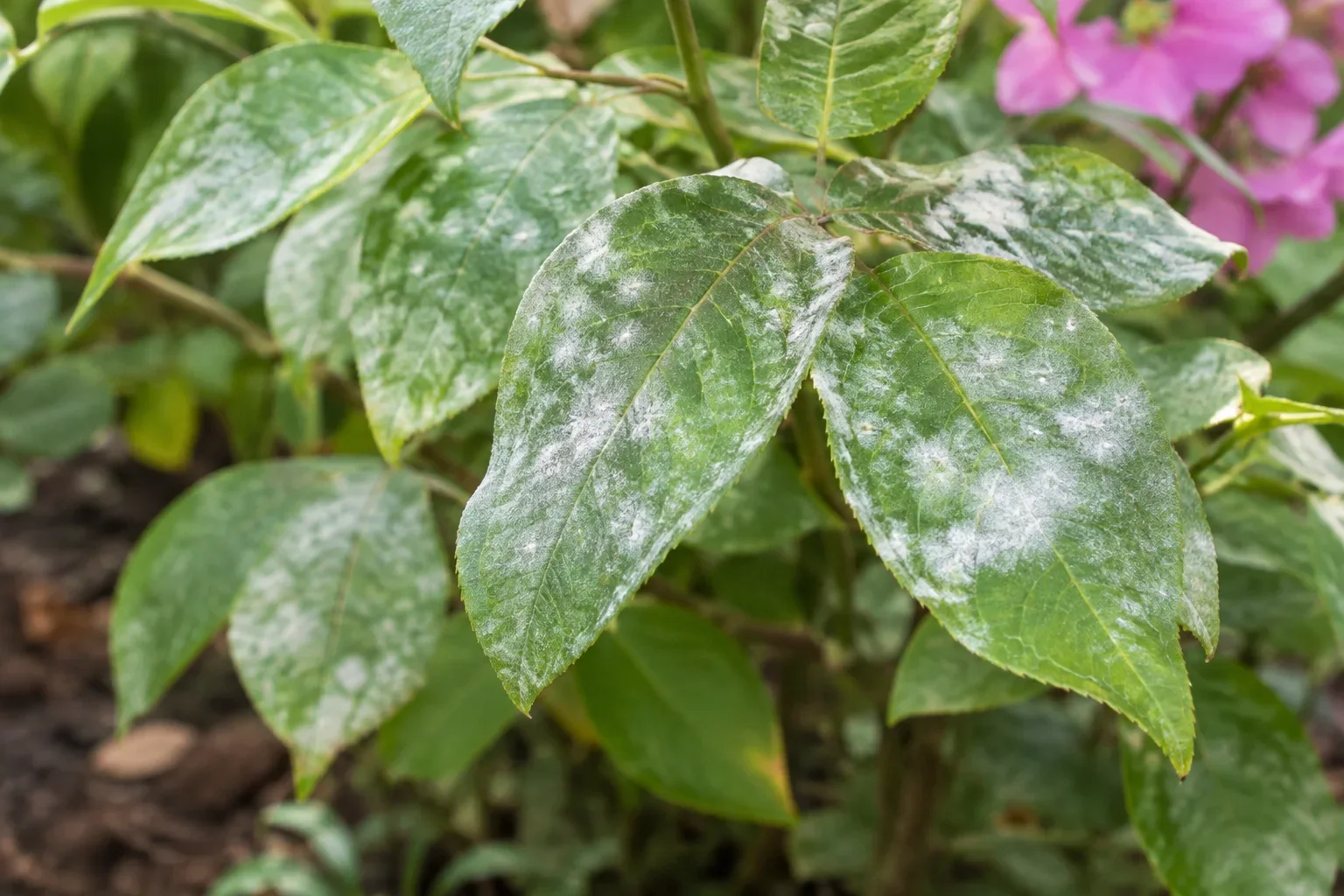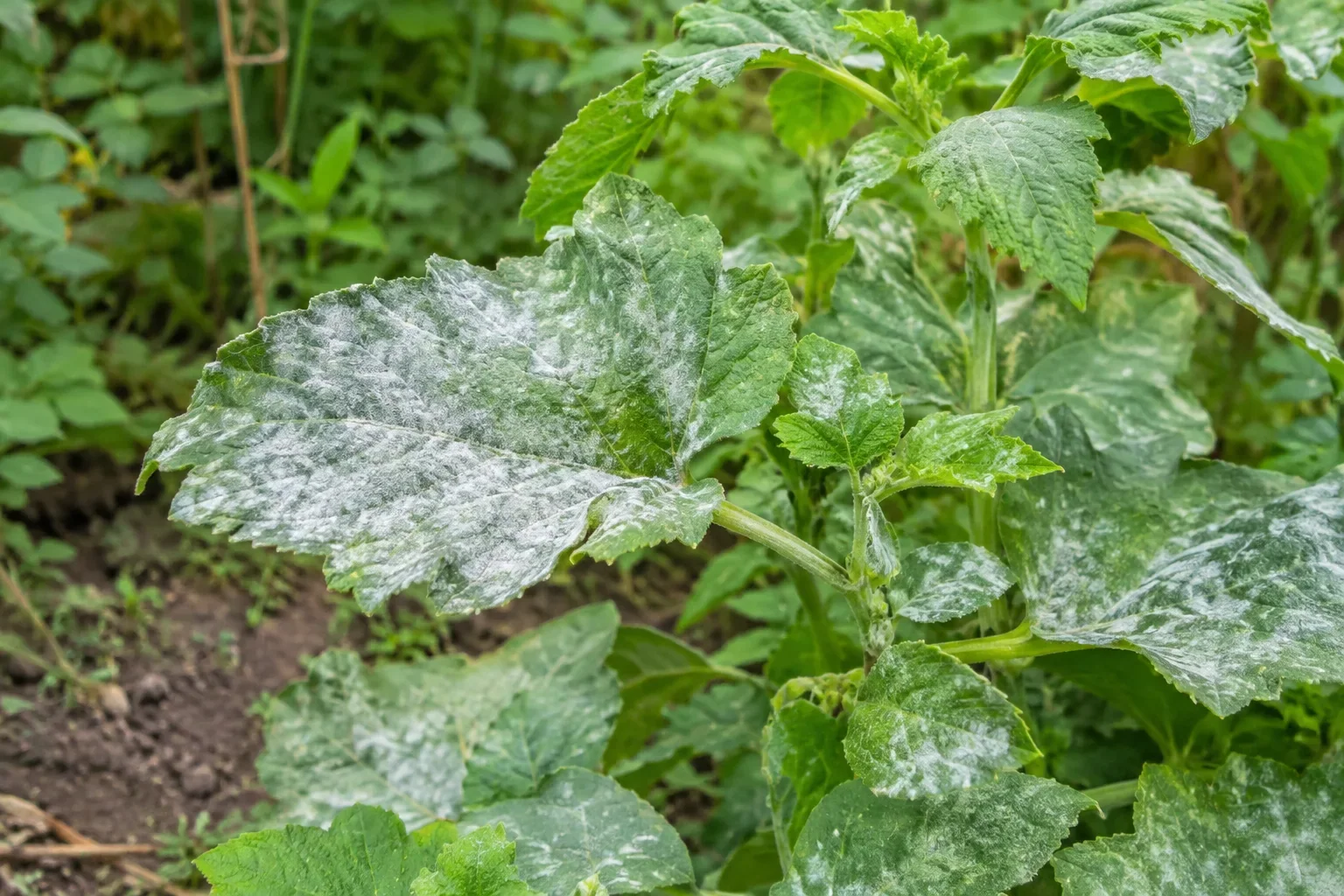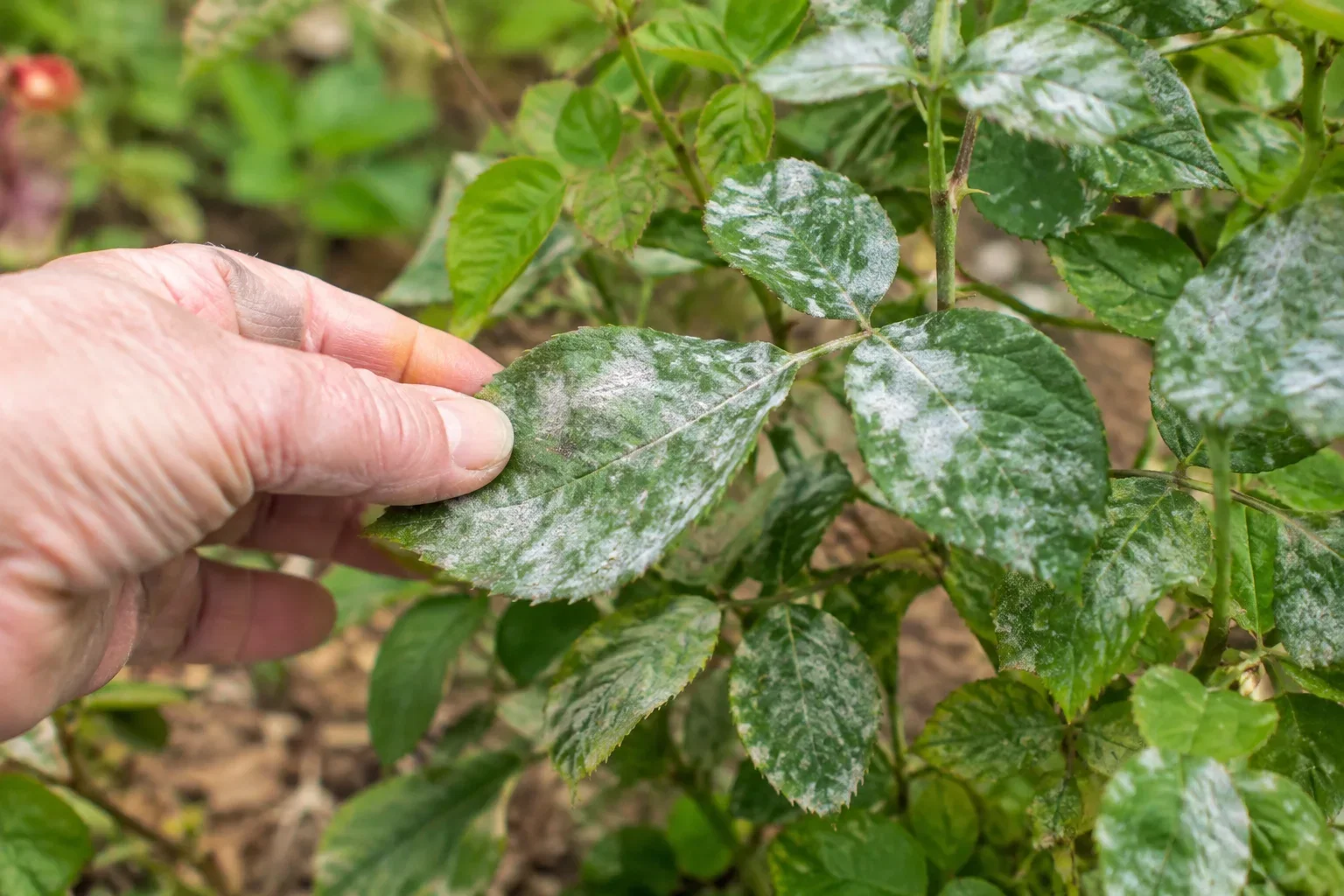
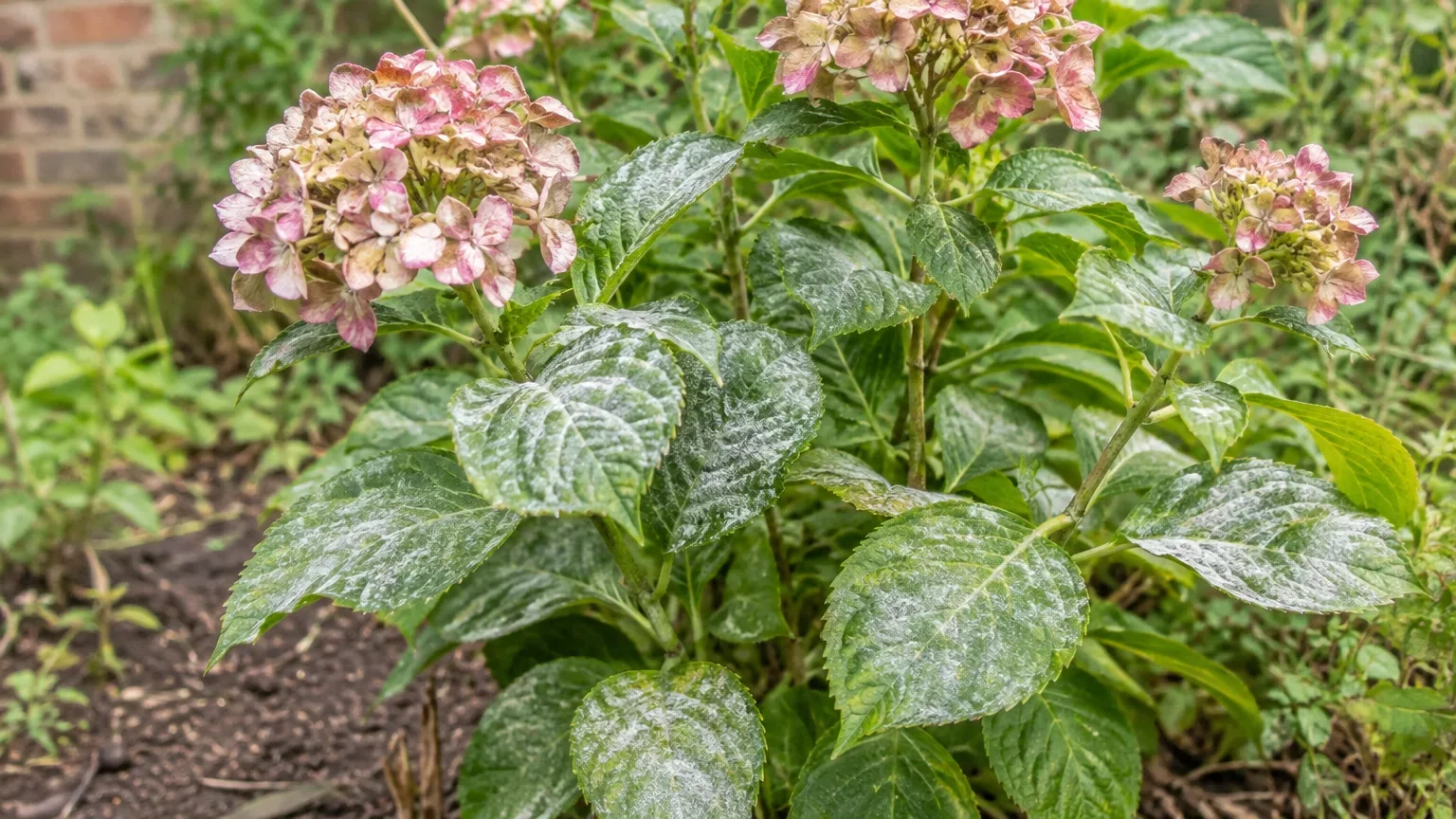
White spots on leaves are a symptom, not a diagnosis. A dusty coating may be powdery mildew, tiny pale pinpricks can indicate feeding damage, and chalky rings may simply be deposits left by water. Some plants also have naturally silver markings that need no treatment.
Before reaching for a spray, establish whether the white material is sitting on the leaf, part of its normal colouring, or damaged leaf tissue. That distinction will help you avoid treating the wrong problem—and potentially adding to the damage.
Recognise the symptoms and their lookalikes
Examine several leaves, including young growth, older foliage and the undersides. Check nearby plants too: a problem confined to one leaf tells a different story from similar markings spreading across a greenhouse.
| What you can see | Possible explanation | What to check next | |---|---|---| | Flour-like patches spreading over the surface | Powdery mildew | Look for patches on other leaves, stems or buds | | Tiny pale dots merging into a washed-out appearance | Spider mites or other sap-feeding pests | Inspect beneath leaves for pests, eggs or fine webbing | | Silvery streaks or patches, sometimes with black specks | Thrips feeding damage | Check young leaves and flowers for slender insects | | White cottony tufts or small attached bumps | Mealybugs or scale insects | Examine leaf joints, veins and stems | | Chalky spots or circular splash marks | Water deposits or spray residue | See whether a small patch wipes away | | Pale, dry areas after a change in conditions | Scorch or other physical damage | Review recent sun exposure, weather and treatments | | Repeated silver markings on otherwise healthy leaves | Natural colouring | Compare with healthy leaves of the same plant |
These clues narrow the possibilities; none confirms the cause on its own. Powdery mildew may rub off, but so can harmless residue. Equally, the absence of visible webbing does not rule out spider mites.
Try a gentle wipe test
On one affected leaf, wipe a small area with a soft cloth dampened with plain water. Do not scrub delicate foliage.
If the mark comes away, inspect what remains. Healthy green tissue beneath a chalky ring suggests a surface deposit. A powdery patch that returns or appears elsewhere raises suspicion of mildew. If the pale area remains within the leaf, investigate feeding damage, scorch or natural colouring.
Affected plants and how problems develop
White markings occur on houseplants, vegetables, fruit and ornamentals, but the plant's identity is an important diagnostic clue.
Powdery mildews affect many garden plants, including roses, courgettes, cucumbers, phlox and Michaelmas daisies. Different mildew fungi affect different host groups: mildew on a rose does not mean every nearby plant will develop the same disease. Growth may recur while conditions remain suitable, and some mildews survive between seasons on living plant material or infected debris.
Spider mites are particularly troublesome on susceptible plants in warm, dry, sheltered conditions, including greenhouses and centrally heated rooms. Thrips can also damage protected crops and houseplants, although their presence is not restricted to indoors.
Mealybugs and many houseplant scale insects often remain tucked into protected parts of the plant. Their young stages can be much harder to spot than established colonies.
Natural markings deserve equal attention. Pulmonaria commonly has pale spots, cyclamen often carries silver patterning, and some courgette leaves have silvery areas associated with their veins. A regular pattern on healthy growth may be entirely normal, though a naturally marked plant can still develop pests or disease.
Likely causes and diagnostic distinctions
Powdery mildew: white powder rather than pale tissue
Powdery mildew usually appears as white or greyish superficial fungal growth. Small patches can expand and merge, sometimes affecting stems, buds and flowers as well as leaves. Affected foliage may later yellow, distort or deteriorate.
Look for an irregular, dusty coating rather than identical markings repeated from leaf to leaf. Warm conditions, humid air, crowded growth and stress associated with dry roots can favour problems. Unlike many fungal leaf diseases, powdery mildew does not require a film of water on leaves to infect them.
Not every pale fungal-looking patch is powdery mildew. Pale or yellowish areas above, with downy growth underneath, may indicate a different disease and need a host-specific diagnosis.
Spider mites and thrips: damage that will not wipe away
Spider mites produce fine pale stippling as they feed. As damage increases, foliage can look dull, bronzed or washed out. Fine webbing is a useful clue when present, but early infestations may show little or none.
Thrips more often leave silvery scars, streaks or irregular patches. Small dark faecal specks may accompany the damage, and developing leaves or flowers can become distorted.
A hand lens helps with both. Hold a sheet of white paper beneath affected growth and tap gently; dislodged moving specks are a reason to investigate further, not a complete identification.
Mealybugs and scale: white objects attached to the plant
Mealybugs look like small, wax-covered insects, often surrounded by cottony material. They commonly gather in leaf axils and other sheltered places.
Scale insects can resemble tiny fixed bumps rather than recognisable insects. Some produce pale waxy coverings. Sticky honeydew and black sooty mould may accompany infestations, although not every scale insect produces honeydew.
Inspect the whole plant. The most obvious white material may be away from the leaves that first caught your attention.
Deposits, scorch and other non-infectious causes
Hard-water deposits and dried spray residues often follow droplet outlines. They do not develop into expanding fungal colonies.
Scorch and chemical injury affect the tissue itself. Pale areas may become papery or brown, especially after a plant is moved abruptly into stronger sunlight or exposed to an unsuitable treatment. The timing and distribution matter: damage mainly on exposed leaves after a recent move is a useful clue.
Nutrient problems more commonly produce broader yellowing or patterns linked to leaf veins than a removable white powder. Do not assume that extra fertiliser will solve unexplained white spots.
Practical first actions
Work through these steps before choosing a treatment.
- Identify the plant. Record its name, whether it is edible, and whether it grows indoors, under glass or outside.
- Inspect in good light. Check both leaf surfaces, growing tips, stems and leaf joints. Use a hand lens where possible.
- Record the pattern. Photograph the whole plant and close-ups. Note whether old leaves, young leaves or one exposed side is worst affected.
- Review recent changes. Consider watering, relocation, strong sunshine, feeding, sprays and the arrival of new plants.
- Separate movable plants if pests are suspected. Keep affected pots away from other susceptible plants while investigating.
- Pause unnecessary treatments. Avoid applying several remedies in quick succession; subsequent damage can make diagnosis harder.
Do not strip off every marked leaf. A heavily affected plant still needs functioning foliage, and removing leaves will not necessarily eliminate the cause.
Control and treatment
For suspected powdery mildew
Correct avoidable stress first. Check the soil or compost rather than watering by the calendar, and keep watering appropriate to the plant. Improve spacing around crowded pots and avoid excessive nitrogen feeding that encourages vulnerable growth.
Where practical, remove badly affected leaves without leaving the plant bare. Deal with heavily diseased fallen material rather than allowing it to accumulate around susceptible plants.
Established damage may remain visible. Assess progress through the condition of new growth and whether fresh patches continue appearing.
For confirmed pests
Choose control for the pest and growing situation, not simply for "white spots". A light mealybug infestation on an accessible houseplant may allow careful physical removal, while spider mites throughout a greenhouse need a broader approach.
Biological controls are available for some pests in protected growing spaces. They require correct pest identification and suitable conditions, so follow the supplier's instructions rather than buying on appearance alone.
If considering a pesticide, use only a product currently authorised for the intended UK use. Follow its label, including crop restrictions, application instructions and any harvest interval. Do not assume an ornamental-plant treatment is suitable for edible leaves or fruit.
Avoid improvised mixtures of washing-up liquid, oils, vinegar or other household ingredients. They can injure foliage and are not substitutes for a correctly identified, suitable treatment.
For residue or environmental damage
Where foliage tolerates wiping, remove harmless deposits gently with plain water. Review how the marks arose before repeating the same watering or spraying method.
For scorch, correct the exposure or treatment responsible. Introduce plants gradually to stronger light when moving them outdoors. Bleached or dead tissue will not turn green again; judge recovery by healthy new growth.
Prevention and seasonal follow-up
In spring, inspect overwintered plants before placing them alongside new purchases or young plants. Check sheltered joints and leaf undersides, not just the newest leaves.
In summer, watch greenhouse and conservatory plants during warm, dry spells. Ventilate appropriately, monitor watering and inspect susceptible foliage regularly. Outdoor powdery mildew can become conspicuous during dry periods, so do not dismiss fungal disease simply because there has been little rain.
In autumn, check tender plants before bringing them indoors. Remove badly affected material where appropriate and inspect pots for pests that might otherwise move into the house.
In winter, avoid keeping all houseplants on the same watering routine. Light, temperature and growth rates vary, while warm indoor conditions can allow some pests to remain active.
After taking action, compare photographs and inspect new growth. Old scars may persist even when the cause is controlled. Conversely, clean new leaves followed by fresh spotting suggest that the underlying problem remains.
When to seek specialist advice
Seek help when damage spreads quickly, valuable plants decline, or the likely cause remains unclear after careful inspection. Edible crops with unexplained symptoms also deserve a reliable diagnosis before treatment.
Provide the plant's name, photographs of both leaf surfaces, a whole-plant view and details of recent care or sprays. Include close-ups of any insects, webbing or fungal growth.
The most useful first question is not "Which spray removes white spots?" but "What is the white mark made of?" Establish that, check the plant and growing conditions, and treatment becomes a much more informed decision.