Cabbage Head Agave
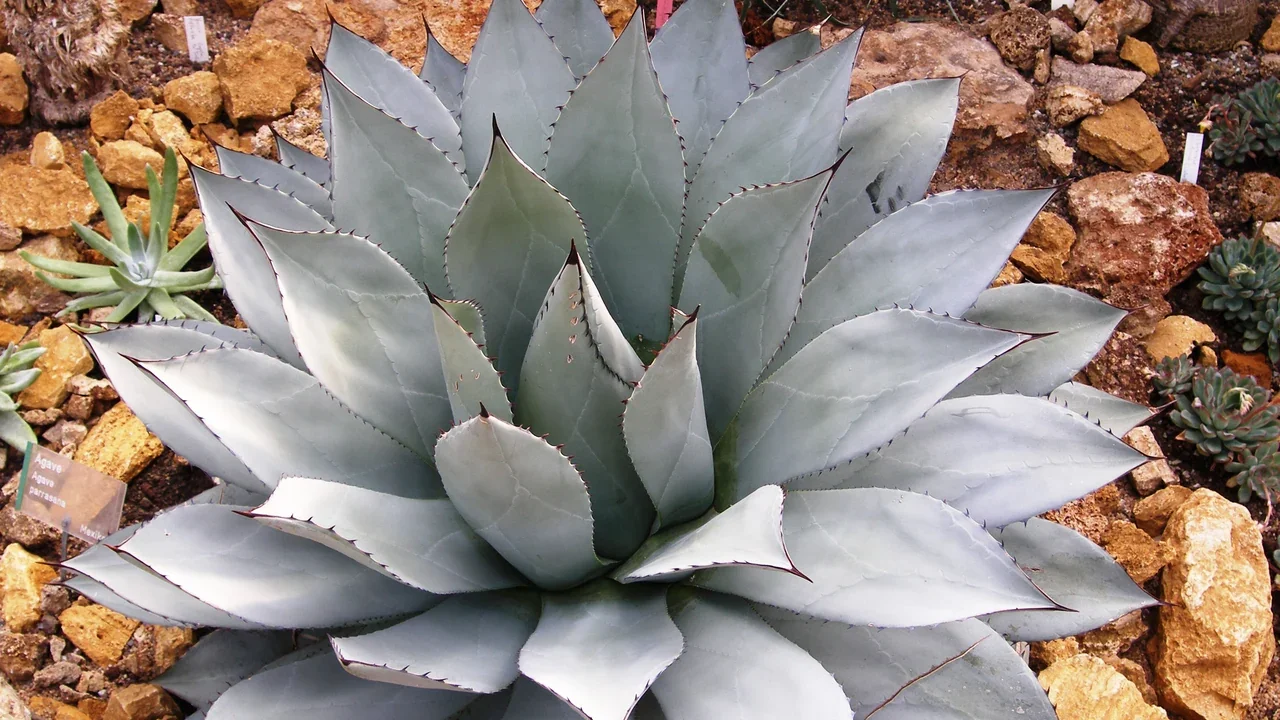
Agave parrasana
The Gardening Year
Best months in UK gardens · full planting calendar →
🖨 Print-friendly care cardAt a Glance
| Botanical name | Agave parrasana |
|---|---|
| Common name(s) | Cabbage Head Agave |
| Family | Asparagaceae |
| Plant type | succulent (Monocarpic; the flowering rosette dies after producing a flower head, but offsets may form and continue growing.) |
| Height × Spread | 60–100 cm × 60–100 cm |
| Position | Full sun |
| Soil | Very free-draining gritty cactus compost; avoid wet winter soil. |
| Toxicity | Not yet established. Do not assume this plant is safe for people or pets. |
| Native range | North East Mexico |
Growing Agave parrasana in the UK
Treat this Mexican agave as a plant for a sunny, sheltered position rather than an ordinary damp border. A substantial container makes it easier to provide sharp drainage and protect it when prolonged wet or freezing weather arrives. Choose a pot with unobstructed drainage holes and a gritty, peat-free cactus mix.
Watering and winter protection
Give water during active growth, allowing excess to escape completely. Reduce watering as temperatures and light levels fall, and avoid keeping the roots cold and wet over winter. RHS guidance for agaves stresses full sun and a free-draining compost; hardiness differs between plants and cultivars, so confirm the exact form before trying permanent outdoor planting.
Handling and ongoing care
Leave room around the stiff, sharply pointed leaves, especially beside paths and seating. Wear sturdy gloves when handling or repotting. These architectural succulents normally need little pruning beyond the careful removal of damaged or dead leaves; check for pests while inspecting the leaf bases.
Source: RHS gardening guidance. Advice is adapted to UK growing conditions.
Pests and Diseases
| Problem | Symptoms | Management |
|---|---|---|
| Root rot | Leaves become soft, mushy, and discoloured as the base of the plant collapses. | Ensure excellent drainage with gritty compost and water only when the soil is completely dry. |
| Mealybugs | White, cottony wax-like clusters appear in leaf axils and on stems. | Isolate the plant and treat infested areas with a cotton bud dipped in methylated spirits or insecticidal soap. |
| Scale insects | Small, immobile brown or grey bumps attach to leaves and stems, often secreting sticky honeydew. | Scrape off visible scales manually and apply a systemic insecticide if the infestation is severe. |
| Sunburn | Leaves develop bleached, white, or brown necrotic patches on the most exposed surfaces. | Acclimatise the plant gradually to brighter light and provide shade during intense midday summer sun. |
| Cold damage | Leaves turn translucent, grey, or black and become soft due to frost exposure. | Keep the plant above 5°C in winter and ensure it is completely dry before cold weather arrives. |
Or browse the full plant problem solver to diagnose an issue by symptom.