Tomato
Solanum lycopersicum · love apple
The Gardening Year
Best months in UK gardens · full planting calendar →
🖨 Printable care card (PDF)At a Glance
| Botanical name | Solanum lycopersicum |
|---|---|
| Common name(s) | tomato, love apple |
| Family | nightshade |
| Plant type | annual (vulnerable to frost, though sometimes living longer in greenhouses) |
| Height × Spread | 1.5–2.5 m × 50–100 cm |
| Position | Full sun |
| Soil | Moist but well-drained, fertile soil; clay, loam or sand |
| Flowering | June–August |
| Toxicity | No specific toxicity is listed by the RHS. This is not a guarantee of safety — check with a vet or the ASPCA before pets or children eat any plant. |
| Native range | western South America |
Overview
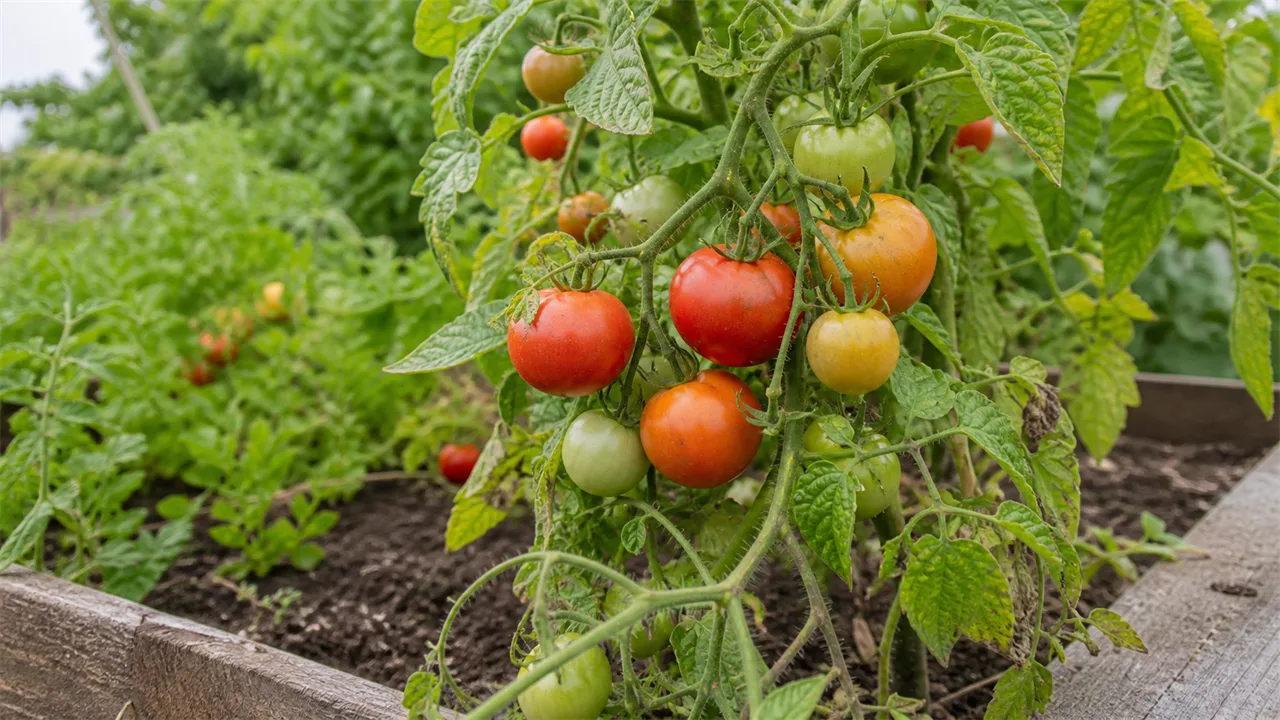
Tomato (Solanum lycopersicum) is a tender perennial from the Solanaceae family, grown as an annual in the UK for its edible fruits. The cultivated tomato we eat today descends from wild ancestors in the Andean foothills of South America and reached Britain via Spanish and Italian trade routes in the sixteenth century. Despite being botanically a berry-bearing fruit, it's treated as a kitchen vegetable and is the most widely grown crop in British allotments and greenhouses.
Growing your own matters because a vine-ripened tomato, picked warm from the plant in August, is a different ingredient entirely from anything you can buy. UK shop-bought tomatoes are picked under-ripe for shipping and rarely develop full sugar and aroma. A single cordon plant in a growbag can yield 4–6 kg over a season; a well-tended greenhouse vine, 8 kg or more. Tomatoes also suit every British growing setup — greenhouse, polytunnel, cold frame, sunny patio, or outdoor bed in milder regions.
Sowing
Tomatoes need a long growing season, so all UK sowings start indoors under heat. Sow from late January to late March depending on what you're growing them in:
- Heated greenhouse (8–10°C minimum night temperature): late January to mid-February for an early June crop.
- Unheated greenhouse / polytunnel: mid-February to mid-March for a July start.
- Outdoor cultivation: mid-March to late March only. Earlier outdoor sowings produce leggy plants that won't go out until June anyway.
How to sow: Sow into seed trays or modular trays at 5 mm depth in fine seed compost. Keep at 18–21°C — a heated propagator with a thermostat is ideal. Germination takes 7–14 days. As soon as the seed leaves (cotyledons) are fully open, prick out into 9 cm pots and grow on at 16–18°C. Pot on again into their final 10–12 litre container, growbag, or bed once the first truss is visible.
UK region-aware windows:
| Region | Indoor sow | Plant out |
|---|---|---|
| South-west England, Channel Islands | Late Jan – late Feb | Late April (under cover) |
| South-east, Midlands, Wales | Mid-Feb – mid-March | Mid-May (under cover), early June (outdoor) |
| Northern England, Yorkshire | Early – late March | Late May (under cover), mid-June (outdoor) |
| Scotland, upland north | Mid – late March | Early June (under cover only); outdoor is risky |
Spacing: 45–60 cm between cordon plants; 60–90 cm between bush types, which sprawl.
Growing
Tomatoes are hungry, thirsty, and frost-tender. Three rules: water consistently, feed weekly once the first truss sets, and keep them above 10°C.
Watering: Irregular watering causes blossom end rot (a sunken black patch on the bottom of the fruit) and fruit split. In a greenhouse, water in the morning onto compost, not leaves. Outdoor plants need watering during dry spells — a typical July tomato in a growbag uses 1–2 litres per day. Mulch with straw or compost to keep moisture even.
Feeding: Once the first truss has set (small green fruits visible), switch to a high-potash liquid feed (tomato feed, comfrey tea, or seaweed feed) every 7–10 days. Before that, plain water is enough — over-feeding young plants gives lush leaves and few fruits.
Training: Cordon (indeterminate) varieties — the tall single-stemmed types like 'Gardener's Delight' and 'Sungold' — need the side shoots removed. Pinch them out when 5–7 cm long, in the leaf axil. Bush varieties don't need pinching; let them sprawl or tie to a short stake.
Conditions: Day temperature 18–24°C, night 13–18°C. Above 30°C fruit fails to set; pollen dies. Below 10°C growth stalls. Greenhouses need ventilation from late April and damping down (hosing the floor) on hot days to keep humidity up. Outdoor plants do best against a south-facing wall.
Pests and disease: Watch for whitefly and aphids under cover (encarsia wasps or sticky traps); potato blight (Phytophthora infestans) outdoors in warm, wet summers — the same disease that hits British potatoes. Remove lower leaves touching the soil and grow resistant varieties outdoors ('Mountain Magic', 'Crimson Crush', 'Losetto').
Supporting
Cordon tomatoes need tall support — 1.8 m (6 ft) bamboo canes for outdoor plants, or soft string tied to the greenhouse ridge. Tie the main stem to the cane every 20–30 cm with soft twine in a figure-of-eight; never tie tight against the stem. As the plant grows, remove the lower yellowing leaves up to the lowest ripening truss — this improves airflow and speeds ripening. Pinch out the growing tip of cordons in early August (outdoor) or late August (greenhouse), two leaves above the top truss you've chosen to keep. This focuses the plant on ripening existing fruit rather than setting more.
Bush varieties need only a short 60 cm stake or a wire cage to keep fruit off the soil. Heavy cropping types like 'Tumbler' grown in hanging baskets need no support at all.
Harvesting
Tomatoes are ready when they are fully coloured and slightly soft to a gentle squeeze — not rock-hard. The time from sowing to first harvest is roughly 16–20 weeks: a March sowing under cover picks from late July; a January heated sow picks from June.
UK region-aware harvest windows:
| Region | Greenhouse | Outdoor |
|---|---|---|
| South-west, south coast | Late June – October | Late July – early October |
| Midlands, south-east, Wales | Mid-July – October | Early August – late September |
| Northern England | Late July – early October | Mid-August – mid-September (unreliable) |
| Scotland | Late July – September | Generally not recommended |
Pick regularly — every 2–3 days in peak season. Fruit left too long on the vine splits, and the plant slows new production. At season's end (late September to early October), pull the whole plant and ripen the green fruits indoors on a windowsill, in a paper bag with a banana, or wrapped individually in newspaper. Green tomatoes can also be used for chutney.
Storing
Ripe tomatoes don't store well — eat them within a few days at room temperature. Never refrigerate a ripe tomato; the cold kills the flavour compounds and turns the flesh mealy.
For preserving a glut:
- Passata / bottled tomato sauce: Blanch, peel, blend, simmer 30 minutes, bottle in sterilised jars and water-bath for 20 minutes. Keeps 12 months unopened.
- Freezing: Wash, dry, freeze whole on a tray, then bag. Frozen tomatoes collapse to a pulp that's perfect for soups and stews from October to March.
- Sun-dried (UK oven method): Halve small tomatoes, salt cut-side up for an hour, then dry in a 90°C oven for 4–6 hours. Store in olive oil.
- Green tomato chutney: Use the late-season green fruits with onions, vinegar, sugar and spices for a Christmas cheese chutney.
Eating
A home-grown tomato needs almost nothing: a pinch of flaky sea salt, a drizzle of cold-pressed rapeseed oil, torn basil leaves. The high sugar and acidity balance that supermarkets never deliver makes even a 'Gardener's Delight' eaten over the sink worth the season's work.
Culinary uses range across the harvest: raw in salads and caprese, slow-roasted whole at 160°C for 90 minutes with garlic and thyme to concentrate into a paste, charred on the barbecue for salsa verde, or cooked down into a long-simmered ragù. Cherry tomatoes are best raw or briefly blistered in a hot pan with olive oil; beefsteak types like 'Costoluto Fiorentino' are best sliced thick and layered with mozzarella. Plum and paste varieties ('Roma', 'San Marzano') are the sauce tomatoes — thick flesh, few seeds, low water content.
Growing to eat rather than to look at is the point of a GYO tomato. Every British kitchen gets a working crop between July and October that pays back the seed packet many times over.
---
Cultivars and Varieties
| Cultivar | Height | Flower | Notes | AGM |
|---|---|---|---|---|
| 'Acme' | — | — | said to be in the parentage of most cultivars for the next twenty-five years, introduced in 1875 | |
| 'Paragon' | — | — | introduced in 1870 |
Pests and Diseases
| Problem | Symptoms | Management |
|---|---|---|
| Tomato blight | Dark brown patches on leaves and stems, often with white fungal growth, leading to rapid collapse. | Improve air circulation, avoid wetting foliage, and remove infected plant parts immediately. |
| Glasshouse whitefly | Tiny white flies swarm when disturbed; sticky honeydew on leaves promotes black sooty mould. | Use yellow sticky traps for monitoring and control populations with biological agents or approved insecticides. |
| Blossom end rot | The base of the fruit turns dark brown, sunken, and leathery due to calcium deficiency. | Water regularly to maintain even soil moisture and ensure adequate calcium in the growing medium. |
| Tomato leaf mould | Yellowing leaves with a fuzzy, olive-green or greyish fungal growth on the undersides. | Ensure good ventilation, avoid overcrowding, and remove severely affected leaves to reduce humidity. |
| Magnesium deficiency | Older leaves develop yellowing between the veins while the veins remain green. | Apply a high-potassium tomato feed containing magnesium or use Epsom salts solution. |
Or browse the full plant problem solver to diagnose an issue by symptom.
Companion planting
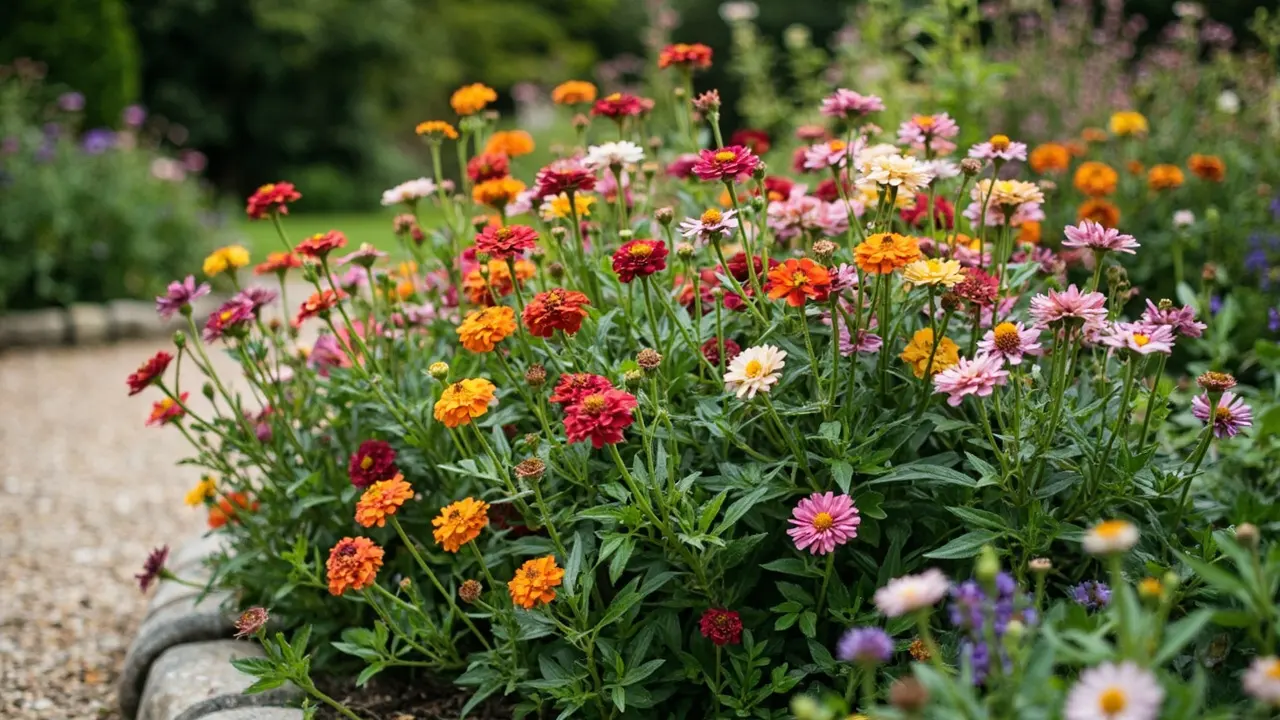
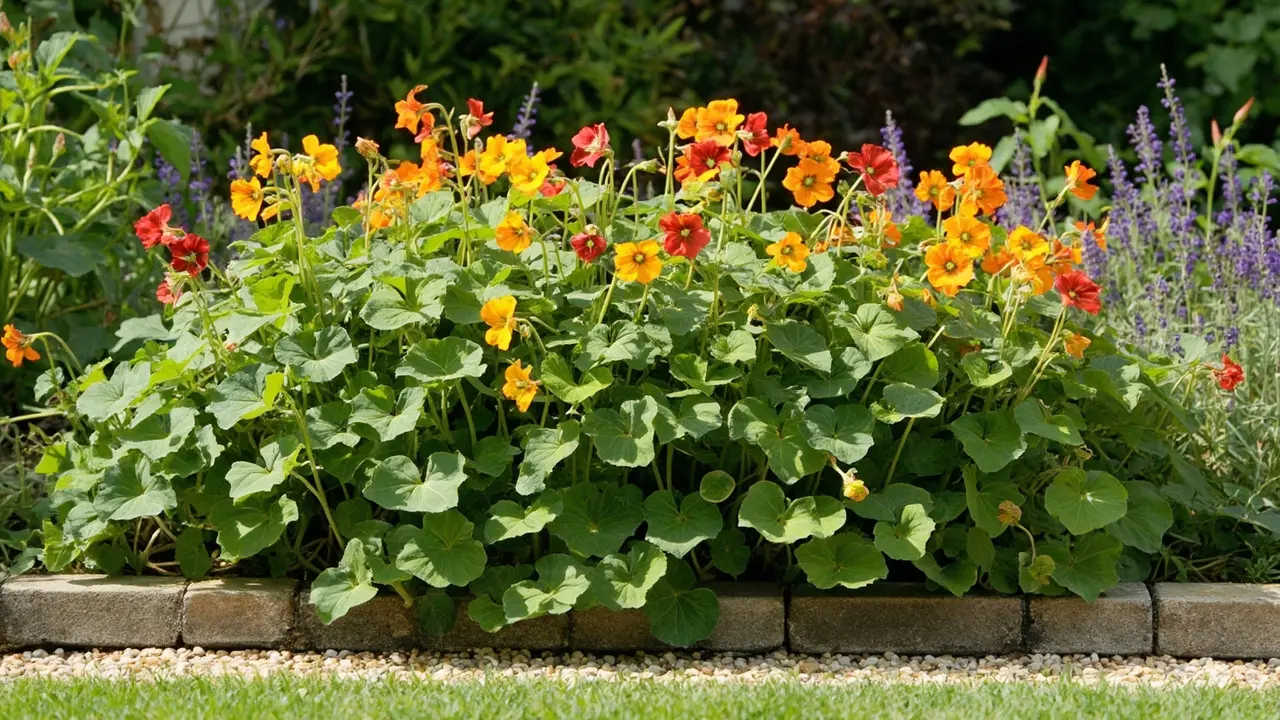
✔ Grows well with: Borage, carrot, Chives, great basil, marigolds, Pot Marigold.
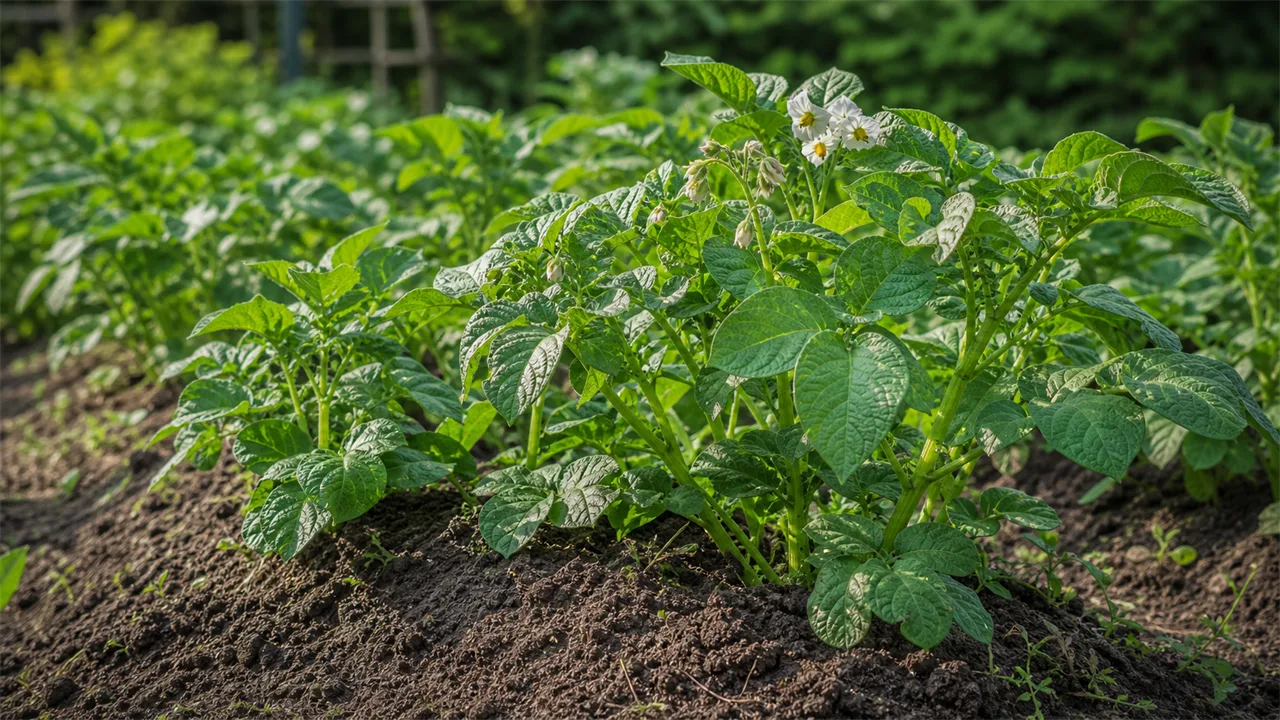
✘ Keep apart from: Florence fennel, potato.
Full companion planting chart →
Tomato in our guides
- A Guide to Companion Planting
- Container Gardening for Beginners
- Container Gardening for Beginners: Pots, Compost and Care
- Containers for Growing Vegetables
- Crop Rotation Explained for UK Vegetable Gardens
- Drip Irrigation Systems: Save Time and Water
Recommended Products
GardenWizz earns a commission from qualifying purchases made through affiliate links on this page (including links within the article) — as an Amazon Associate, and from Thompson & Morgan via the Awin network. This does not affect the price you pay. See our disclaimer for details.