
Best Climbing Plants for UK Walls and Fences
A bare fence or blank wall is wasted growing space. Choose the right climber and that same square metre of garden becomes flowers from May to October, shelter for nesting birds, a windbreak for the…
Best Climbing Plants for UK Walls and Fences
A bare fence or blank wall is wasted growing space. Choose the right climber and that same square metre of garden becomes flowers from May to October, shelter for nesting birds, a windbreak for the border behind it, and a softening backdrop for everything else. The trick is matching the plant to the support, the aspect, and the soil you actually have — not the one in the catalogue photo.
This guide is for anyone with a fence panel, brick wall, pergola post, or obelisk that needs dressing in the UK climate. It covers when to plant, how to fix the support so it doesn't pull the fence down, and which climbers genuinely earn their keep on heavy clay, dry shade, and north-facing walls.
When to plant and plan the job
The best planting window is October to April, while the plant is dormant. Container-grown climbers from a garden centre can go in at any time the ground isn't frozen or waterlogged, but an autumn or early-spring planting gives roots a full season to establish before the first hot summer.
Do the structural work first. Most climbers need something to cling to or weave through, and that "something" has to bear the weight of a mature plant laden with rain. A well-grown wisteria can exceed 20 kg per stem run; a five-year-old Virginia creeper will cover a 3 m x 2 m panel. Fix supports into brick or sound masonry with 8 x 60 mm masonry screws and 6 mm wall plugs, spaced every 60–80 cm. On a fence, fix a horizontal wire system (galvanised or stainless steel wire, 2 mm gauge, tensioned with vine eyes) about 5 cm off the fence face so air can circulate behind the foliage and the wood doesn't rot.
What you'll need
- The climber (pot-grown, 2–3 litre size is the sweet spot for value vs establishment speed)
- A spade and fork, plus a bucket of water for soaking the rootball
- Two canes per plant, at least as tall as the plant, to lead it to the support
- Soft garden twine in 2–3 mm width — never wire, which cuts into swelling stems
- A 50-litre bag of peat-free multipurpose or John Innes No 3 compost for backfilling
- A handful of bonemeal (or mycorrhizal granules) worked into the backfill
- Mulch: 75–100 litres of bark or well-rotted garden compost, laid 5–8 cm deep after planting
- Tree ties with a rubber buffer for any climber going up a post
Step-by-step: planting and training
- Soak the rootball in the bucket for 20–30 minutes until bubbles stop rising. Dry rootballs repel water from the surrounding soil and the plant sulks all summer.
- Dig the planting hole 30–50 cm from the wall or fence (not hard against it — the rain shadow there is bone-dry in summer), and twice as wide as the pot. Square the base and sides with the fork to stop the roots circling.
- Mix the backfill 50:50 with compost and add bonemeal at the rate on the packet. Throw a few handfuls of the rubble from the hole back in first if drainage is slow on clay.
- Plant at the same depth it was in the pot — you can see the old soil mark on the stem. Firm with your heel, water with a full 10-litre can even in damp weather, and lay the mulch, keeping it 5 cm clear of the stem.
- Lead the stems to the support with the two canes tied in a V from the planting spot to the lowest wire or trellis rail. Fan the stems out sideways, not straight up — horizontal or 45° shoots flower more heavily on climbers like wisteria, climbing roses, and pyracantha.
- Tie in every 30–40 cm during the growing season. New growth wanders off in surprising directions and a stem left to flap gets snapped by July wind.
Pick the climber for the spot
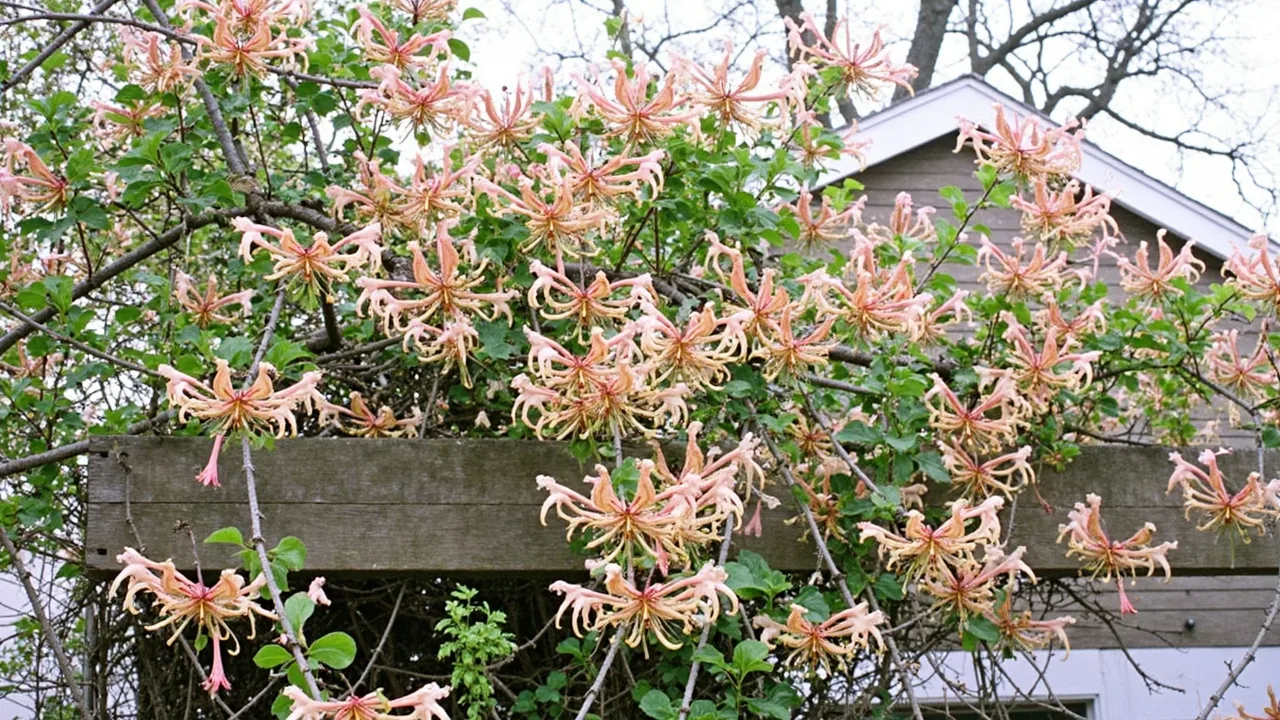
North- or east-facing wall (shade, slow to dry out): Hydrangea petiolaris climbs to 8 m by itself with adhesive roots and flowers in June; climbing hydrangea is the safe answer for a damp, shady brick wall. For something evergreen, try Lonicera japonica 'Halliana' (the late, white-flowered honeysuckle) — it copes with shade, flowers for months, and smells superb on still evenings.
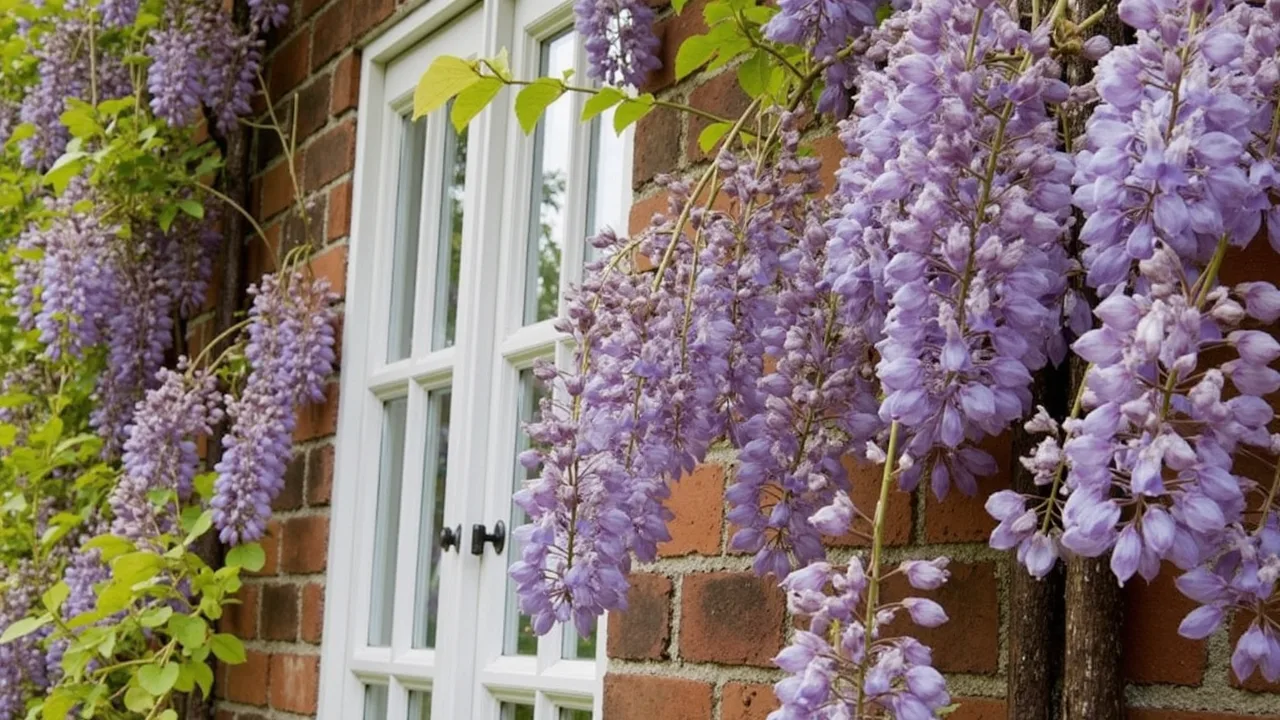
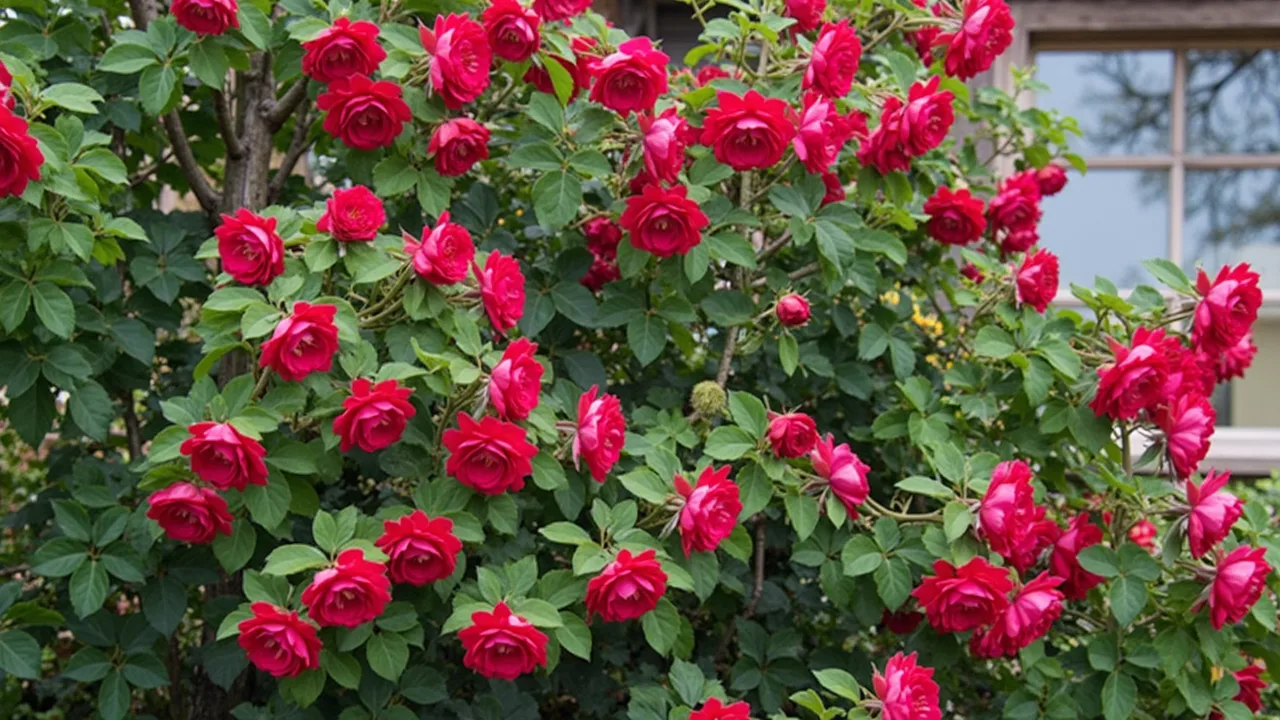
South- or west-facing wall (sun, free-draining): Wisteria sinensis or Wisteria floribunda, but only if you can commit to twice-yearly pruning (July, shortening new shoots to 5–6 leaves; January, cutting those same shoots back to 2–3 buds). Without it you get foliage and no flowers. For a lower-maintenance option, a climbing rose such as 'The Generous Gardener' or 'Gertrude Jekyll' will repeat-flower from June to September on a sunny fence.
Fence panels, not walls: Self-clingers (ivy, Virginia creeper) hold on with adhesive pads and need no wires, but they will mark fence timber and make it harder to repaint or replace panels. On a fence you can re-treat every few years, choose a twining climber — clematis, honeysuckle, perennial sweet pea — and use a trellis panel fixed to the fence with 25 mm stand-off brackets to keep airflow behind the foliage.
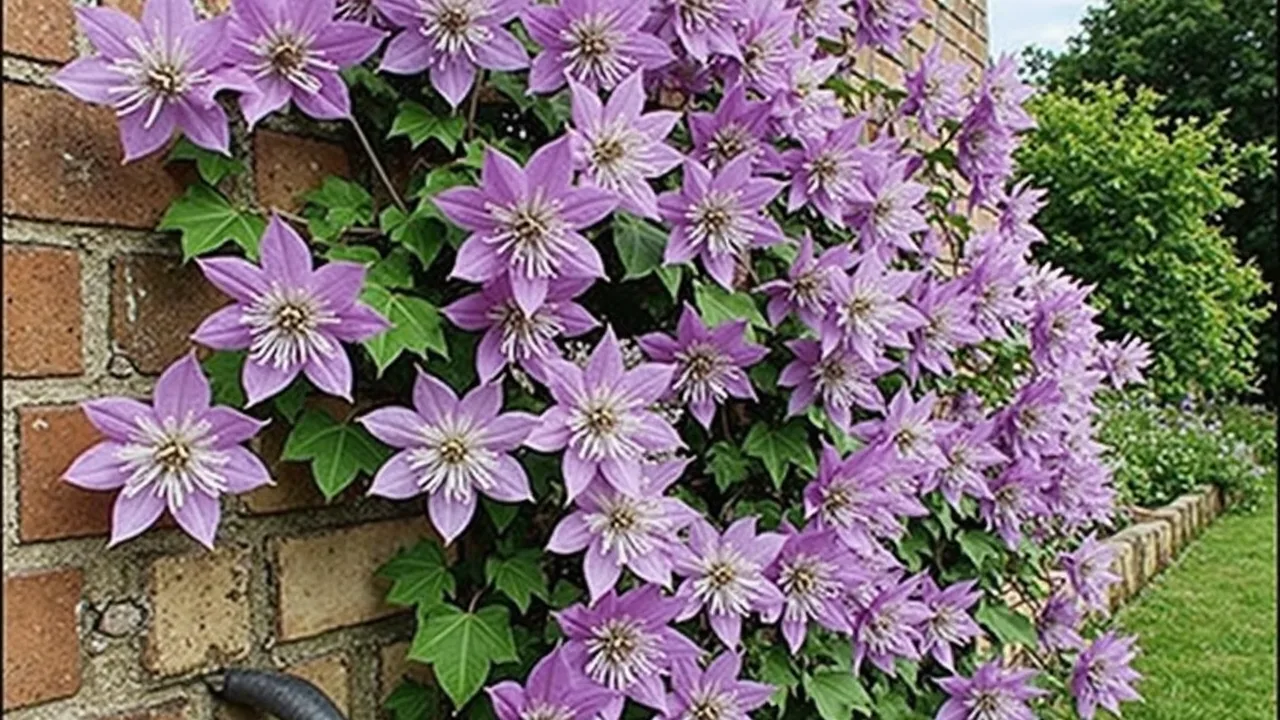
Heavy clay, damp soil: Clematis 'Jackmanii' types and most roses thrive. Avoid Mediterranean sun-lovers like trachelospermum unless the base is in well-drained, improved soil.
Common mistakes UK gardeners make
- Planting too close to the wall. The rain shadow is dry; the soil close to brick or concrete is full of builder's rubble. Plant 30–50 cm out and lead the stems in.
- Letting the first year's flowers run to set seed on wisteria or clematis. Pinch them off in year one; the plant's job is roots, not seed.
- One pruning a year on wisteria. You get a tangle of whippy growth and no blooms. Two prunings is non-negotiable.
- Using wire ties. A single season of growth swells the stem and the wire bites in, girdling the shoot. Use soft twine and re-tie every year.
- Forgetting the watering can in year one. A newly planted climber in a dry May or June can die back to the base. Water a full 10-litre can once a week in dry spells for the first growing season.
Troubleshooting
Yellow leaves on a climber in its first spring: Usually cold, wet soil rather than hunger. Hold off feeding until you see real new growth, then apply a general-purpose fertiliser.
No flowers on wisteria after three years: Almost always pruning, or a high-nitrogen feed pushing leafy growth at the expense of blooms. Switch to a high-potash feed (tomato feed is fine) in late spring and commit to the July and January pruning.
Clematis wilt (sudden collapse in early summer): Cut the affected stems back to healthy growth, even at ground level — most modern large-flowered clematis will reshoot from the base. Water and mulch.
Greenfly and blackfly on roses and honeysuckle in late May: A jet of water in the morning knocks them off; encourage blue tits with a nearby nestbox — they do a serious job on aphid colonies.
Stems pulling away from the support in autumn gales: You didn't tie in often enough. Cut the loose stems back, re-tie what remains, and add an extra wire or trellis rail at the weak point.
A simple starter plan for a 6 m fence panel
If you want a fence covered in one season with minimum fuss: plant a climbing rose ('The Generous Gardener') at one end and a late-flowering clematis (Group 3, e.g. 'Etoile Violette') 2 m along. Train the rose up the panel and over the top; let the clematis scramble through the rose to add a second flush of colour from July to September. Add one Lonicera periclymenum at the far end for evening scent in July. Three plants, 12 months, and you have a fence that earns its keep.
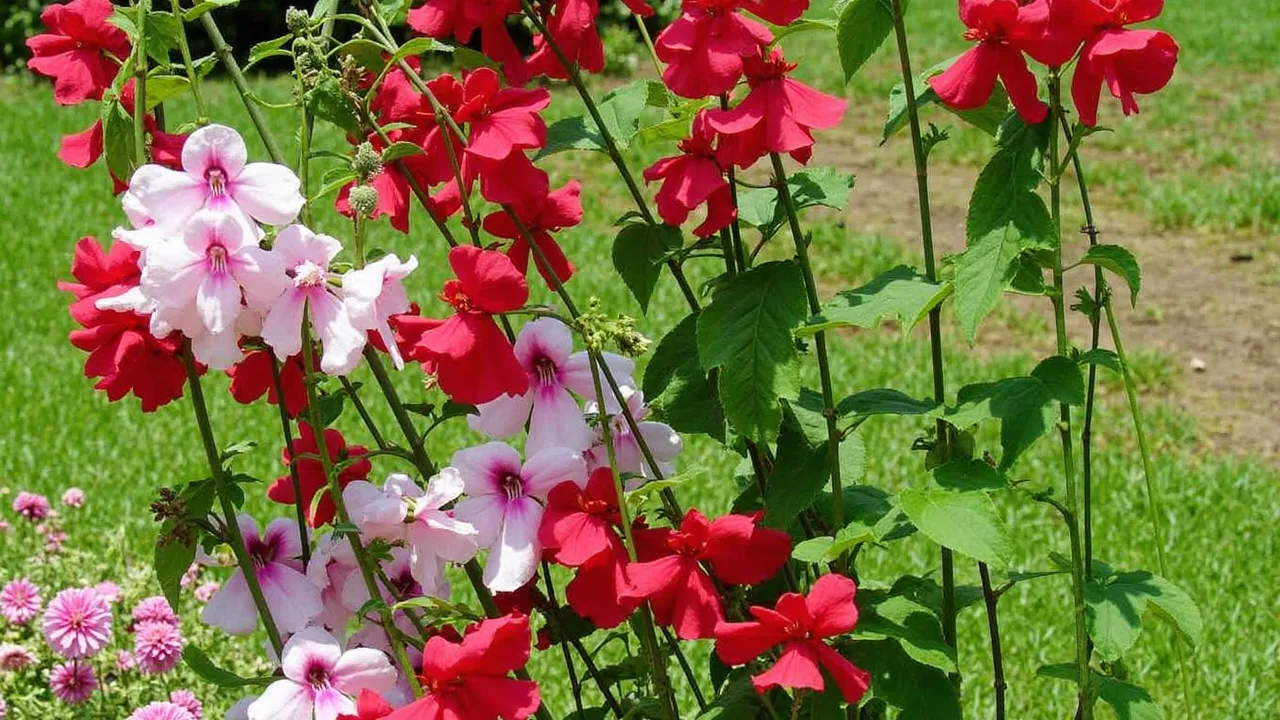
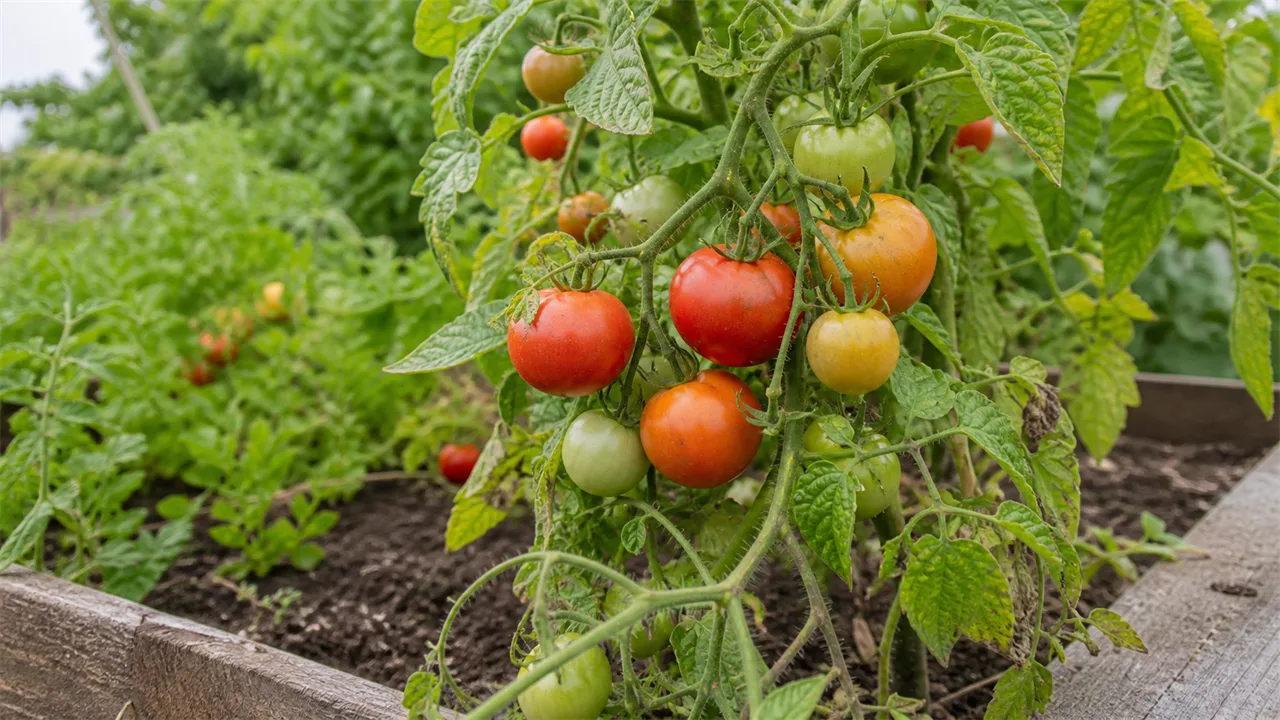
Plants in this guide
Recommended Products
GardenWizz earns a commission from qualifying purchases made through affiliate links on this page (including links within the article) — as an Amazon Associate, and from Thompson & Morgan via the Awin network. This does not affect the price you pay. See our disclaimer for details.
Related Articles
More →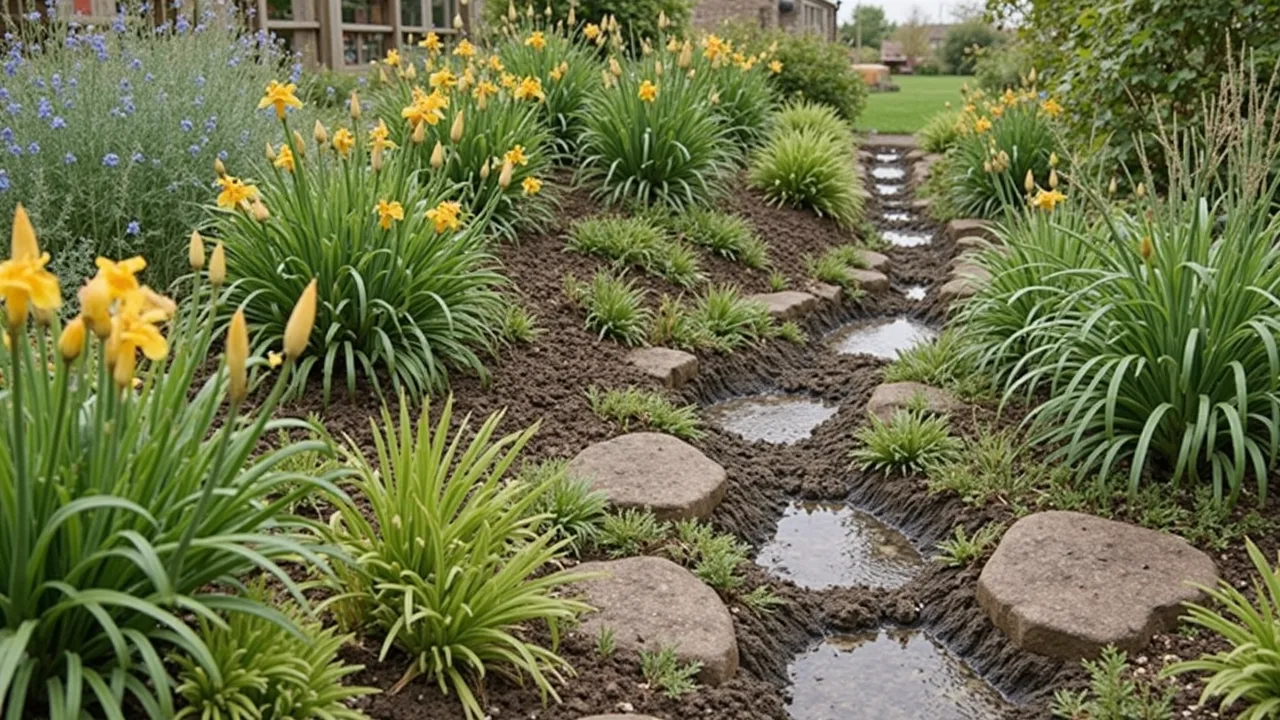 Garden Design
Creating a Rain Garden
12 June 2026A rain garden is a shallow, planted dip in the lawn or border that catches roof and paving runoff, lets it soak into the ground, and filters it through plant roots on the way down. In a UK garden it…
 Garden Design
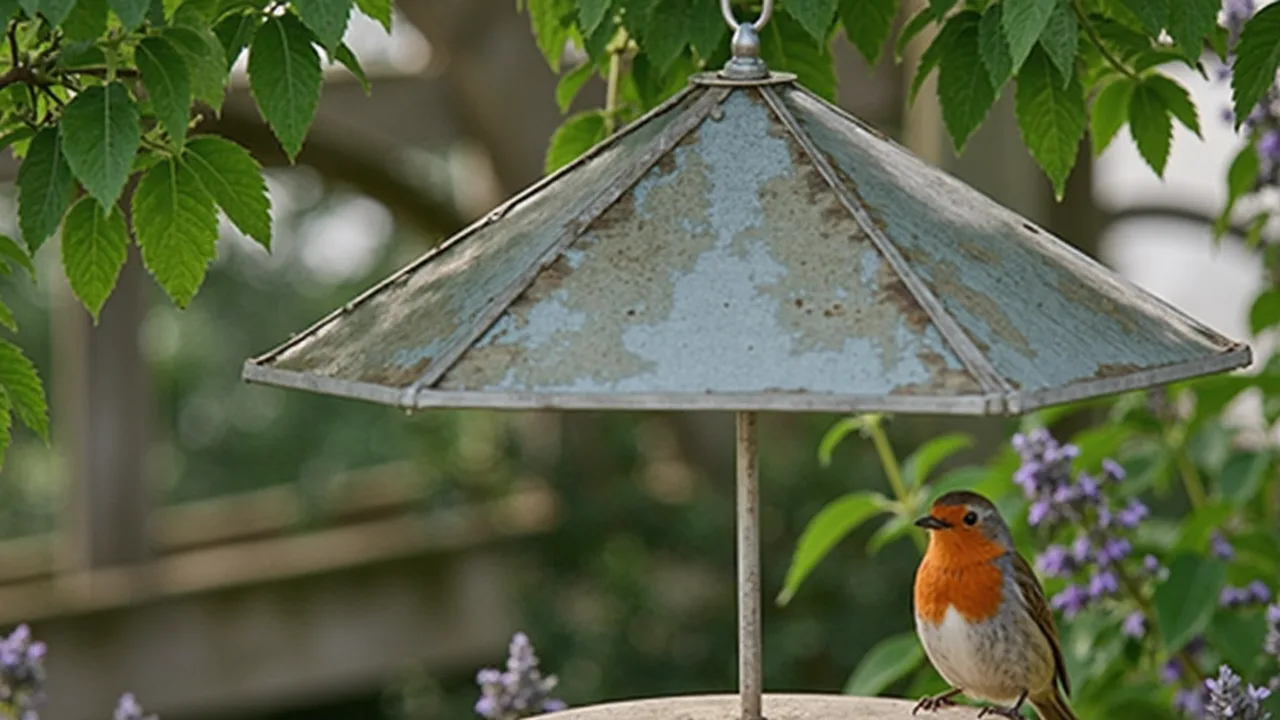
How to Attract Birds to Your Garden
12 June 2026A garden with birds is a working garden. They eat aphids, caterpillars, slugs and snails; they pollinate as they forage; and they tell you, quickly, when something in your patch is out of balance.…
 Garden Design
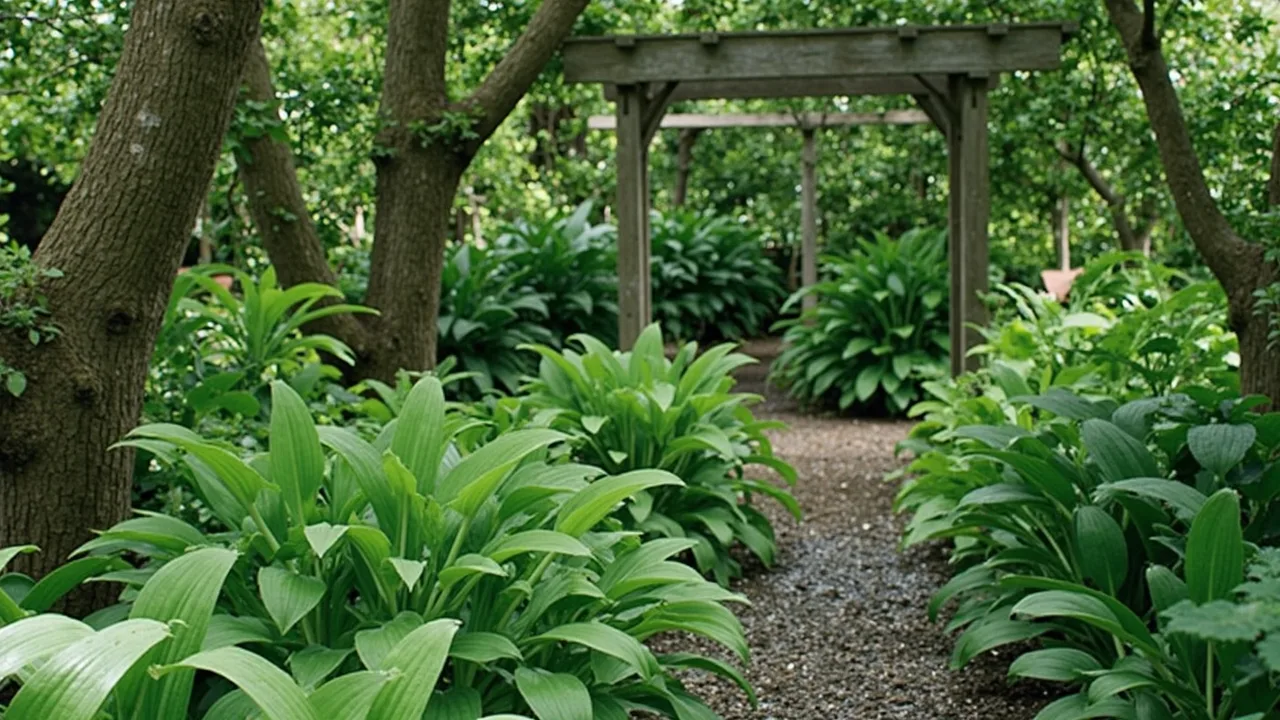
Planting a Shady Border
11 June 2026A shady border is the bit of garden everyone calls "the difficult patch" — the north-facing wall, the strip under the hedge, the side return nobody walks down. Planted badly, it stays bare or fills…