Rose
Rosa
The Gardening Year
Best months in UK gardens · full planting calendar →
🖨 Printable care card (PDF)At a Glance
| Botanical name | Rosa |
|---|---|
| Common name(s) | rose |
| Family | Rosaceae |
| Plant type | shrub (Plants last for many years) |
| Height × Spread | 1–2.5 m × 80–150 cm |
| Position | Full sun, Partial shade |
| Soil | moisture-retentive, fertile, well-drained soils |
| Flowering | May |
| Toxicity | No specific toxicity is listed by the RHS. This is not a guarantee of safety — check with a vet or the ASPCA before pets or children eat any plant. |
| Native range | — |
Roses are woody flowering plants of the genus Rosa, in the family Rosaceae. They have been cultivated in British gardens for centuries and remain among the most widely grown ornamental shrubs. Modern roses range from compact patio forms to large climbing and shrub types, offering a long flowering season and a broad colour palette. The following entry summarises the key characteristics, cultivation requirements and common issues relevant to UK gardeners.
Overview
The genus Rosa contains over 100 wild species and a very large number of hybrid cultivars. The most familiar garden groups in the UK are hybrid teas, floribundas, shrub roses, climbing roses, rambling roses, patio and miniature roses, and old garden roses such as damasks, albas, gallicas and Bourbons. Roses are hardy across most of the UK, with the Royal Horticultural Society classifying many modern cultivars in the H6 and H7 hardiness categories, meaning they tolerate minimum temperatures between roughly −15 °C and −20 °C. Specific cultivar ratings should be confirmed with the supplier, as hardiness varies by variety.
Roses are suitable for mixed borders, dedicated rose beds, informal cottage plantings, walls, pergolas, and large containers. Flowering season for most types runs from early or mid-June through to September, with repeat-flowering cultivars producing successive flushes until the first frosts.
Appearance
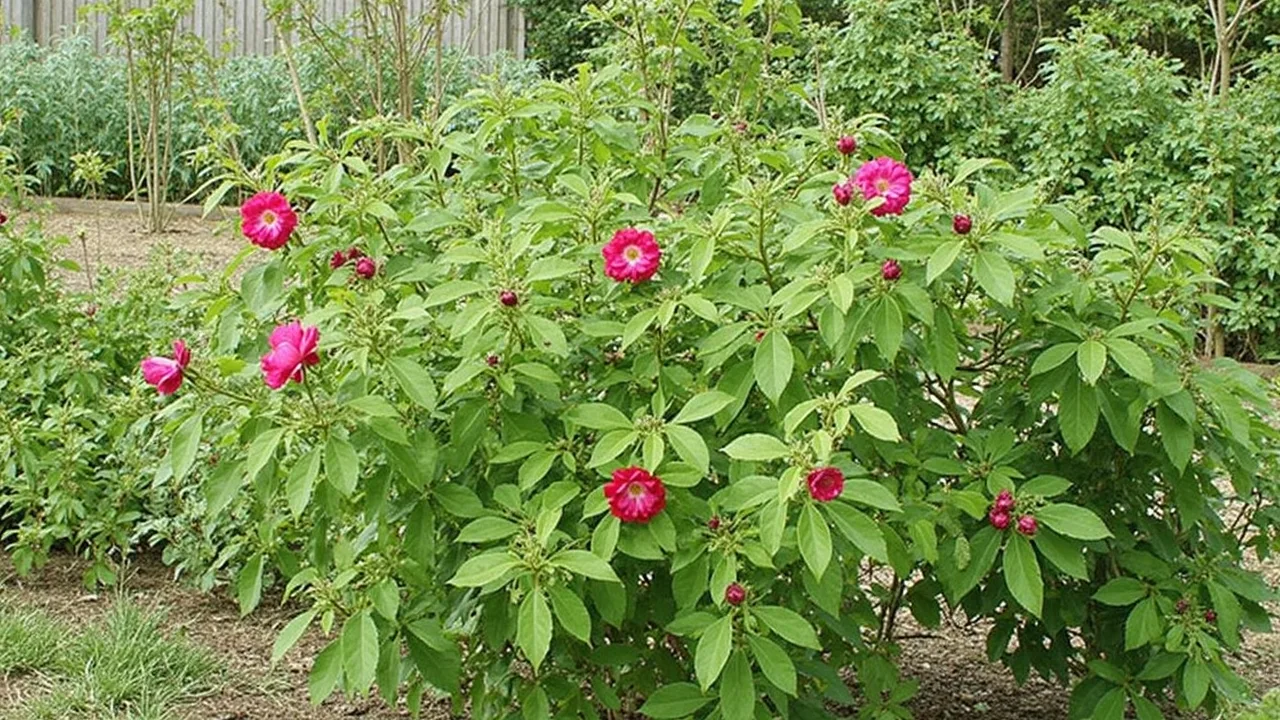
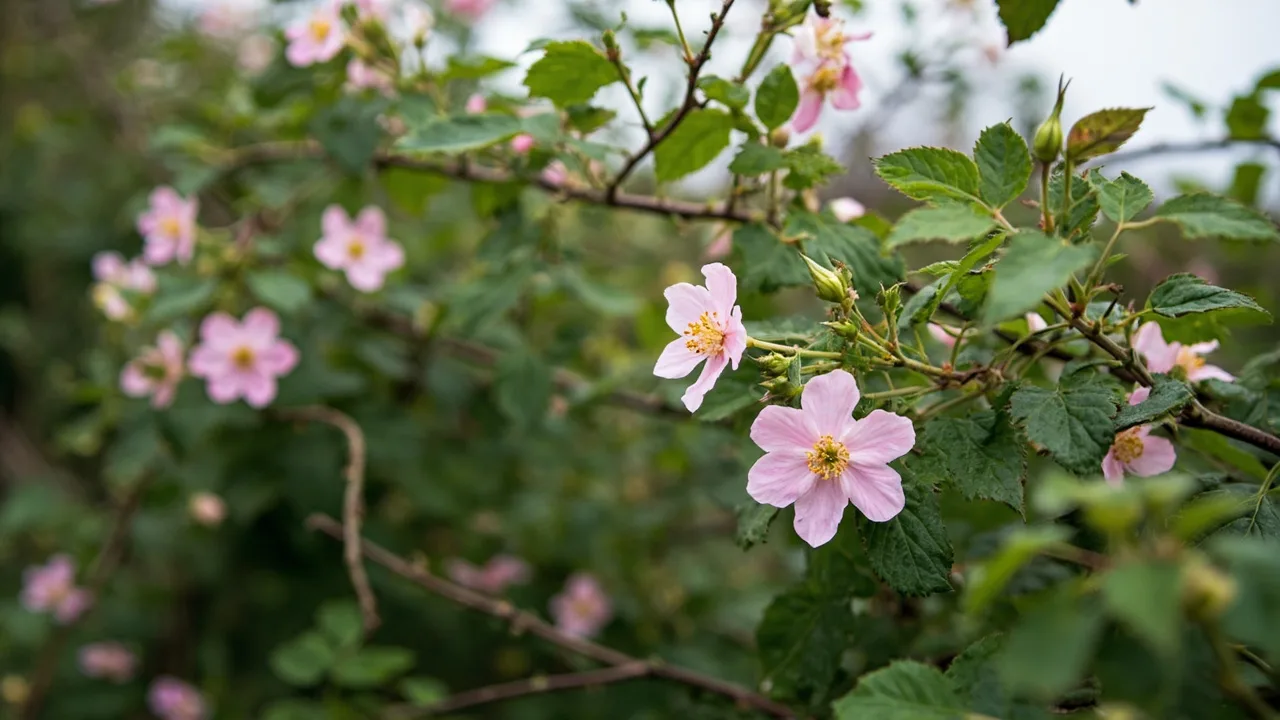
Roses are deciduous or, in a very small number of cases, semi-evergreen shrubs with compound leaves usually composed of five to seven toothed leaflets. Stems carry thorns (more correctly, prickles) that can be sparse or dense depending on the cultivar. Growth habit varies widely: hybrid teas tend to be upright and relatively sparse; floribundas are bushier with clustered flowers; shrub and old garden roses are often rounded and dense; climbers and ramblers produce long, flexible canes that require support.
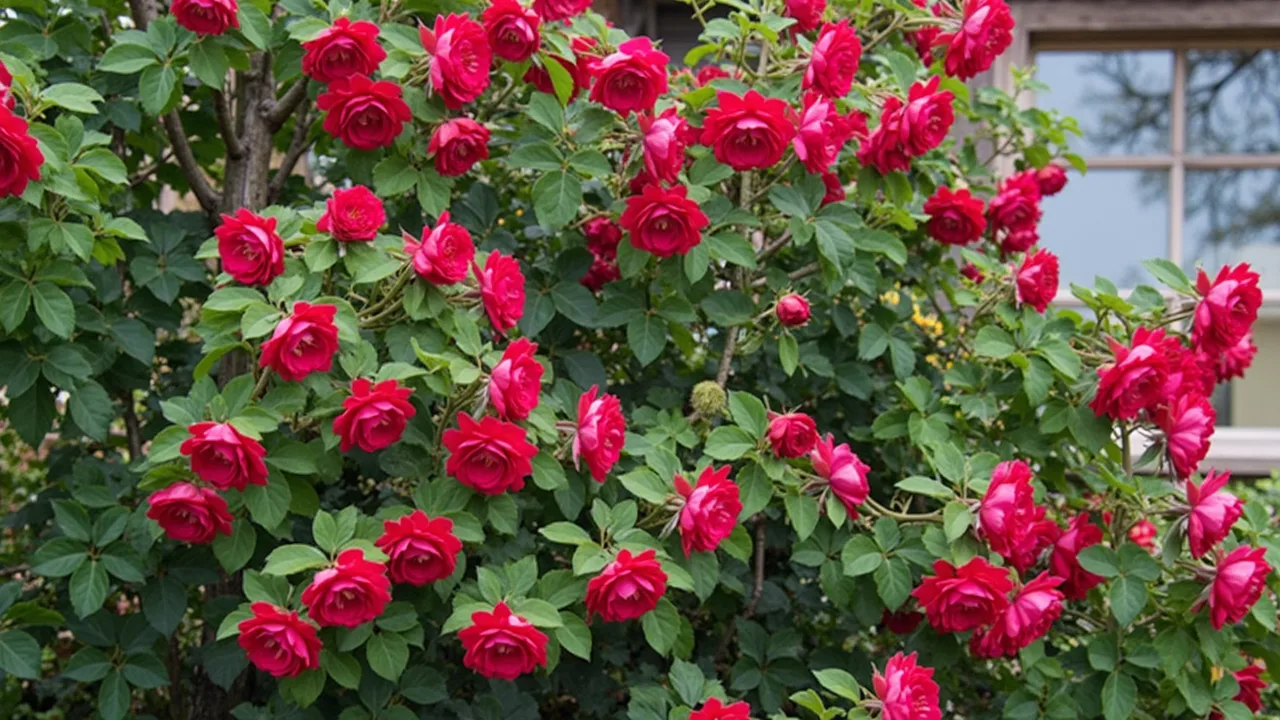
Flowers are single to fully double, with forms ranging from shallow open cups to high-centred exhibition shapes. Colours include white, pink, red, yellow, orange, apricot, mauve and bicolours, though true blue is absent. Many cultivars are strongly scented, though fragrance varies considerably; the classic "old rose" perfume is most consistently found in old garden roses and some English roses. Foliage is typically mid- to dark green and may be matte or glossy; new growth in spring is often flushed with red or bronze.
Growing Conditions
Roses grow best in an open, sunny position that receives at least four to six hours of direct sunlight per day. They tolerate very light dappled shade but flower less freely in deeper shade. Cold, exposed sites and pockets where air stagnates increase the risk of fungal disease, so good air movement around the plant is beneficial.
Soil should be fertile, moisture-retentive but well drained, and ideally slightly acidic to neutral (pH 6.0 to 7.0). Roses are deep-rooted and respond poorly to compacted or waterlogged ground. Before planting, it is worth digging in well-rotted manure or garden compost to a depth and width of at least 45 cm. In heavy clay, raised beds or generous additions of organic matter improve drainage; on thin, sandy soils, mulching and consistent watering are needed to keep the roots cool and active.
Most modern garden roses are grafted onto rootstocks such as Rosa canina or Rosa laxa. Own-root roses (grown from cuttings) are also available and may be preferred in colder regions where the top growth is occasionally killed back, as they will regrow true to type from the base.
Planting and Care
Bare-root roses are best planted between October and March, while the plants are dormant, avoiding periods when the ground is frozen or waterlogged. Container-grown roses can be planted at any time of year provided the soil is workable and watering is kept up during dry spells. The planting hole should be wide enough to accommodate the spread roots and deep enough so that the graft union sits roughly 2–5 cm below the soil surface. Backfill with the improved soil, firm in well, and water thoroughly.
Watering is most critical during the first two growing seasons while the root system establishes. Deep, infrequent watering encourages roots to penetrate further into the soil. In prolonged dry spells, soak the base of the plant rather than sprinkling the foliage.
Feeding: Apply a balanced rose fertiliser or general-purpose granular feed in spring as new growth begins, and again after the first flush of flowers to support repeat blooming. Mulching in late spring with a 5–8 cm layer of well-rotted compost or bark helps retain moisture, suppress weeds, and add organic matter.
Pruning depends on the type of rose. Hybrid teas and floribundas are typically pruned in late winter (February to early March in most of the UK) by removing weak, dead and crossing stems and shortening the remaining strong shoots to four or five buds. Climbers are pruned in autumn or early spring, with main framework canes left in place and side shoots shortened to two or three buds. Ramblers are usually pruned immediately after flowering, with one or two of the oldest canes removed at the base to encourage new growth. Shrub and old garden roses need only light shaping and the removal of dead, diseased or damaged wood.
Propagation: Roses can be propagated by hardwood cuttings taken in autumn, by semi-ripe cuttings in summer, or by budding onto rootstocks, which is the method used for most commercial cultivars.
Seasonal care: In March, prune and apply a spring feed. Deadhead repeat-flowering roses through summer to encourage further blooms. In autumn, cut back very long canes on climbers and ramblers to reduce wind rock, and collect fallen leaves to reduce overwintering disease. Mulch refresh can be carried out in spring rather than autumn to avoid encouraging rot around the crown.
Common Problems
Aphids (greenfly and blackfly) commonly colonise new shoots in late spring and can be washed off with a strong jet of water or controlled with insecticidal soap. Black spot, a fungal disease causing dark patches on leaves followed by yellowing and defoliation, is one of the most widespread problems, particularly in damp summers. Good hygiene (removing infected leaves, avoiding overhead watering) and resistant cultivars reduce incidence. Powdery mildew, producing a white dusty coating on leaves and buds, is favoured by dry, warm days and cool nights; mulching and good air circulation help.
Rose rust appears as small orange pustules on the undersides of leaves. Other issues include grey mould (botrytis) in wet weather, particularly on damaged flowers, and stem cankers. Pests such as rose sawfly larvae (also called rose slugworms) can skeletonise leaves in late spring. Two-spotted spider mite occasionally causes a fine pale mottling on leaves in hot, dry summers.
Most problems are reduced by good cultural practice: appropriate spacing, watering at the base, mulching, autumn clearance of fallen leaves, and choosing disease-resistant cultivars where possible. Chemical intervention is rarely necessary in well-managed gardens.
Popular Varieties
The following cultivars are widely available from UK rose nurseries and represent the main garden groups. Always confirm current availability and specific hardiness ratings with the supplier at the time of purchase.
- Rosa 'Queen Elizabeth' — a tall floribunda with clear pink, double flowers on long stems; widely grown and reliable.
- Rosa 'Iceberg' — a floribunda with clusters of pure white, lightly scented blooms; very floriferous and one of the most popular white roses in the UK.
- Rosa 'Mister Lincoln' — a hybrid tea with large, strongly fragrant, deep red flowers; a classic exhibition-style rose.
- Rosa 'Graham Thomas' — an English shrub rose with cupped, rich yellow flowers and a tea-like fragrance.
- Rosa 'New Dawn' — a hardy climbing rose with pale pink, semi-double flowers that repeat through summer and into autumn.
- Rosa rugosa cultivars (such as 'Alba' or 'Roseraie de l'Haÿ') — rugged shrub roses with wrinkled foliage, showy hips in autumn, and excellent tolerance of poorer soils and coastal conditions.
Cultivars and Varieties
| Cultivar | Height | Flower | Notes | AGM |
|---|---|---|---|---|
| 'Albéric Barbier' | — | — | RHS AGM (H5) | ✓ |
| 'Albertine' | — | — | RHS AGM (H6) | ✓ |
| 'Alexandre Girault' | — | — | RHS AGM (H6) | ✓ |
| 'Alibaba' | — | — | RHS AGM (H6) | ✓ |
| 'Alister Stella Gray' | — | — | RHS AGM (H5) | ✓ |
| 'Aloha' | — | — | RHS AGM (H6) | ✓ |
| 'Arthur Bell' | — | — | RHS AGM (H6) | ✓ |
| 'Ballerina' | — | — | RHS AGM (H6) | ✓ |
| 'Beau Narcisse' | — | — | RHS AGM (H7) | ✓ |
| 'Belvedere' | — | — | RHS AGM (H6) | ✓ |
| 'Blanche Double de Coubert' | — | — | RHS AGM (H7) | ✓ |
| 'Bleu Magenta' | — | — | RHS AGM (H6) | ✓ |
| 'Blushing Lucy' | — | — | RHS AGM (H6) | ✓ |
| 'Bobbie James' | — | — | RHS AGM (H6) | ✓ |
| 'Buff Beauty' | — | — | RHS AGM (H6) | ✓ |
| 'Cantabrigiensis' | — | — | RHS AGM (H6) | ✓ |
| 'Cécile Brünner' | — | — | RHS AGM (H5) | ✓ |
| 'Céleste' | — | — | RHS AGM (H6) | ✓ |
| 'Celsiana' | — | — | RHS AGM (H7) | ✓ |
| 'Cerise Bouquet' | — | — | RHS AGM (H6) | ✓ |
| 'Charles de Mills' | — | — | RHS AGM (H6) | ✓ |
| 'Chinatown' | — | — | RHS AGM (H6) | ✓ |
| 'Climbing Cécile Brünner' | — | — | RHS AGM (H5) | ✓ |
| 'Climbing Étoile de Hollande' | — | — | RHS AGM (H5) | ✓ |
| 'Climbing Iceberg' | — | — | RHS AGM (H5) | ✓ |
| 'Climbing Lady Hillingdon' | — | — | RHS AGM (H4) | ✓ |
| 'Climbing Madame Butterfly' | — | — | RHS AGM (H6) | ✓ |
| 'Climbing Shot Silk' | — | — | RHS AGM (H6) | ✓ |
| 'Compassion' | — | — | RHS AGM (H6) | ✓ |
| 'Constance Spry' | — | — | RHS AGM (H6) | ✓ |
| 'Cornelia' | — | — | RHS AGM (H6) | ✓ |
| 'Daisy Hill' | — | — | RHS AGM (H7) | ✓ |
| 'Debutante' | — | — | RHS AGM (H7) | ✓ |
| 'De Resht' | — | — | RHS AGM (H7) | ✓ |
| 'Dortmund' | — | — | RHS AGM (H7) | ✓ |
| 'Duc de Guiche' | — | — | RHS AGM (H7) | ✓ |
| 'Duchesse de Montebello' | — | — | RHS AGM (H7) | ✓ |
| 'Dupontii' | — | — | RHS AGM (H6) | ✓ |
| 'Fantin-Latour' | — | — | RHS AGM (H6) | ✓ |
| 'Felicia' | — | — | RHS AGM (H6) | ✓ |
| 'Félicité Parmentier' | — | — | RHS AGM (H6) | ✓ |
| 'Félicité-Perpétue' | — | — | RHS AGM (H6) | ✓ |
| 'Ferdinand Pichard' | — | — | RHS AGM (H6) | ✓ |
| 'Flower Carpet Coral' | — | — | RHS AGM (H6) | ✓ |
| 'Fragrant Delight' | — | — | RHS AGM (H6) | ✓ |
| 'Francis E. Lester' | — | — | RHS AGM (H6) | ✓ |
| 'François Juranville' | — | — | RHS AGM (H6) | ✓ |
| 'Fred Loads' | — | — | RHS AGM (H6) | ✓ |
| 'Fritz Nobis' | — | — | RHS AGM (H6) | ✓ |
| 'Fru Dagmar Hastrup' | — | — | RHS AGM (H7) | ✓ |
| 'Frühlingsgold' | — | — | RHS AGM (H7) | ✓ |
| 'Frühlingsmorgen' | — | — | RHS AGM (H7) | ✓ |
| 'Général Kléber' | — | — | RHS AGM (H7) | ✓ |
| 'Geranium' | — | — | RHS AGM (H5) | ✓ |
| 'Ghislaine de Féligonde' | — | — | RHS AGM (H5) | ✓ |
| 'Gloire de France' | — | — | RHS AGM (H7) | ✓ |
| 'Gruss an Aachen' | — | — | RHS AGM (H6) | ✓ |
| 'Henri Martin' | — | — | RHS AGM (H7) | ✓ |
| 'Honorine de Brabant' | — | — | RHS AGM (H6) | ✓ |
| 'Impératrice Joséphine' | — | — | RHS AGM (H7) | ✓ |
| 'Ispahan' | — | — | RHS AGM (H6) | ✓ |
| 'Just Joey' | — | — | RHS AGM (H6) | ✓ |
| 'Königin von Dänemark' | — | — | RHS AGM (H7) | ✓ |
| 'Korresia' | — | — | RHS AGM (H7) | ✓ |
| 'La Ville de Bruxelles' | — | — | RHS AGM (H6) | ✓ |
| 'Leverkusen' | — | — | RHS AGM (H6) | ✓ |
| 'Madame Alfred Carrière' | — | — | RHS AGM (H5) | ✓ |
| 'Madame Grégoire Staechelin' | — | — | RHS AGM (H6) | ✓ |
| 'Madame Hardy' | — | — | RHS AGM (H6) | ✓ |
| 'Madame Knorr' | — | — | RHS AGM (H7) | ✓ |
| 'Maigold' | — | — | RHS AGM (H6) | ✓ |
| 'Marchesa Boccella' | — | — | RHS AGM (H7) | ✓ |
| 'Mermaid' | — | — | RHS AGM (H5) | ✓ |
| 'Morning Jewel' | — | — | RHS AGM (H7) | ✓ |
| 'Narrow Water' | — | — | RHS AGM (H6) | ✓ |
| 'New Dawn' | — | — | RHS AGM (H7) | ✓ |
| 'Noisette Carnée' | — | — | RHS AGM (H7) | ✓ |
| 'Nuits de Young' | — | — | RHS AGM (H7) | ✓ |
| 'Parade' | — | — | RHS AGM (H6) | ✓ |
| 'Paul Transon' | — | — | RHS AGM (H6) | ✓ |
| 'Penelope' | — | — | RHS AGM (H5) | ✓ |
| 'Phyllis Bide' | — | — | RHS AGM (H6) | ✓ |
| 'Président de Sèze' | — | — | RHS AGM (H6) | ✓ |
| 'Prosperity' | — | — | RHS AGM (H6) | ✓ |
| 'Rambling Rector' | — | — | RHS AGM (H6) | ✓ |
| 'Raspberry Royale' | — | — | RHS AGM (H6) | ✓ |
| 'Reine des Viole ttes' | — | — | RHS AGM (H6) | ✓ |
| 'Sally Holmes' | — | — | RHS AGM (H6) | ✓ |
| 'Scabrosa' | — | — | RHS AGM (H7) | ✓ |
| 'Schneezwerg' | — | — | RHS AGM (H7) | ✓ |
| 'Seagull' | — | — | RHS AGM (H6) | ✓ |
| 'Southampton' | — | — | RHS AGM (H6) | ✓ |
| 'Stanwell Perpetual' | — | — | RHS AGM (H7) | ✓ |
| 'The Fairy' | — | — | RHS AGM (H6) | ✓ |
| 'The Garland' | — | — | RHS AGM (H6) | ✓ |
| 'Thérèse Bugnet' | — | — | RHS AGM (H7) | ✓ |
| 'Tuscany Superb' | — | — | RHS AGM (H7) | ✓ |
| 'Veilchenblau' | — | — | RHS AGM (H7) | ✓ |
| 'White Pet' | — | — | RHS AGM (H6) | ✓ |
| 'Wickwar' | — | — | RHS AGM (H6) | ✓ |
| 'William Lobb' | — | — | RHS AGM (H7) | ✓ |
| 'Yesterday' | — | — | RHS AGM (H6) | ✓ |
| 'Yvonne Rabier' | — | — | RHS AGM (H6) | ✓ |
Pests and Diseases
| Problem | Symptoms | Management |
|---|---|---|
| Black spot | Rapidly enlarging black patches with radiating strands appear on leaves, causing yellowing and premature leaf drop. | Improve air circulation, remove fallen leaves in autumn, and select resistant cultivars to reduce infection pressure. |
| Powdery mildew | A white, dusty fungal growth covers young leaves and shoots, often causing distortion and purpling of the foliage. | Plant in sunny, well-ventilated positions and prune out affected growth as soon as it is detected. |
| Replant disease | Newly planted roses struggle to establish, show poor growth, and may have rotten fine roots compared to plants in fresh soil. | Avoid planting roses in soil previously occupied by roses; swap with fresh soil or move the plant to a new site. |
| Rose rust | Bright orange pustules of spores appear on stems and leaves, particularly noticeable in spring around buds. | Prune out spring infections immediately and collect fallen leaves in autumn to destroy overwintering spores. |
| Shoot dieback | Individual shoots or branches wither and die back, often triggered by weather damage, poor care, or fungal entry. | Prune affected wood back to healthy tissue during dry weather and disinfect tools between cuts. |
| Slugs and snails | Irregular holes are eaten in young leaves and buds, often accompanied by silky trails and slimy residue. | Use physical barriers like copper tape or crushed eggshells, and hand-pick pests at night. |
For step-by-step help, read Dealing with Slugs and Snails, Treating Powdery Mildew and Tackling Black Spot on Roses. Or browse the full plant problem solver to diagnose an issue by symptom.
Rose in our guides
- Container Gardening for Beginners
- Container Gardening for Beginners: Pots, Compost and Care
- Drip Irrigation Systems: Save Time and Water
- Garden Mulch: Why It Matters and How to Apply It
- How to Create a Windowsill Herb Garden
- How to Deadhead Flowers for More Blooms All Summer
Recommended Products
GardenWizz earns a commission from qualifying purchases made through affiliate links on this page (including links within the article) — as an Amazon Associate, and from Thompson & Morgan via the Awin network. This does not affect the price you pay. See our disclaimer for details.