
Planting a Shady Border
A shady border is the bit of garden everyone calls "the difficult patch" — the north-facing wall, the strip under the hedge, the side return nobody walks down. Planted badly, it stays bare or fills…
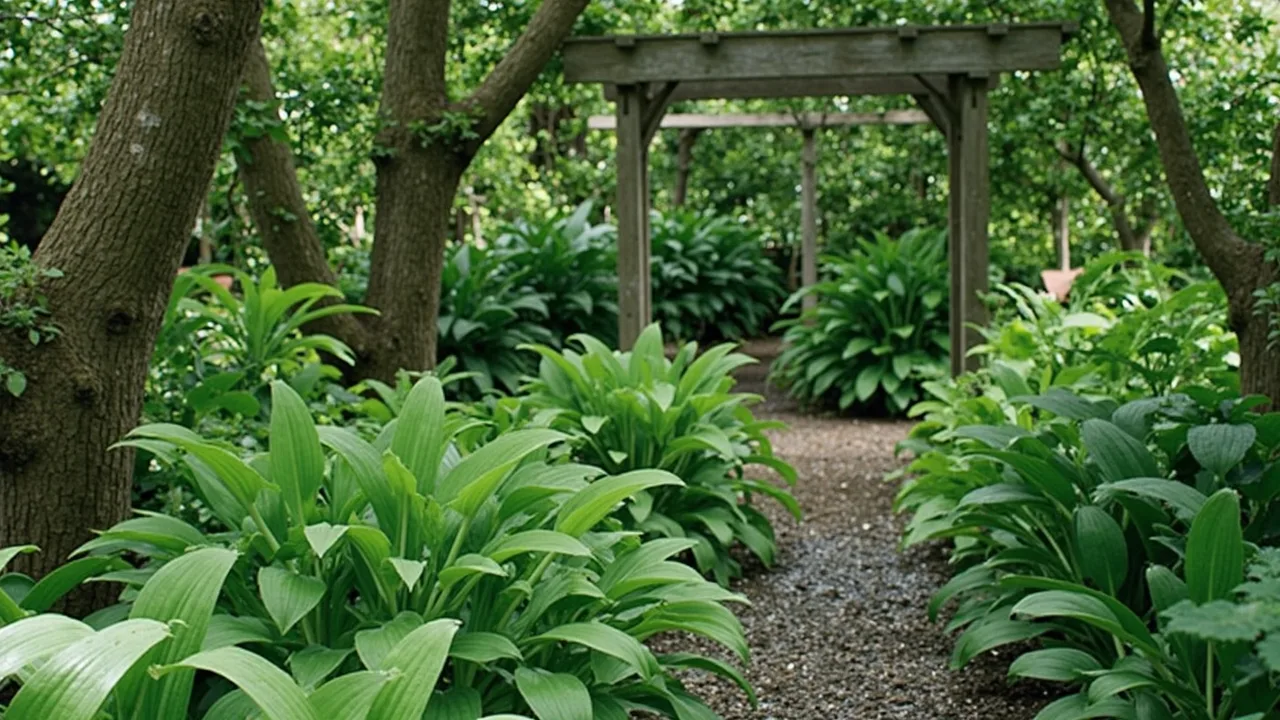
A shady border is the bit of garden everyone calls "the difficult patch" — the north-facing wall, the strip under the hedge, the side return nobody walks down. Planted badly, it stays bare or fills with weeds. Planted well, it's the most reliable border you've got: cool, leafy, lush from April to October, with far less watering and weeding than a sunny one. The trick is matching plants to the actual shade, not the label, and getting the soil right before you put a spade in.
Why a shady border is worth doing properly
Shade in a UK garden is rarely uniform. There's dry shade under a hedge or against a wall, damp shade along a north-facing fence, and dappled shade under a deciduous tree where the light shifts through the day. Each has its own plant list, but the prep is the same, and that's where most plantings fail: a thin layer of compost over compacted, hungry soil, with the wrong plants shoved in. Spend a weekend on the ground and the border looks after itself for years.
When to plant it
The two reliable windows in the UK are October to mid-November and March to mid-April. Both let roots establish in cool, moist soil before the first real test — winter wet or summer drought. Avoid planting in:
- Mid-summer (June–early August): soil is dry, plants sulk or scorch.
- Frozen ground: obvious, but it catches people out in cold snaps from late November.
- Waterlogged winter soil: heavy clay that puddles for days — wait for it to drain or build a raised bed 15–20 cm above grade.
If you can only do it once, October is the better choice. Soil is warm from summer, rain is reliable, and the plants are dormant so transplant shock is minimal.
What you'll need
For a border roughly 3 m long by 1.2 m deep (a realistic starting size):
- Soil improver: 2–3 x 60-litre bags of peat-free, loam-based compost (Melcourt SylvaGrow or John Innes No. 3 are reliable UK choices) or 4–5 generous wheelbarrow-loads of well-rotted garden compost/leaf mould.
- Mulch: one bag of bark chips or a barrow of composted bark, enough for a 5–7 cm layer over the whole bed.
- Tools: spade, fork, hand trowel, hand fork, a stiff rake, a watering can with a rose, and a wheelbarrow.
- Plants: see the plant list below — order from a UK nursery (Burncoose, Beth Chatto, Crocus, or a good local one) for stronger stock than the average garden centre.
- Optional but worth it: a soil pH test kit (£6–10), mycorrhizal root inoculant (Rootgrow, ~£7 for a small pack) for woody plants.
Step-by-step: planting the border
- Clear the ground. Cut back existing growth to ground level. Lift out perennial weeds — bindweed, couch grass, ground elder — roots and all. Don't skim; you want every bit of root out. For ground elder and bindweed, expect to spot-weed for a season after.
- Test the soil. If your pH kit reads below 5.5 or above 7.5, you've got a constraint worth knowing. Most shade plants are happy between 5.5 and 7.0. Very acid soil suits rhododendrons and camellias; very alkaline suits brunnera and geraniums but locks out ericaceous plants.
- Dig it over. Single-dig the whole bed to one spade depth (a "spit", ~25 cm). Don't double-dig unless the subsoil is concrete; it's hard work and rarely needed. Break clods, leave the surface rough so winter frost can shatter them.
- Improve the soil. Spread a 5–8 cm layer of compost or well-rotted organic matter over the surface and fork it into the top 15–20 cm. For dry shade (under hedges, against walls), add extra organic matter and a couple of buckets of leaf mould — it holds moisture. For damp shade (north-facing, heavy clay), grit at one bucket per square metre helps drainage.
- Plan the layout. Before you plant anything, set the pots on the soil in their positions. Aim for groups of 3, 5, or 7 of the same plant — odd numbers read as natural drifts, not soldiers on parade. Tallest at the back (or the centre of an island bed): 80–120 cm. Mid-layer at 40–70 cm. Edge plants at 20–30 cm. Allow 30–45 cm between plants for most perennials, 60–80 cm for larger shrubs.
- Plant. Soak each pot in a bucket of water for 10 minutes. Dig a hole twice the pot width and the same depth. For shrubs and woody plants, dip the rootball in Rootgrow. Backfill, firm with your heel so the plant doesn't rock, and water in well — a full 5-litre can per plant, not a sprinkle.
- Mulch. Once everything's in and the soil is damp, lay 5–7 cm of bark or composted bark over the whole bed, keeping it clear of plant stems. This is the single biggest contributor to low-maintenance shade: it suppresses weeds, holds moisture, and feeds the soil as it breaks down.
- Water for the first season. Even in shade, new plantings need a soak once a week in dry spells for their first summer. After that, most shade plants are self-sufficient except in severe drought.
Plants that actually work in UK shade
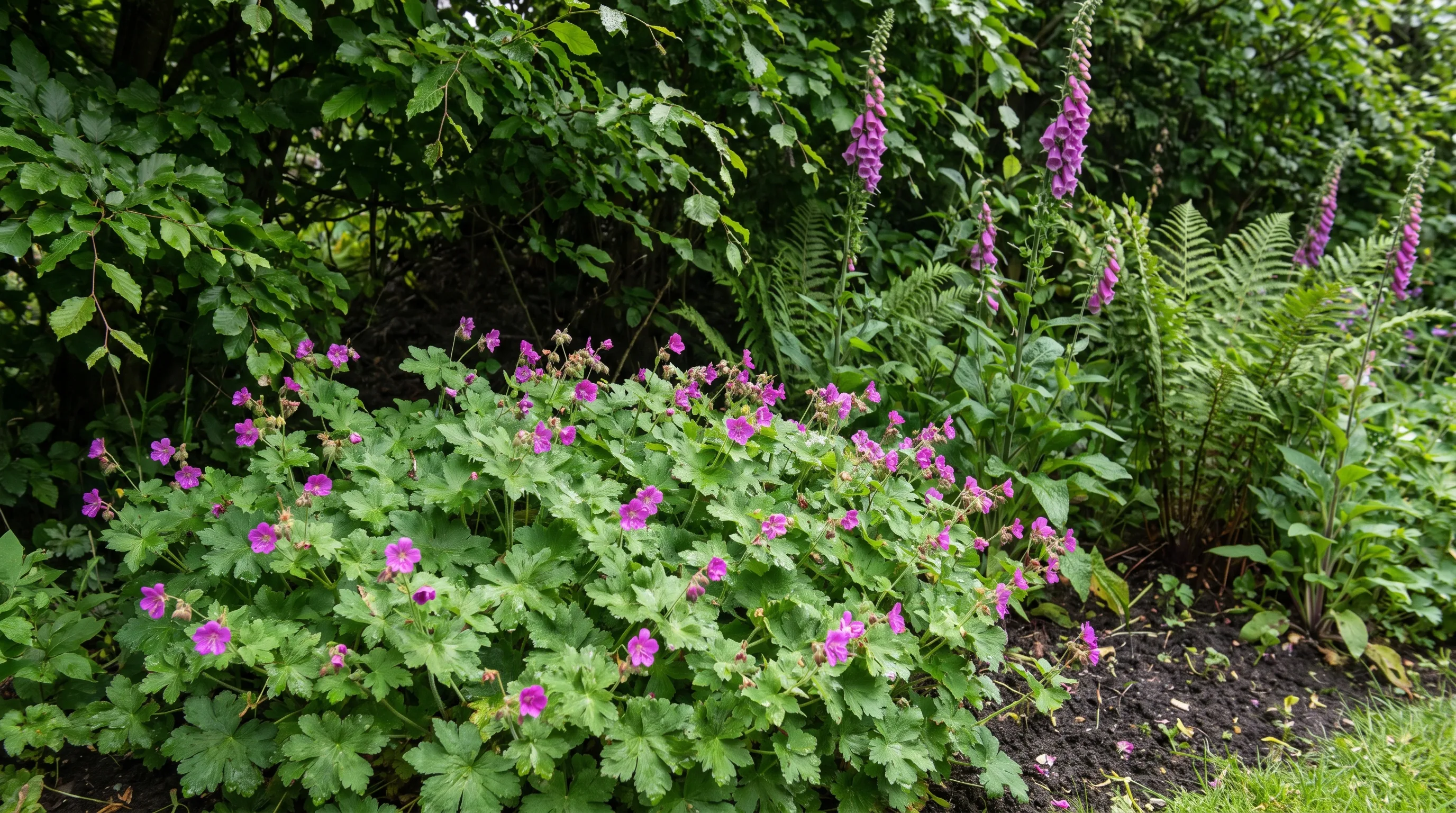
Dry shade (under hedges, north walls, tree roots): Epimedium (barrenwort), Liriope muscari, Vinca minor (lesser periwinkle) used as ground cover, Brunnera macrophylla 'Jack Frost', Geranium macrorrhizum, Polystichum setiferum (soft shield fern), and Mahonia aquifolium. The tough shrub is Sarcococca confusa (Christmas box) — evergreen, scented in January, grows in near-dry shade once established.
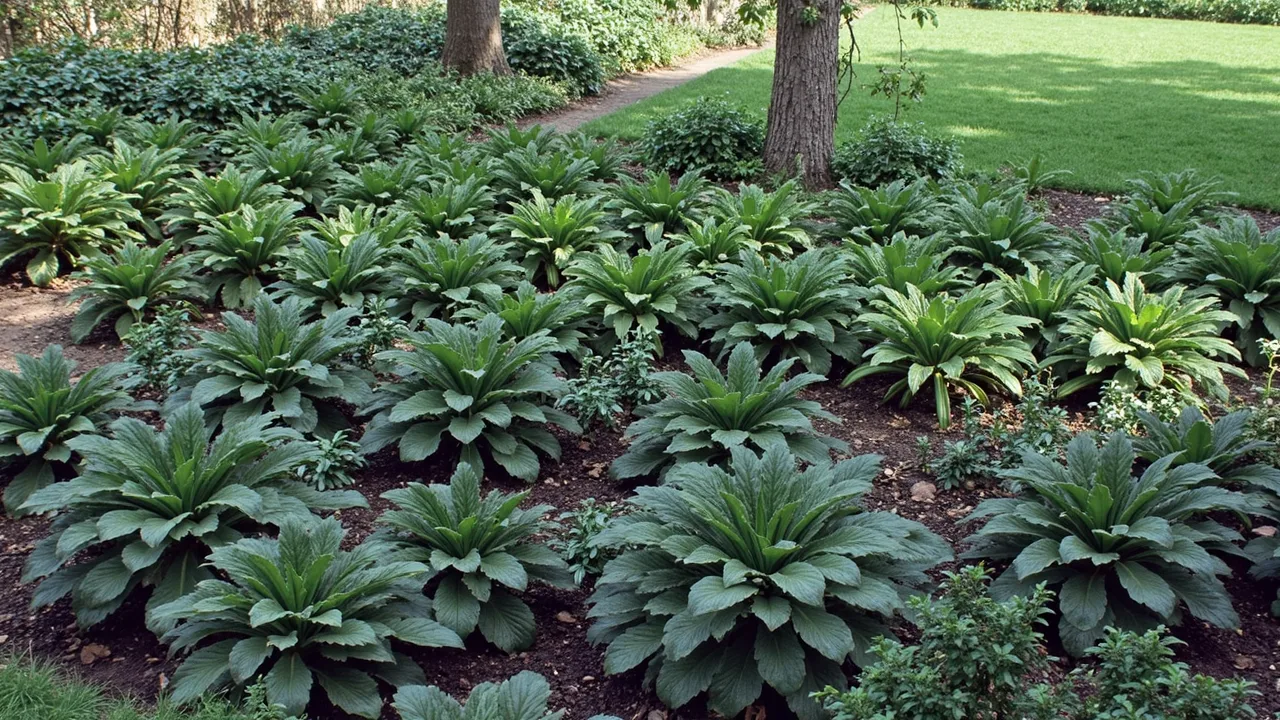
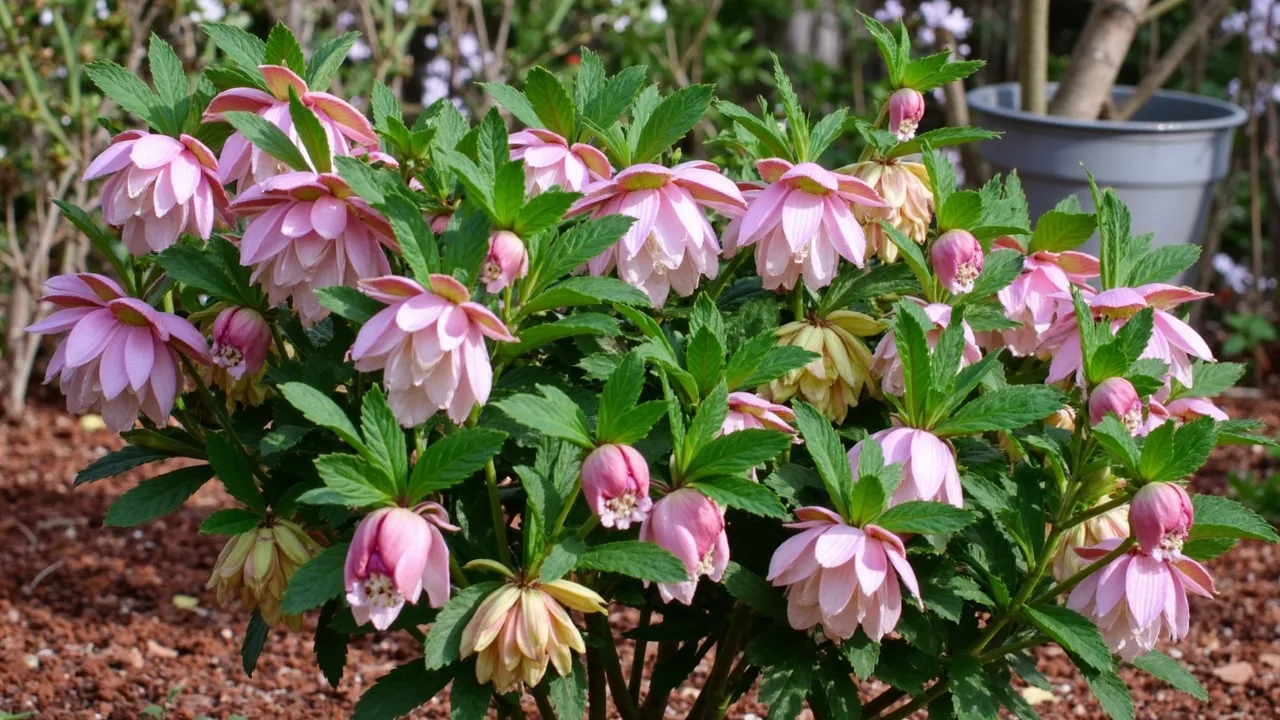
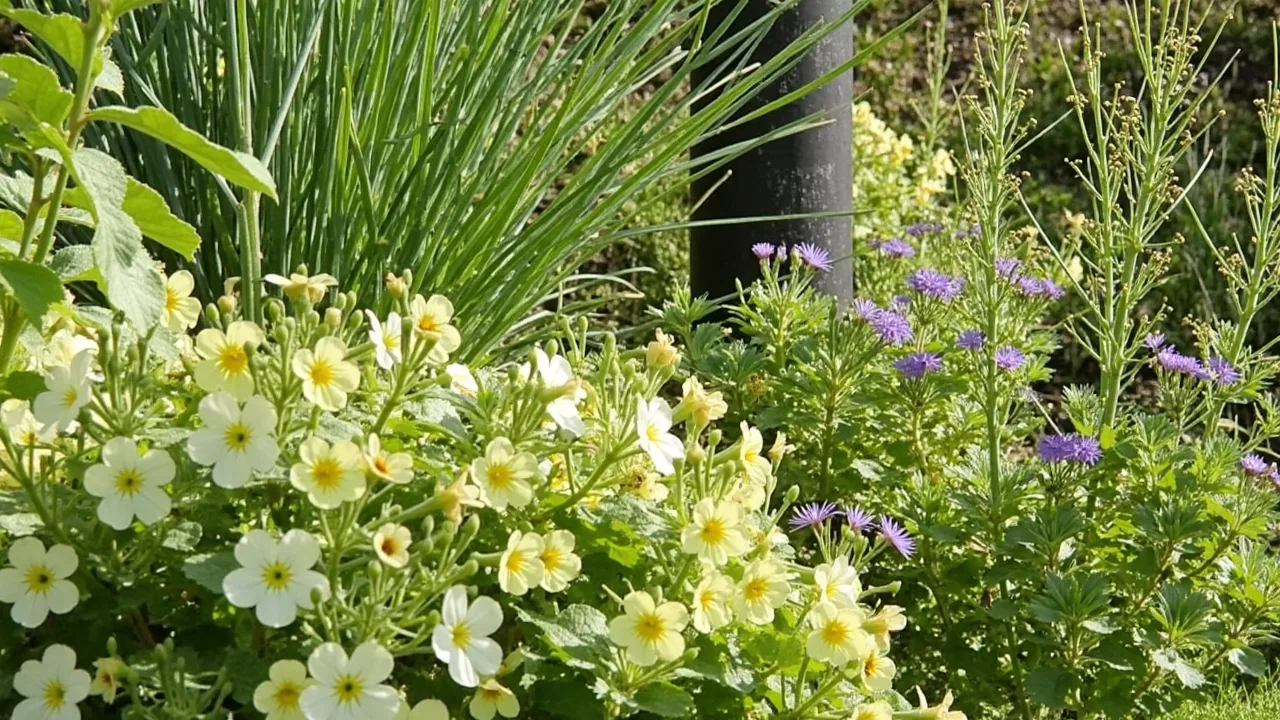
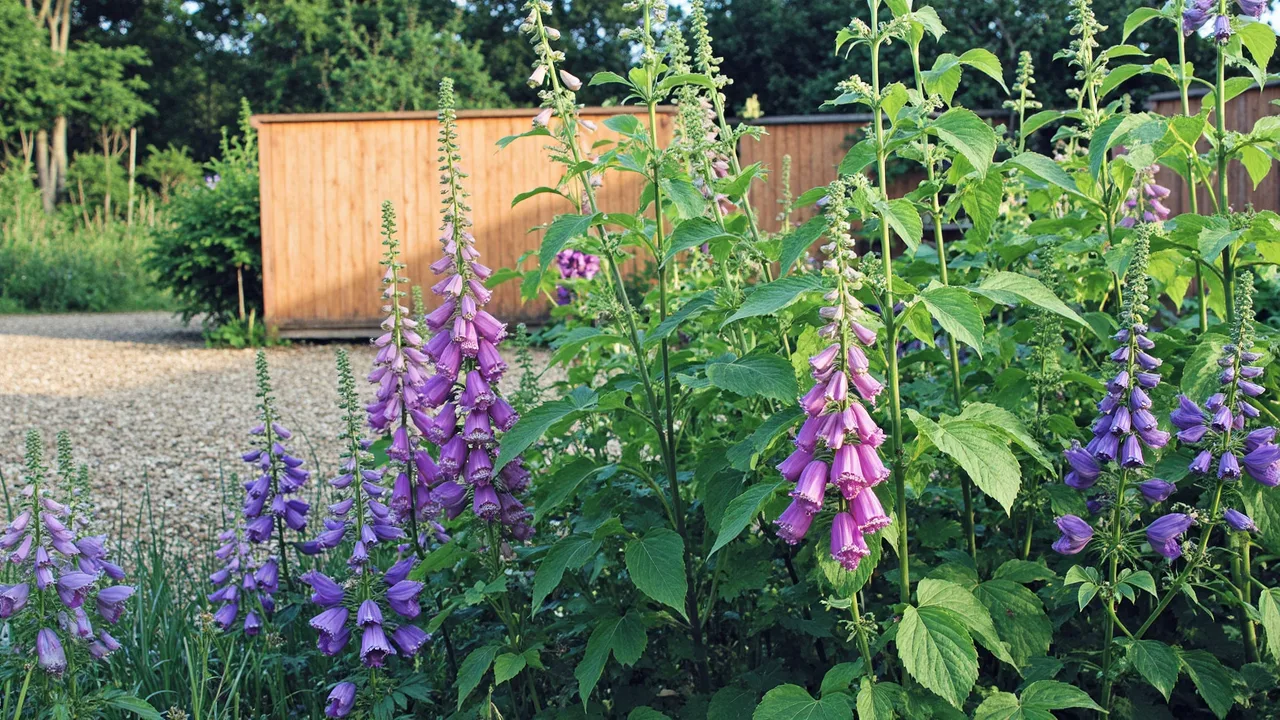
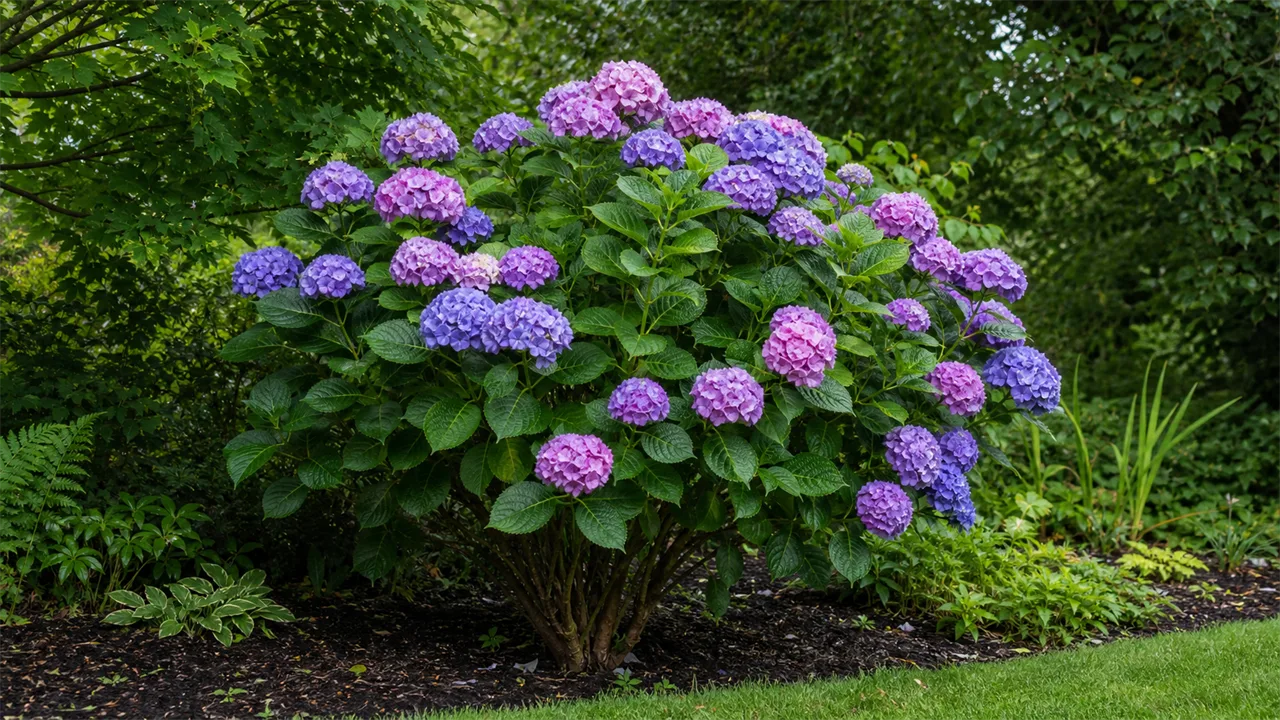
Damp shade (north-facing, heavy soil, near a downpipe): Astilbe, Rodgersia, Hosta (slugs permitting — choose thick-leaved cultivars like 'Sum and Substance'), Helleborus orientalis, Primula vulgaris, Astrantia major, and Digitalis purpurea (native foxglove, biennial but self-seeds reliably). The shrub is Hydrangea macrophylla.
Dappled shade under deciduous trees: the widest palette. Add Anemone × hybrida (Japanese anemone), Pulmonaria saccharata, Tiarella cordifolia, Heuchera, Aquilegia vulgaris, and the grass Carex morrowii or Hakonechloa macra.
Common mistakes to avoid
- Planting sun-lovers and hoping. If the bed gets less than 2 hours of direct sun a day in midsummer, it's shade. Don't put lavender, roses, or penstemons in it.
- Skipping the mulch. A bare-soil shady bed is a slug nursery and a weed trap. Mulch is non-negotiable.
- Planting too close. Shade plants grow fast in their second year. A border that looks sparse in May will be full by July — give things room or you'll be lifting and dividing in year three.
- Ignoring the soil. Shade often sits over hungry ground (under trees, near conifer hedges). Compost, compost, compost.
- Choosing plants for flower alone. In a shady border, foliage does the heavy lifting from June to October. A Brunnera 'Jack Frost' or a hosta gives you months of display for one planting.
Troubleshooting
- Yellowing leaves, no flowers, plants leaning towards light: the shade is deeper than the plant tolerates, or competition from tree roots is starving them. Move the plant to a brighter spot, or top-dress with 5 cm of compost and feed monthly with liquid seaweed.
- Blackened new growth in spring: frost damage. Cut back to healthy growth; most shade plants recover. Avoid siting tender plants (camellias, early Helleborus cultivars) in spots where late frost lingers.
- Holes in hosta and lily leaves: slugs. Beyond pellets (which work but are a slug's job, not yours), try coarse bark mulch, beer traps, or growing slug-resistant cultivars. Helleborus, Epimedium, and Brunnera are reliably left alone.
- Powdery white film on leaves in late summer: mildew, usually a sign of dry roots and stagnant air. Water deeply, mulch, and thin out congested growth. Mildew-resistant Pulmonaria and Brunnera cultivars are a good first choice if it's a recurring problem.
A simple aftercare routine
Once established (year two onwards), a shady border wants very little: a spring top-dress of compost, a mulch refresh every other year, cutting back last year's foliage in late February before new growth comes through, and the occasional division of overgrown clumps in autumn. That's it. A well-planted shady border gets better every year and asks for less than a sunny one — which is why, done properly, it's the smartest bed in the garden.
Plants in this guide

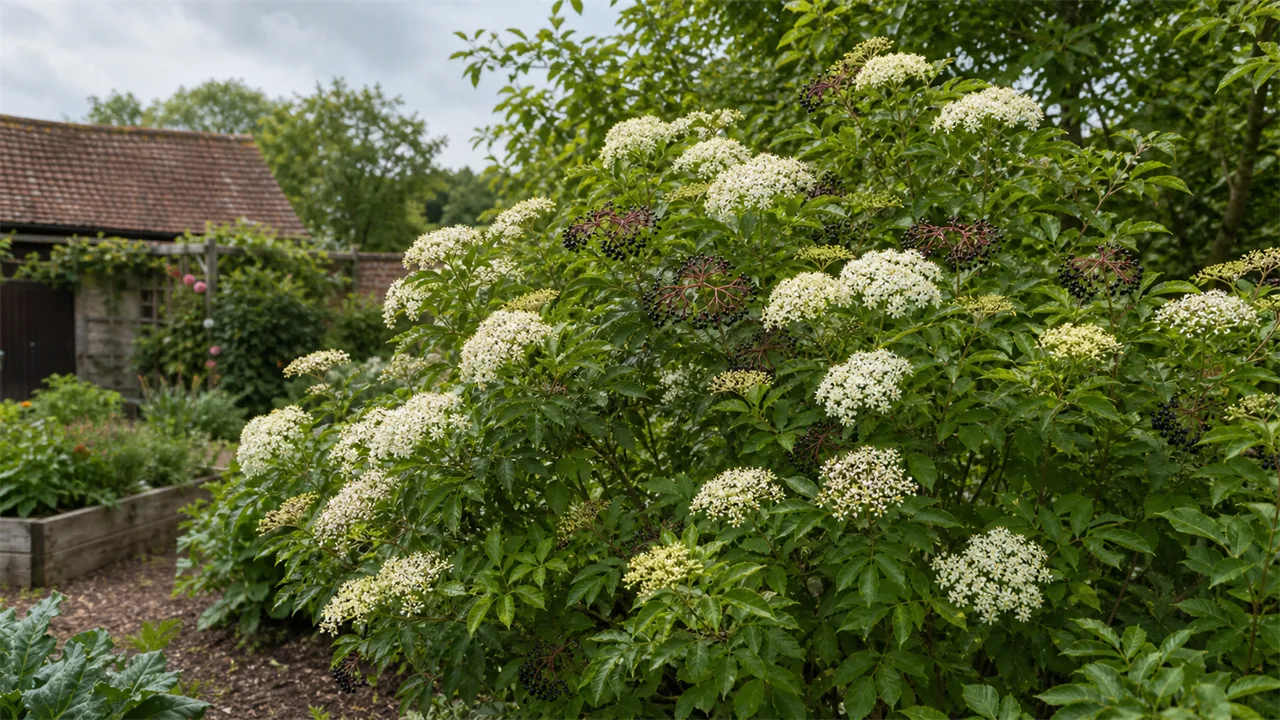
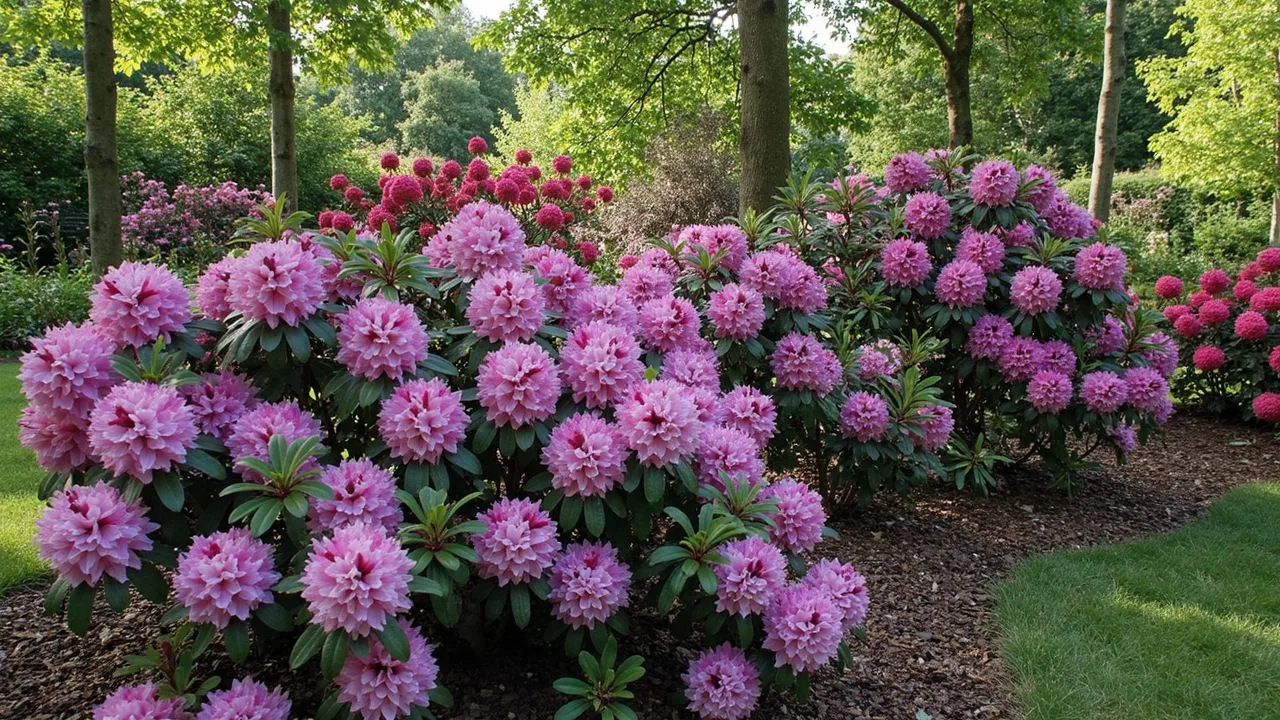
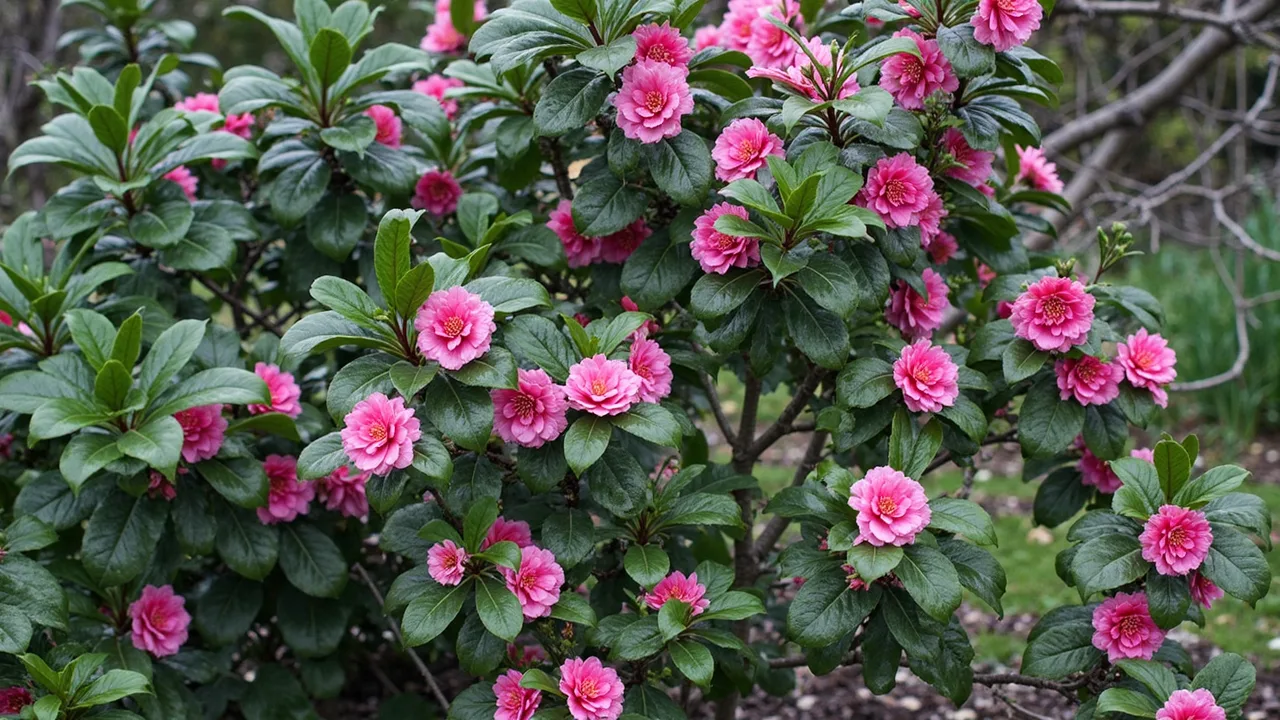
Recommended Products
GardenWizz earns a commission from qualifying purchases made through affiliate links on this page (including links within the article) — as an Amazon Associate, and from Thompson & Morgan via the Awin network. This does not affect the price you pay. See our disclaimer for details.
Related Articles
More →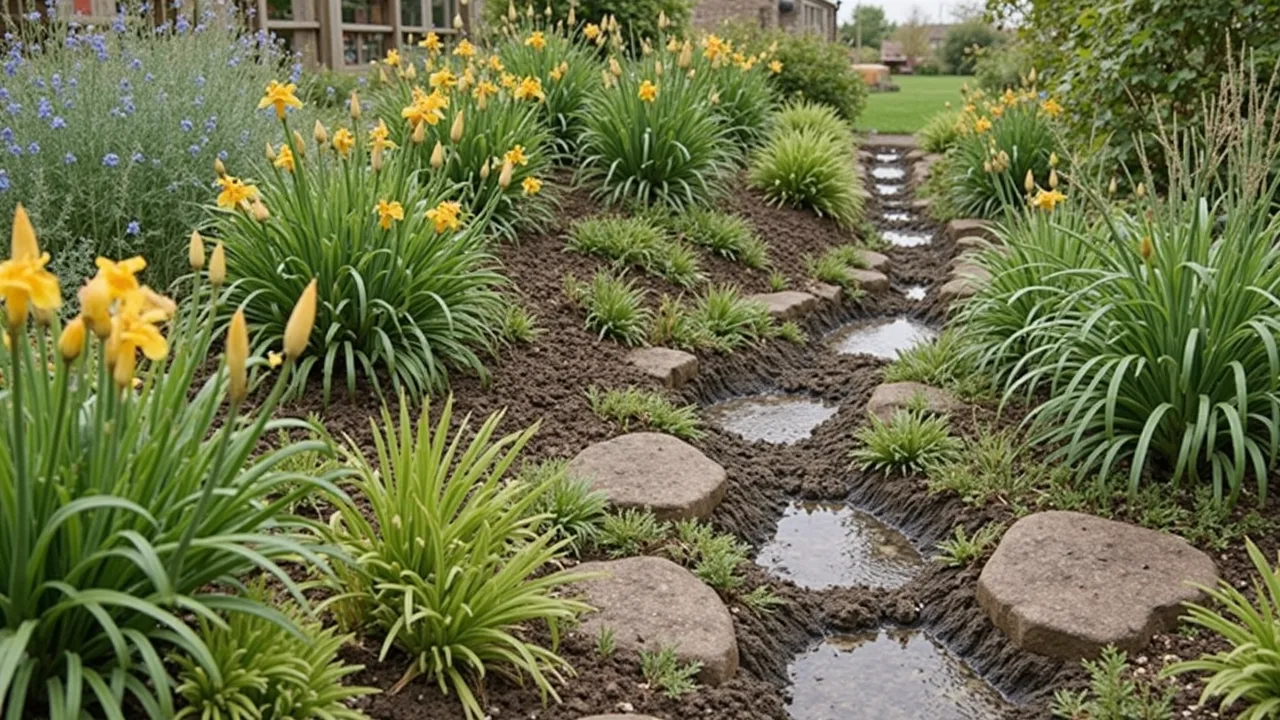 Garden Design
Creating a Rain Garden
12 June 2026A rain garden is a shallow, planted dip in the lawn or border that catches roof and paving runoff, lets it soak into the ground, and filters it through plant roots on the way down. In a UK garden it…
 Garden Design
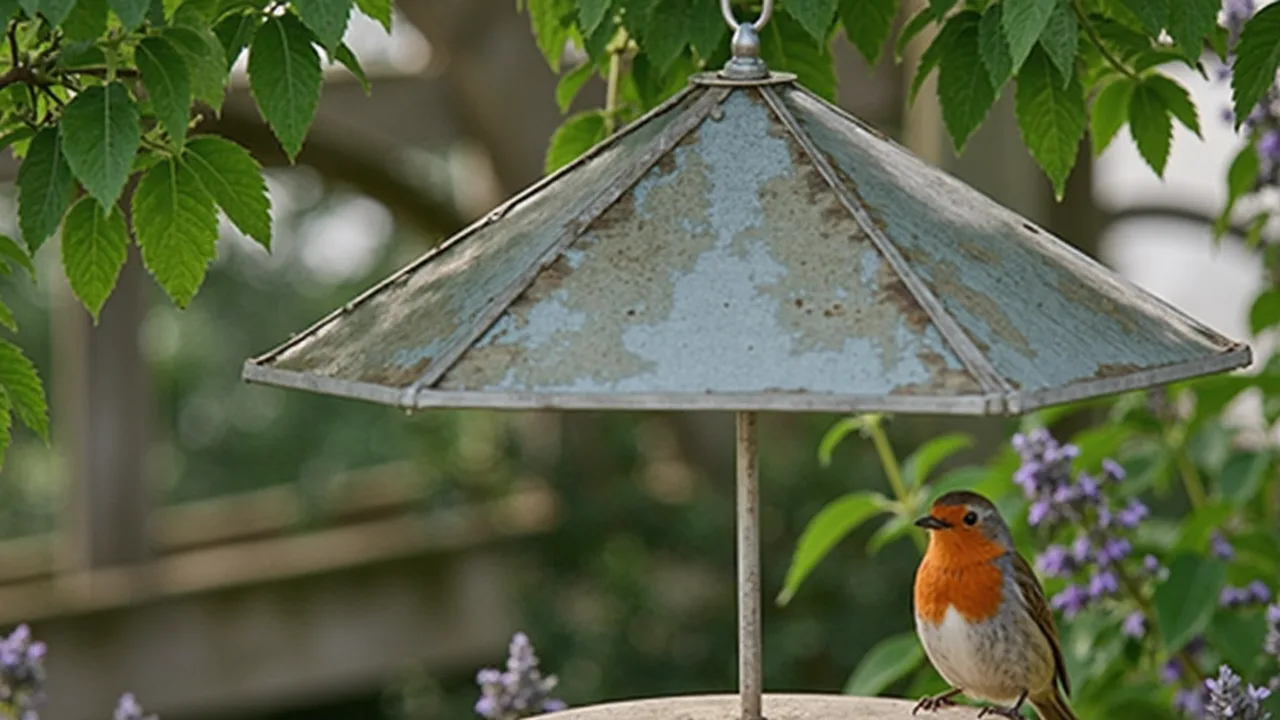
How to Attract Birds to Your Garden
12 June 2026A garden with birds is a working garden. They eat aphids, caterpillars, slugs and snails; they pollinate as they forage; and they tell you, quickly, when something in your patch is out of balance.…
 Garden Design
Best Climbing Plants for UK Walls and Fences
12 June 2026A bare fence or blank wall is wasted growing space. Choose the right climber and that same square metre of garden becomes flowers from May to October, shelter for nesting birds, a windbreak for the…