Rock Crane's-Bill
Geranium macrorrhizum
The Gardening Year
Best months in UK gardens · full planting calendar →
🖨 Printable care card (PDF)At a Glance
| Botanical name | Geranium macrorrhizum |
|---|---|
| Common name(s) | Rock Crane's-bill |
| Family | Geraniaceae |
| Plant type | perennial (Semi evergreen) |
| Height × Spread | 50–100 cm × 10–50 cm |
| Position | Full sun, Partial shade, Full shade |
| Soil | Moist but well–drained or Well–drained; Chalk Clay Loam Sand; Acid or Alkaline or Neutral; moderately fertile soil apart from waterlogged soils |
| Flowering | June–August |
| Toxicity | — |
| Native range | South east Alps and the Balkans |
Overview
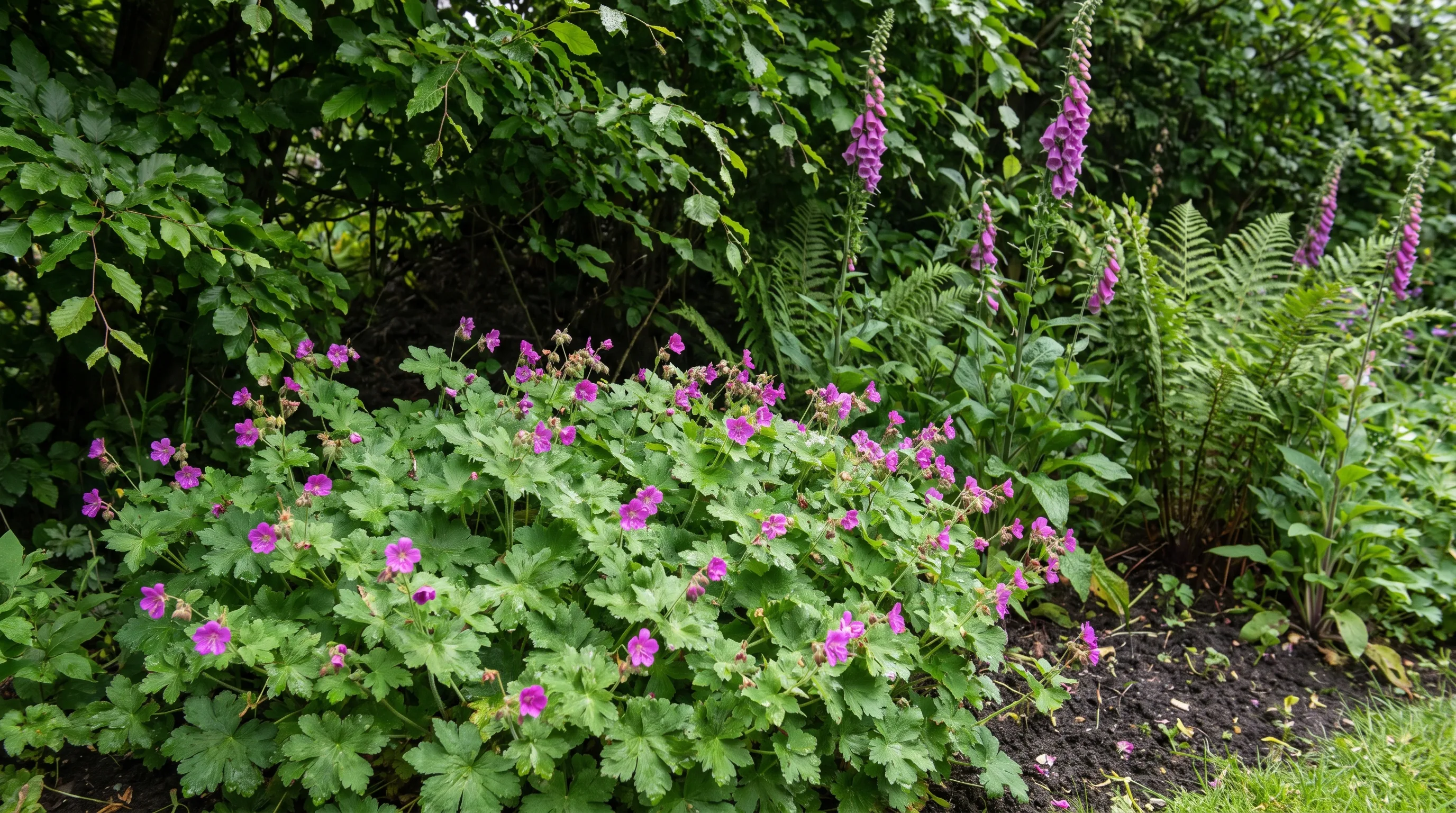
Geranium macrorrhizum is a robust, long-lived herbaceous perennial used as an easy-care groundcover and border plant across the UK. It is valued for its deeply divided foliage, dense habit and repeated pink flower sprays that can turn banks and edging into a stable, visually continuous feature through summer.
Geranium macrorrhizum is native to south-eastern Europe and western Asia and has adapted well to cooler British gardens because it remains tough through variable weather. The species is most often described as a bedding and bedding-to-border plant: it bridges the gap between an upright, cutflower type and a low spreading, clump-forming perennial. Its stems and leaves carry a subtle, fresh scent when handled, and the flowers add structure late into the season, especially on open, bright sites.
Unlike many decorative geraniums, this species performs well in practical situations such as under shrubs, beside paths, and on light slopes where a mix of shade and sun moves across the season. It is useful where gardeners want continuity in spring and summer while keeping inputs modest. The plant is frequently sold as a named cultivar rather than unnamed species stock because reliable flower quality, habit and vigour can vary between lineages.
In a UK context, Geranium macrorrhizum suits informal perennial borders, gravelled edges, cottage-style groups and low, informal banks. It is widely valued as a practical native-style accent because it is neither too large nor too delicate for the average climate and can be maintained easily once its root mass is established.
Appearance
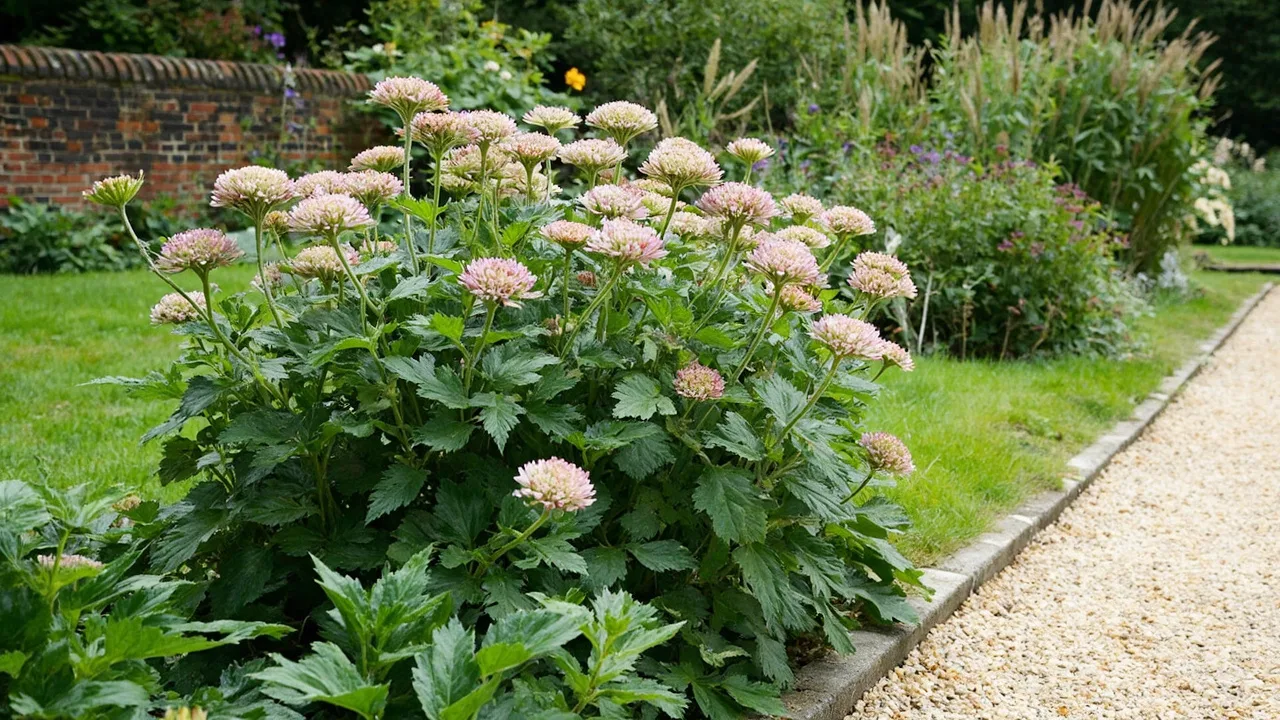
The plant forms semi-woody crowns with upright to ascending stems that create a rounded mound. New leaves appear in spring as deeply dissected, pointed lobes with a rougher texture than many other geraniums. Each leaf division gives the foliage a slightly architectural quality from a distance and catches light well in bright positions. The plant often looks at its best when a few dry stems from older growth are cut back, which exposes the clean, freshest foliage and gives clumps a renewed geometric outline.
Flower structure is distinctly geranium-like, with five-petalled blooms often in shades of soft pink to mauve. Petals usually sit in looser terminal clusters rather than dense spikes, which means the plant reads as soft clouded colour instead of a hard brush. Over a season, plants can appear less uniform than shrubs, but the effect is desirable where gardeners prefer natural movement rather than clipped formality.
Flowering is typically strongest on sunny sites and less continuous in full shade. In sheltered corners and against warm walls, blooms persist later into autumn, while exposed edges may finish earlier in October if weather turns wet or windy. In many UK summers, a healthy clump remains attractive after flowering because leaves persist and continue to give structure even when some blooms fade.
The flower-to-foliage rhythm is one of this species’ key virtues. It begins with bold spring growth, passes through a clear flowering peak around midsummer, and then retains enough green architecture to avoid dramatic slumps through early autumn. For formal parterre-style planting, this even seasonal profile is valuable because it reduces the visual dead time that can occur in more brittle or short-lived perennials.
Growing Conditions
Geranium macrorrhizum is happiest where the roots can breathe and the soil does not stay waterlogged through winter. In the UK, the common failure mode is not lack of sun but excess moisture around the crown, especially on heavy ground or where drainage is poor. Choose a raised bed, gently sloping area, or a prepared border where winter rainfall does not sit for long periods.
The most reliable sites are light to medium shade to sun exposures with good air movement. Full sun gives the strongest flower production and darker stems, while very bright heat and drought need supplemental moisture. Light shade is acceptable and can reduce heat stress, but shade-heavy locations often produce weaker stems and less consistent blooms. Sheltered courtyards and leeward wall edges are often excellent for long-season flowering, provided airflow is not blocked.
Soils should be friable rather than compacted and moderately fertile without being over-rich. This species copes with clay loam or loam-sand mixes better than extremely sour, dense clays, and it appreciates organic matter that keeps moisture steady in summer. For compact sites, amend planting pits with well-rotted compost and a small amount of grit for structure rather than heavy fertiliser. Because the plant dislikes root heat and stale, wet soil, aim for clear drainage at crown level and avoid creating a deep peat-heavy bed.
UK suitability is generally broad in mild districts and moderate uplands, with predictable behaviour in the usual temperate conditions of most regions. It is not the best choice for very exposed, water-laden hollows unless raised beds are used and winter moisture is managed aggressively. In areas with prolonged humid summers, spacing is more important than extra feeding: dense crowding increases fungal pressure and softens winter recovery.
Seasonally, a practical UK routine is: establish in spring for active growth, reduce water stress in late summer, and allow a clean post-season tidy in early spring before new growth resumes. For the species’ main ornamental period, target a cool, bright position and even moisture around establishment months (April to July), with cooler dry-edge management in late summer to avoid lanky leggy shoots.
Planting and Care
Best planting windows are spring and early autumn. In most gardens, late April to early June is forgiving because soil warms without becoming too dry, while a late August to September window suits autumn establishment where possible. In colder exposed plots, avoid very late autumn because new roots may not harden before winter wet periods. Planting depth should keep the crown just level with surrounding soil; planting too deep can weaken the stem base.
Use 45 to 60 cm spacing for mixed beds and smaller, 30 to 45 cm spacing for compact edging. Rootbound or overgrown nursery plants should be divided at the start of the activity so each section carries several healthy shoots and intact root segments. Immediate watering after planting helps close soil contact, then a thorough water through the first growing season if springs are dry.
Watering: The species is not a water-demanding plant, but it benefits from consistent moisture while establishing. Once root systems are formed, irrigation should be moderate and deep rather than frequent and shallow. In heat spells, water early morning or evening in cycles that wet the root zone through depth.
Feeding is light. This geranium performs best with modest fertility, especially in spring and early summer. Use a light dressing of mature compost or a balanced slow-release feed before shoot growth increases, then avoid heavy nitrogen-rich applications. Excessive nutrition produces lush, weaker stems and can reduce hardiness in winter wind.
Cut back and renewal: As a herbaceous perennial, the plant should be cut back rather than hard-pruned. The first regular tidy is typically in late winter or very early spring, removing dead canes and weak basal growth so fresh, vigorous shoots can emerge cleanly. A second light cutback after main flowering can also improve light penetration and reduce wind breakage. Timing for both tasks is weather dependent, but March to April is common for the first clean-up and early July to late August for summer tidying on strong flowering growth.
Division is the simplest form of rejuvenation and also a controlled propagation route. Divide in spring when new growth is active or in late summer once heat has dropped and the canopy is less stressed. Cuttings are also possible in warm months if conditions are moist and shading is available, but division remains the most reliable method for preserving cultivar traits and creating instant replacements.
Seasonal care should vary with the month: avoid over-shading crowded clumps by removing accumulated dead material, keep soil cultivation shallow to avoid root disturbance, and check for bare drainage channels over winter. In particularly wet seasons, ensure run-off channels are not blocked around the base.
Common Problems
The most persistent issue is drainage failure. When crowns sit in cold, wet soil, geraniums can decline suddenly through root decay and weak shoots. This is usually visible as darkened bases, soft growth and delayed spring recovery. Corrective action is improved drainage and wider spacing; affected plants should often be lifted and reset with better soil structure.
Second, weak flowering is commonly linked to over-watering, over-fertilising or heavy shade. These stressors do not usually kill the plant immediately but reduce floral density. In dense shrub-like mixtures, this species can lose its edge and become merely decorative green foliage. The cure is tactical: give more light, moderate feeding, and cut back old stems before summer.
Pests and diseases are usually secondary compared with environment-related decline. Aphids can cluster on fresh stems in warm spells and reduce vigour. Small outbreaks are generally handled with pressure-based controls, water sprays and removal of heavily infested tips. In humid locations, occasional fungal spotting appears on older leaves; spacing, early sanitation and stable airflow are more effective than repetitive blanket sprays.
Severe slug pressure occasionally damages first-year shoots where shelters are abundant. If this is persistent, use a practical prevention routine: reduce clumps of debris around crowns, keep soil edges clear, and reinforce watering to avoid prolonged leaf wetness. Avoid unnecessary chemical intervention unless problems are persistent and correctly diagnosed.
Popular Varieties
- Geranium macrorrhizum 'Bevans' is widely used for compact, neat bedding where a controlled habit is required. It gives reliable, repeatable colour in midsummer and is a common choice for formal edging projects.
- Geranium macrorrhizum 'Bulgaria' has strong, upright clumps with a clear pink flower character that suits grouped bordering and long strips under light shade.
- Geranium macrorrhizum 'Pindus' is appreciated for sturdy growth and tolerance in less-than-perfect sites, especially where summer heat is followed by wet periods.
- Geranium macrorrhizum 'Ridskio' is selected for dense coverage and a useful groundcover effect when planted in repeating masses.
- Geranium macrorrhizum 'Spessart' is a useful garden option when a clean seasonal structure and predictable flowering are priorities.
Among UK hardy geraniums, Geranium macrorrhizum is often grown alongside heathers, alpine daylilies, lavender family accents and grasses where the aim is continuity with seasonal interest. It is especially effective in dry pockets that stay bright but not scorched, as the leaves can hold form under moderate stress better than many broad-leaved perennials.
It is also practical for transitional spaces that receive both direct light and early afternoon shade, because the foliage remains coherent in transitional weather and does not become as brittle as some tender substitutes. Designers often use it to hold pathways visually because the clumps remain dense through mild autumns and recover from short periods of neglect better than fussy perennials.
The species is often underestimated because it is not dramatic in the way of giant shrub geraniums, but that modesty is its strength. It supplies dependable summer structure, repeated flower interest, and a clear maintenance route based on correct timing rather than high input care.
Pests and Diseases
| Problem | Symptoms | Management |
|---|---|---|
| Vine weevil larvae | Wilting or collapse of plants due to roots being chewed by larvae in the soil. | Apply a biological control containing nematodes to the compost in spring and autumn. |
| Slugs and snails | Irregular holes eaten into leaves and stems, often accompanied by slimy trails. | Use iron phosphate-based pellets or beer traps to reduce populations around the plant base. |
| Powdery mildew | A white, dusty fungal growth appears on leaves and stems, particularly in dry conditions. | Improve air circulation and spray with a fungicide or milk solution at first sign of infection. |
| Geranium sawfly larvae | Leaves are skeletonised or eaten away by green, slug-like caterpillars. | Hand-pick the larvae or apply a biological insecticide containing spinosad. |
| Capsid bug | Small, pale patches or holes appear on leaves and flower buds as bugs suck sap. | Encourage natural predators like ladybirds or use a horticultural oil spray if infestations are severe. |
| Downy mildew | Yellowing patches on upper leaf surfaces with fuzzy grey growth underneath in humid weather. | Remove affected foliage immediately and ensure good drainage to prevent waterlogging. |
For step-by-step help, read Dealing with Slugs and Snails and Treating Powdery Mildew. Or browse the full plant problem solver to diagnose an issue by symptom.
Recommended Products
GardenWizz earns a commission from qualifying purchases made through affiliate links on this page (including links within the article) — as an Amazon Associate, and from Thompson & Morgan via the Awin network. This does not affect the price you pay. See our disclaimer for details.