Busy Lizzie
Impatiens walleriana Hook.f. · patience plant · sultana · sultan's flower · sultan's balsam · sultan's pride · Zanzibar balsam
The Gardening Year
Best months in UK gardens · full planting calendar →
🖨 Printable care card (PDF)At a Glance
| Botanical name | Impatiens walleriana Hook.f. |
|---|---|
| Common name(s) | busy lizzie, patience plant, sultana, sultan's flower, sultan's balsam, sultan's pride, Zanzibar balsam |
| Family | Balsaminaceae |
| Plant type | perennial (Tender herbaceous perennial (RHS Plant Profile 95402) — in the UK it is grown almost exclusively as a half-hardy annual for summer bedding; can be kept year-on-year via softwood cuttings or as a houseplant. — Tender herbaceous perennial; sheltered in UK — grown almost exclusively as a half-hardy annual for summer bedding in beds, borders, containers, hanging baskets and window boxes; can be kept year-on-year as a houseplant or via softwood cuttings.) |
| Height × Spread | 15–60 cm × — |
| Position | Partial shade |
| Soil | Moist but well-drained; peat-free multi-purpose with added grit for containers; Chalk / Clay / Loam / Sand accepted (per RHS cultivar profile 250575). |
| Flowering | May–October |
| Toxicity | — |
| Native range | Eastern Africa — SE Kenya to S. Tropical Africa (POWO); Kenya to Mozambique (RHS). Not native to GB/Ireland. |
Busy Lizzie is Impatiens walleriana Hook.f., a tender herbaceous perennial in the family Balsaminaceae. In the UK it is usually grown as a half-hardy annual for summer bedding, although a healthy plant can be kept from year to year indoors. This guide covers the traditional Busy Lizzie, not its New Guinea relatives or the separate balsam species Impatiens balsamina.
The plant is native to Eastern Africa, from south-eastern Kenya to southern tropical Africa. Its familiar names include busy lizzie, patience plant, sultana, sultan's flower, sultan's balsam, sultan's pride and Zanzibar balsam. For the wider collection, browse the A-Z plant index.
Overview
Busy Lizzie is the classic shade-tolerant bedding impatiens: a bushy plant that flowers generously through the warmer part of the year. It is not the same as the New Guinea impatiens group, which generally has larger flowers, more pointed leaves and better tolerance of brighter conditions. Nor is it Impatiens balsamina, often called balsam, an upright cottage-garden annual whose flowers are held above the foliage.
In its natural life cycle, Impatiens walleriana is a tender herbaceous perennial. In most UK gardens, frost means it is treated as a half-hardy annual and planted out only after cold weather has passed. A sheltered houseplant or conservatory specimen may be retained, and late-summer cuttings offer a practical way to carry a favourite plant into the following season.
It suits beds, borders, containers, hanging baskets and window boxes, as well as indoor growing where light and ventilation are suitable. Use the UK plant hardiness ratings as broader context, remembering that the species profile does not pin a single RHS H-code.
Appearance
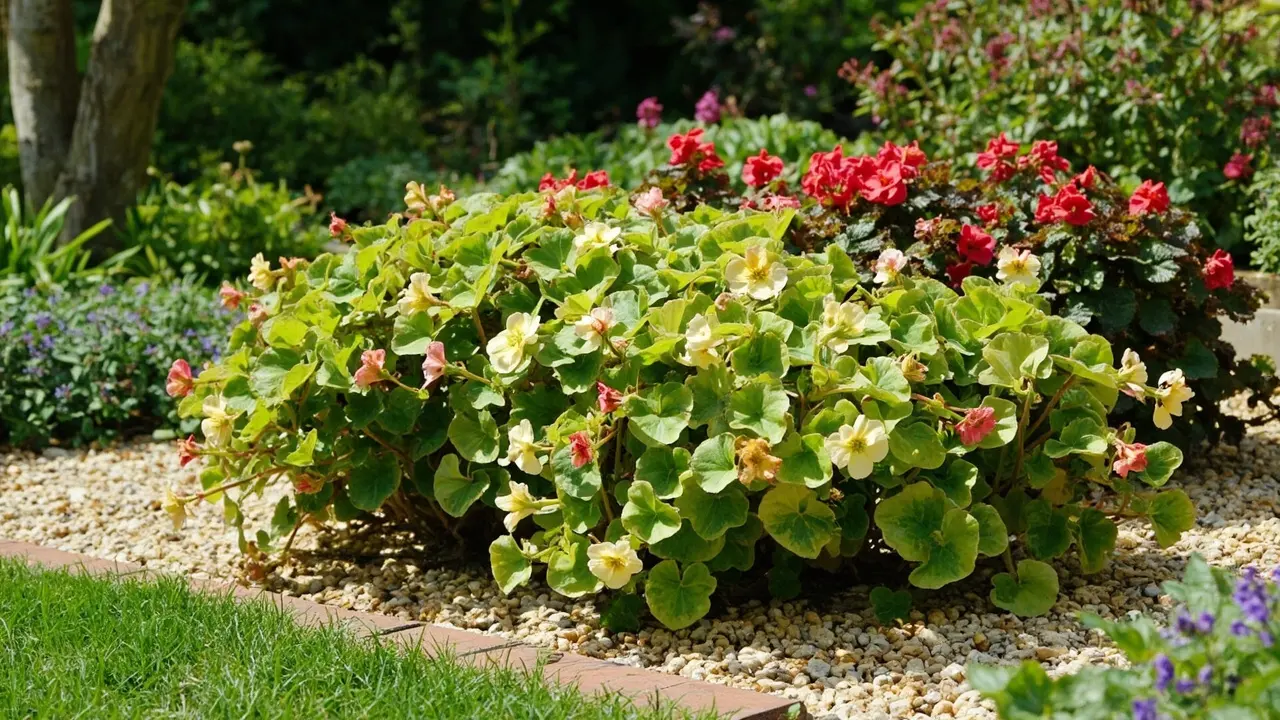
A mature Busy Lizzie forms a rounded, mounding plant about 15–60 cm tall. Its fleshy stems carry broad, lanceolate green leaves, sometimes with spotting or a reddish underside. The leaves are usually alternate and have a softly succulent texture, so plants can wilt quickly when their rootball dries but often recover when watered promptly.
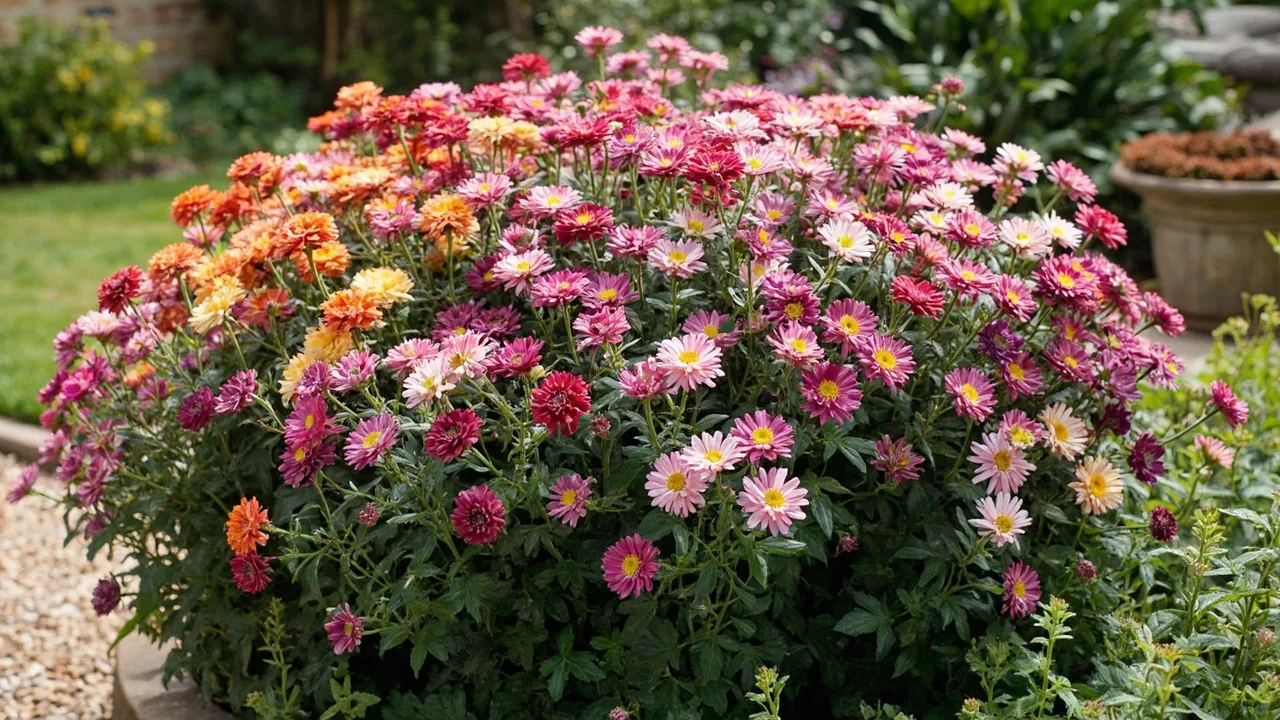
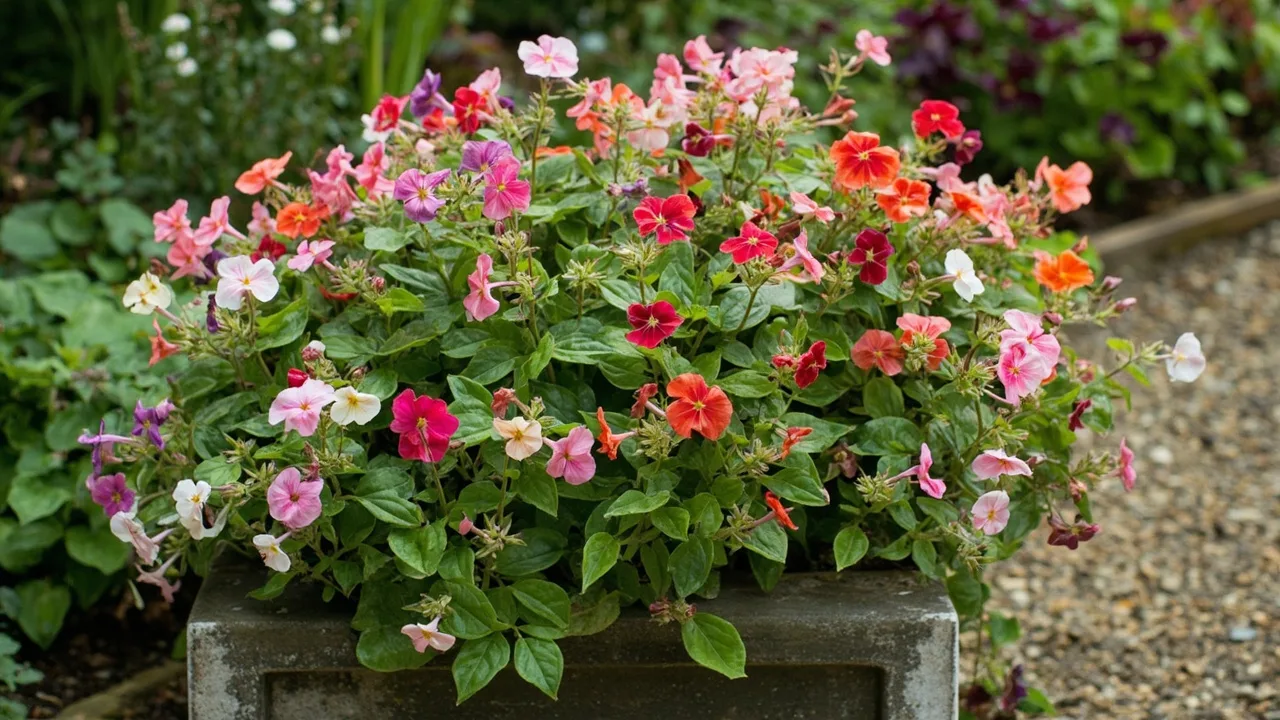
The flowers are flat and single in the species description, with five petals and a short spur. They are produced freely among the leaves and give colour from May through June, July, August, September and October when plants remain warm, watered and healthy. Flower colour varies across cultivated forms, but the plant_record does not provide a cultivar list, so named varieties should not be assumed for this species entry.
Distinguishing the plant correctly matters. New Guinea types have a different visual presence and are commonly chosen for brighter sites; Impatiens balsamina has a more upright habit and a different flower presentation. For comparison, see Begonia semperflorens (wax begonia) and Begonia (genus guide), two useful shade-bedding companions rather than synonyms.
Growing Conditions
Choose partial shade and a sheltered position. Bright filtered light or gentle morning sun can produce strong flowering, while harsh, hot, exposed sun can scorch foliage and increase water stress. In cooler, reliably moist parts of the UK, plants may take more sun; in a hot south-facing position, the New Guinea group is usually a more suitable alternative.
The soil should be moist but well-drained. In containers, use peat-free multi-purpose compost with added grit so the rootball holds moisture without remaining waterlogged. Chalk, clay, loam and sand are all recorded as accepted soil types, provided drainage and moisture are managed. Beds and borders benefit from organic matter worked into the planting area rather than a permanently wet pocket.
Containers, baskets and window boxes are particularly useful because they make watering and shelter easier to control. Combine Busy Lizzie with Pelargonium (tender 'geranium') or Fuchsia where their different light preferences can be accommodated. A Pelargonium printable care card and Fuchsia printable care card provide portable companion references.
Planting and Care
Sow seed indoors in January or February only if you can provide warmth and a long growing-on period. The research evidence gives 21–24°C for sowing, followed by 18–21°C as plants grow on. Young plants should be pinched out at about 10 cm to encourage a bushier shape, then hardened off in mid to late May.
Plant out after the last frost, normally from late May into June: often late May to early June in southern England and one to two weeks later further north. Planting too early exposes tender stems to cold and can stop growth. The May planting calendar (UK) and June planting calendar (UK) help place the job in the wider season.
Allow roughly 20–25 cm for mass bedding and 25–30 cm in mixed baskets or containers, following the approved cultivation guidance. Water whenever the surface begins to dry, especially in containers, but do not leave roots saturated. Feed with a high-potash liquid fertiliser every two weeks once flowering starts. Remove faded flowers and damaged leaves; many traditional walleriana plants look better with regular deadheading, while some modern F1 series are largely self-cleaning.
During sudden heat or drought, move containers to lighter shade, water thoroughly and check them again during the day. Late summer is also the time to take softwood cuttings: choose non-flowering shoots about 4–8 cm long in late August or early September, root them in water or free-draining compost, and keep them frost-free on a bright windowsill through winter at 13–18°C. Seed is slow and fussy, and named F1 hybrids will not come true from saved seed, so cuttings are usually the more dependable home method.
For seasonal contrasts, compare the July planting calendar (UK), Cosmos, Dahlia, Dahlia printable care card, Marigold (Tagetes), Snapdragon (Antirrhinum majus), Verbena (Verbena bonariensis) and Salvia.
Common Problems
Impatiens downy mildew is the most important disease to recognise. It caused a historical collapse of Busy Lizzie availability and displays in the UK in 2011–2012. Watch for yellowing on upper leaves, white downy growth underneath, leaf drop and rapid collapse. Remove and bin affected plants rather than composting them, avoid overhead watering, improve air circulation and do not replant susceptible material immediately in the same problem site. Resistant cultivated forms or New Guinea impatiens may be alternatives. Use the plant problem solver for symptom-led diagnosis.
Grey mould, caused by Botrytis cinerea, appears as grey fuzzy growth on damaged or ageing tissue during damp summer or autumn weather. Remove affected material, ventilate and keep foliage as dry as practical. Aphids cluster on soft tips, especially on overwintered windowsill plants; hand removal, a soft soap spray and encouraging natural predators can help. Isolate indoor plants before treatment and before returning them to a display.
Vine weevil can notch container leaves, while its grubs may damage the root crown. Biological controls are an option for container plants, and compost should not be kept excessively wet. Slugs and snails may damage young spring shoots. In hot, dry indoor conditions, glasshouse red spider mite causes stippling and bronzing; increase humidity and ventilation. The Treating powdery mildew, Dealing with slugs and snails and Controlling aphids naturally articles offer further problem-specific guidance.
Popular Varieties
Busy Lizzie is cultivated in many colour and habit selections, but this species page deliberately does not present an invented or unsupported cultivar list: the canonical plant record has no cultivar entries. Treat a plant labelled only “Busy Lizzie” as Impatiens walleriana unless its label provides more specific, verifiable information.
Do not use the name New Guinea impatiens, Sunpatiens or a named series as though it were a synonym for the species. Those plants may be useful where brighter light or greater sun tolerance is needed, but they are a different growing choice and should have their own clearly identified content. Likewise, Impatiens balsamina is a separate species, not a Busy Lizzie variety.
When selecting plants, prioritise healthy, compact growth, clean leaves and a well-rooted compost rather than an assumed trade name. Check the position, water supply and shelter first; a correctly matched unnamed plant will outperform a poorly placed one. For other plant references, return to the A-Z plant index.
Fact sources: RHS Plant Profile 95402 and Kew Plants of the World Online: Impatiens walleriana Hook.f., accessed 2026-08-03. The profile does not assert a spread, toxicity figure or single species RHS H-code; those remain unknown here.
Pests and Diseases
| Problem | Symptoms | Management |
|---|---|---|
| Impatiens downy mildew | Yellowing of upper leaves, white downy growth on the underside, leaf drop, rapid collapse — caused by Plasmopara obducens (an oomycete). | Remove and bin affected plants (do not compost). Avoid overhead watering. Improve air circulation. Choose resistant cultivars (e.g. Imara series) or switch to New Guinea impatiens / Sunpatiens at affected sites. |
| Grey mould (Botrytis cinerea) | Grey fuzzy sporulation on damaged or senescing tissue in damp autumn weather. | Improve air flow, avoid overhead watering, remove affected material, do not overwinter in stagnant indoor conditions. |
| Aphids | Clustering on soft shoot tips and on overwintered plants on UK windowsills. | Hand removal, soft soap spray, encourage natural predators outdoors; for overwintered houseplants isolate and treat before returning to indoor display. |
| Vine weevil | Notching on leaf margins of container-grown plants; collapse if grubs eat the root crown. | Biological control (Steinernema kraussei / Heterorhabditis bacteriophora) for container plants; avoid over-wet compost. |
| Glasshouse red spider mite | Fine stippling and bronzing on leaves under hot dry indoor overwinter conditions. | Raise humidity, ventilate, introduce Phytoseiulus if severe; do not overwinter in a dry warm room. |
| Slugs and snails | Shoot damage on young plants in spring. | Standard UK slug control — see /articles/dealing-with-slugs-and-snails. |
For step-by-step help, read Controlling Aphids Naturally, Dealing with Slugs and Snails and Treating Powdery Mildew. Or browse the full plant problem solver to diagnose an issue by symptom.
Recommended Products
GardenWizz earns a commission from qualifying purchases made through affiliate links on this page (including links within the article) — as an Amazon Associate, and from Thompson & Morgan via the Awin network. This does not affect the price you pay. See our disclaimer for details.