Begonias
Begonia
The Gardening Year
Best months in UK gardens · full planting calendar →
🖨 Printable care card (PDF)At a Glance
| Botanical name | Begonia |
|---|---|
| Common name(s) | Begonias |
| Family | Begoniaceae |
| Plant type | perennial (Tender perennial; some species are tuberous or rhizomatous. Monoecious with unisexual male and female flowers on the same plant.) |
| Height × Spread | 0.1–3.6 m × 10–45 cm |
| Position | Partial shade, Full sun |
| Soil | Well-drained, reasonably fertile soil or peat-free compost. Neither constantly wet nor allowed to dry out completely. |
| Flowering | June–November |
| Toxicity | — |
| Native range | Tropical and subtropical regions of Africa, Asia, and Central and South America. Africa is considered the center of origin. |
Begonias are a diverse group grown for colourful flowers, dramatic foliage or both. Some make generous summer bedding and patio plants, while others are best treated as houseplants or conservatory specimens. Because the genus includes plants with very different habits, the first step is to identify the type of begonia you have and match its care to that group.
Choosing the right begonia
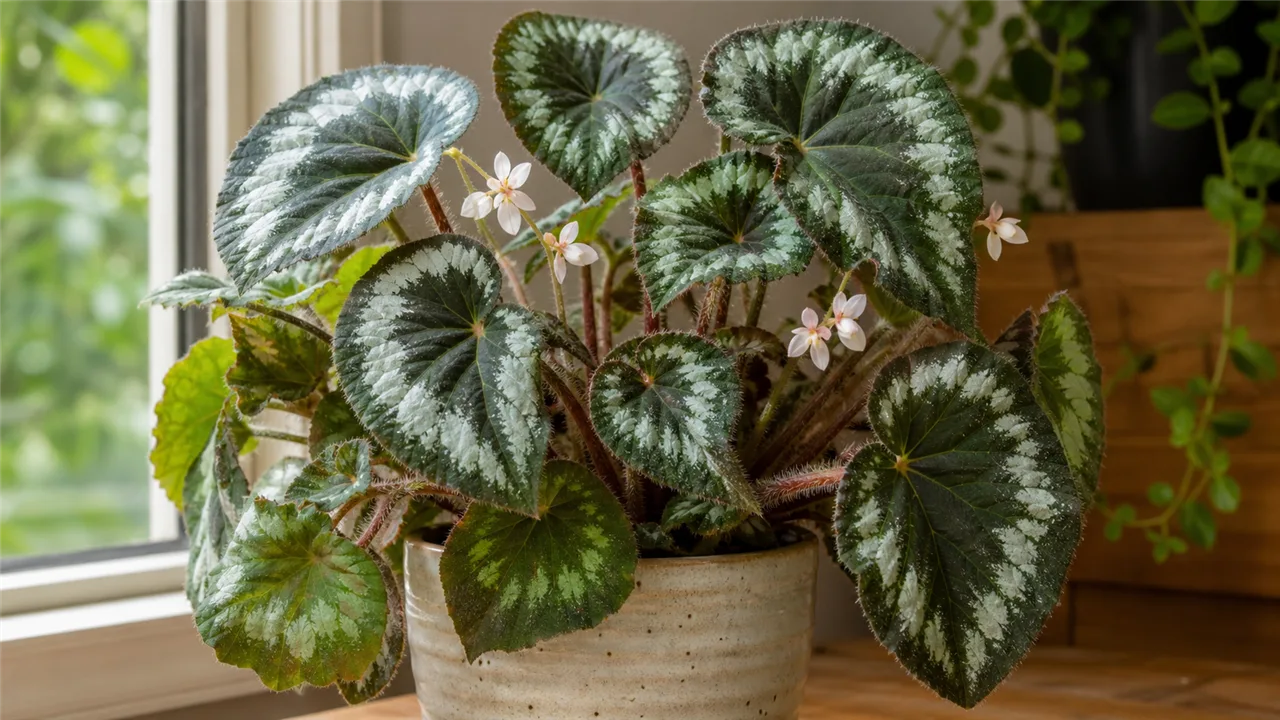
Fibrous-rooted begonias include compact wax begonias used in summer bedding and larger cane types with upright stems. Tuberous begonias produce showy flowers and are popular in pots and hanging baskets, but their tubers need frost-free winter storage. Rex and other rhizomatous begonias are grown mainly for patterned leaves and usually prefer indoor or protected conditions in the UK.
Labels matter. A plant sold simply as “begonia” may need very different winter care from another bearing the same general name. Keep the cultivar or group name where possible, particularly when buying specialist foliage begonias.
Appearance and garden use
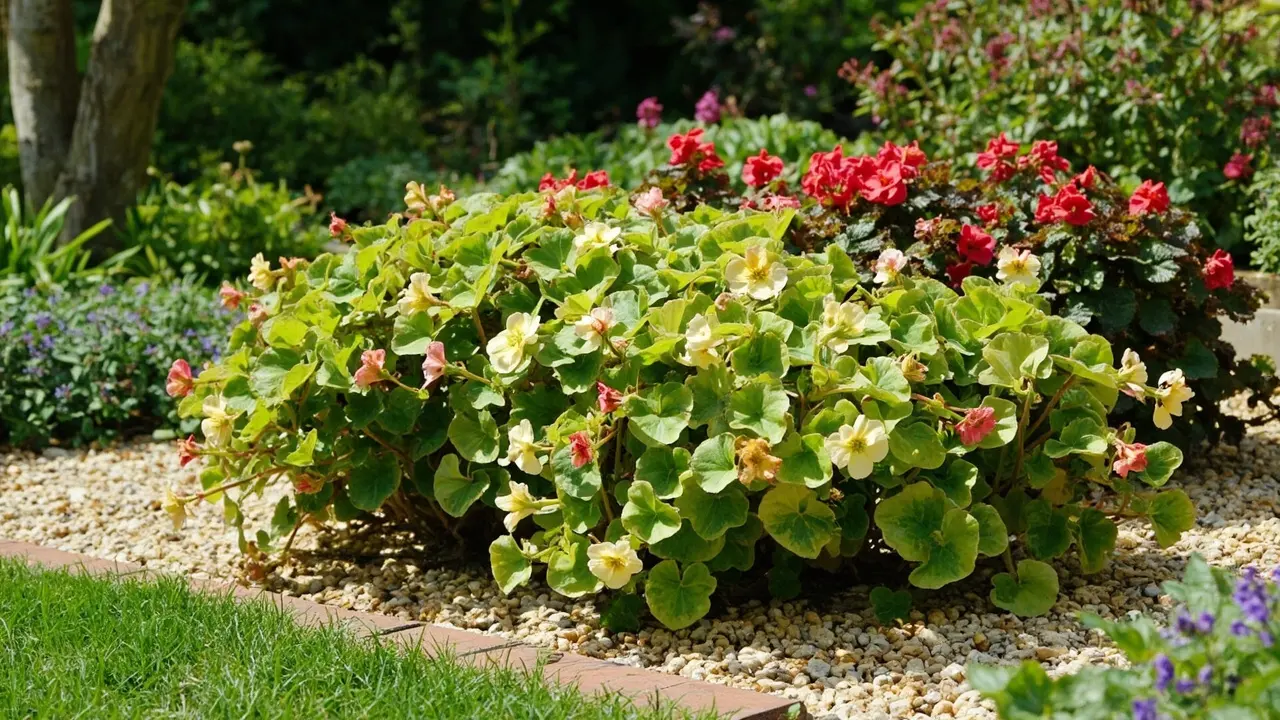
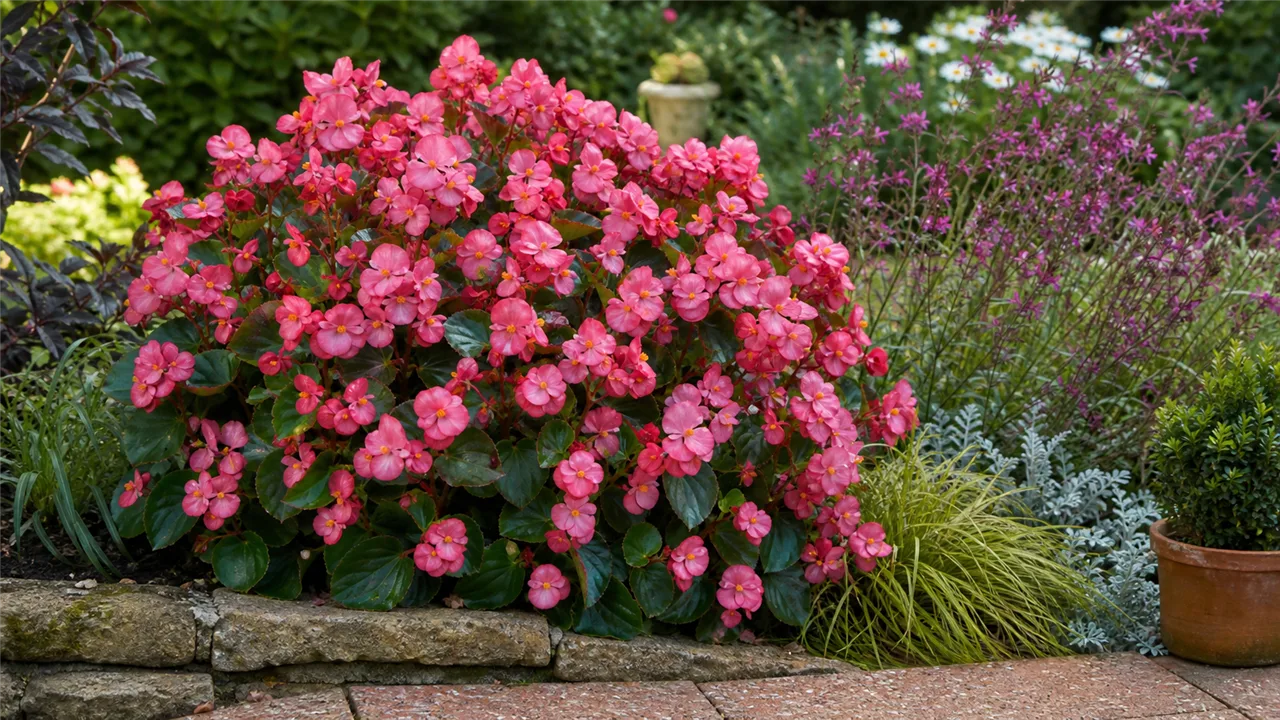
The genus ranges from low, rounded bedding plants to trailing basket forms and tall cane begonias. Leaves are usually asymmetrical at the base, a characteristic feature of begonias, but their colour and texture vary enormously. They may be glossy green, bronze, silver-marked, spotted, deeply textured or edged with contrasting colour.
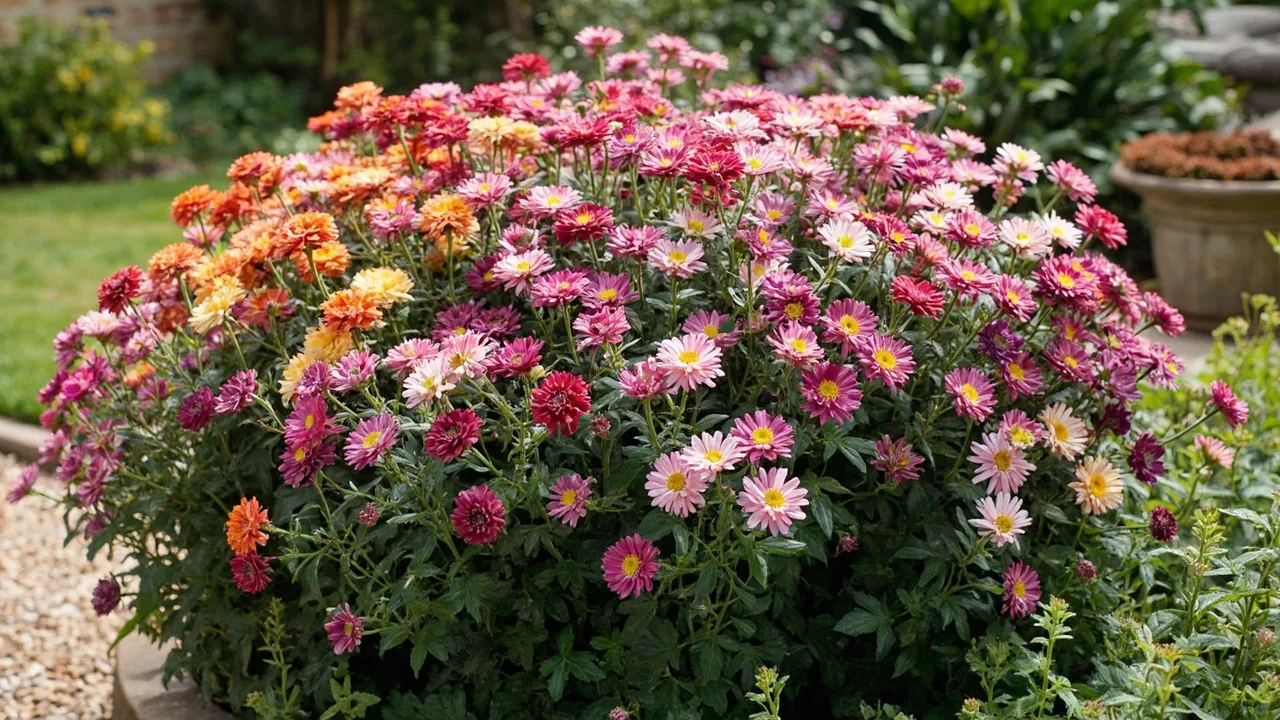
Flowers may be small and freely produced or large and double, in shades including white, yellow, orange, pink and red. Bedding and tuberous begonias provide long summer colour outdoors. Foliage begonias make striking indoor specimens, where their leaves can be viewed closely.
Light and position
Most begonias prefer bright conditions without harsh midday sun. Outdoors, partial shade or filtered light is a reliable choice, especially for foliage types and plants in containers. Some modern bedding begonias tolerate more sun when their roots remain evenly moist. Deep shade reduces flowering and encourages weak growth, while sudden intense sunshine can scorch leaves.
Indoor begonias do best close to a bright window but protected from strong summer sun through glass. Avoid cold draughts, radiators and positions where leaves repeatedly touch cold windowpanes. Good airflow helps prevent fungal disease, but the plants should not be exposed to drying winds.
Soil, watering and feeding
Use fertile, free-draining soil or peat-free potting compost. Begonias appreciate consistent moisture during active growth but dislike waterlogging. Water when the surface begins to dry, allowing excess water to drain fully. Do not leave pots permanently standing in water, and reduce watering when growth slows.
Feed container plants with a balanced liquid fertiliser during active growth, following the product instructions. Flowering types can move to a flowering-plant feed once buds form. Excess fertiliser produces soft growth and can worsen root problems, so feeding should never be used to compensate for poor light or saturated compost.
Seasonal care
Outdoor begonias are tender. Harden young plants off gradually and plant them outside only after frost risk has passed. Bring valuable container specimens under cover before cold autumn nights. Fibrous types can be kept as houseplants or propagated from cuttings, while dormant tuberous begonias can be lifted, dried and stored frost-free according to their group.
Remove damaged leaves and faded flowers to maintain airflow and appearance. Tuberous and cane types may need support when heavily flowered. Do not cut healthy foliage from a tuberous begonia until it has naturally declined, because the plant needs time to replenish the tuber.
Propagation
Fibrous and cane begonias root readily from stem cuttings. Many rhizomatous and rex begonias can be propagated from leaf sections, while tuberous types may be divided when each section has a viable bud. Seed is possible but extremely fine and is mainly used for bedding strains or by experienced growers.
Using begonias effectively
For summer containers, combine begonias with plants that share their preference for steady moisture and shelter. Avoid mixing them with drought-loving plants in the same pot. Indoors, foliage begonias are strongest as individual specimens where their leaf patterns remain visible, while cane begonias need enough space to develop upright stems.
When buying, inspect the crown, leaf undersides and compost surface. Choose a plant with firm growth, clear labelling and no signs of sticky residue, webbing or soft rot. Quarantine a new houseplant briefly before placing it beside an established collection.
Common problems
Grey mould and powdery mildew are encouraged by crowded growth, poor airflow and wet foliage. Remove affected material, improve spacing and water the compost rather than routinely wetting the leaves. Soft stems, yellowing and collapse usually point to waterlogged compost or cold, wet conditions.
Vine weevil larvae, aphids, thrips, mealybugs and mites may occur, particularly under cover. Inspect leaf undersides, crowns and roots when growth becomes distorted or loses vigour. Isolate affected houseplants and use an appropriate control for the pest and setting.
Cultivars and Varieties
| Cultivar | Height | Flower | Notes | AGM |
|---|---|---|---|---|
| 'Alto Scharff' | — | — | RHS AGM (H1b) | ✓ |
| 'Ambassador Rose' | — | — | RHS AGM (H1b) | ✓ |
| 'Benitochiba' | — | — | RHS AGM (H1b) | ✓ |
| 'Black Fang' | — | — | RHS AGM (H1b) | ✓ |
| 'Carol Flame' | — | — | RHS AGM (H1b) | ✓ |
| 'Carolina Moon' | — | — | RHS AGM (H1b) | ✓ |
| 'Carol Red' | — | — | RHS AGM (H1b) | ✓ |
| 'China Curl' | — | — | RHS AGM (H1b) | ✓ |
| 'Cleopatra' | — | — | RHS AGM (H1b) | ✓ |
| 'Connee Boswell' | — | — | RHS AGM (H1c) | ✓ |
| 'Curly Fireflush' | — | — | RHS AGM (H1b) | ✓ |
| 'David Blais' | — | — | RHS AGM (H1b) | ✓ |
| 'Dewdrop' | — | — | RHS AGM (H1b) | ✓ |
| 'Dibleys Pink Showers' | — | — | RHS AGM (H1b) | ✓ |
| 'Emerald Beauty' | — | — | RHS AGM (H1b) | ✓ |
| 'Encanto Orange' | — | — | RHS AGM (H1b) | ✓ |
| 'Erythrophylla' | — | — | RHS AGM (H1b) | ✓ |
| 'Escargot' | — | — | RHS AGM (H1b) | ✓ |
| 'Esther Albertine' | — | — | RHS AGM (H1b) | ✓ |
| 'Fireworks' | — | — | RHS AGM (H1b) | ✓ |
| 'Glowing Embers' | — | — | RHS AGM (H1b) | ✓ |
| 'Green Gold' | — | — | RHS AGM (H1b) | ✓ |
| 'Helen Lewis' | — | — | RHS AGM (H1b) | ✓ |
| 'Hilo Holiday' | — | — | RHS AGM (H1b) | ✓ |
| 'Ikon Blush White' | — | — | RHS AGM (H1b) | ✓ |
| 'Illumination Orange' | — | — | RHS AGM (H2) | ✓ |
| 'Illumination Salmon Pi nk' | — | — | RHS AGM (H2) | ✓ |
| 'Irene Nuss' | — | — | RHS AGM (H1b) | ✓ |
| 'Ironstone' | — | — | RHS AGM (H1b) | ✓ |
| 'Limeade' | — | — | RHS AGM (H1b) | ✓ |
| 'Little Brother Montgomery' | — | — | RHS AGM (H6) | ✓ |
| 'Marmaduke' | — | — | RHS AGM (H1b) | ✓ |
| 'Martin Johnson' | — | — | RHS AGM (H1b) | ✓ |
| 'Midnight Magic' | — | — | RHS AGM (H1b) | ✓ |
| 'Mikado' | — | — | RHS AGM (H1b) | ✓ |
| 'Mirage' | — | — | RHS AGM (H1b) | ✓ |
| 'Munchkin' | — | — | RHS AGM (H1b) | ✓ |
| 'Namur' | — | — | RHS AGM (H1b) | ✓ |
| 'Orient' | — | — | RHS AGM (H1b) | ✓ |
| 'Pinafore' | — | — | RHS AGM (H1b) | ✓ |
| 'Pink Champagne' | — | — | RHS AGM (H1b) | ✓ |
| 'Pin Up' | — | — | RHS AGM (H1b) | ✓ |
| 'Pin Up Flame' | — | — | RHS AGM (H1b) | ✓ |
| 'Pollux' | — | — | RHS AGM (H1b) | ✓ |
| 'Président Carnot' | — | — | RHS AGM (H1b) | ✓ |
| 'Princess of Hanover' | — | — | RHS AGM (H1b) | ✓ |
| 'Raymond George Nelson' | — | — | RHS AGM (H1b) | ✓ |
| 'Red Robin' | — | — | RHS AGM (H1b) | ✓ |
| 'Regal Minuet' | — | — | RHS AGM (H1b) | ✓ |
| 'Ricky Minter' | — | — | RHS AGM (H1b) | ✓ |
| 'Rip van Winkle' | — | — | RHS AGM (H1b) | ✓ |
| 'Rocheart' | — | — | RHS AGM (H1b) | ✓ |
| 'Roi de Roses' | — | — | RHS AGM (H1b) | ✓ |
| 'Sea Serpent' | — | — | RHS AGM (H1b) | ✓ |
| 'Silver Cloud' | — | — | RHS AGM (H1b) | ✓ |
| 'Silver Jewell' | — | — | RHS AGM (H1b) | ✓ |
| 'Silver King' | — | — | RHS AGM (H1b) | ✓ |
| 'Silver Queen' | — | — | RHS AGM (H1b) | ✓ |
| 'Snowcap' | — | — | RHS AGM (H1b) | ✓ |
| 'Sophie Cecile' | — | — | RHS AGM (H1b) | ✓ |
| 'Super Olympia Light Pink' | — | — | RHS AGM (H1b) | ✓ |
| 'Thurstonii' | — | — | RHS AGM (H1b) | ✓ |
| 'Tiger Paws' | — | — | RHS AGM (H1b) | ✓ |
| 'Victoria Falls' | — | — | RHS AGM (H1b) | ✓ |
Pests and Diseases
| Problem | Symptoms | Management |
|---|---|---|
| Powdery mildew | A white, dusty fungal growth appears on leaves and stems, often causing distortion. | Improve air circulation and treat with a suitable fungicide or bicarbonate spray. |
| Slugs and snails | Irregular holes are eaten in leaves and flowers, often accompanied by slimy trails. | Use physical barriers, copper tape, or approved slug pellets to protect foliage. |
| Root rot | Leaves turn yellow and wilt despite moist soil, indicating waterlogged roots. | Ensure pots have drainage holes and allow compost to dry slightly between waterings. |
| Aphids | Small green or black insects cluster on new growth and leaf undersides, secreting sticky honeydew. | Squash by hand or spray with a strong jet of water or insecticidal soap. |
| Vine weevil | Notched edges on leaves and wilting plants caused by larvae feeding on roots. | Apply biological nematodes to the compost in late summer or autumn. |
For step-by-step help, read Controlling Aphids Naturally, Dealing with Slugs and Snails and Treating Powdery Mildew. Or browse the full plant problem solver to diagnose an issue by symptom.
Recommended Products
GardenWizz earns a commission from qualifying purchases made through affiliate links on this page (including links within the article) — as an Amazon Associate, and from Thompson & Morgan via the Awin network. This does not affect the price you pay. See our disclaimer for details.