Broad Bean
Vicia faba
The Gardening Year
Best months in UK gardens · full planting calendar →
🖨 Printable care card (PDF)At a Glance
| Botanical name | Vicia faba |
|---|---|
| Common name(s) | Broad Bean |
| Family | Fabaceae |
| Plant type | annual |
| Height × Spread | 50–180 cm × 10–50 cm |
| Position | Full sun |
| Soil | fertile, moist but well drained soil; tolerates clay, chalk, loam, sand; pH acid, alkaline, neutral |
| Flowering | May |
| Toxicity | Broad (fava) beans can trigger haemolysis (a haemolytic crisis) in people with G6PD deficiency. This is a susceptibility-specific risk; broad beans are otherwise a food crop. |
| Native range | — |
Broad bean is a cool-season annual pulse grown for its large, tender seeds. It suits UK vegetable plots, raised beds and large containers, and can be among the first home-grown vegetables harvested each year.
| Sowing season | October to November or February to May, according to region and conditions |
|---|---|
| Harvest season | Late May to September, according to region and sowing time |
Overview
Broad bean, Vicia faba, is a cultivated edible crop in the pea family, Fabaceae. It is distinct from the common bean, Phaseolus vulgaris, and has been grown for food for thousands of years. The thick pods contain large seeds that may be eaten young and green or left to mature for drying. Very young pods are also edible when cooked, although most gardeners grow the crop for the shelled beans.
The plant is well suited to the UK's cool springs and generally moist growing season. Autumn-sown plants can overwinter in mild, sheltered districts and crop early, while spring sowing is more reliable in colder northern and Scottish gardens, exposed plots and wet ground. Successional sowings can spread the harvest, but late crops are more likely to encounter black bean aphid and dry soil during flowering.
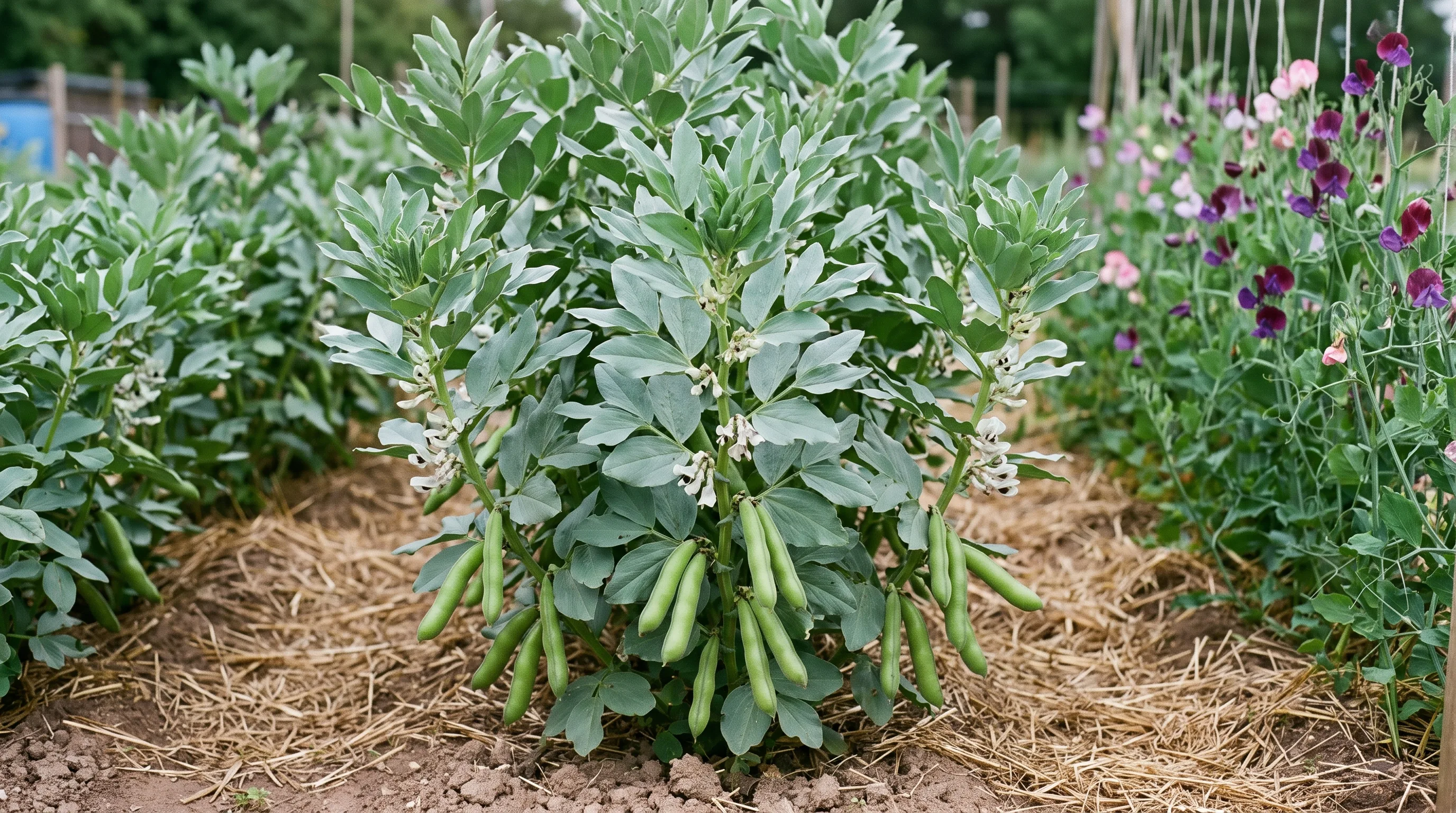
Plants are upright rather than tendril-climbing, with stout square stems, blue-green divided leaves and clusters of pea-like flowers at the leaf joints. Most flowers are white with a dark purple or black blotch, though some cultivars have white or crimson flowers. Pollinated flowers form thick, downy-lined pods containing several beans. Dwarf cultivars may reach only about 45 cm; vigorous longpod types can grow to 1.5 m and need support.
Broad beans form root nodules in partnership with nitrogen-fixing bacteria, but this does not compensate for compacted, waterlogged or infertile soil. A well-prepared bed supports deep roots, even moisture and good pod filling. The flowers attract pollinating insects, and their early harvest makes broad beans useful before many warm-season vegetables begin cropping.
Sowing
Choose an open position in full sun, with shelter from prevailing wind if a tall cultivar is planned. Light partial shade is tolerated, but deep shade leads to weak stems and fewer pods. Soil should be fertile, moisture-retentive and well drained. Incorporate well-rotted garden compost into light or hungry soil, and remove perennial weeds. Avoid working heavy ground while it is saturated, because compacted, airless soil encourages seed to rot.
In mild, sheltered districts of southern and south-western Britain, including coastal sites with free-draining soil, sow suitable cultivars outdoors from October into November for an early crop. Autumn sowing is risky where winters are cold, ground remains wet, or wind rocks young plants. In colder northern England, Scotland, frost pockets and exposed gardens, wait until February or March to start seed under unheated cover, or sow outdoors from March to April once the soil is workable and no longer waterlogged. Across most central and southern districts, direct sowing can begin in February during a settled spell, with March and April providing the main window. A final sowing in May extends the season where summer moisture can be maintained.
For autumn sowing, choose a cultivar suited to the purpose, such as 'Aquadulce Claudia'. Spring cultivars include the early 'Witkiem Manita' and the vigorous 'Masterpiece Green Longpod'. 'The Sutton', usually about 45 cm tall, is useful for containers, small beds and exposed plots. Cultivar descriptions guide timing but do not override local conditions: even an autumn-sowing cultivar is safer sown in spring on cold, wet clay or a windswept northern site.
Sow seeds directly 5–7 cm deep. Space them 15–25 cm apart, allowing the wider spacing for vigorous plants. A staggered double row works well: leave about 20–25 cm between its two lines and at least 60 cm between each pair of double rows. This gives access for picking and allows stakes and twine to enclose the whole block. Dwarf plants can be slightly closer, while tall longpod cultivars need room for air movement.
Where the ground is unsuitable, sow one seed per deep module or small pot in a peat-free seed compost. Keep seedlings cool, frost-protected and in good light; warm indoor rooms produce soft, drawn growth. Harden plants off gradually and set them outside at their original depth before roots become congested. Water them in without disturbing the root ball.
Mice and other animals may dig up newly sown beans, while slugs and snails can damage emerging shoots. Check rows promptly if gaps appear rather than repeatedly watering a cold seed-bed. Secure any protective mesh so wildlife cannot become trapped. A further small sowing after a failure is often more successful once drainage, pests or weather have been addressed.
Growing
Keep the crop weed-free while young, using shallow hoeing to avoid damaging roots near the surface. Once plants are established, a 5 cm layer of compost or other organic mulch over moist soil suppresses annual weeds and slows evaporation. Do not heap mulch against the stems. Broad beans tolerate cool weather, but autumn-sown plants in an exposed position may loosen through wind-rock; firm them back gently after severe weather.
Water newly planted seedlings during dry spells, then give particular attention from the start of flowering until the beans swell. A thorough soak reaching the root zone is better than frequent surface sprinkling. Dryness at flowering can cause blossom to drop and seeds to fill poorly, while saturated soil deprives roots of air. Container crops need more frequent checks because their compost dries quickly; use a large, deep pot with drainage holes and never leave it standing in water.
If the bed received compost or well-rotted manure before sowing, plants in ordinary garden soil seldom need extra feed. Excess nitrogen encourages lush, aphid-prone shoots rather than a balanced crop. Container plants or crops on visibly poor soil may receive a modest potassium-rich liquid feed once flowering and pod formation begin, applied at the labelled rate.
Supporting: Broad beans do not climb with tendrils, so tall stems need collective restraint. Drive sturdy stakes around the outside of a double row and run garden twine at two or three levels, adding the upper line as growth lengthens. In a very exposed garden, put supports in early rather than waiting for stems to lean. Compact cultivars such as 'The Sutton' often need only a low string barrier, though no cultivar is completely immune to lodging in strong wind.
When the lowest flower clusters have formed small pods, pinch out about 7–10 cm of soft growth from each stem tip. This one-off task removes tissue favoured by black bean aphid and can direct growth towards the developing crop; it is not a scheduled pruning regime. Inspect from May onwards for dense black aphid colonies and sticky honeydew. Infested tips can be pinched off after pod set, while small colonies may be rubbed away or dislodged with water. Hoverflies, ladybirds and other predators often help control them, so avoid unnecessary broad-spectrum insecticides.
Chocolate spot causes reddish-brown marks that may merge and blacken foliage or stems in prolonged cool, humid weather. Give plants enough space, control weeds and avoid overhead watering late in the day so foliage does not remain wet. Remove badly affected material and rotate broad beans and other pulse crops around the plot. Broad bean rust appears as orange-brown pustules, commonly late in the season; clear crop debris and do not retain exhausted plants after harvest.
Pea and bean weevil adults leave scalloped notches around leaf edges. Established plants often outgrow moderate damage, but seedlings can be checked severely, so keep young crops growing steadily and reduce nearby sheltering debris. Poor pod set can result from dry soil, cold or unusually hot weather during flowering, low pollinator activity, excessive nitrogen or wind-rock. Correct the growing conditions rather than adding feed automatically.
Propagation is by seed. For seed saving, select healthy, true-to-type plants and let chosen pods dry fully before shelling. Different cultivars can cross-pollinate, so saved seed may not remain identical when several broad beans flower nearby. Dry it thoroughly, label it and keep it somewhere cool and dry; buy fresh seed when cultivar purity is important.
Harvesting
Harvest timing follows sowing date and local spring temperatures. In mild, sheltered southern and south-western districts, sound autumn-sown plants may produce their first usable pods from late May, with the main crop in June. Autumn-sown crops elsewhere generally harvest through June and early July. In colder northern England, Scotland and exposed sites, March or April sowings commonly begin in late June or July and can continue into August. A May sowing may crop during August and into September if moisture is available. Cool springs delay these windows, while a warm sheltered plot may bring them forward.
For tender green beans, pick when pods are well filled but still fresh green and the seed scar has not darkened. Feel along a pod to judge seed size. Beans no bigger than a fingernail are especially tender; larger seeds remain useful but may benefit from slipping off their pale outer skins after cooking. Pick regularly from the base of the plant upwards, holding the stem while twisting or cutting the pod to avoid tearing it.
Very young pods can be cooked whole before their lining becomes fibrous. For dry beans, leave selected pods on healthy plants until they turn dark, dry and brittle. If persistent rain threatens, lift the mature pods and finish drying them under cover with good ventilation. Shell only when the beans are fully dry.
Once picking is complete, cut down or lift the tops. Compost healthy material, but dispose of badly diseased growth according to local guidance. Roots may be left to decay in the bed if they are sound, although their nitrogen-fixing ability should not be treated as a substitute for feeding the following crop according to its needs.
Eating
Fresh broad beans have a sweet, grassy flavour and a creamy texture. Shell the pods and cook the beans briefly in boiling water, steam them, or add them near the end of cooking soups, stews and risottos. Young beans are good with peas, new potatoes, mint, parsley, lemon or soft cheese. Larger beans can be boiled, cooled and squeezed from their thicker outer skins for purées, salads and dips. Pods picked exceptionally young can be sliced and cooked, but mature pods are tough and are normally discarded.
Storing: Freshly picked pods are best used promptly, as their sugars begin converting to starch after harvest. Keep unwashed pods in the refrigerator for a few days. To freeze, shell and blanch the beans briefly, cool them rapidly, drain well and pack into freezer containers. Fully mature beans can be stored dry only after both pods and seeds have lost all residual moisture; keep them in an airtight, labelled container in a cool, dry place and discard any that become mouldy.
People with glucose-6-phosphate dehydrogenase (G6PD) deficiency should avoid broad, or fava, beans because they can trigger haemolysis. This susceptibility-specific warning does not mean that broad beans are generally poisonous.
Pests and Diseases
| Problem | Symptoms | Management |
|---|---|---|
| Chocolate spot | Dark, chocolate-coloured spots appear on leaves, stems and pods, potentially causing defoliation. | Remove infected plant debris after harvest to reduce overwintering spores. |
| Broad bean rust | Small, dusty, dark brown spots surrounded by a pale yellow halo on leaves and stems. | Maximise air flow with wider spacing and destroy infected material to prevent spread. |
| Black bean aphid | Clusters of black aphids cluster on shoot tips, causing stunted growth and distorted leaves. | Pick off the tips of shoots to reduce infestation and improve yield. |
| Pea and bean weevil | Small greyish beetles feed on flowers, reducing pod set and potentially transmitting disease. | Monitor plants during flowering and remove affected flowers if infestation is heavy. |
| Broad bean seed beetle | Circular emergence holes in dry stored seeds with grubs feeding inside the cotyledons. | Inspect saved seeds for damage; most affected seeds will still germinate successfully. |
For step-by-step help, read Controlling Aphids Naturally. Or browse the full plant problem solver to diagnose an issue by symptom.
Broad Bean in our guides
- Garden Tools for Beginners: What You Actually Need
- How to Grow Broad Beans
- How to Grow Broad Beans in the UK
- How to Grow Runner Beans in the UK
- How to Harden Off Seedlings Before Planting Out
Recommended Products
GardenWizz earns a commission from qualifying purchases made through affiliate links on this page (including links within the article) — as an Amazon Associate, and from Thompson & Morgan via the Awin network. This does not affect the price you pay. See our disclaimer for details.