French Bean
Phaseolus vulgaris
The Gardening Year
Best months in UK gardens · full planting calendar →
🖨 Printable care card (PDF)At a Glance
| Botanical name | Phaseolus vulgaris |
|---|---|
| Common name(s) | French Bean |
| Family | Fabaceae |
| Plant type | annual |
| Height × Spread | 0.2–4 m × 50–100 cm |
| Position | Full sun |
| Soil | fertile, moisture-retentive |
| Flowering | July–August |
| Toxicity | Raw pods/beans harmful if eaten. Contains toxic compound phytohaemagglutinin. |
| Native range | Americas |
The French bean (Phaseolus vulgaris) is a tender, quick-cropping annual grown across the UK for its slim, tender pods. It belongs to the legume family (Fabaceae) and is closely related to the runner bean, but is generally more compact, more heat-demanding, and picked younger. Where space is tight or summers are cool, French beans are a dependable alternative to climbing French and runner types, cropping heavily from a small footprint and finishing well before the first autumn frosts.
In the UK, French beans are grown as a half-hardy annual: sown after the last frost, harvested through summer and into early autumn, and cleared at the end of the season. They are highly productive for the space they occupy, and — like all beans — they fix atmospheric nitrogen via root-nodule bacteria, leaving the soil in better condition for the following crop.
Safety note. Raw or undercooked French beans — including the pods and any shelled or dried seeds (haricots) — contain the lectin phytohaemagglutinin, which is toxic and can cause severe gastric illness if eaten without thorough cooking. Pods and seeds must be cooked before eating; dried haricot beans should be soaked and then boiled briskly for at least 10 minutes, as slow cookers and low-temperature methods do not reliably destroy the toxin. If you have any doubt about preparation or safe consumption, confirm current advice with an authoritative source such as the RHS or the Food Standards Agency before eating.
Overview
French beans are one of the most rewarding vegetables for the UK kitchen garden, combining speed, productivity and a long picking season in a single crop. A short row sown in late May will begin cropping in eight to ten weeks and continue for two months if picked regularly. Dwarf (bush) varieties need no staking and suit containers, raised beds and small plots; climbing varieties crop more heavily over a longer season but require tall supports.
The species originates in the Americas and was introduced to Europe after the Columbian exchange, where it gradually displaced many of the older Old World pulses. In Britain it has been grown in vegetable gardens since at least the sixteenth century and is now a familiar summer crop on allotments and in kitchen gardens across the country.
Appearance
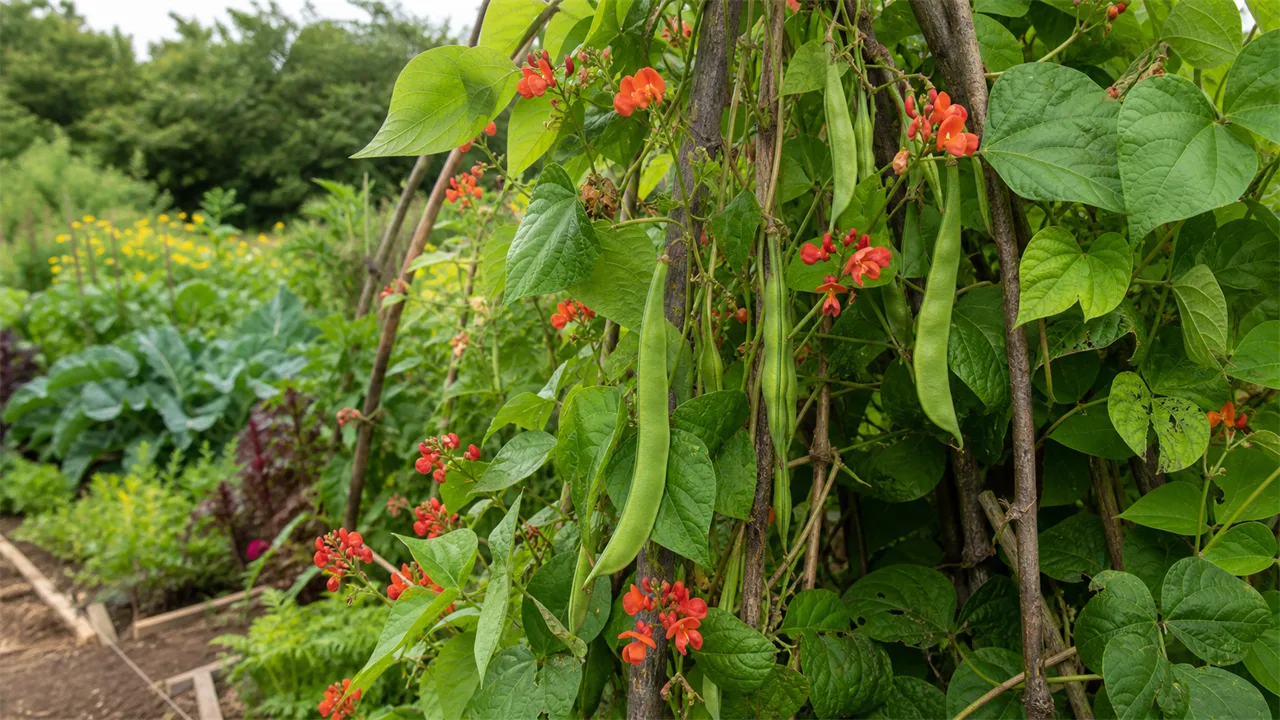
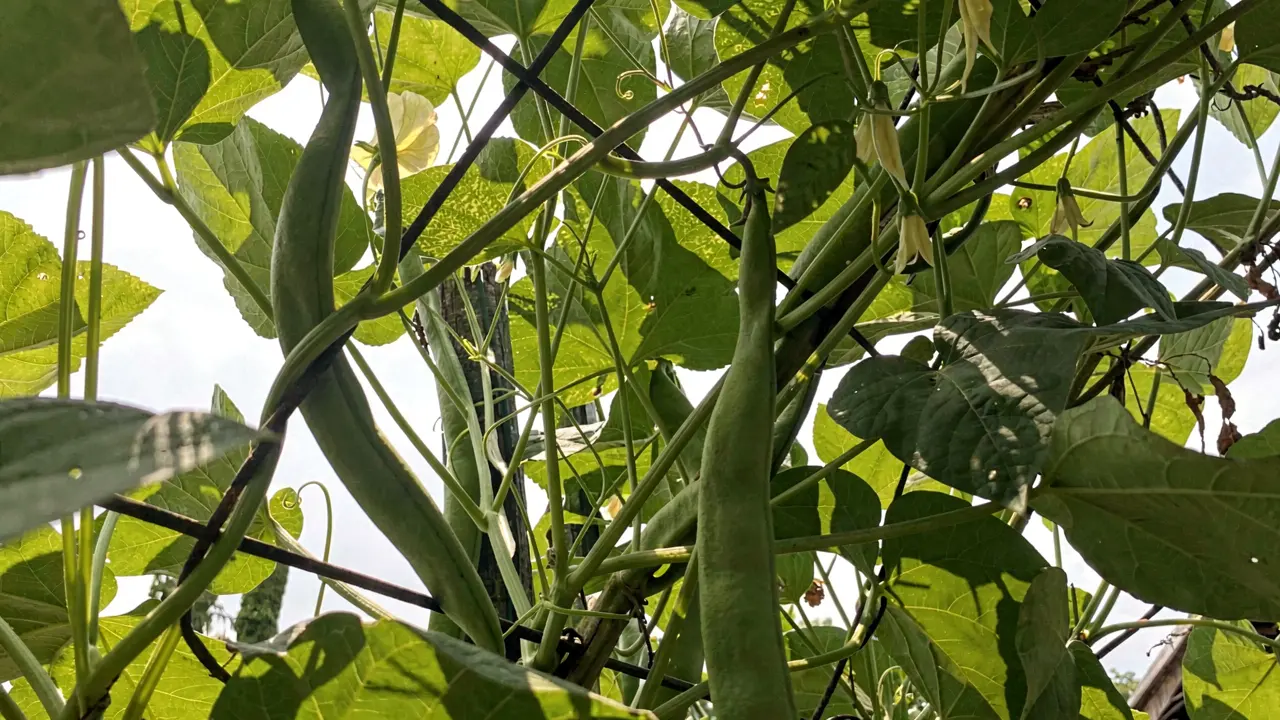
French bean plants have a compact, bushy habit in their dwarf form, typically reaching 45–60 cm tall with a spread of 20–30 cm. The leaves are trifoliate, dark green and broadly ovate, with a slightly downy surface. Climbing cultivars share the same leaf form but produce twining stems that will run 1.8–2.5 m up a support.
Flowers are typical of the legume family — papilionaceous, with a prominent standard petal — and are borne in small clusters at the leaf axils. They are usually white, pale pink or pale violet, depending on cultivar, and are self-fertile, so a single plant will set pods without a pollination partner.
The edible pods develop rapidly after flowering. They are typically 10–20 cm long and may be flat, pencil-shaped or rounded in cross-section, depending on the cultivar group. Pod colour ranges from the familiar mid-green through yellow (wax beans) to deep purple. Seeds inside the pods swell as the pods mature; pods picked young are stringless and tender, while pods left to mature fully can be shelled for the immature seeds (haricots) or dried for storage (haricot beans).
Growing Conditions
French beans need warmth, sun and a moisture-retentive soil to crop well. Choose the warmest, most sheltered spot available — a south- or west-facing bed against a fence or wall is ideal in cooler districts. Avoid frost pockets and exposed sites where cold winds check growth.
Soil should be fertile, well-drained and moisture-retentive, ideally a loam with a pH between 6.0 and 7.0. Work in plenty of well-rotted garden compost or manure the winter before sowing; on thin or sandy soils, additional organic matter improves both water retention and nutrient supply. Because French beans fix their own nitrogen through root-nodule bacteria, high-nitrogen fertilisers are unnecessary and tend to produce leafy growth at the expense of pods.
The plants are not frost-hardy and must be grown after the last frost date for the region. In the UK this typically means outdoor sowing from mid-May in the south and early June further north, with indoor sowing in modules from April where the season is short.
Planting and Care
Sowing. Direct sow outdoors from mid-May to early July, once the soil has warmed to at least 10 °C. Sow 5 cm deep, 15 cm apart in rows 45 cm apart, with two or three seeds at each station later thinned to the strongest seedling. For an earlier start, sow singly in modules under cover in April at 18–21 °C and transplant after the last frost, taking care not to disturb the roots.
Successional sowing every two to three weeks from May to early July gives a continuous harvest from July into October; a final sowing in early July is worthwhile in southern England but rarely completes its cycle further north.
Watering. Water regularly and consistently, particularly from flowering through pod set. Irregular watering causes flower drop, poor pod fill and stringy pods. Mulch with garden compost or straw to conserve moisture and suppress weeds; hoe very shallowly around the plants to avoid damaging the shallow roots.
Support. Dwarf varieties need no support. Climbing (pole) cultivars need a framework of 1.8–2.5 m bamboo canes, hazel poles or a tall net, set up before sowing or transplanting so the twining stems can find their own way up.
Feeding. On reasonably fertile ground, additional feeding is rarely needed. On poor soils, a single liquid feed of a balanced organic fertiliser at first flowering will keep the plants productive. Avoid high-nitrogen feeds, which delay flowering and reduce pod set.
Harvesting. Pick pods while they are still young and tender — usually 10–15 cm long — before the seeds inside swell visibly. Regular harvesting (at least twice a week in midsummer) is essential: pods left to mature signal the plant to stop flowering. Finish the harvest before the first autumn frosts, and pull up the plants once cropping ends; the nitrogen-rich root nodules benefit the following crop, particularly leafy brassicas. Always cook the pods before eating — raw French beans are toxic — and treat any dried haricot seeds the same way (soak and boil briskly for at least 10 minutes to destroy phytohaemagglutinin).
Propagation. French beans are grown from seed each year and are not propagated vegetatively in the kitchen garden. Saved seed is viable for three to four years if kept cool and dry, but cross-pollination between cultivars is common, so home-saved seed will not necessarily come true to type.
Common Problems
Halo blight (Pseudomonas syringae pv. phaseolicola) — small angular brown spots on the leaves surrounded by a yellow halo, sometimes with a watery halo on pods. It spreads in wet weather and is seed-borne. Use certified disease-free seed, rotate crops on at least a three-year cycle, and remove and destroy infected plants; do not compost them.
Anthracnose (Colletotrichum lindemuthianum) — dark, sunken lesions on pods, stems and leaves. Worse in cool, wet seasons. Rotate crops, avoid overhead watering, and use clean seed.
Blackfly (aphids) — colonies cluster on the shoot tips and young pods in early summer, distorting growth and reducing yield. Pinch out badly affected tips, spray with soft soap, or encourage natural predators by leaving room for ladybirds and hoverflies.
Slugs and snails — a serious threat to seedlings, particularly in damp springs. Use ferric phosphate pellets, copper tape around container rims, or night-time hand-picking.
Chocolate spot (Botrytis fabae) — reddish-brown spotting on leaves and stems, mostly seen on broad beans but also possible on French beans in damp seasons. Improve air circulation by correct spacing and avoid overcrowding.
Powdery mildew — a white, powdery coating on leaves in late summer, usually a sign of drought stress. Mulch and water consistently to prevent it.
Poor germination — cold, wet soil causes seed to rot before it emerges. Wait until the soil has warmed before sowing, or start in modules under cover.
Toxicity of raw or undercooked beans — both the pods and any shelled or dried seeds (haricots) contain the lectin phytohaemagglutinin, which is toxic when eaten raw or only lightly cooked and can cause severe vomiting and diarrhoea. Always cook pods thoroughly before eating; soak dried beans and boil them briskly for at least 10 minutes. Slow cookers, sous-vide and low-temperature simmering do not reliably destroy the toxin. If you are unsure about preparation, confirm current advice with the RHS or the Food Standards Agency before consuming.
Popular Varieties
Dwarf / bush types
- 'Delinel' — a reliable, heavy-cropping dwarf with slim, dark-green pencil pods. The standard choice for UK allotments and a good first sowing.
- 'Tendergreen' — early-maturing, stringless green pods on compact plants; useful for short seasons and containers.
- 'Purple Teepee' — purple-podded dwarf; the pods are easy to see when picking and turn green on cooking. Vigorous and prolific.
- 'Mistik' — a compact dwarf with mottled purple-and-green pods; ornamental as well as productive, suited to patio containers.
Climbing / pole types
- 'Cobra' — a widely grown climbing French bean with long, round, stringless green pods over a long season. Reliable in most UK districts and one of the heaviest croppers.
- 'Blue Lake' — a classic climbing type producing slim, round, tender pods; particularly good for successive picking over a long season.
- 'Carioca' — a climbing type grown both for its green pods when young and for its mottled cream-and-brown dried beans, used as haricot beans in the kitchen.
Climbing cultivars crop more heavily over a longer season than dwarf types, but they need tall supports and a sheltered site to do well. For most UK gardens, a row of dwarf varieties for an early, concentrated harvest plus a wigwam or two of a climbing type for sustained picking through August and September is the most productive combination.
Cultivars and Varieties
| Cultivar | Height | Flower | Notes | AGM |
|---|---|---|---|---|
| 'Algarve' | — | — | RHS AGM (H2) | ✓ |
| 'Annabel' | — | — | RHS AGM (H2) | ✓ |
| 'Boston' | — | — | RHS AGM (H2) | ✓ |
| 'Cobra' | — | — | RHS AGM (H2) | ✓ |
| 'Dior' | — | — | RHS AGM (H2) | ✓ |
| 'Elba' | — | — | RHS AGM (H2) | ✓ |
| 'Eva' | — | — | RHS AGM (H2) | ✓ |
| 'Golden Gate' | — | — | RHS AGM (H2) | ✓ |
| 'Hunter' | — | — | RHS AGM (H2) | ✓ |
| 'Limka' | — | — | RHS AGM (H2) | ✓ |
| 'Marona' | — | — | RHS AGM (H2) | ✓ |
| 'Nomad' | — | — | RHS AGM (H2) | ✓ |
| 'Pantheon' | — | — | RHS AGM (H2) | ✓ |
| 'Sprite' | — | — | RHS AGM (H2) | ✓ |
| 'Stanley' | — | — | RHS AGM (H2) | ✓ |
Pests and Diseases
| Problem | Symptoms | Management |
|---|---|---|
| Slugs and snails | Irregular holes chewed in young leaves and stems, often with silvery slime trails visible. | Use physical barriers like copper tape or beer traps, and hand-pick at night. |
| Black bean aphid | Clusters of small black insects on leaf undersides and growing tips, causing curling leaves. | Encourage natural predators like ladybirds or use a strong jet of water to dislodge them. |
| Runner and French bean rust | Small pale spots on upper leaf surfaces developing into brown or black pustules underneath. | Improve air circulation by thinning plants and remove heavily infected leaves to reduce spread. |
| Bean seed fly | Seedlings fail to emerge or collapse, with small maggots found in the soil around roots. | Sow seeds later in the season when soil is warmer or use fine mesh covers to exclude flies. |
| Powdery mildew | White, dusty fungal growth on leaves and stems, often appearing in hot, dry weather. | Water at the base to keep foliage dry and choose resistant varieties where possible. |
For step-by-step help, read Controlling Aphids Naturally, Dealing with Slugs and Snails and Treating Powdery Mildew. Or browse the full plant problem solver to diagnose an issue by symptom.
French Bean in our guides
Recommended Products
GardenWizz earns a commission from qualifying purchases made through affiliate links on this page (including links within the article) — as an Amazon Associate, and from Thompson & Morgan via the Awin network. This does not affect the price you pay. See our disclaimer for details.