Rosy Rhododendron
Rhododendron oreodoxa
The Gardening Year
Best months in UK gardens · full planting calendar →
🖨 Printable care card (PDF)At a Glance
| Botanical name | Rhododendron oreodoxa |
|---|---|
| Common name(s) | Rosy Rhododendron |
| Family | Ericaceae |
| Plant type | shrub |
| Height × Spread | 4–8 m × 1.5–2.5 m |
| Position | Partial shade, Full sun |
| Soil | moist but well-drained, leafy, humus-rich acid soil |
| Flowering | March–May |
| Toxicity | Harmful if eaten |
| Native range | central China |
Overview
Rhododendron oreodoxa is an evergreen species rhododendron from the mountains of south-west China, valued in British gardens for its early spring display of rose-pink blossom and its tolerance of cold winters. In its native Sichuan and Yunnan it makes a substantial shrub or small tree; in UK cultivation it forms a more modest, architectural specimen, eventually reaching small-tree proportions over many decades. The species sits within the Maddenia group, a section noted for funnel-shaped flowers carried in loose trusses, and it associates naturally with other woodland rhododendrons on acid soil.
It is well placed at a woodland edge or in a sheltered shrub border, and it has a long track record in the larger Cornish, Scottish, Welsh and Irish gardens that have traditionally led rhododendron collection in Britain. It is not a plant for shallow chalk soils, exposed sites or hot, dry borders, and it asks for the same basic conditions as any other ericaceous rhododendron: acidic, humus-rich ground and shelter from the worst of the wind.
Appearance
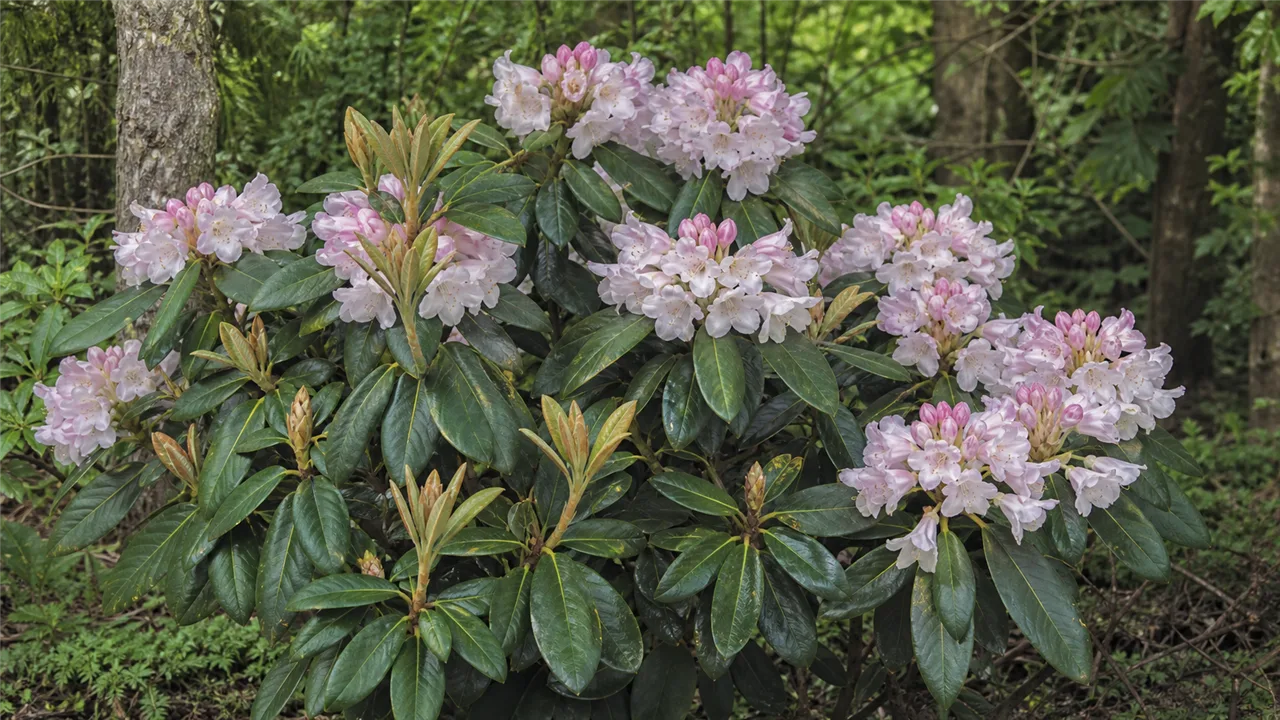
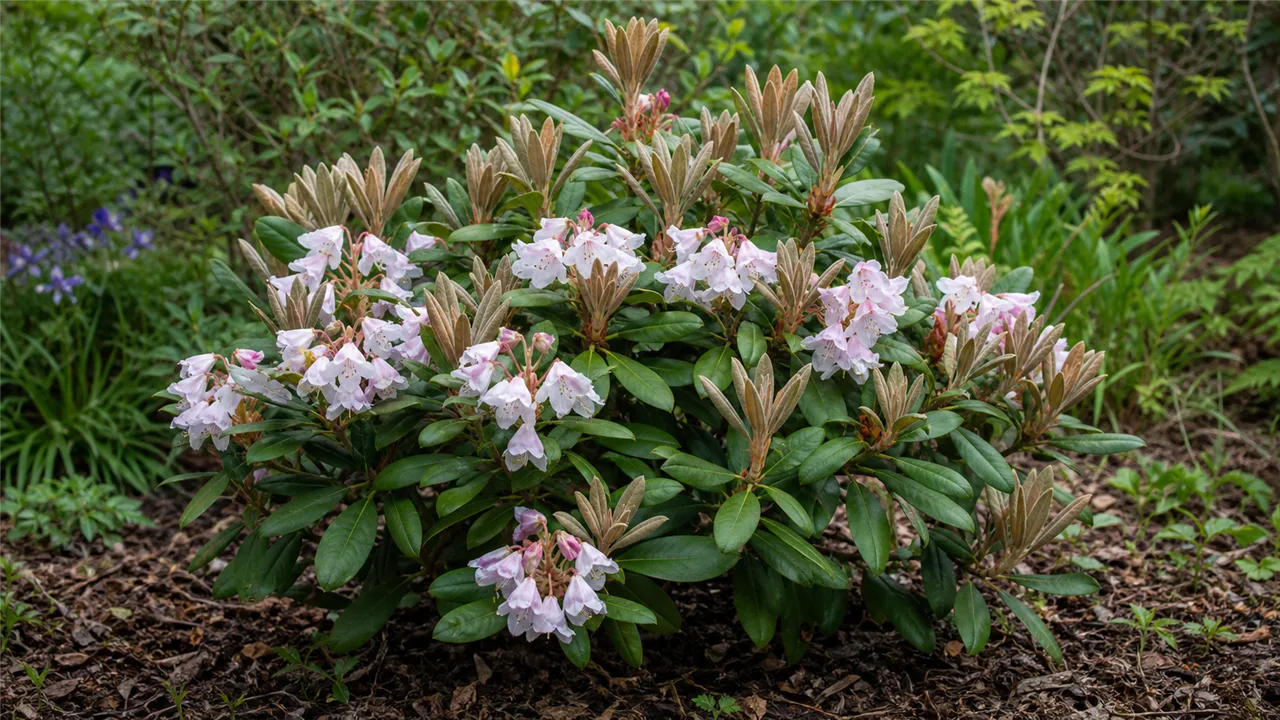
Rhododendron oreodoxa develops an upright, eventually rounded canopy on a sturdy framework of smooth, reddish-brown branches. The bark peels in thin flakes with age, and mature specimens in the UK often carry their lower branches down to the ground, producing a broad, dome-like silhouette that is best shown off as a specimen in open woodland or at the edge of a glade.
The leaves are a distinguishing feature. They are leathery, broadly elliptic to oblong, and typically 7–14 cm long in UK cultivation, occasionally reaching 20 cm on vigorous shoots. The upper surface is a deep, slightly glossy mid-green; the underside is paler and carries a fine scattering of small scales, which marks the species as a lepidote (scaly) rhododendron rather than one of the elepidote (non-scaly) hybrids more closely related to R. ponticum. New growth often emerges with a faint bronze flush before settling to green.
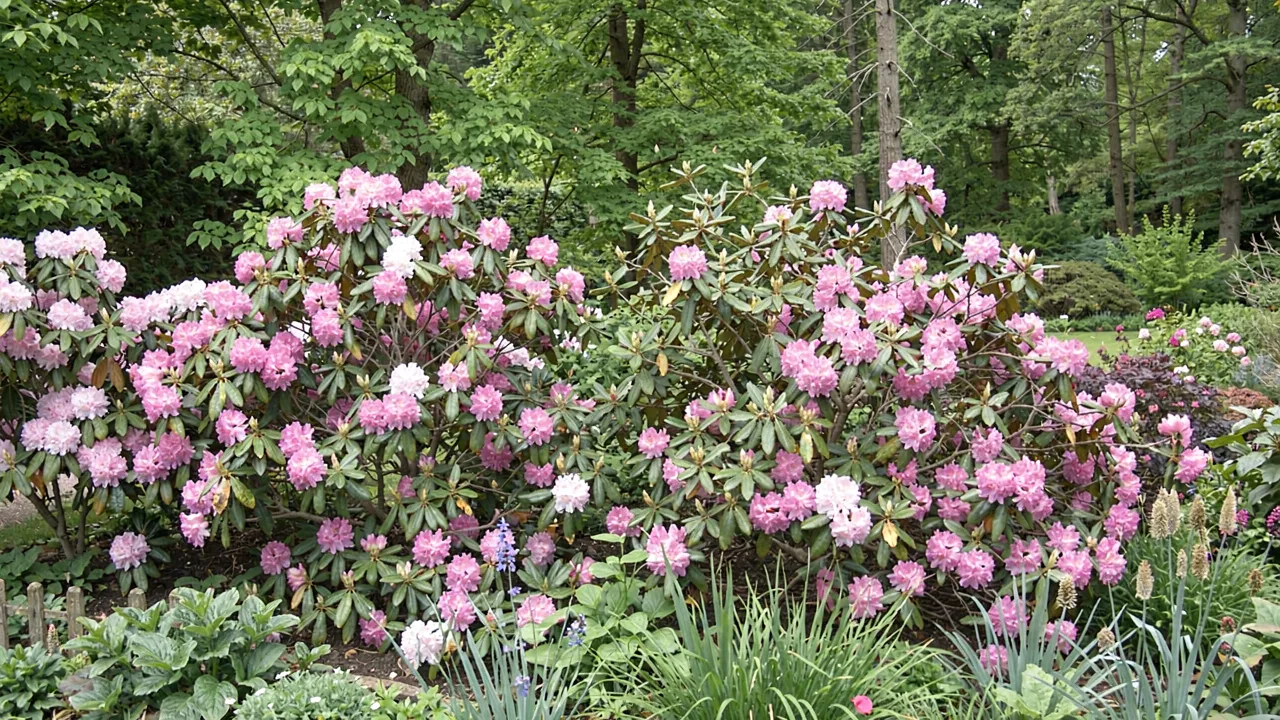
Flowering is the main event. Trusses of 8 to 15 funnel-shaped blooms open from scaly buds in April and May, usually before or alongside the new leaves, so the flowers are clearly visible against the dark branches. Each flower is 4–6 cm across, in shades of clear rose-pink to a softer blush, occasionally paler in some wild forms, with a faint dusting of purple spotting inside the throat in a proportion of plants. A light, sweet scent is detectable in still air, particularly in early morning. In a good year a well-settled plant can carry so much flower that the foliage is almost obscured.
Growing Conditions
Soil. Acid, humus-rich, well-drained but moisture-retentive soil is essential. R. oreodoxa dislikes alkaline ground and quickly develops interveinal chlorosis on neutral or chalky soils because iron and manganese become locked up. In the loamy, peat-influenced soils of Devon, Cornwall, Wales, the west of Scotland, parts of Ireland and most heathland gardens, it grows without fuss. Elsewhere, raised beds filled with ericaceous loam and pine-bark fines are a reliable solution, and container culture is straightforward where ground conditions are unsuitable.
Light. Dappled or partial shade is ideal, with overhead canopy that filters the strongest midday sun while letting in plenty of light. The species tolerates morning sun but dislikes hot, reflected heat from south-facing walls, particularly in dry soil. Deep shade under dense evergreens reduces flowering.
Aspect and shelter. Shelter from cold, drying east winds and from late-spring frosts is important. Frost pockets are poor sites, because the opening buds in April and May are easily damaged by a hard frost after a mild spell. A position beside taller shrubs or high-canopied trees, on a gentle slope that drains cold air away, generally gives the best results.
Moisture. Even soil moisture through the growing season is important. Mulching annually with pine bark, leaf mould or bracken keeps the roots cool and the soil damp, and is one of the most effective single things a gardener can do for an established rhododendron. Drought at the root is the most common reason for a struggling specimen.
UK climate. The species comes from high elevations in south-west China, where winters are severe, so it has no trouble with cold UK winters. Its main UK weaknesses are late-spring frost at flowering time and drought at the root in summer; site selection handles both.
Planting and Care
When to plant. Container-grown plants can be put in at any time of year when soil and weather allow, but autumn and early spring are best because the roots have time to settle before summer stress. Avoid planting into frozen or waterlogged ground, and avoid mid-summer planting unless the plant can be kept well watered.
Method. Dig a hole at least twice as wide as the rootball and the same depth — rhododendrons are surface-rooters and must not be buried deeper than they were in the pot. Backfill with the original soil, enriched with leaf mould or well-rotted ericaceous compost if the natural soil is poor. Water in well, then apply a 5–8 cm mulch of pine bark or leaf mould over the root area, keeping it clear of the stems.
Watering. Through the first two summers, water freely in dry spells; a mature plant tolerates short droughts but performs noticeably better with consistent moisture. Use rainwater if your tap water is hard, because lime in irrigation water gradually raises soil pH and brings on chlorosis.
Feeding. An annual spring top-dressing of ericaceous fertiliser is usually enough. Avoid general-purpose feeds, which can be too high in nitrogen and produce soft, frost-sensitive growth. Pale, sickly leaf colour on otherwise healthy plants usually points to a pH problem rather than a feed problem; correct the soil first.
Pruning and deadheading. R. oreodoxa needs no routine annual pruning. Remove dead or damaged wood, and any crossing branches, immediately after flowering, and deadhead spent trusses by snapping them off carefully at the base, taking care not to damage the new shoots just behind the old truss. This is the regular annual maintenance that keeps the plant tidy and improves the following year's display. The species does not regenerate well from hard cutting back into old wood, so avoid renovation pruning where possible. If size reduction is needed, do it gradually over several seasons, cutting back to a vigorous side shoot.
Propagation. Increase from semi-ripe cuttings taken in late summer and rooted with bottom heat, or by layering a low branch in autumn — peg it down, lightly wound the underside, and leave for a full year before severing. Seed is possible but slow and does not come true in garden hybrids.
Seasonal care. In April and May, watch for frost forecasts once buds begin to show colour: a light horticultural fleece thrown over the plant the night before a hard frost saves the display. Top up the mulch in late spring, and refresh ericaceous mulch and feed annually.
Common Problems
Bud blast (Botrytis cinerea) is the most distinctive rhododendron complaint: buds turn brown, firm and fail to open, often with fine black bristles visible on the dead bud. It is encouraged by cold, damp winters and by the rhododendron leafhopper, which lays eggs in the buds and can transmit the bud-blast organism. Prompt deadheading and removal of affected buds helps break the cycle.
Powdery mildew appears as a pale, dusty coating on the leaf surface in dry, still summers. Improve air movement and avoid overhead watering in the evening. Most cases are cosmetic on R. oreodoxa, but severe attacks on young plants weaken growth.
Chlorosis on alkaline or slightly neutral soils produces yellow leaves with green veins. It is a soil pH problem, not a feed problem. Long-term, lift the plant into an ericaceous bed, or apply chelated (sequestered) iron as a short-term fix while soil conditions are addressed.
Phytophthora root rot is the most serious threat on poorly drained sites. The plant wilts even in moist soil and the lower stem may show dark staining. There is no cure once established, so prevention — well-drained soil and avoiding planting too deep — is everything.
Pests. Rhododendron leafhopper, a pale-green summer leafhopper, is the carrier of bud-blast and is worth controlling if bud blast is present. Aphids colonise soft new growth in spring and are easily managed with a strong spray of water or a soft soap spray. Vine weevil grubs can be a problem in containers, eating the finer roots; a nematode drench in late summer is the standard organic treatment. Slugs and snails graze young foliage in damp springs.
Wind and frost damage to the evergreen foliage shows as brown, scorched leaf margins after cold, drying winds in late winter — a symptom rather than a disease, best prevented by siting in shelter.
Popular Varieties
Named cultivar selections of R. oreodoxa are uncommon in UK nursery lists, and most plants are sold as the species or under a botanical variety name. The following are the forms most often seen and worth seeking out from specialist rhododendron nurseries.
- R. oreodoxa var. fargesii — sometimes sold simply as R. fargesii. A particularly floriferous form with slightly broader leaves and clear pink flowers, originally collected from Sichuan. Often considered the finest of the wild forms in cultivation and the most widely offered variety in British specialist lists.
- R. oreodoxa var. shweliense — a more compact form from the Shweli area of Yunnan, with smaller leaves and paler pink flowers. A good choice for a smaller garden where the typical species would be too large.
- Seed-raised pink forms — many specialist growers offer seed-raised plants of the species, which give some natural variation in flower colour from blush-pink to deeper rose. Buy from a reputable nursery that hand-selects flowering stock.
- The species form — the most widely available and a perfectly good garden plant in its own right, and the form to plant unless a specific variety is wanted.
Hybrids raised from R. oreodoxa in the early twentieth century exist in specialist collections but are rarely offered for sale. Gardeners wanting a hybrid with a similar character — pink, scaly-leaved, hardy — are often better served by named Maddenia hybrids such as R. `Mrs J.C. Williams` or R. `Loderi`, both of which carry related Chinese species in their parentage, though these are large plants best suited to a generous woodland setting.
Pests and Diseases
| Problem | Symptoms | Management |
|---|---|---|
| Powdery mildew | White, dusty fungal growth appears on leaves and shoots, often causing distortion. | Improve air circulation and apply a suitable fungicide if infection is severe. |
| Bud blast | Flower buds turn brown and die before opening due to late spring frost damage. | Plant in sheltered sites away from frost pockets and avoid early morning sun exposure. |
| Lime-induced chlorosis | Leaf margins remain green while the tissue between veins turns yellow due to iron deficiency. | Ensure soil pH is below 6.0 using ericaceous compost and avoid adding lime or alkaline water. |
| Root rot | Plant wilts and declines despite moist conditions, often with blackened roots. | Plant in well-drained soil and ensure adequate drainage to prevent waterlogging. |
| Slugs and snails | Irregular holes chewed into young leaves and shoots, often accompanied by slime trails. | Use physical barriers, hand-pick at night, or apply approved slug pellets sparingly. |
For step-by-step help, read Dealing with Slugs and Snails and Treating Powdery Mildew. Or browse the full plant problem solver to diagnose an issue by symptom.
Recommended Products
GardenWizz earns a commission from qualifying purchases made through affiliate links on this page (including links within the article) — as an Amazon Associate, and from Thompson & Morgan via the Awin network. This does not affect the price you pay. See our disclaimer for details.