Candelabra Sage
Salvia candelabrum
The Gardening Year
Best months in UK gardens · full planting calendar →
🖨 Printable care card (PDF)At a Glance
| Botanical name | Salvia candelabrum |
|---|---|
| Common name(s) | Candelabra Sage |
| Family | Lamiaceae |
| Plant type | perennial |
| Height × Spread | 50–100 cm × 10–50 cm |
| Position | Full sun, Partial shade |
| Soil | light, moderately fertile, humus-rich, moist but well-drained soil; good on chalky soil |
| Flowering | June–August |
| Toxicity | — |
| Native range | southern Spain |
Overview
Salvia candelabrum is a small, evergreen subshrub in the family Lamiaceae, native to dry, rocky slopes and open scrubland in the southern Iberian Peninsula. In the wild it is found in a fairly limited area of southern Spain, where it grows among Mediterranean maquis on well-drained, often limestone-derived soils. It was described as a species in its own right by Bentham in the nineteenth century and is placed within a large genus that also includes the kitchen sage (Salvia officinalis) and many ornamental hybrids widely grown in British gardens.
For UK gardeners, S. candelabrum sits in the same niche as other sun-loving Mediterranean salvias: drought-tolerant once established, aromatic in foliage, and valuable late in the season when earlier perennials have finished. It is not widely sold in mainstream garden centres and is more often encountered through specialist salvia nurseries or by exchange among enthusiasts. Gardeners attracted to silver-leaved, drought-resilient plants for warm, sunny borders will find it a worthwhile addition where conditions suit.
The plant is grown primarily for its candelabra-like flower spikes, which give the species its name, and for its attractive grey-green foliage. It tolerates exposed, dry sites that would defeat less well-adapted subshrubs, and pairs naturally with other Mediterranean-climate plants such as lavenders, cistus, rosemary and Helichrysum italicum.
Appearance
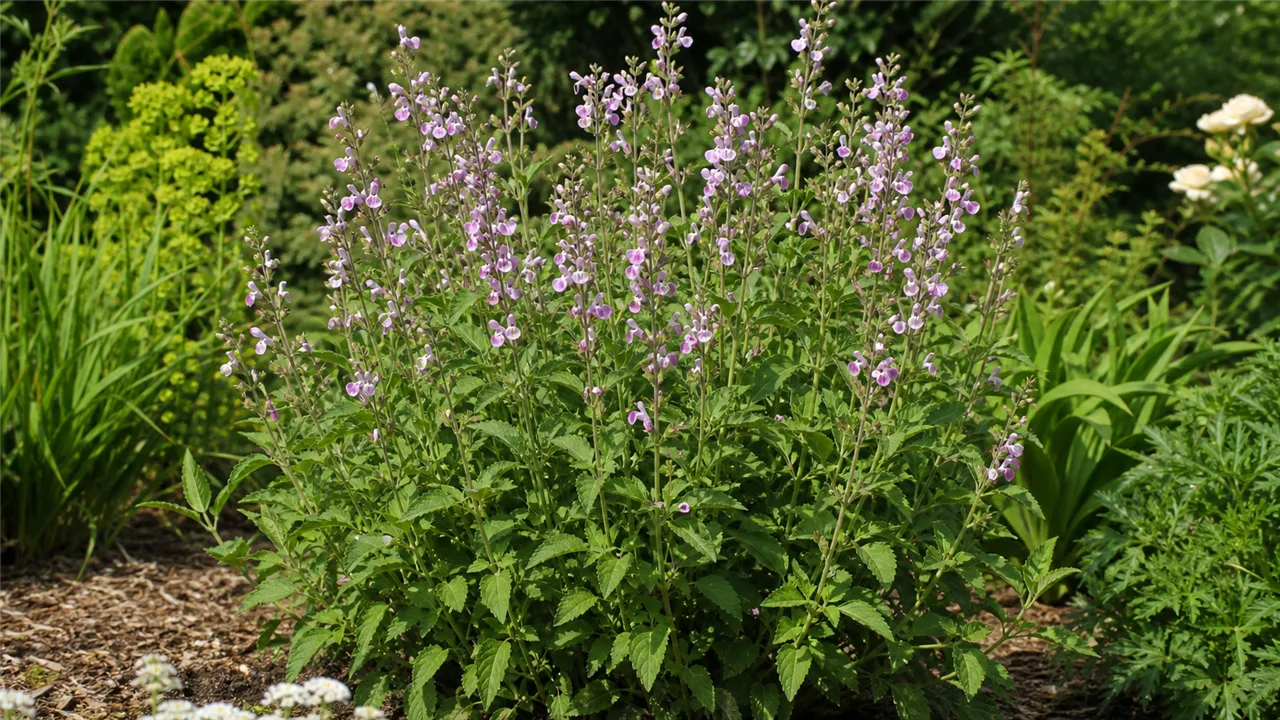
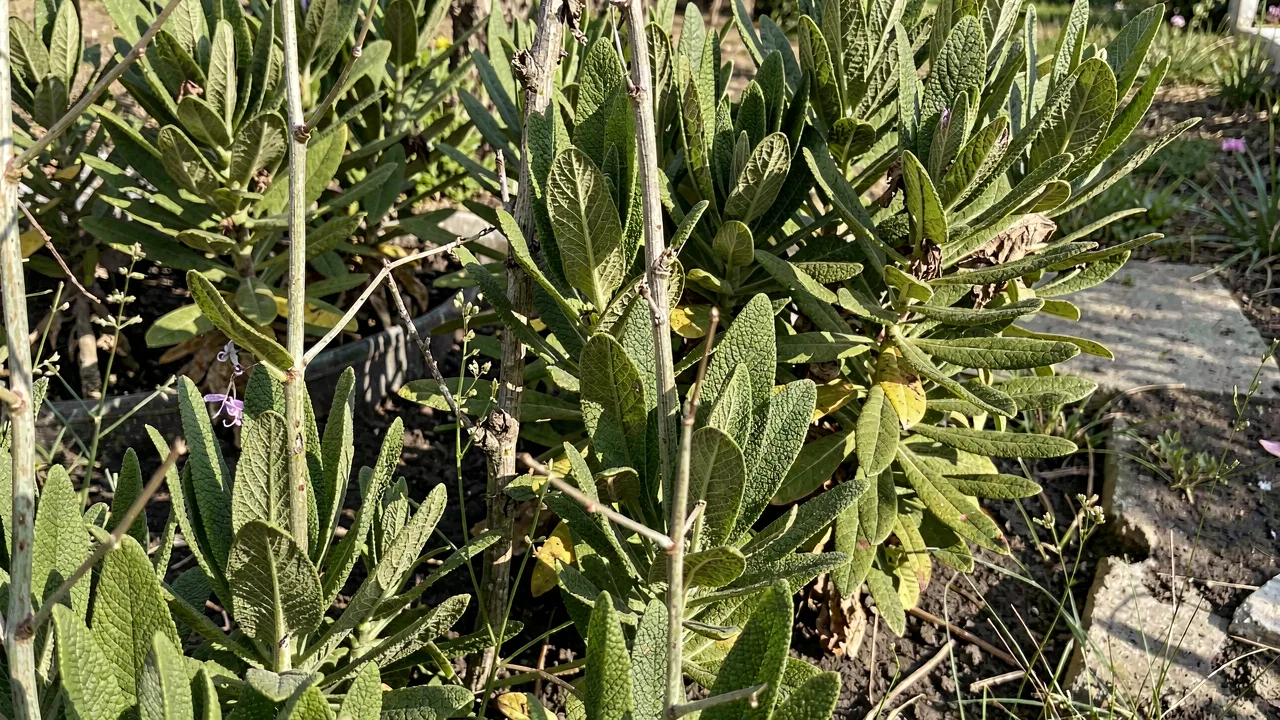
Salvia candelabrum forms a rounded, woody-based clump, generally between 60 cm and 1 m tall with a similar spread when grown in favourable conditions. The stems are square, slightly downy when young, and become woody at the base with age, though the upper growth remains soft and herbaceous. Mature plants develop a distinct trunk-like base from which the current season's shoots emerge each spring.
The leaves are arranged in opposite pairs along the stems. They are oblong to broadly lance-shaped, typically 4–8 cm long, with slightly wavy or shallowly toothed margins. Colour is a soft grey-green to sage green, reflecting a covering of fine hairs that reduces water loss in summer. When bruised, the foliage releases a mild, herbal aroma characteristic of the genus.
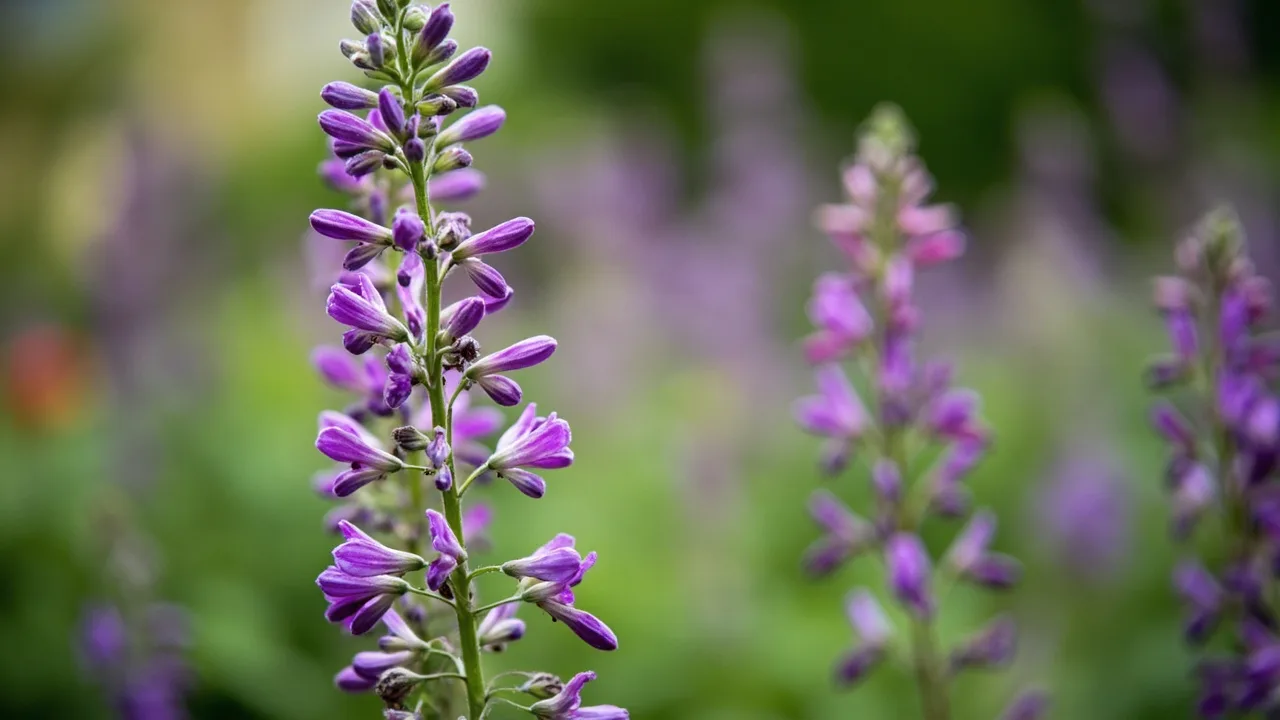
The flowers are carried in tall, branched inflorescences that rise well above the foliage, giving the candelabra form that gives the species its name. Each spike is composed of widely spaced whorls of two-lipped tubular flowers, usually in shades of pale violet to lilac-blue, occasionally with white markings on the lower lip. Flowering typically begins in mid to late summer and continues intermittently into early autumn, with individual blooms lasting several days before being replaced by new flushes along the spike.
After flowering, small nutlets develop within the persistent calyces. These dry to a papery brown and remain on the stem for some weeks, providing modest late-season interest and a seed source for propagation, though seedlings do not always come true.
Growing Conditions
Salvia candelabrum demands a position in full sun, ideally with shelter from cold north and east winds. In the UK this means an open, south- or west-facing border, a raised bed, a gravel garden, or the foot of a warm house wall where reflected heat builds up over the summer. The plant resents shade and damp, both of which encourage weak, leggy growth and increase the risk of winter losses.
Soil must be sharply drained. Light, sandy or gritty loams overlying free-draining subsoil suit it best; on heavier clay it struggles, particularly in wet winters when waterlogging around the crown can kill the plant within days. Where the native soil is heavy, planting on a raised mound or in a large container filled with a loam-based mix cut with at least a third by volume of horticultural grit will give much better results. Soil pH is not critical, though mildly alkaline to neutral conditions are typical of its natural range.
The plant is offered in the UK trade with a hardiness rating displayed in the plant's record, indicating the range of conditions it tolerates once established; gardeners should consult that badge when siting new plants. As a rule, S. candelabrum is treated as a borderline-hardy subshrub in much of Britain, reliably perennial only in milder regions or where drainage and aspect are near ideal. In colder inland gardens, winter protection in the form of a dry mulch of straw or bracken over the crown is worthwhile.
Planting and Care
Plant in spring once the soil has warmed and any risk of hard frost has passed, which in most of the UK means from late April into May. This gives the root system a full growing season to establish before its first winter. Water in well after planting and keep the soil just moist, not saturated, for the first six to eight weeks. Once new growth is clearly active, reduce watering and allow the plant to dry out between soakings; overwatering at this stage is one of the most common causes of failure.
Routine watering is rarely needed for established plants. During prolonged summer droughts, an occasional deep soak is welcome, but the plant copes well with dry conditions and should not be treated as a moisture-loving border perennial. Container-grown specimens need more regular attention, as the restricted root volume dries out quickly; allow the compost to dry to a depth of a few centimetres between waterings.
Feeding is light. A single application of a low-nitrogen, high-potash fertiliser in late spring, such as a seaweed-based or rose-style feed, is sufficient. Rich, nitrogen-heavy feeds encourage lush, soft growth that is more susceptible to frost damage and less likely to flower freely.
Pruning is best carried out in mid-spring once the worst of the winter weather has passed and new basal shoots are visible. Cut the previous season's stems back to a pair of healthy buds or to within a few centimetres of the woody framework. Avoid hard cutting into old wood that has lost active growth points, as recovery from such cuts is slow. Lightly trim the plant after the main flush of flowers to encourage a tidier shape and, in long seasons, a further round of bloom.
Propagation is straightforward from semi-ripe cuttings taken in mid to late summer. Choose non-flowering side shoots roughly 8–10 cm long, trim cleanly below a leaf node, remove the lower leaves, and insert into a 50:50 mix of peat-free compost and perlite. Keep the cuttings in a closed propagator or under a clear plastic bag in bright but indirect light; roots usually form within four to six weeks. Pot on individually once rooted and overwinter in a cold frame or unheated greenhouse before planting out the following spring.
Seasonal care centres on winter protection in borderline areas. From late autumn, avoid cutting back the top growth, which provides some shelter to the lower stems and crown. A loose, dry mulch applied after the first hard frost helps insulate the crown from alternating freeze-thaw cycles. In spring, remove the mulch gradually once new growth is underway.
Common Problems
The single most serious problem is winter wet, which rots the crown and kills plants that would otherwise have tolerated cold. Improving drainage and avoiding overhead winter shelter are the key preventive measures. Where losses occur repeatedly, lifting the plant into a container for the winter, or taking cuttings as insurance, is a sensible precaution.
Powdery mildew can affect the foliage in dry summers, particularly where plants are grown in too much shade or where air movement is poor. Symptoms include a white, dusty coating on the upper leaf surfaces and some leaf distortion. Maintaining good spacing, watering at the base rather than over the foliage, and removing affected material promptly are usually sufficient; severe outbreaks can be treated with a sulphur-based fungicide approved for ornamental use.
Sage leafhopper is a minor pest occasionally seen, producing small pale speckling on the leaves. It is rarely damaging enough to warrant treatment and populations tend to be kept in check by natural predators in balanced garden environments. Slugs and snails may attack new shoots in spring, especially in damp seasons; standard controls are effective.
The plant is generally considered non-toxic to humans and pets, though, as with most Lamiaceae, large quantities of foliage may cause mild digestive upset if eaten. There are no specific toxicity concerns documented for this species.
Popular Varieties
The species itself is the form most commonly encountered in cultivation, sold simply as Salvia candelabrum or occasionally as the synonym Salvia candelabra. Named cultivars are very few and the plant is not widely subject to formal breeding programmes in the UK. The following represent the most reliably available selections:
- Salvia candelabrum (species form): the typical grey-leaved plant with lilac-blue flower spikes described above; the default form sold by specialist nurseries.
- Salvia candelabrum alba: a white-flowered form reported from Spanish populations and occasionally offered through specialist salvia growers; otherwise similar to the type.
- Salvia × sylvestris hybrids in related colour ranges, sometimes grouped in catalogues with Mediterranean species, though these are distinct hybrids and should not be confused with S. candelabrum itself.
Gardeners seeking specific forms should source plants from specialist salvia or Mediterranean-plant nurseries, where stock is generally raised from cutting-propagated mother plants. Seed-raised plants can show some variation in flower colour and leaf tone, and named cultivars should be acquired as pot-grown, vegetatively propagated specimens.
Pests and Diseases
| Problem | Symptoms | Management |
|---|---|---|
| Root and foot rot | Stems become soft, mushy, and discoloured at the base, often leading to sudden collapse. | Ensure well-drained soil and avoid overwatering, especially during winter dormancy. |
| Powdery mildew | A white, dusty fungal growth appears on leaves and stems, potentially causing distortion. | Improve air circulation and apply a suitable fungicide if infection becomes severe. |
| Honey fungus | General decline with wilting foliage and possible white fungal growth under the bark. | Remove infected plants and improve soil drainage to prevent spread to neighbouring plants. |
| Verticillium wilt | Lower leaves yellow and drop, followed by wilting of stems despite adequate moisture. | Avoid planting in soil previously affected by the disease and remove infected material. |
| Winter dieback | Plant fails to regrow in spring due to freezing damage or waterlogged roots. | Grow in light, well-drained soil and provide mulch for protection in colder areas. |
For step-by-step help, read Treating Powdery Mildew. Or browse the full plant problem solver to diagnose an issue by symptom.
Recommended Products
GardenWizz earns a commission from qualifying purchases made through affiliate links on this page (including links within the article) — as an Amazon Associate, and from Thompson & Morgan via the Awin network. This does not affect the price you pay. See our disclaimer for details.