Spurges
Euphorbia

The Gardening Year
Best months in UK gardens · full planting calendar →
🖨 Printable care card (PDF)At a Glance
| Botanical name | Euphorbia |
|---|---|
| Common name(s) | Spurges |
| Family | Euphorbiaceae |
| Plant type | perennial (The plants are annual, biennial or perennial herbs, woody shrubs, or trees. Range from tiny annual plants to large and long-lived trees.) |
| Height × Spread | 0.1–30 m × 30–90 cm |
| Position | Full sun, Partial shade |
| Soil | fertile and well drained; moist but free-draining soil |
| Flowering | April–June |
| Toxicity | poisonous, latex-like sap; caustic, poisonous milky latex |
| Native range | — |
Overview
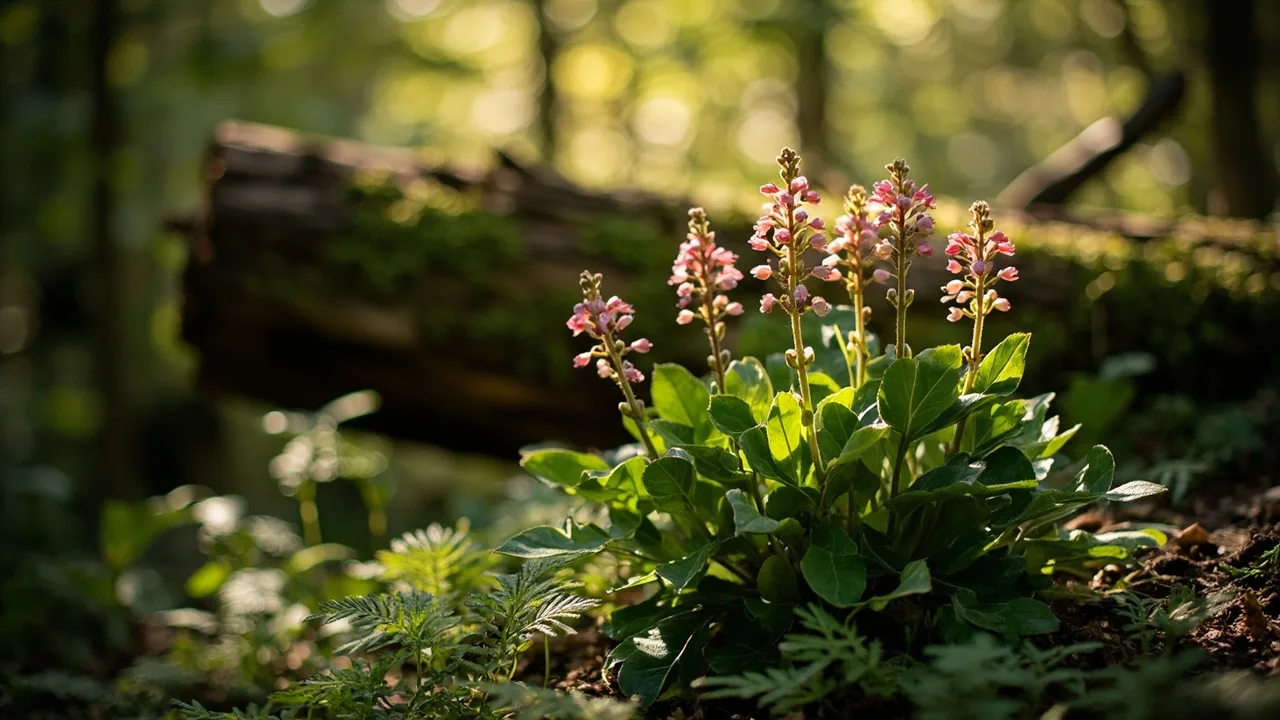
Euphorbia is one of the largest and most diverse plant genera in cultivation, comprising well over 2,000 species ranging from low annual herbs through hardy herbaceous perennials to woody subshrubs, architectural evergreens and tree-sized succulents. Members of the family Euphorbiaceae, they are united by a single distinctive feature: every part of the plant contains a milky white latex sap. In British gardens the genus is valued for its long season of bright, acid-yellow and lime-green "flowers" (technically specialised structures called cyathia), its tolerance of poor, dry soils, and its ability to bridge the colour gap between late winter and early summer. Popular groups include the Mediterranean spurges such as Euphorbia characias and E. x martinii, the hardy herbaceous E. palustris and E. polychroma, and the tender succulent E. trigona grown as a house plant. The RHS recognises several species and cultivars with the Award of Garden Merit, reflecting their proven reliability in UK conditions.
Euphorbia is found natively across temperate and tropical regions worldwide, with major centres of diversity in southern and eastern Africa, Madagascar, the Americas and the Mediterranean basin. In cultivation in the UK the genus is most widely represented by the hardy herbaceous and Mediterranean subshrub forms, which sit comfortably in mixed borders, gravel gardens, coastal plantings and difficult dry sites where many other perennials struggle.
Appearance
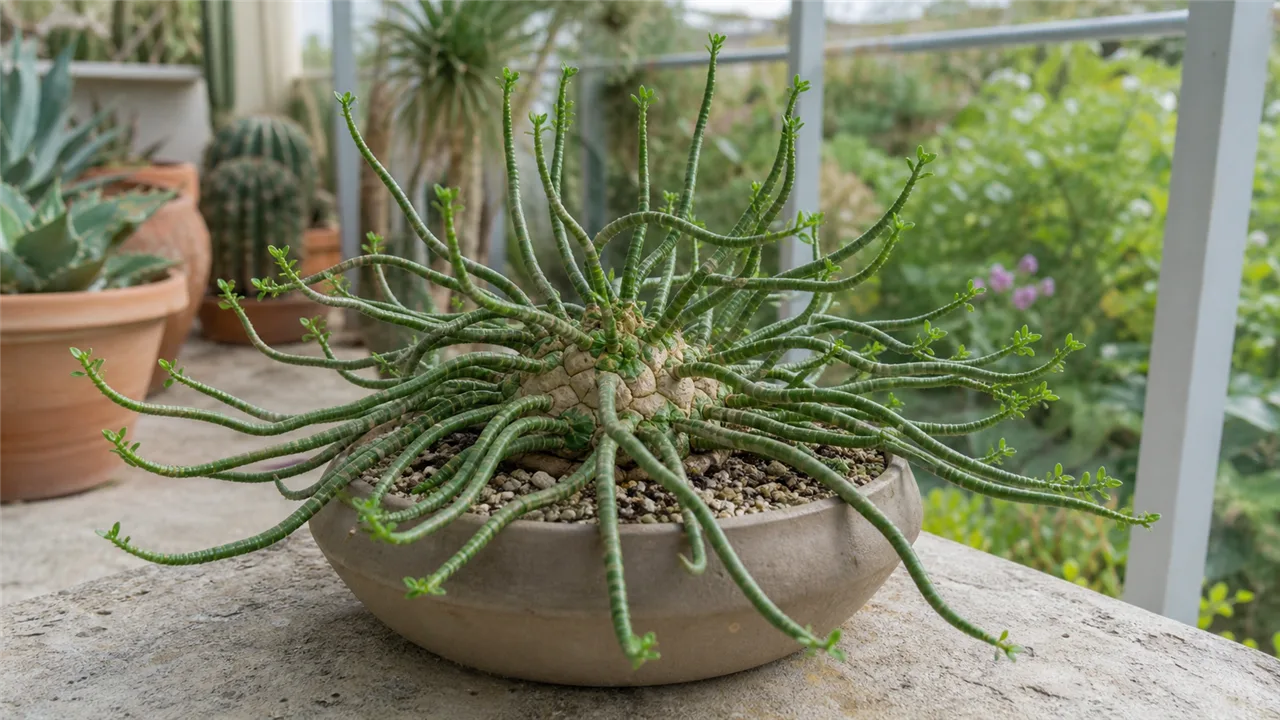
The diversity of Euphorbia is extraordinary: low mat-forming alpines barely 10 cm tall, vigorous border perennials reaching 60 to 120 cm, architectural subshrubs of 1 to 1.5 m with bold evergreen foliage, and cactus-like succulents several metres high with ribbed, spiny stems. Foliage is generally simple, alternate or opposite, often narrow and entire; in succulent species the leaves are reduced or absent, with photosynthesis carried out by the stem. Leaf colour ranges from fresh green through blue-grey to deep purple-bronze in selected cultivars.
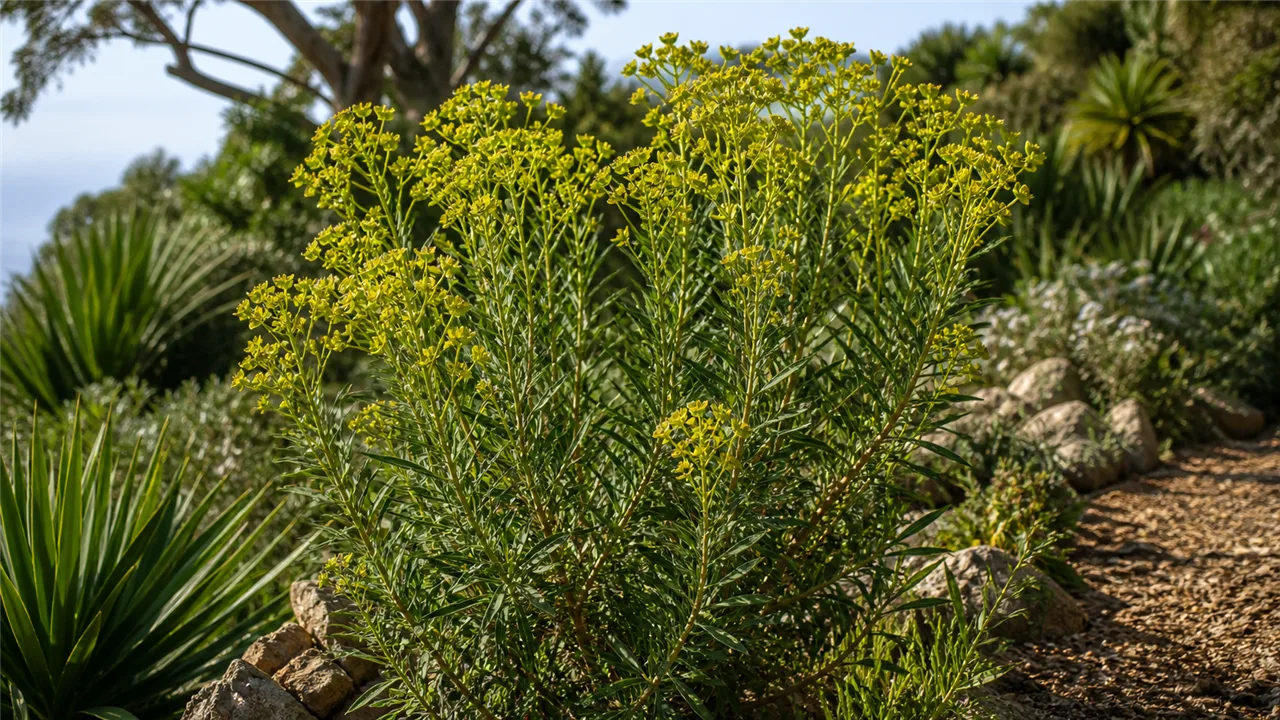
The structures most gardeners call "flowers" are actually cyathia — small cup-shaped inflorescences containing highly reduced individual flowers, surrounded by showy bracts that perform the visual role of petals. In many species these bracts are vivid acid-yellow or lime-green and persist for several weeks; in others they shade through orange, red, pink or white. Flowering season in the UK runs from late winter (some Mediterranean species can be in bloom by February in mild districts) through to midsummer, with the peak display in April, May and June.
The stems of nearly all euphorbias carry the milky latex that gives the genus its name in folklore — "wolf's milk" in several European languages. This sap is a defence compound and a useful identification feature, but it is also a significant irritant to skin and eyes.
Growing Conditions
Most garden euphorbias grow best in full sun, in well-drained soil of moderate fertility. The Mediterranean and subshrub types in particular resent winter wet more than they resent winter cold; sharp drainage is the single most important cultural requirement. Sandy, gravelly or stony soils suit them perfectly, and they thrive in raised beds, the top of a dry wall, or a sunny gravel garden border. The hardy herbaceous species such as E. palustris are the notable exceptions, thriving in moist or even boggy soil at the edge of a pond or stream where little else of comparable ornamental value will grow.
Light shade is tolerated by most species, though flowering is usually heavier and the bract colour more intense in sun. Soil pH is generally unimportant — euphorbias tolerate a wide range from mildly acid to mildly alkaline. Drought tolerance once established is excellent for the subshrub and succulent types; in containers, watering through the summer is needed because the restricted root volume dries out quickly.
Borderline-hardy Mediterranean species (typically those from upland Spain, Portugal or North Africa) benefit from a free-draining mulch of coarse grit over the crown in autumn and a position sheltered from cold east winds. In colder parts of northern England and Scotland, growing them against a south- or west-facing wall markedly improves survival through hard winters.
Planting and Care
Container-grown euphorbias can be planted at any time of year when the soil is workable and not frozen, though spring is ideal as it gives a full growing season for the plant to establish. Autumn planting is also successful in mild, well-drained sites. Space according to the species' eventual spread — typically 60 to 90 cm apart for medium shrubby forms such as E. characias, and 30 to 45 cm for smaller herbaceous species. Plant at the same depth as the pot and water in well.
Watering is seldom needed once established except in prolonged drought. Container plants and newly planted specimens need more regular watering through their first summer. Feeding should be modest: a single light application of a general-purpose fertiliser in spring, or a top-dressing of garden compost, is sufficient; over-rich soils produce lush soft growth that is more vulnerable to winter damage and less likely to flower freely.
Pruning differs by growth form. Herbaceous species are cut back hard in autumn or early spring once the foliage has died down; fresh growth emerges from the base. Mediterranean subshrubs such as E. characias and E. x martinii are pruned immediately after flowering: cut the flowered stems back to a low bud or to the basal rosette, but never into old leafless wood, which rarely regenerates. Every few years, a subshrub that has become leggy or exhausted at the base can be renovated by hard pruning into lower framework growth; if no suitable growth exists, replacement is preferable. Always wear gloves and eye protection when handling euphorbias — the milky latex is a significant skin and eye irritant.
Propagation is straightforward. Herbaceous species are divided in spring as growth begins, replanting the vigorous outer portions and discarding the woody centre. Subshrubs and shrubs are propagated from basal cuttings taken in spring or early summer; the cut surface should be dipped in tepid water briefly to stop the latex flow, allowed to dry for a few hours, then inserted into a gritty, free-draining compost under a cold frame or in a shaded corner. Seed is also viable for species but produces variable offspring; named cultivars must be propagated vegetatively to stay true.
Seasonal care in the UK follows a simple rhythm: a light spring tidy removing any frost-damaged stems, minimal summer watering, the main pruning pass straight after flowering in May, June or early July, and a coarse-grit mulch rather than organic matter over borderline-hardy species as winter sets in.
Common Problems
The most serious hazard is the latex sap itself. Every species in the genus exudes a milky white liquid when cut or broken, and this sap is a powerful skin and eye irritant. Sensitive individuals can develop severe dermatitis from contact, and a splash to the eye is a genuine medical concern requiring prompt irrigation and medical attention. All pruning, propagation and propagation-cleaning work should be carried out with sturdy gloves, long sleeves and eye protection; cut material should not be burned in quantity (the smoke is also irritant) and should be disposed of through normal garden waste rather than composted in bulk.
In the garden, the most frequent cultural problems are winter die-back on borderline-hardy Mediterranean species, particularly after a wet autumn followed by a hard frost, and root rot on succulent euphorbias grown in cold, damp soil. Remedy by improving drainage, mulching with grit and selecting species suited to the local climate.
Several popular species self-seed prolifically — E. characias and E. x martinii especially can throw seedlings several metres from the parent. Deadheading promptly after flowering prevents unwanted spread; bear in mind that cut seed heads continue to release latex.
Aphids occasionally colonise the soft new growth and flower buds in late spring; a strong jet of water or a soap-based spray is usually sufficient. Powdery mildew can affect foliage in humid seasons or where air circulation is poor. Rust and various leaf-spot fungi are recorded but rarely serious.
Popular Varieties
Euphorbia characias subsp. wulfenii is the most striking architectural spurge for UK gardens, forming a large evergreen mound of blue-grey foliage with towering flower heads of vivid lime-yellow bracts in April and May. It typically reaches 90 to 120 cm tall and carries the RHS Award of Garden Merit. The cultivar 'Lambrook Gold' is a particularly well-coloured selection raised by Margery Fish at Lambrook Manor in Somerset.
Euphorbia x martinii is a naturally occurring hybrid between E. characias and E. amygdaloides, with a more compact, rounded habit (typically 50 to 70 cm) and dark green foliage often flushed purple when young; the flower bracts are a softer yellow with a small red eye at the centre. It flowers slightly later than E. characias, extending the spurge season into June.
Euphorbia palustris, the marsh spurge, is the choice for damp soil at the margin of a pond or stream. It forms a vigorous 60 to 90 cm clump of bright green foliage and broad heads of acid-yellow bracts in May and June, colouring richly in autumn before dying back for winter. It holds the RHS Award of Garden Merit.
Euphorbia polychroma (sometimes sold as E. epithymoides) is a compact, dome-forming herbaceous spurge roughly 40 cm tall and wide, with brilliant yellow bracts in late spring that completely smother the foliage. AGM-rated and ideal for the front of a sunny border.
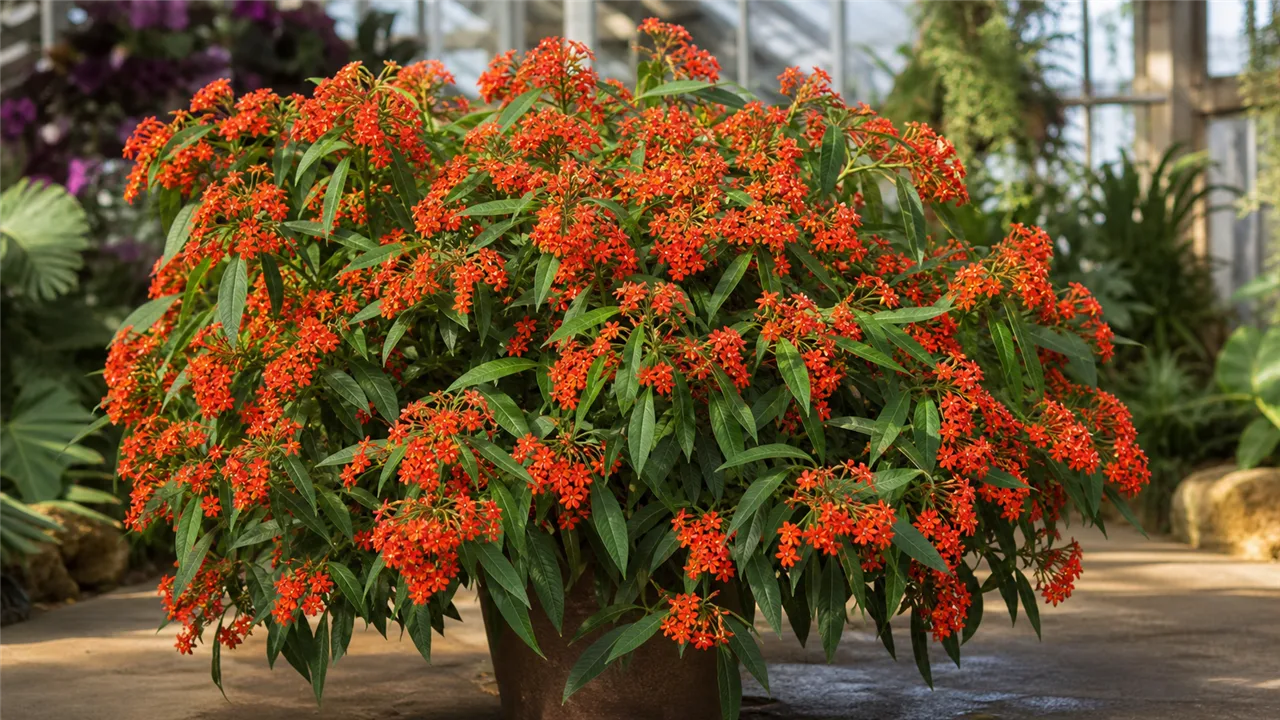
Euphorbia griffithii 'Fireglow' brings warm colour into the spurge palette, with orange-red bracts in early summer above dark green foliage tinted red; it is a vigorous herbaceous perennial reaching about 70 cm and is best in moisture-retentive soil.
Euphorbia amygdaloides 'Purpurea' is a form of the wood spurge with deep purple-bronze evergreen foliage and the usual lime-yellow bracts in spring, providing useful year-round ground cover in dry shade beneath trees. The cultivar 'Ruby Glow' is a more compact selection with particularly intense foliage colour.
Euphorbia myrsinites is a trailing, evergreen species with spiralling blue-grey leaves and bright yellow bracts in late spring; at only 10 to 15 cm tall, it is invaluable for the top of a dry wall, a sunny rock garden or the edge of a gravel path.
Euphorbia trigona, the African milk tree, is a tender columnar succulent reaching 1 to 2 m in a large pot, grown as a striking house plant in a bright position out of direct summer sun. It tolerates the dry indoor air of centrally heated rooms better than most cacti and succulents.
Cultivars and Varieties
| Cultivar | Height | Flower | Notes | AGM |
|---|---|---|---|---|
| 'Abbey Dore' | — | — | RHS AGM (H7) | ✓ |
| 'Whistleberry Garnet' | — | — | RHS AGM (H7) | ✓ |
Pests and Diseases
| Problem | Symptoms | Management |
|---|---|---|
| Powdery mildew | A white, dusty fungal growth appears on leaves and stems. | Improve air circulation and apply a suitable fungicide if severe. |
| Slugs and snails | Irregular holes are eaten in young shoots and foliage. | Use physical barriers, copper tape, or slug pellets to protect new growth. |
| Root rot | Leaves turn yellow and wilt despite moist soil conditions. | Ensure well-drained soil and avoid overwatering, especially in containers. |
| Vine weevil | Notched leaf margins on potted plants and root damage underground. | Use nematode treatments or biological controls for potted specimens. |
| Sap irritation | Skin redness or itching after contact with the milky latex sap. | Wear gloves and long sleeves when pruning or handling plants. |
For step-by-step help, read Dealing with Slugs and Snails and Treating Powdery Mildew. Or browse the full plant problem solver to diagnose an issue by symptom.
Recommended Products
GardenWizz earns a commission from qualifying purchases made through affiliate links on this page (including links within the article) — as an Amazon Associate, and from Thompson & Morgan via the Awin network. This does not affect the price you pay. See our disclaimer for details.