Silver Sage
Salvia argentea
The Gardening Year
Best months in UK gardens · full planting calendar →
🖨 Printable care card (PDF)At a Glance
| Botanical name | Salvia argentea |
|---|---|
| Common name(s) | Silver sage |
| Family | Lamiaceae |
| Plant type | perennial (biennial or short-lived perennial) |
| Height × Spread | 60–120 cm × 60–100 cm |
| Position | Full sun |
| Soil | moist, well-drained |
| Flowering | March–August |
| Toxicity | — |
| Native range | southern Europe from Portugal to Bulgaria |
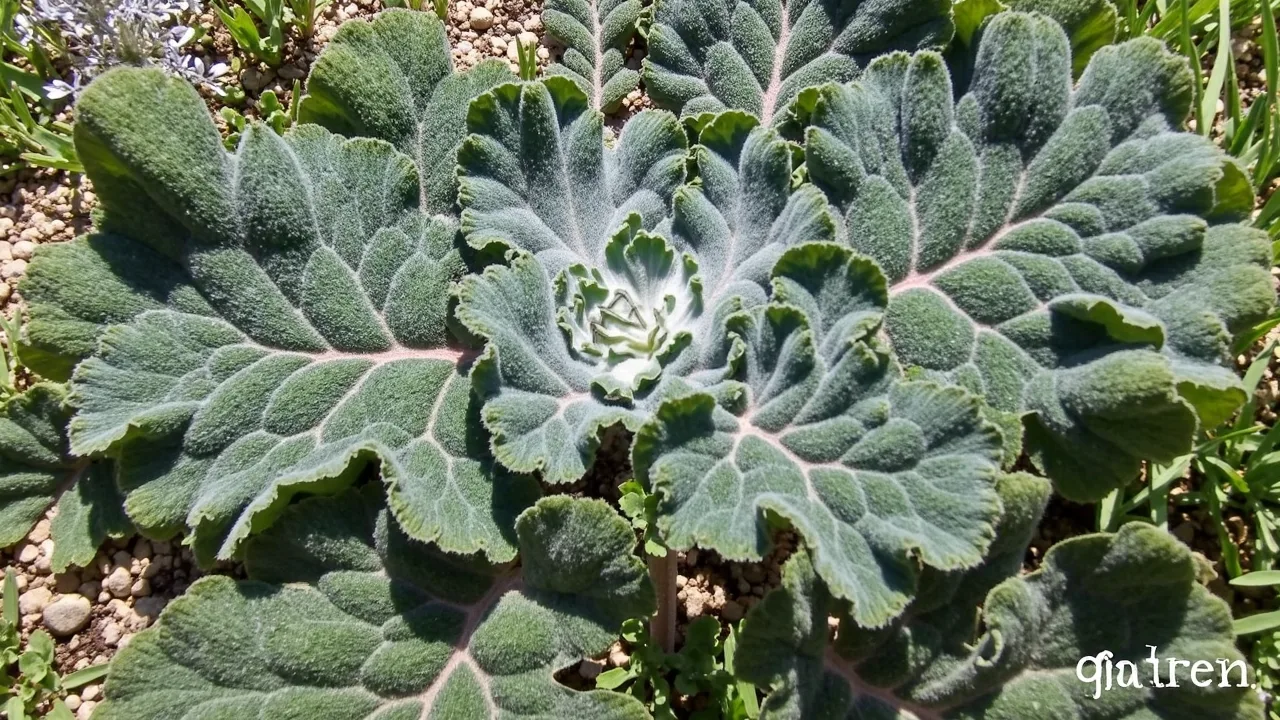
Silver sage is the foliage plant that turns a sunny border into something out of a chalk drawing. The rosettes are large, flattish, and thickly felted with silky white hairs that catch the light and read as polished pewter from any distance of more than a few metres. It is a member of the mint family (Lamiaceae) and a near relative of the culinary sage used in kitchens, though silver sage itself is grown purely as an ornamental.
It is a short-lived herbaceous perennial from the Mediterranean basin — recorded from southern Spain, Portugal, the south of France and Italy, and parts of North Africa — and it behaves in most British gardens as a biennial or a fleeting perennial that is best renewed from seed every few years.
Overview
Silver sage is grown for one thing above all: its rosette of oversized, lamb's-ear-like leaves that look as though they have been dipped in aluminium paint. The foliage is the plant; the flower spikes are a bonus that comes at the cost of the plant's life. In a typical British garden, a silver sage sown in early spring produces a handsome silver carpet of leaves by midsummer, sits through winter as a rosette, then sends up branched flowering stems the following June before setting seed and dying.
It earns its place in gravel gardens, sunny front-of-border plantings, Mediterranean schemes and large containers, where its pale rosettes provide a cool foil to deeper greens, to burgundy foliage such as Heuchera 'Obsidian' or Phormium 'Platt's Black', and to hot-coloured flowers such as Achillea 'Moonshine' and the shorter kniphofias. It is also valuable in coastal gardens, where its felted leaves shrug off salt-laden wind better than most broadleaved ornamentals.
The plant carries a published RHS hardiness rating that is rendered by the badge on this page; in the body text we refer only to the fact that silver sage is hardy through most British winters provided drainage is sharp and the plant is not exposed to prolonged wet.
Appearance
The foliage rosette is the signature. Each leaf is broad and oval, typically 15–25 cm long and almost as wide at maturity, with shallowly scalloped or shallowly lobed margins and a softly puckered surface. Both faces of the leaf are densely clothed in fine, slightly woolly hairs that give the whole plant its silver finish. Newly opened leaves are almost pure white; as they age the silver takes on a faintly green or grey cast, especially on the underside and along the veins.
In its first season the plant concentrates on this rosette, which can spread to 40–50 cm across on a contented specimen in well-drained soil. From the centre of the rosette, in the second summer after germination (occasionally the third), it sends up one or several branched, square flowering stems 60–100 cm tall — taller specimens to about 1.2 m are not unusual in rich soil. The stems carry smaller, sessile leaves that are still felted but increasingly grey-green, and the whole flowering structure has a slightly candelabra-like outline.
The flowers are held in widely spaced whorls along the upper part of the stems. Each individual flower is the typical two-lipped salvia shape, about 2.5–4 cm long, creamy white to pale ivory, often with a faint pink, lilac or pale-yellow flush on the upper lip and a darker mark on the lower lip. Bumblebees and honey bees visit them freely; the plants are useful in pollinator plantings for the few weeks they are in flower.
After flowering, the rosette that produced the spike dies. A vigorous plant may also produce one or two offsets at the base, which can be detached and grown on; otherwise the line is continued by self-sown seedlings around the parent.
Growing Conditions
Soil: Silver sage needs sharp drainage above almost everything else. It thrives in light, sandy or gritty loam of low to moderate fertility and tolerates chalk. Heavy clay that holds water through winter is the single most common cause of loss — the crown simply rots. Where soil is heavy, either build a raised bed, work in generous grit and organic matter, or grow the plant in containers.
Aspect: Full sun is essential. The silver felt develops its best metallic finish in open, unobstructed light, and the leaves stay tighter and more architectural than they do in shade. Light, dappled shade is tolerated but produces leggier, greener rosettes that lose the characteristic look.
pH and fertility: Near-neutral to mildly alkaline soils are ideal, in keeping with its Mediterranean origin. The plant does not require rich soil and in fact produces the most intensely silver foliage on lean ground. Overfeeding leads to larger, softer leaves with reduced felting.
UK suitability: Silver sage grows happily through most of southern and central England, in sheltered Welsh and Irish coastal gardens, and in lowland Scotland where drainage is good and winter rainfall is not allowed to sit around the crown. In colder inland districts — exposed moorland gardens, the higher Pennines, the Scottish Highlands — it is more reliable grown in containers of free-draining compost and given the protection of a cold frame or unheated greenhouse over winter. In all regions the key to overwintering is keeping the crown dry rather than keeping it warm.
Container growing: Use a loam-based compost such as John Innes No. 2 with at least a third by volume of coarse grit or perlite. Terracotta pots suit the plant better than plastic because they dry out faster after rain. Raise the pot off the ground on pot feet to ensure free drainage from the base.
Planting and Care
When to plant: Plant out pot-grown specimens in late spring or early summer (April to June) once soil has warmed and any risk of hard frost has passed. Autumn planting is possible in mild regions but increases winter loss.
Spacing: Allow 45–60 cm between plants. A single mature rosette can fill a 50 cm patch, and crowding reduces airflow around the felted leaves, encouraging botrytis in damp weather.
Watering: Newly planted silver sage needs regular watering for its first growing season to establish a deep root system. Once established it is notably drought-tolerant and prefers the soil to dry out between waterings. Overwatering established plants is a far more common cause of failure than underwatering.
Feeding: Generally unnecessary in reasonable garden soil. On very poor, hungry soils a single light application of a balanced granular fertiliser in spring is sufficient; avoid high-nitrogen feeds that produce soft, lush growth at the expense of the silver finish.
Cutback: The principal pruning task is the removal of spent flower stems. Once flowering is over (typically late August or September), cut the stems back to the base of the rosette using secateurs or a sharp knife. In late winter or early spring, tidy the rosette by pulling away any leaves that have become tatty, brown or collapsed, taking care not to damage the crown.
Dividing: Silver sage is not divided in the conventional sense. It is a short-lived perennial that is best renewed from seed every two to three years, with old plants removed once they have flowered and set seed. If the plant produces offsets at the base these can be detached in spring and potted up separately; treat them as cuttings rather than divisions and keep them lightly shaded until they root.
Propagation: From seed is the most reliable method. Sow under cover in late winter (February to March) in a gritty seed compost, barely covering the seed and keeping it on a warm windowsill or in a heated propagator at gentle warmth. Germination typically takes two to three weeks. Prick out seedlings once they have a pair of true leaves and grow them on in individual pots until they are large enough to plant out in late spring. Basal cuttings of new offsets can be taken in spring and rooted in a free-draining cuttings compost; gentle bottom heat speeds rooting.
Seasonal care calendar:
- Cut back: August–September. Remove spent flower stems at the base after the main flush of bloom fades.
- Divide: Not applicable. Renew plants from seed rather than division.
Common Problems
Winter rot: The single most frequent problem. Silver sage is much more tolerant of cold than of winter wet. Waterlogged soil around the crown in combination with low temperatures causes the crown and roots to rot, and the plant collapses in late winter or early spring. The remedy is cultural: improve drainage before planting, raise the bed, grow in containers, or place a temporary cloche over the plant during the wettest months.
Leggy, greener rosettes: Caused by too much shade or by over-rich soil. The leaves grow larger but lose much of their silver finish. Move affected plants to full sun next season and avoid high-nitrogen feeds.
Powdery mildew: Can affect the leaves in dry summers following a wet spring, or in situations with poor airflow. The felted leaves hide the early stages; by the time a white bloom is obvious on the upper leaf surface it is well established. Improve airflow by reducing overcrowding and remove the worst-affected leaves. A sulphur-based or potassium bicarbonate fungicide can be used if the problem recurs every year.
Slug and snail damage: Young rosettes are vulnerable in spring, particularly in damp seasons. The new leaves are softer than the mature felted foliage and are grazed readily. Use your usual method of slug control — ferric phosphate pellets, beer traps, night-time hand-picking — and avoid organic mulches that harbour slugs directly against the crown.
Premature flowering: Plants that run up to flower in their first year have usually been sown too early in warmth and have experienced a cold shock, or have been stressed by drought. The rosette that flowers dies, so this is unwelcome unless seed is wanted. Discard affected plants or let a few set seed for replacement stock.
Self-seeding: In favourable conditions silver sage will self-seed modestly around the parent. Seedlings are easy to lift and transplant in autumn or spring. In very dry gardens self-seeding is sparse and may not be enough to maintain a stand.
Popular Varieties
Named clonal cultivars of Salvia argentea are limited compared with many other garden salvias; most plants sold under the species name are seed-raised and therefore variable. The following are the selections most widely encountered in British horticulture.
Salvia argentea (species). The default form. Large silver rosettes to about 50 cm across and flower spikes up to roughly 1 m, with creamy-white to pale-ivory blooms. The RHS has recognised the species with an Award of Garden Merit; the specific rating is rendered in the badge rather than the prose of this page.
'Artemis'. A compact, well-branched seed selection that produces shorter, more numerous flowering stems (typically 50–70 cm) than the typical species. Its rosettes are a little smaller and the flower spikes sturdier, making it a better choice for exposed or smaller gardens where the taller form can look ungainly. It was a Fleuroselect award winner.
Seed strains and colour variants. A number of seed catalogues offer "selected" or "improved" strains of silver sage with subtly larger or whiter rosettes; these are not fixed clonal cultivars but populations raised from hand-pollinated parent lines and will show some variation from plant to plant. A pale-pink-flowered tendency is sometimes claimed for certain seed strains, though in practice the colour range within a batch is modest.
Where named clonal cultivars are scarce, the species and 'Artemis' remain the two forms on which most UK plantings are based.
Pests and Diseases
| Problem | Symptoms | Management |
|---|---|---|
| Slugs and snails | Irregular holes chewed in young leaves or seedlings eaten overnight. | Use physical barriers, copper tape, or iron phosphate-based pellets to control populations. |
| Sage leafhopper | Leaves become speckled with white spots and may curl or distort as sap is sucked. | Encourage natural predators like ladybirds or apply a horticultural oil spray if infestations are severe. |
| Powdery mildew | A white, dusty fungal growth appears on the surface of leaves and stems. | Improve air circulation around plants and treat with a fungicide containing myclobutanil or potassium bicarbonate. |
| Rosemary beetle | Small black beetles feed on foliage, causing notching and general defoliation. | Hand-pick adults and larvae regularly or use a broad-spectrum insecticide as a last resort. |
| Root rot | Plant wilts and collapses despite moist soil, often with dark, mushy roots. | Ensure planting in well-drained soil and avoid overwatering to prevent waterlogging. |
For step-by-step help, read Dealing with Slugs and Snails and Treating Powdery Mildew. Or browse the full plant problem solver to diagnose an issue by symptom.
Recommended Products
GardenWizz earns a commission from qualifying purchases made through affiliate links on this page (including links within the article) — as an Amazon Associate, and from Thompson & Morgan via the Awin network. This does not affect the price you pay. See our disclaimer for details.