Sage
Salvia officinalis · common sage · garden sage · golden sage
The Gardening Year
Best months in UK gardens · full planting calendar →
🖨 Printable care card (PDF)At a Glance
| Botanical name | Salvia officinalis |
|---|---|
| Common name(s) | sage, common sage, garden sage, golden sage |
| Family | Lamiaceae |
| Plant type | perennial (perennial, evergreen subshrub) |
| Height × Spread | 60–152 cm × 60–152 cm |
| Position | Full sun, Partial shade |
| Soil | free-draining soil; relatively fertile, moist, well-drained soil |
| Flowering | May–August |
| Toxicity | Essential oils contain α and β-thujone, a neurotoxin that can cause convulsions in animals and severe intoxication in humans |
| Native range | Mediterranean region |
Overview
Sage (Salvia officinalis) is an evergreen, woody-stemmed subshrub in the Lamiaceae (mint) family, native to the dry, sun-baked hillsides of the Mediterranean basin. Cultivated for centuries as a culinary, medicinal, and ornamental herb, it remains one of the most widely grown garden plants in the United Kingdom, valued for its grey-green aromatic foliage, its tolerance of poor soils, and its reliable behaviour in coastal and drought-prone sites. As a low-maintenance perennial that holds its leaves through most British winters, sage suits herb gardens, kitchen borders, ornamental gravel plantings, and pollinator-friendly cottage schemes alike. The species has a long documented history of cultivation, and numerous ornamental and culinary cultivars are available from UK nurseries.
Appearance
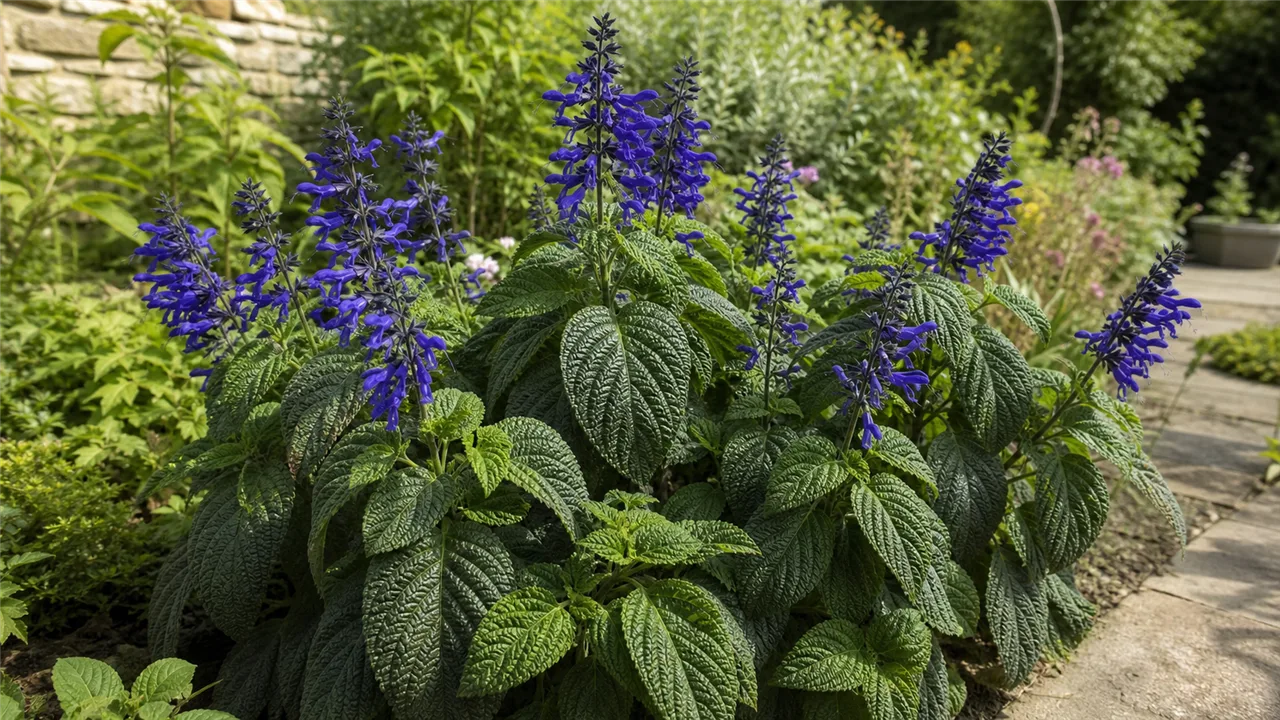
Sage forms a dense, rounded mound of woody stems clothed in oblong, slightly puckered leaves. The leaves are arranged in opposite pairs along the stems, are typically 4–10 cm long, and have a softly downy, finely textured surface that gives the whole plant its characteristic grey-green or silvered appearance. When crushed or brushed against, the foliage releases a strong, savoury, slightly camphor-like aroma produced by volatile oils in the leaf tissue.
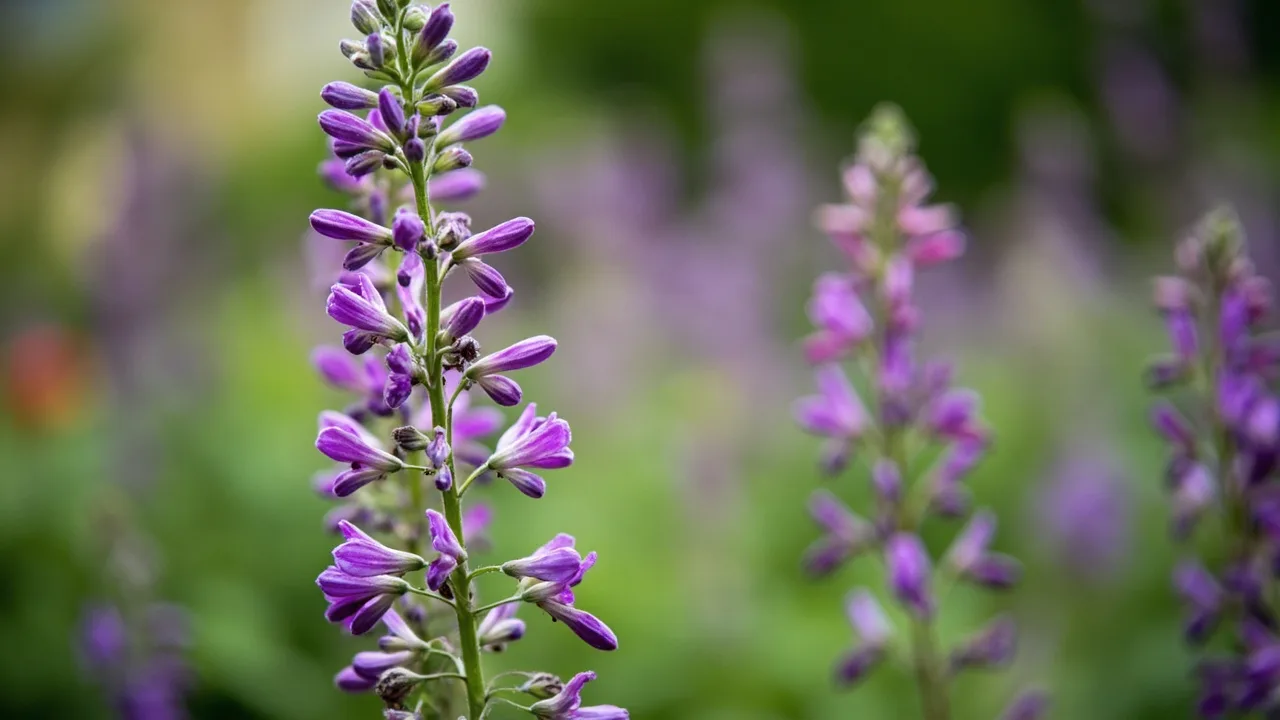
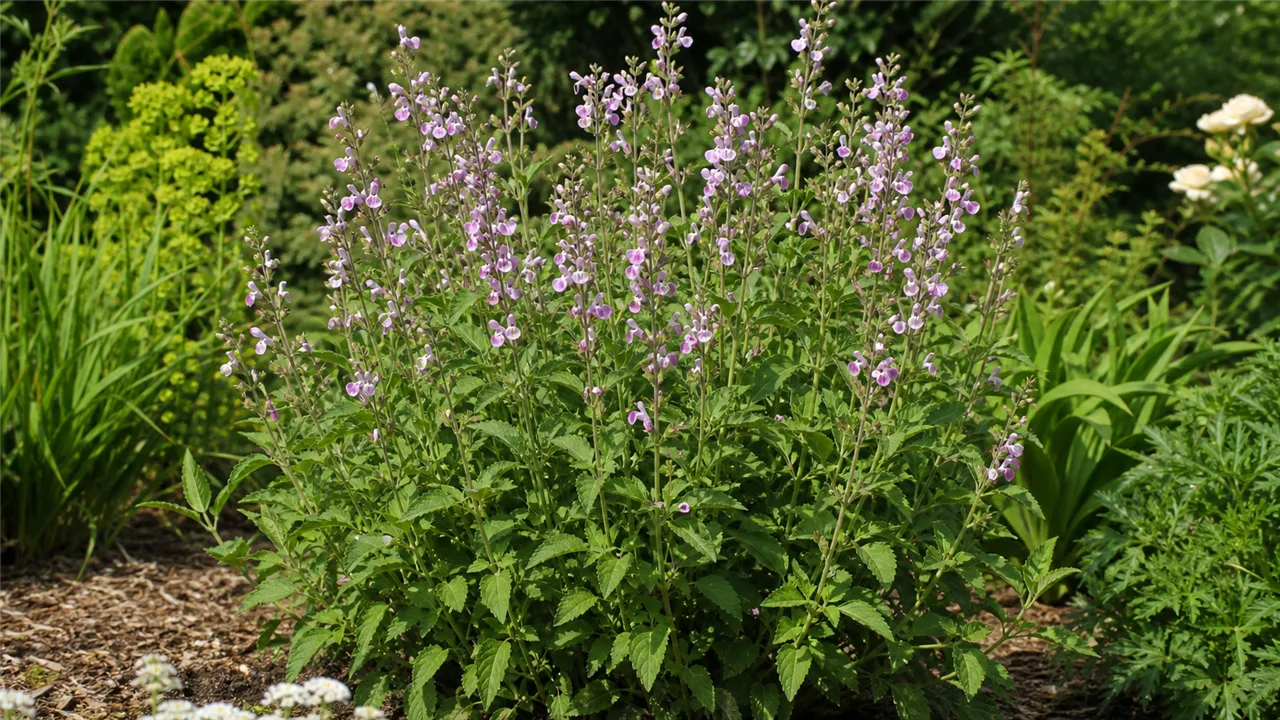
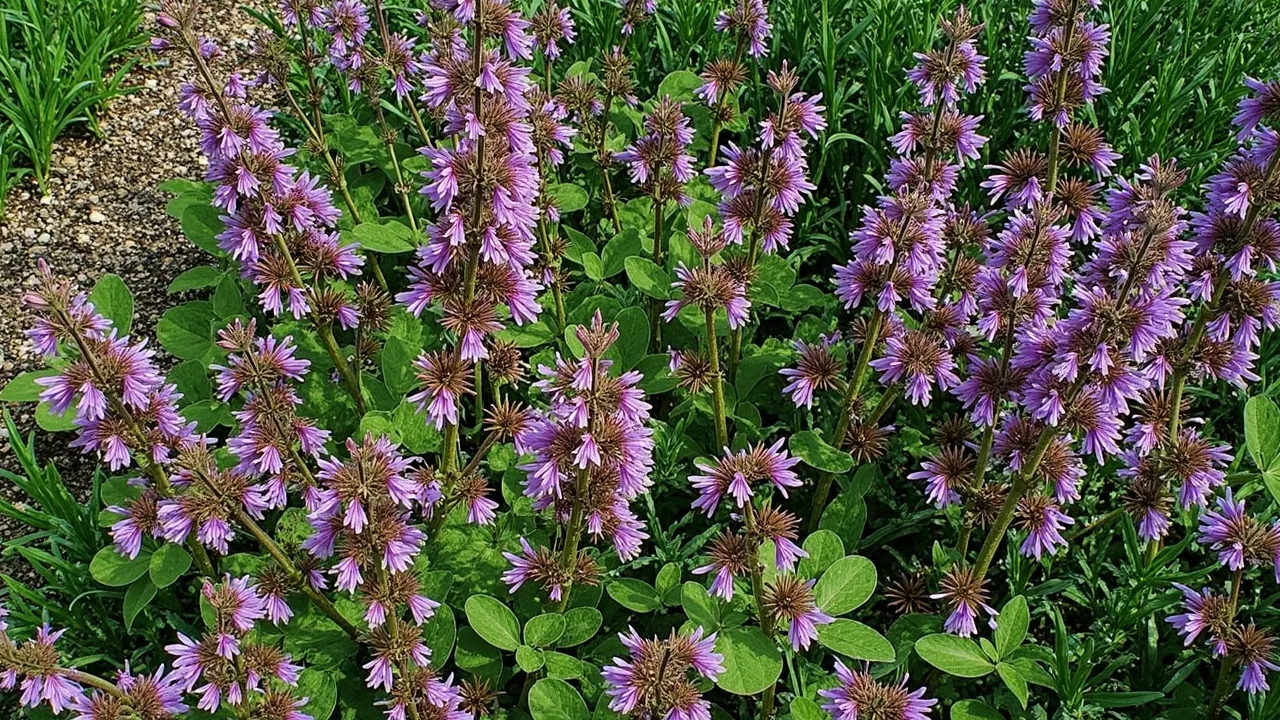
Flowers appear in early to mid-summer on short, upright spikes held above the foliage. Individual flowers are two-lipped and tubular, in the shape typical of the mint family, and are usually a soft violet-blue, though paler lilac and pinkish forms occur. The flower spikes are attractive to bees and other pollinators, and a single established plant in bloom can support a noticeable amount of insect activity.
With age, sage develops thick, somewhat gnarled woody bases; older specimens often become bare and leggy at the base, with active growth concentrated towards the tips of the stems. The plant's overall habit is tidy when young but tends to sprawl and open up after four or five years unless routinely pruned.
Growing Conditions
Sage grows best in full sun, in a position that receives at least six hours of direct light during the growing season. In the UK this means an open, south- or west-facing border, a raised bed, a gravel garden, or a sunny courtyard. It tolerates partial shade, particularly in the south of England, but growth is looser, flowering is reduced, and the foliage is more likely to suffer from fungal leaf spots in damp, shaded sites.
Soil should be light and sharply drained. Sage struggles in heavy, waterlogged ground, especially through winter, where root rot and stem dieback are common. Sandy, loamy, or chalky soils are all suitable; slightly alkaline conditions (pH around 6.5–7.5) are well tolerated. Incorporating coarse grit into heavy clay at planting time markedly improves survival, and mulching the surface with grit or gravel rather than organic matter helps keep the crown dry.
Although sage is often described as drought-tolerant once established, this applies mainly to plants grown in well-drained ground in the south and east of the UK. In wetter regions, particularly in the west and north, winter wet rather than summer drought is the usual cause of losses. Sage is reasonably wind-tolerant and grows well in coastal gardens, where it benefits from the free-draining conditions typical of seaside soils. Hardiness is generally good across most of the UK; in colder inland districts and at higher altitudes in Scotland and northern England, some protection with fleece or a sheltered south-facing wall is helpful for young plants in their first winter.
Planting and Care
Plant container-grown sage at any time of year when the soil is workable, though spring and early autumn are best because the soil is warm and moist. Space plants 45–60 cm apart to allow for their eventual spread, and set the crown level with the surrounding soil surface. Water in well after planting, then reduce watering as the plant establishes; sage prefers a dryish root run.
Watering needs are modest. Once established, sage in open ground rarely needs supplementary irrigation except during prolonged summer drought, when an occasional deep soak is preferable to frequent light watering. Container-grown plants dry out faster and benefit from a check every few days in summer; allow the compost to dry partially between waterings.
Feeding is generally unnecessary in the ground, where sage thrives in moderately poor soils and produces stronger, more aromatic foliage when not overfed. A single light application of a general-purpose fertiliser in spring is sufficient on very thin or sandy soils. Plants in containers benefit from a diluted liquid feed once or twice during the growing season.
Pruning is the single most important aspect of sage care. Each year, after flowering has finished in mid- to late summer, cut the plant back by roughly one third to one half, removing spent flower spikes and tidying the overall shape. Avoid cutting into old wood below the leafy growth, as sage regenerates poorly from bare stems. A second, lighter trim in early spring, just as new growth begins, helps maintain a compact form. Replace plants every four to six years, or propagate from cuttings, before they become woody and unproductive.
Propagation is straightforward from semi-ripe cuttings taken in summer: select non-flowering shoots about 8–10 cm long, trim below a leaf node, remove the lower leaves, and root in a free-draining cuttings compost under cover. Sage can also be grown from seed, though named cultivars do not come true and should be propagated vegetatively. Layering of low stems in contact with the soil is another reliable method for the home gardener.
Seasonal care centres on keeping the crown dry in winter and preventing the plant from becoming leggy. In wetter regions, an open cloche or a sheet of glass propped over the crown through the worst of the winter can make the difference between survival and loss. In cold districts, fleece protection for young plants is worthwhile during hard frosts.
Common Problems
Sage is generally trouble-free, but a small number of issues recur in UK gardens.
Root and crown rot, caused by species of Phytophthora and other soil-borne fungi, is the most serious problem and is usually associated with poorly drained soils or overwatering. Symptoms include sudden wilting, yellowing foliage, blackened stems at the base, and collapse of the plant. There is no effective chemical cure; affected plants should be removed and the site improved with grit before replanting.
Powdery mildew appears as a white, dusty coating on the leaves in late summer, particularly on plants grown in dry soil at the base or in crowded, poorly ventilated positions. Improving airflow, avoiding overhead watering, and removing affected growth helps; the disease is rarely fatal.
Sage leafhopper, a small sap-feeding insect, can cause a stippling or fine mottling of the foliage, and in heavy infestations leaves may curl or distort. The insect is also a vector of phytoplasma diseases reported in sage elsewhere in Europe, though incidence in the UK is generally low. Tolerate light infestations; encourage natural predators and remove badly affected shoots.
Other occasional issues include rosemary beetle (which also feeds on sage), slug and snail damage to young growth in damp conditions, and frost damage to new spring growth following late cold snaps. Sage is widely regarded as deer- and rabbit-resistant, largely because of its aromatic foliage.
Popular Varieties
A range of sage cultivars is available from UK nurseries, varying in leaf colour, size, and culinary strength. The following are real, established selections that can be found in British garden centres and specialist herb nurseries.
'Berggarten' is a compact, broad-leaved clone selected for its large, rounded, grey-green leaves and strong flavour; it is widely grown for culinary use and tends to be slower to flower than the species.
'Purpurascens' (purple sage) has foliage flushed with deep purple, particularly in cooler months, and is grown as much for ornament as for the kitchen. The flavour is good but slightly milder than common sage.
'Tricolor' is a variegated form with leaves mottled in cream, pink, and green. It is less vigorous than the species and is best in a sheltered, sunny spot with sharply drained soil, where it makes a decorative edging or container plant.
'Icterina' (golden sage) has leaves edged and splashed with yellow and is a popular culinary and ornamental form, holding its variegation reliably through the growing season.
For gardeners in colder districts, 'Extrakta' has been selected for higher essential-oil content and is reported to be more winter-hardy than average, though specific RHS hardiness ratings for individual cultivars are not always published and any cold-tolerance claims should be treated with care.
Cultivars and Varieties
| Cultivar | Height | Flower | Notes | AGM |
|---|---|---|---|---|
| 'Alba' | — | white | — | |
| 'Aurea' | — | golden | — | |
| 'Berggarten' | — | — | large leaves, rarely blooms, extending the useful life of the leaves | |
| 'Extrakta' | — | — | leaves with higher oil concentrations | |
| 'Icterina' | — | — | yellow-green variegated leaves | |
| 'Lavandulaefolia' | — | — | small leaved cultivar | |
| 'Purpurascens' | — | — | purple-leafed cultivar | |
| 'Tricolor' | — | — | white, purple and green variegated leaves |
Pests and Diseases
| Problem | Symptoms | Management |
|---|---|---|
| cold wet winter | can be killed by a cold wet winter, especially if the soil is not well drained | — |
Or browse the full plant problem solver to diagnose an issue by symptom.
Companion planting
✔ Grows well with: carrot, strawberry.
Full companion planting chart →
Sage in our guides
- Creating a Herb Garden
- Designing a Cottage Garden
- The Blooming of the RHS Multiple Sclerosis Garden
Recommended Products
GardenWizz earns a commission from qualifying purchases made through affiliate links on this page (including links within the article) — as an Amazon Associate, and from Thompson & Morgan via the Awin network. This does not affect the price you pay. See our disclaimer for details.