
Creating a Herb Garden
A working herb garden is one of the most rewarding designs a small UK plot can carry. Within roughly 4 m² you can grow the culinary herbs you actually cook with — sage, rosemary, thyme, parsley,…
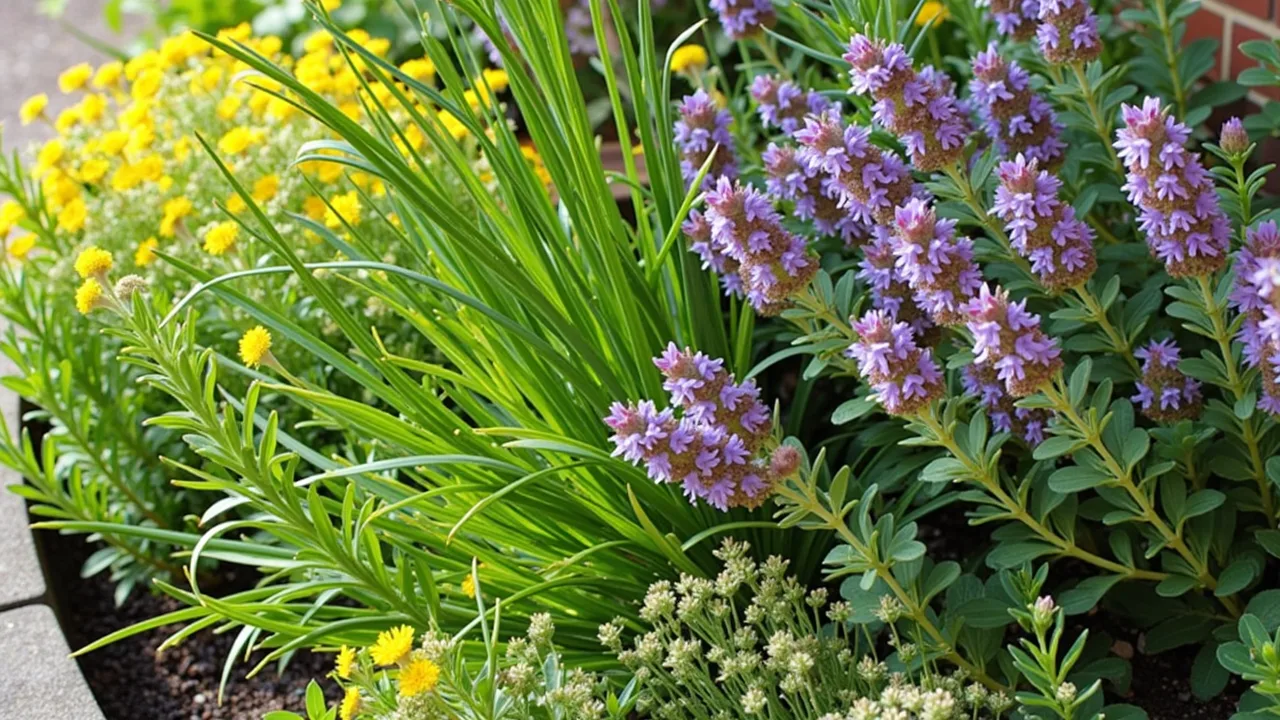
A working herb garden is one of the most rewarding designs a small UK plot can carry. Within roughly 4 m² you can grow the culinary herbs you actually cook with — sage, rosemary, thyme, parsley, chives and mint — alongside pollinator favourites like English lavender, pot marigold and oregano. This guide sets out a layered planting plan, the spacing you need to keep each herb vigorous, and the seasonal care that keeps the bed productive for years.
Design intent and who it suits
This design is for a sunny, rectangular bed roughly 2 m × 2 m (about 4 m²) sited against a south- or west-facing wall, fence or path. Aspect matters: most culinary herbs are Mediterranean in origin and want full sun (six hours or more in midsummer) and free-draining soil. The bed suits loam, chalk or sandy soils; on heavy clay, raise the bed 15–20 cm and dig in 5–10 cm of coarse grit to break up the pan.
If you only have a patio, the same plant list works in a row of terracotta pots — just keep Mediterranean herbs (rosemary, thyme, sage, lavender, oregano) separate from moisture-lovers (mint, parsley, chives, lemon balm), because their watering needs pull in opposite directions.
Planting plan by layer
The plan is built in three layers. Spacings below are taken from the mature spread of each plant in the GardenWizz catalogue — not guesswork — so the bed fills in a single season without crowding.
Structure / back (against the wall or fence)
These are the tall, woody herbs that give the bed its backbone through winter.
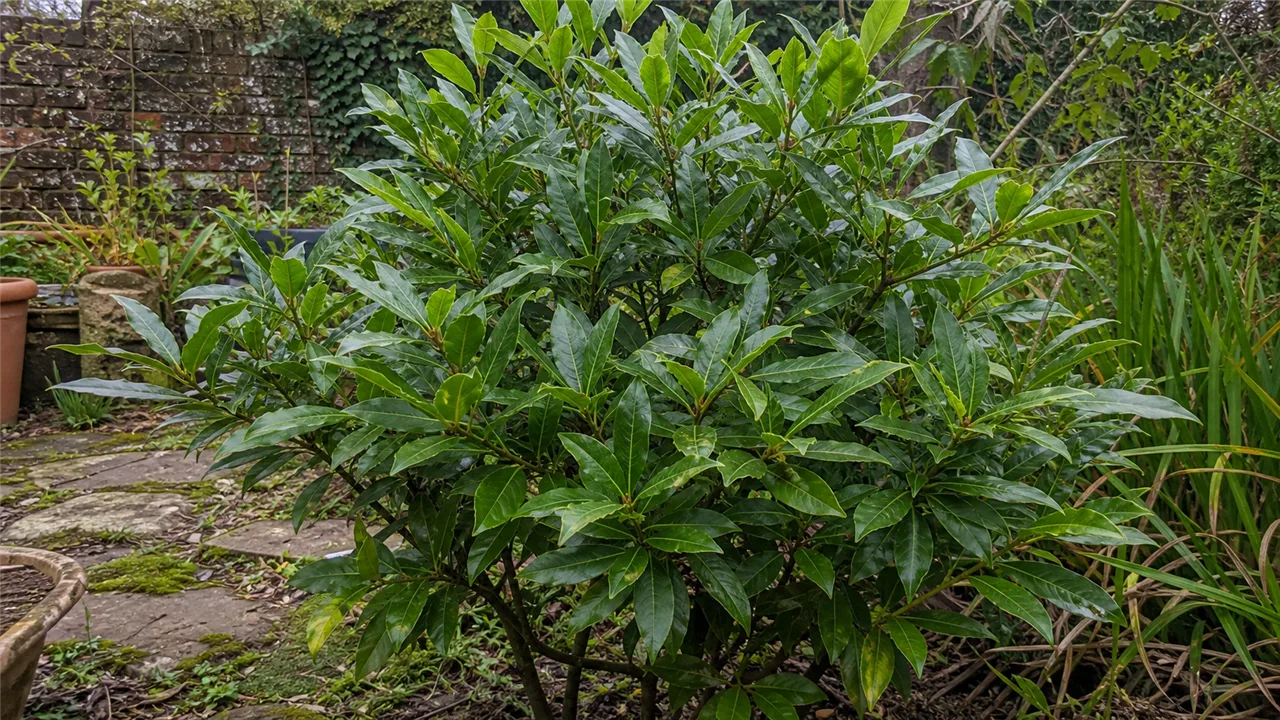
- Bay tree — 1 plant at the centre back. The catalogue lists a mature height of 400 cm and a spread of 250 cm, so it is really a small tree; in a 4 m² bed, keep it hard-pruned to a 150–180 cm standard, or substitute a clipped dwarf bay in a half-barrel. Evergreen; picks year-round.
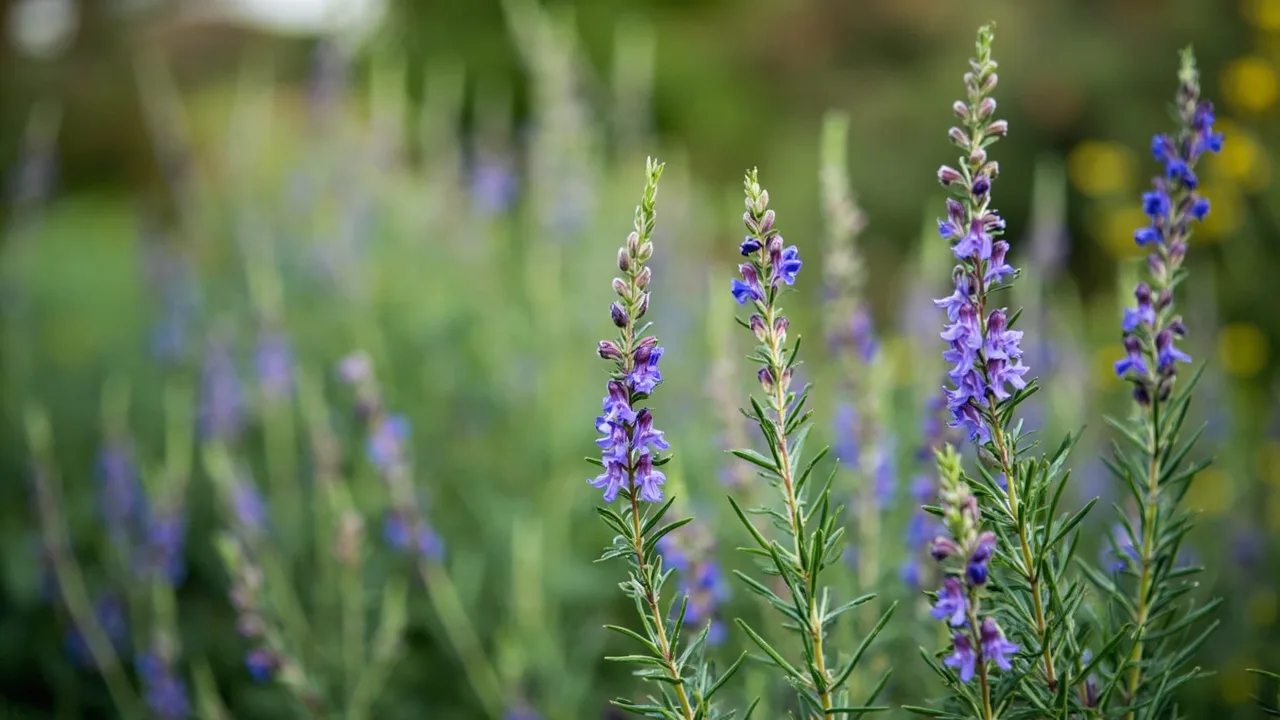
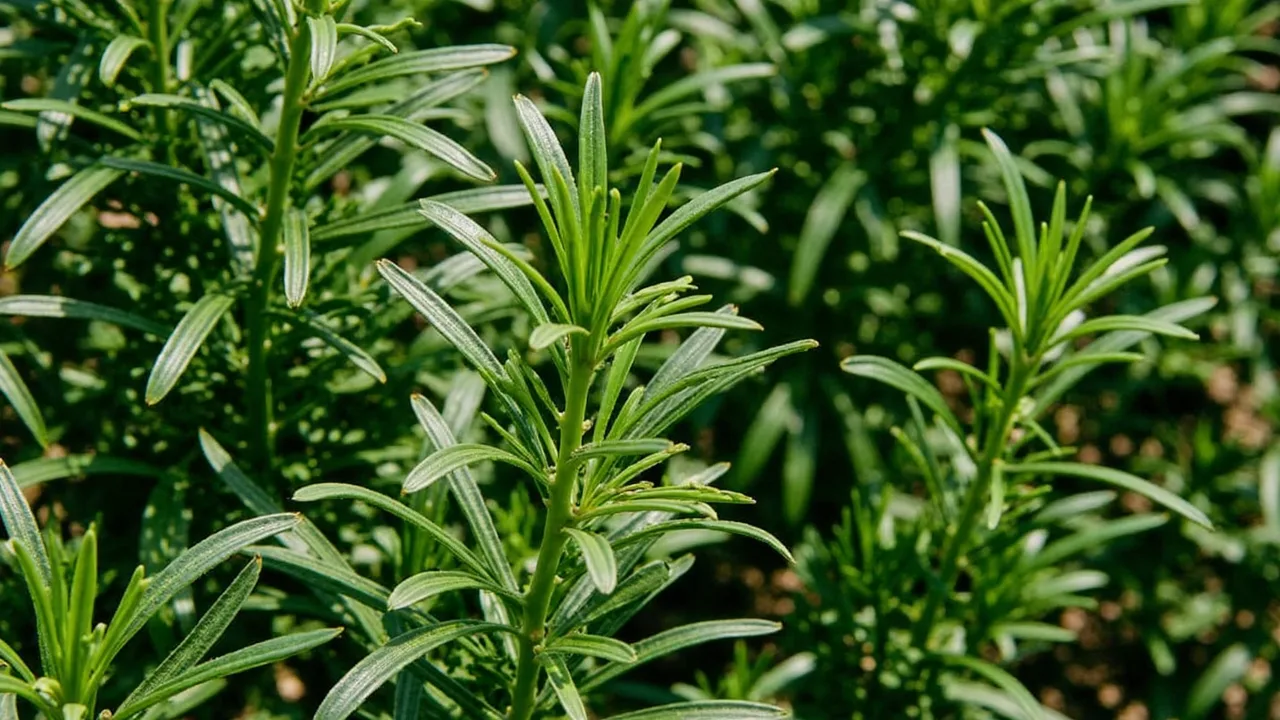
- Rosemary — 1 plant to one side of the bay. Mature 180 cm × 250 cm, but easily held to 90 cm with an annual trim after flowering. Flowers from March through August, a critical early nectar source for bees.
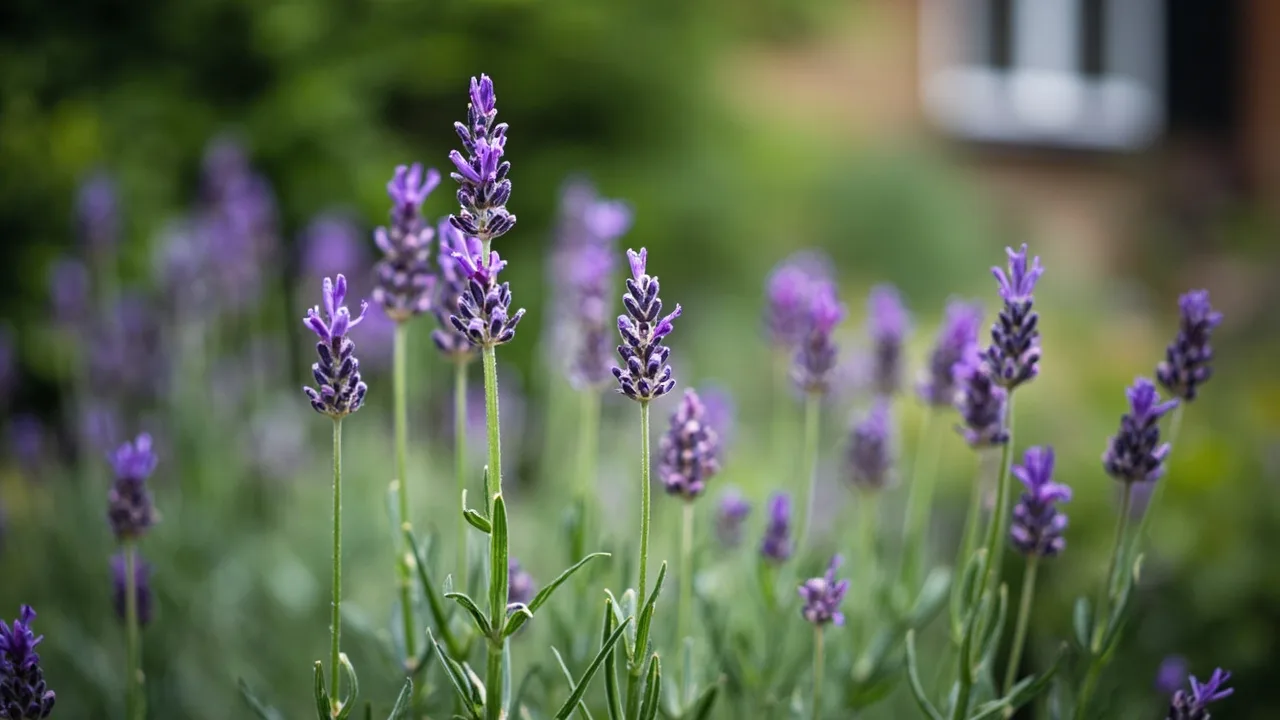
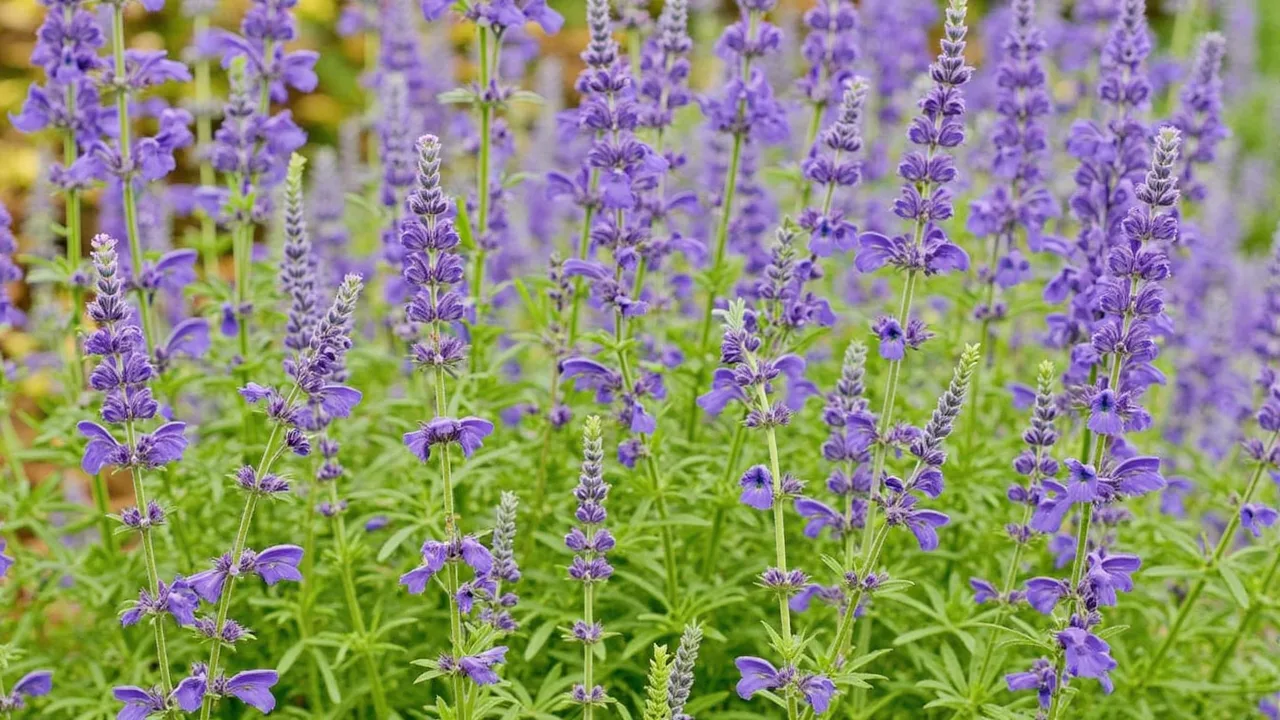
- Lavender 'Hidcote' — 2 plants, spaced 100 cm apart (its mature spread). Reaches 60 cm; the dark-purple flowers in July and August carry the back of the border into late summer.
Mid-height (the productive core)
This is the working layer — the herbs you will harvest weekly.
- Sage — 1 plant, 152 cm spread, so a single plant fills its station with room to spare. Pinch out the tips in May to keep it bushy.
- Tarragon — 1 plant at 50 cm spacing from the sage. Reaches 150 cm in flower; the anise-flavoured leaves are best picked before flowering.
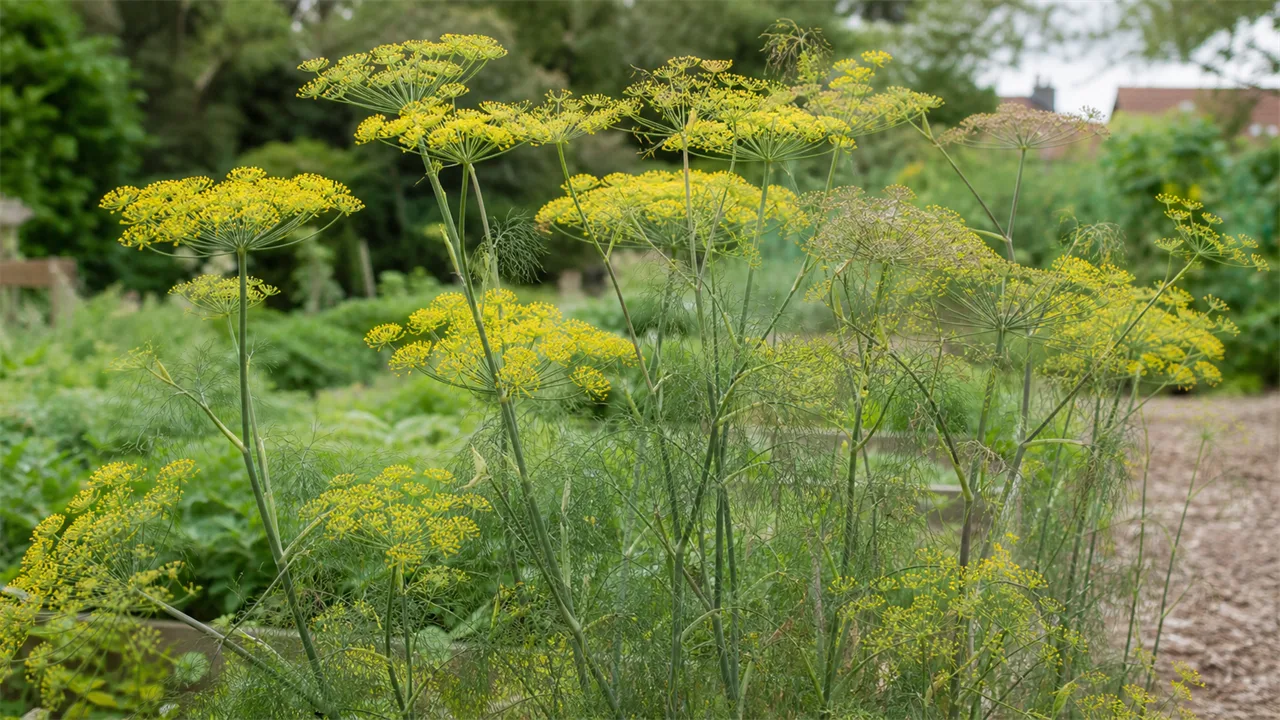
- Florence fennel — 1 plant for its 210 cm height and bronze-tinted foliage; cut it down after seed to keep the bed tidy and let self-sown seedlings replace it.
- Oregano — 1 plant, 90 cm × 50 cm, at the front edge of the mid layer. Bees work it flat from June to August.
- Lemon balm — 1 plant in the cooler corner, 50 cm from the mint station. Vigorous to 100 cm; cut back after flowering to stop it self-seeding everywhere.
Front / edging (low growers)
These hug the path edge and tolerate the driest, rootiest soil.
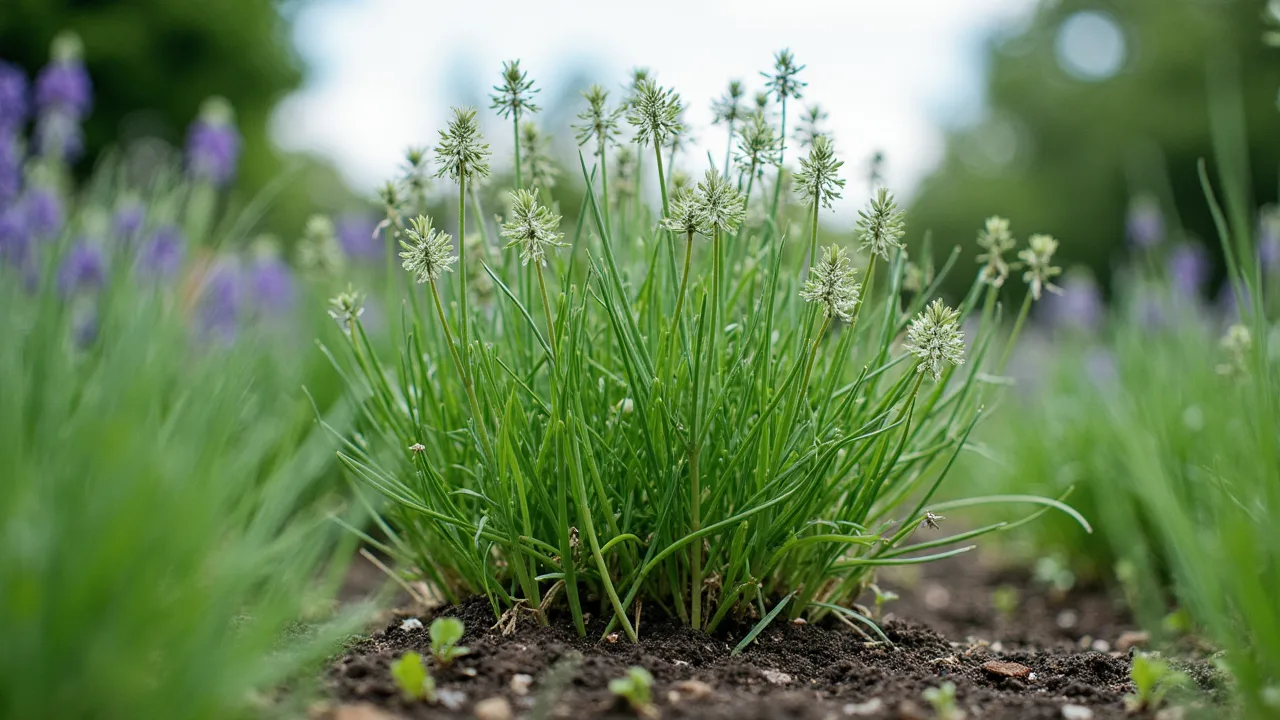
- Chives — 3 plants in a row, 15 cm apart (the catalogue spread). They form a 30 cm-tide of purple flowers in April and May; shear after flowering for a second flush of leaves.
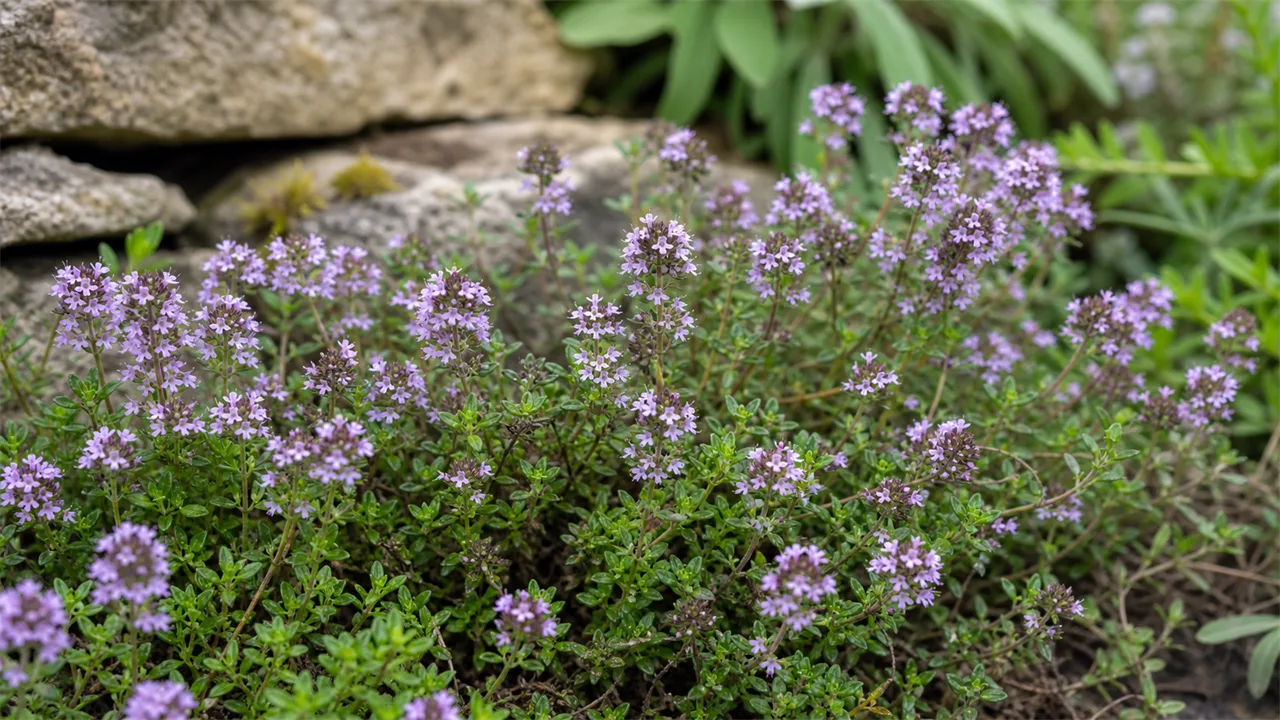
- Common thyme — 3 plants, 40 cm apart, 30 cm tall. Carpet the path edge; step on it occasionally to release the scent.
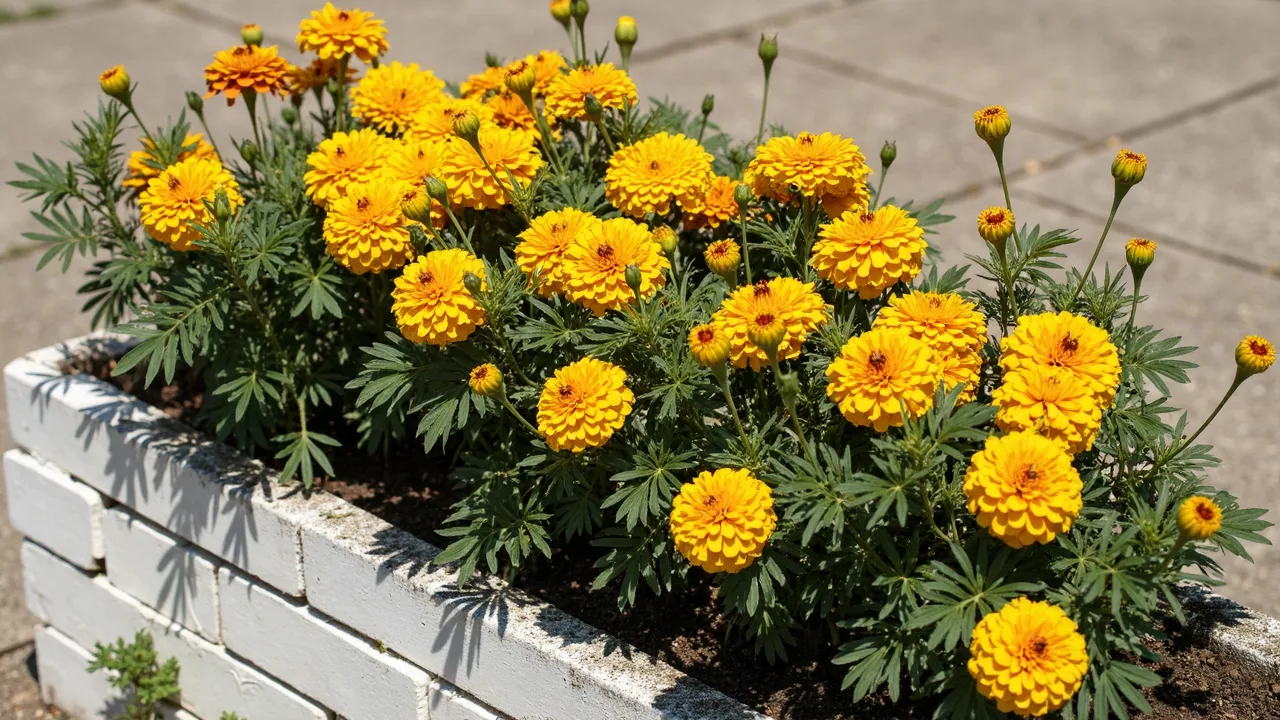
- Pot marigold — 5 plants sown in situ at 50 cm spacing in April or August. Edible petals and a long flowering window from May to September.
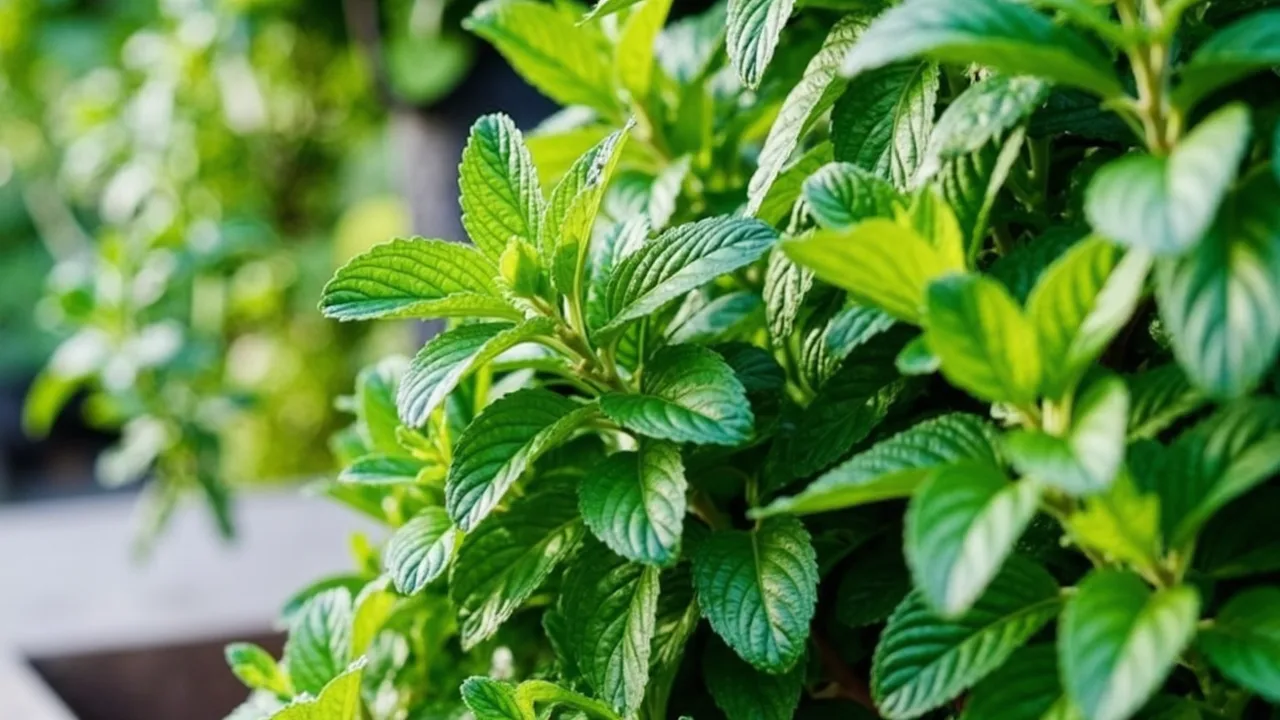
- Mint — 1 plant in a bottomless bucket sunk into the bed. Without containment, 120 cm of mint will overrun everything in two seasons.
Planting table
| Plant | Layer | Mature height | Spacing | Plants in this design |
|---|---|---|---|---|
| Bay tree | Structure / back | 400 cm (kept to 180 cm) | 1 plant, central | 1 |
| Rosemary | Structure / back | 180 cm | 1 plant | 1 |
| Lavender 'Hidcote' | Structure / back | 60 cm | 100 cm | 2 |
| Sage | Mid | 152 cm | 152 cm | 1 |
| Tarragon | Mid | 150 cm | 50 cm | 1 |
| Florence fennel | Mid | 210 cm | 50 cm | 1 |
| Oregano | Mid | 90 cm | 50 cm | 1 |
| Lemon balm | Mid | 100 cm | 50 cm | 1 |
| Chives | Front | 30 cm | 15 cm | 3 |
| Thyme | Front | 30 cm | 40 cm | 3 |
| Pot marigold | Front | 80 cm | 50 cm | 5 |
| Mint | Front (contained) | 120 cm | n/a — contained | 1 |
That is 21 plants in total for a 4 m² bed.
Year-round and seasonal interest
The strength of a herb garden is that it earns its keep in every season, not just July.
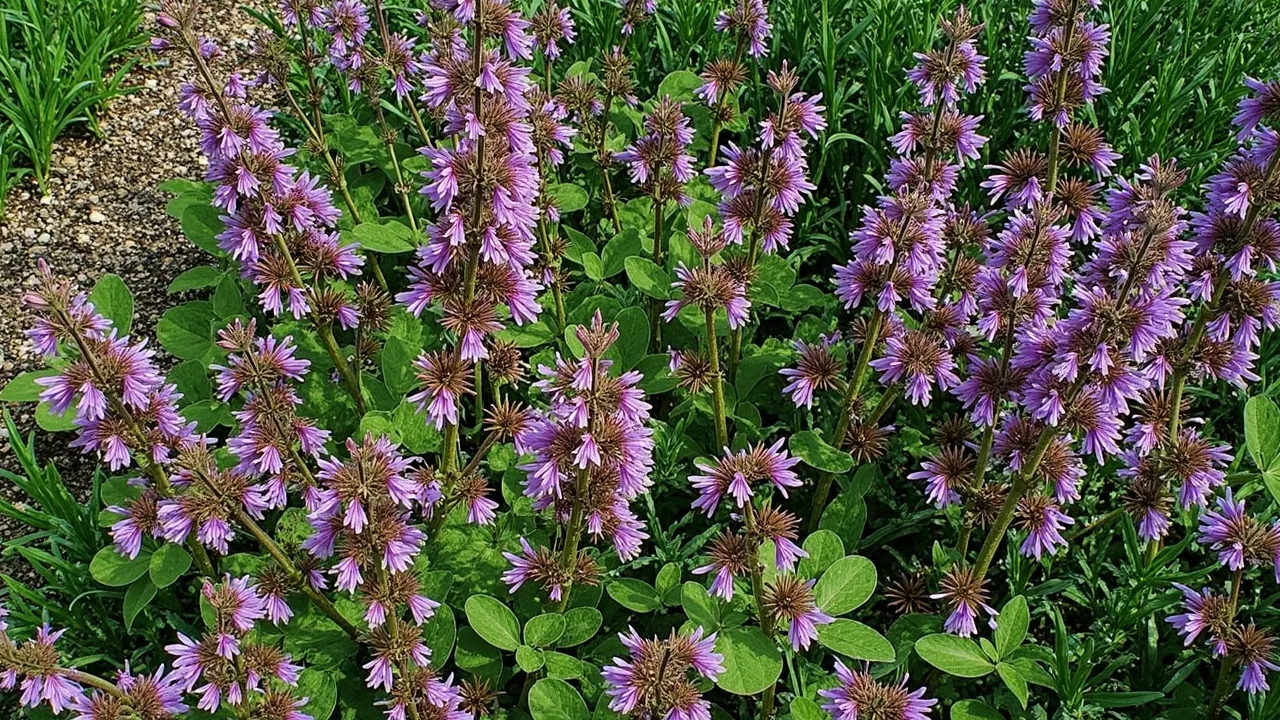
- Spring (March–May): Rosemary opens its first blue flush from March; chives flower in April and May; parsley puts on fresh growth from April; sage sends up its purple-blue spikes in May. This is the season the bed earns its place with the earliest bees.
- Summer (June–August): Oregano, sage, thyme, lavender, lavender 'Munstead', pot marigold and fennel all hit peak flower from June. Harvest in the morning before the sun hits the leaves — that is when the essential-oil content is highest.
- Autumn (September–November): Bay, rosemary, sage and thyme carry the structure; fennel seed heads stand into October; pot marigold keeps flowering until the first hard frost. Cut back the lemon balm and mint to ground level.
- Winter (December–February): Bay, rosemary, sage and lavender are evergreen and provide harvests through the coldest weeks. The structural shapes of fennel skeletons and spent lavender stems give the bed its winter skeleton. Avoid pruning rosemary and lavender hard until April — they resent autumn cuts.
Companion and pollinator notes
- Pollinator pairing: The bed's pollinator pull is concentrated in two windows — rosemary in April–May and the oregano/lavender/marigold block in June–August. That sequence keeps honeybees and bumblebees visiting from spring until the first frosts. Catmint makes a fine late-spring substitute if you find oregano too pungent; the catalogue notes its May–September flowering window.
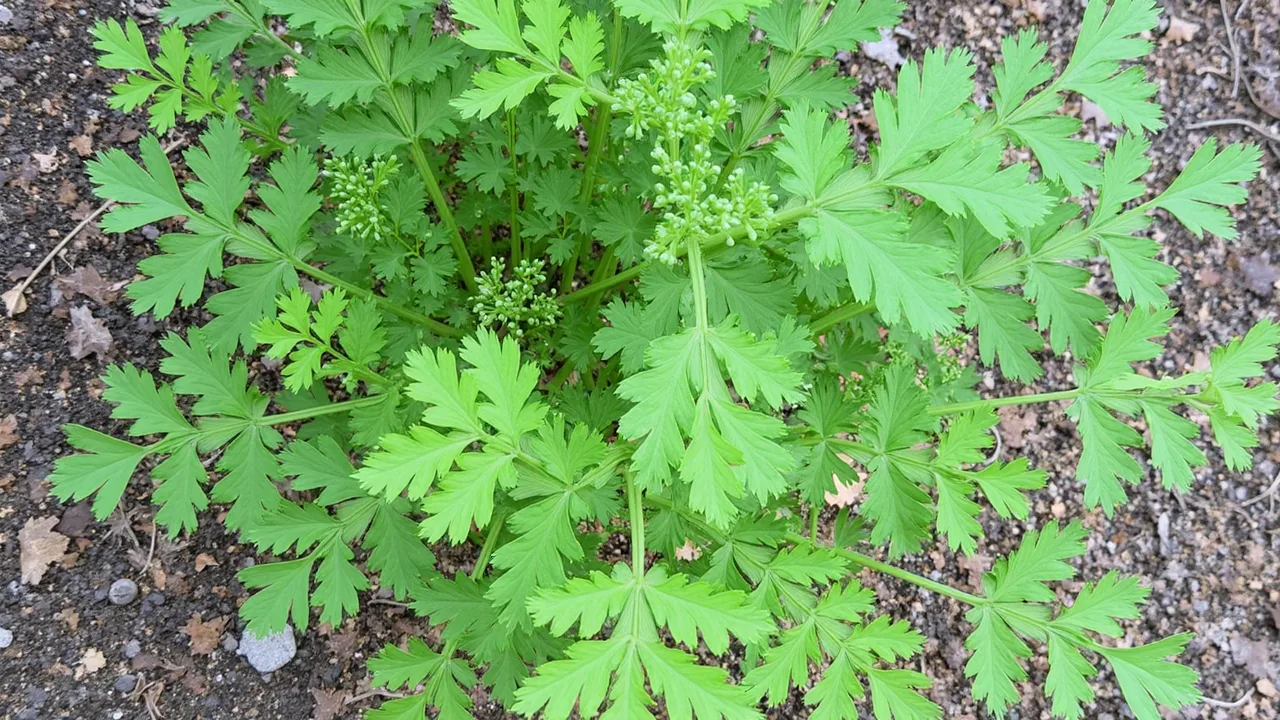
- Kitchen pairing: Plant the herbs you actually cook with in a single row near the path edge. A classic grouping: thyme–rosemary–sage–oregano at the front (Mediterranean, dry); parsley–chives–tarragon just behind (moister); mint contained at one end.
- Defensive pairing: Pot marigold's sticky petals trap aphids and draw them away from beans, tomatoes and brassicas — keep a pot near the veg plot as well as the herb bed. Avoid planting fennel next to beans or tomatoes; it inhibits their growth.
Practical setup
Soil and aspect
- Dig out the bed to one spade's depth and remove perennial weed roots.
- On loam or chalk: add a 5 cm layer of garden compost and fork in.
- On heavy clay: raise the bed 15–20 cm and mix 30 % coarse grit by volume into the top 30 cm.
- Mediterranean herbs (rosemary, thyme, sage, lavender, oregano, bay) want neutral to alkaline pH; they will not thrive in acid soil below pH 5.5 without a dressing of garden lime in late winter.
Planting
Plant in spring (April–May) or early autumn (September). Water in well for the first month, then let the Mediterranean herbs dry out between soakings. Mulch with 3–5 cm of gravel around the woody herbs — it suppresses weeds and reflects heat back into the canopy. Keep mulch off the crowns of chives and parsley, which rot in damp crowns.
Maintenance calendar
- March: Cut back last year's fennel and lavender stems; top-dress Mediterranean herbs with a handful of garden lime.
- May: Pinch sage, thyme and rosemary tips to keep the plants bushy. Sow pot marigold.
- July: Harvest and dry oregano, thyme and sage in the morning. Cut chives back hard after flowering for a second leaf flush.
- September: Cut lemon balm and mint to the ground. Sow overwintering parsley.
- November: Sink the mint container rim below the soil surface and mulch with leaf mould.
Budget
At 2026 UK garden-centre prices, a budget build runs about £90–£120 for the bed (plants plus 40 L of peat-free compost, a bag of grit and a 5 kg bag of lime). Bay, rosemary and lavender are the most expensive single plants at £10–£15 each; everything else sits between £3 and £6 per pot. A cheaper route is to raise parsley, coriander, dill, basil, chamomile and pot marigold from seed in March on a windowsill — that cuts the plant bill by roughly half.
Common mistakes to avoid
- Planting mint directly into the bed. It will smother everything within two seasons. Sink it in a bottomless bucket.
- Pruning rosemary and lavender in autumn. Both reshoot from old wood reluctantly; wait until April.
- Overwatering Mediterranean herbs in a wet summer. They rot at the crown before they drown in a pot.
- Sowing basil and dill outdoors too early. Both resent cold soil — wait until early June under cloche, or sow indoors in April and plant out after the last frost.
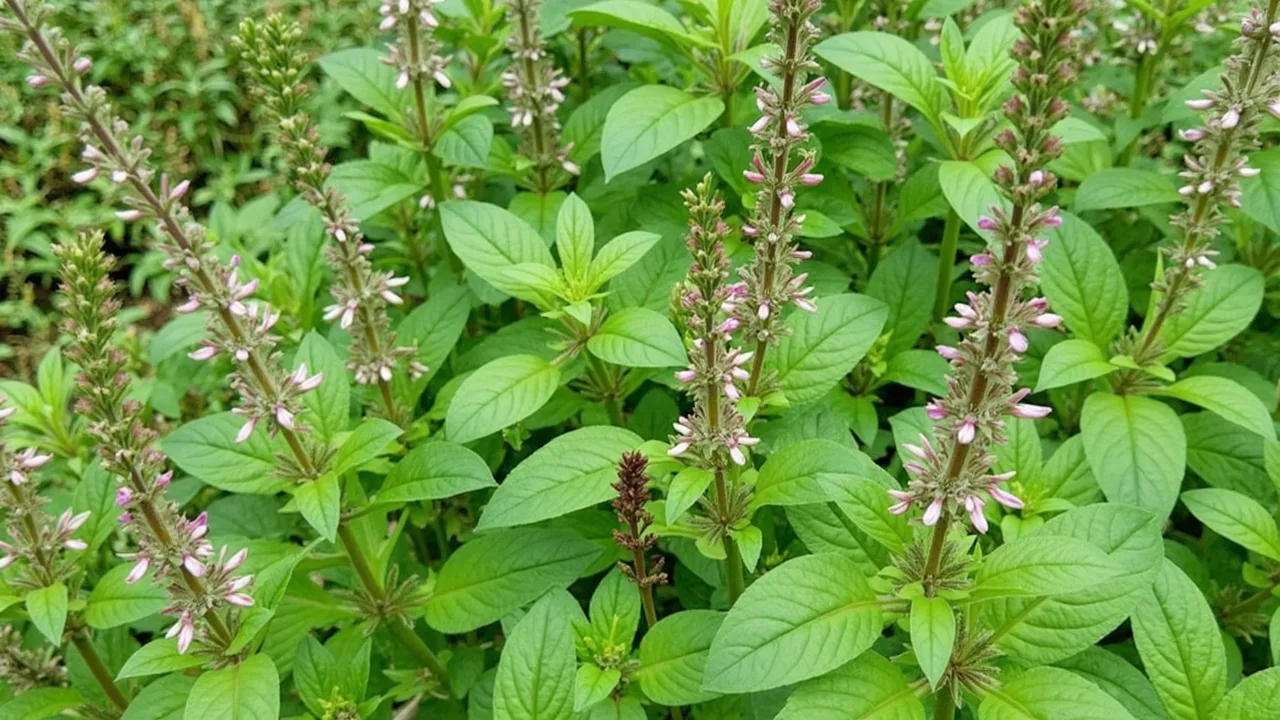
Plants in this guide
Recommended Products
GardenWizz earns a commission from qualifying purchases made through affiliate links on this page (including links within the article) — as an Amazon Associate, and from Thompson & Morgan via the Awin network. This does not affect the price you pay. See our disclaimer for details.
Related Articles
More →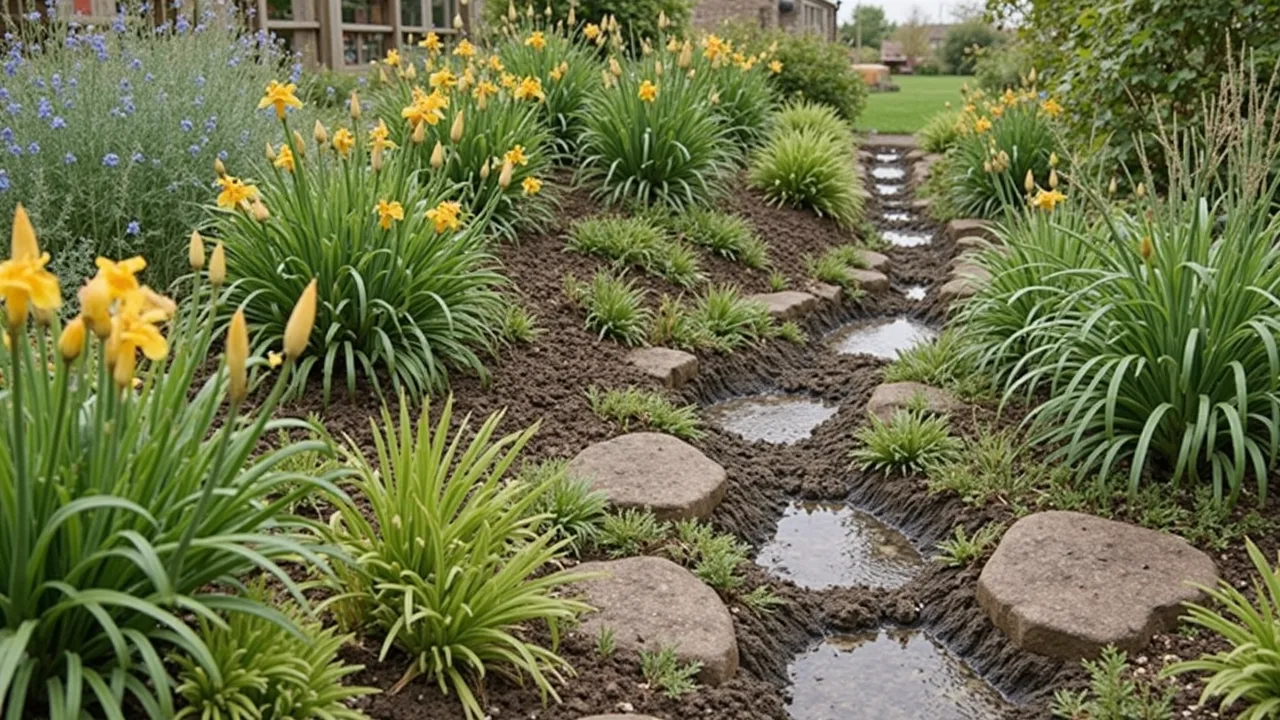 Garden Design
Creating a Rain Garden
12 June 2026A rain garden is a shallow, planted dip in the lawn or border that catches roof and paving runoff, lets it soak into the ground, and filters it through plant roots on the way down. In a UK garden it…
 Garden Design
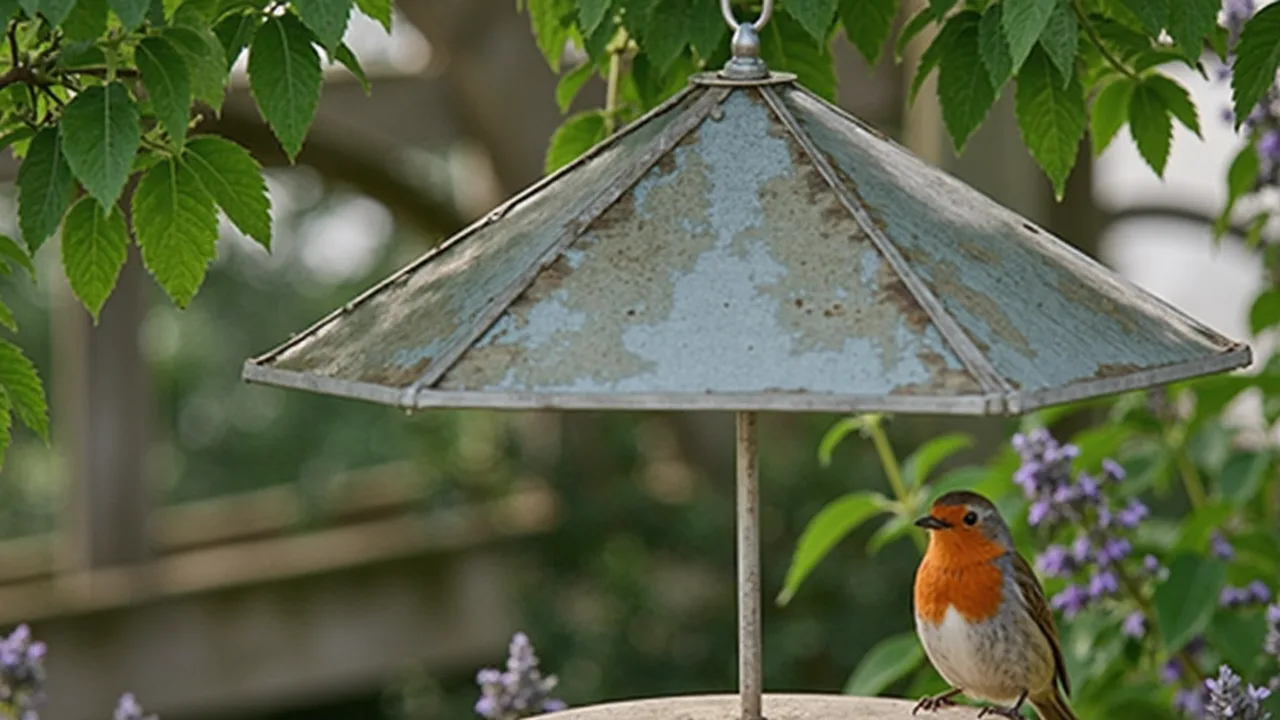
How to Attract Birds to Your Garden
12 June 2026A garden with birds is a working garden. They eat aphids, caterpillars, slugs and snails; they pollinate as they forage; and they tell you, quickly, when something in your patch is out of balance.…
 Garden Design
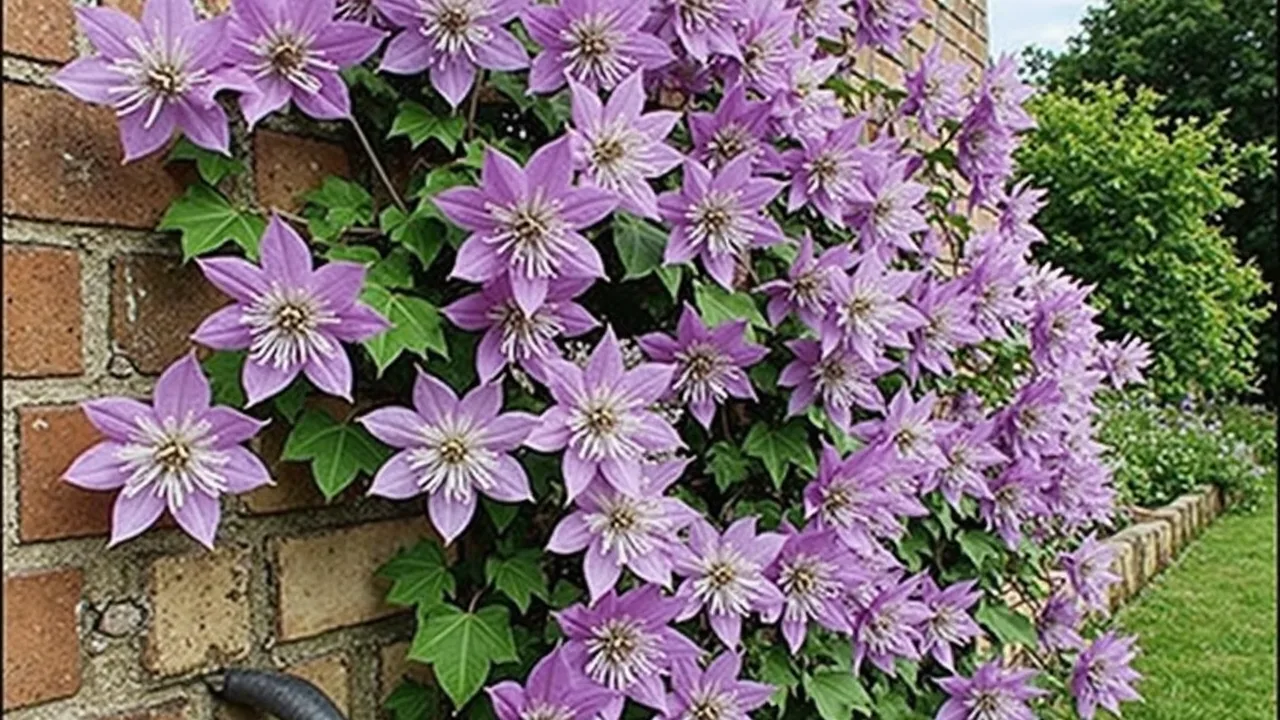
Best Climbing Plants for UK Walls and Fences
12 June 2026A bare fence or blank wall is wasted growing space. Choose the right climber and that same square metre of garden becomes flowers from May to October, shelter for nesting birds, a windbreak for the…