Oregano
Origanum vulgare
The Gardening Year
Best months in UK gardens · full planting calendar →
🖨 Printable care card (PDF)At a Glance
| Botanical name | Origanum vulgare |
|---|---|
| Common name(s) | oregano |
| Family | Lamiaceae |
| Plant type | perennial (grown as an annual in colder climates) |
| Height × Spread | 90 cm × 50 cm |
| Position | Full sun |
| Soil | free-draining soil or compost |
| Flowering | June–August |
| Toxicity | No specific toxicity is listed by the RHS. This is not a guarantee of safety — check with a vet or the ASPCA before pets or children eat any plant. |
| Native range | Mediterranean region |
Overview
Oregano (Origanum vulgare) is a hardy, herbaceous perennial in the family Lamiaceae, widely grown in British gardens both as a culinary herb and as a pollinator-friendly ornamental. The following quick-care table summarises the essentials for UK growers; the full article below covers each in detail.
Origanum vulgare is a rhizomatous perennial native to dry, sunny habitats across Europe, including much of southern Britain where wild populations occur on chalk and limestone grassland. The species has a long history of cultivation in the United Kingdom as a kitchen herb and as a cottage-garden plant, valued for its aromatic foliage and its late-summer display of small pink-purple flowers that are highly attractive to bees, hoverflies and butterflies. Mature plants form loose, spreading clumps of upright to slightly sprawling stems clothed in opposite, oval, softly hairy leaves that release a pungent, warm scent when bruised. The flavour of the true species is noticeably stronger and more pungent than that of closely related sweet marjoram (Origanum majorana), and several ornamental and improved forms have been selected for foliage colour, flower colour or compact habit. The RHS has awarded the Award of Garden Merit to a number of cultivars, recognising their reliability in typical British garden conditions. Oregano is grown in herb gardens, along the front of sunny borders, in gravel gardens, and in containers on patios where the foliage can be reached easily for harvesting. It is also widely naturalised in parts of southern England, where it occurs as a component of unimproved grassland and road verges.
Appearance
Origanum vulgare is a bushy, spreading perennial that grows from a creeping rootstock, sending up a network of square, often reddish-tinged stems each season. The leaves are opposite, oval to broadly lance-shaped, 1 to 4 cm long, with a slightly toothed or entire margin, and are typically a soft, slightly grey-green. Both leaves and stems are covered in fine, short hairs that give the plant a faintly downy texture and help it to tolerate dry conditions. The foliage is strongly aromatic: crushing a leaf releases the warm, pungent, slightly bitter scent that is characteristic of culinary oregano, owing to volatile oils including carvacrol and thymol.
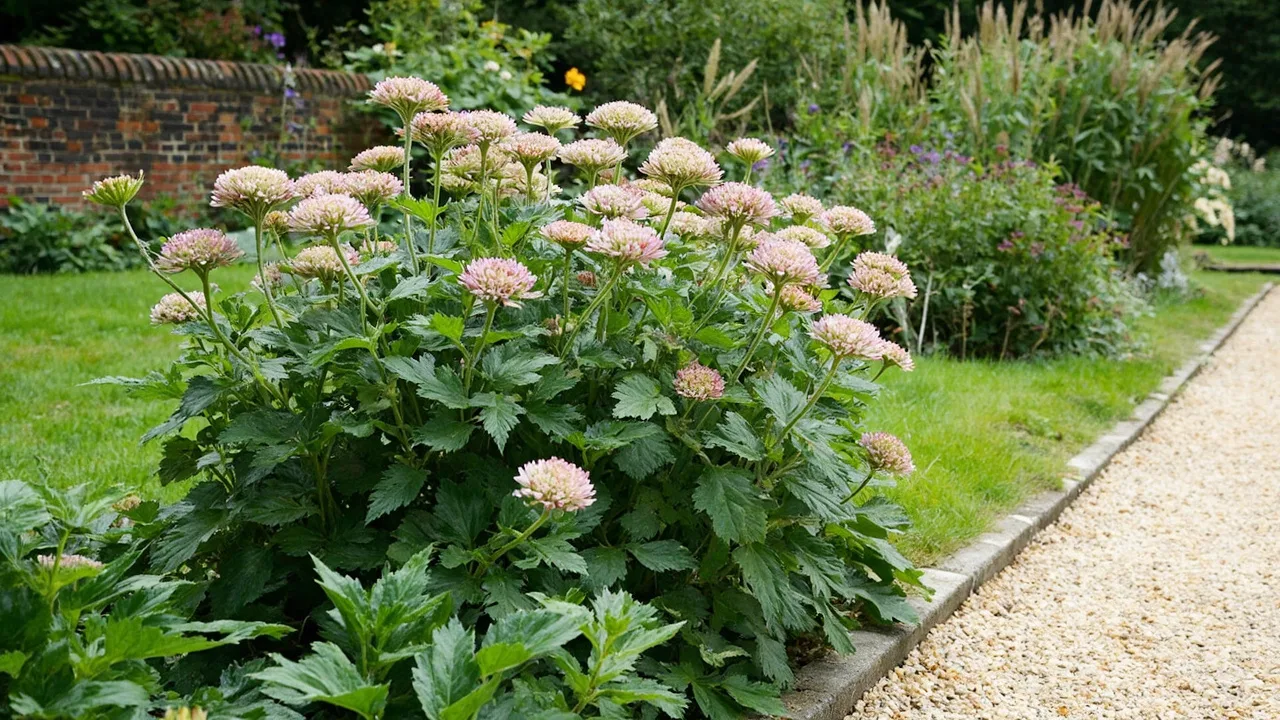
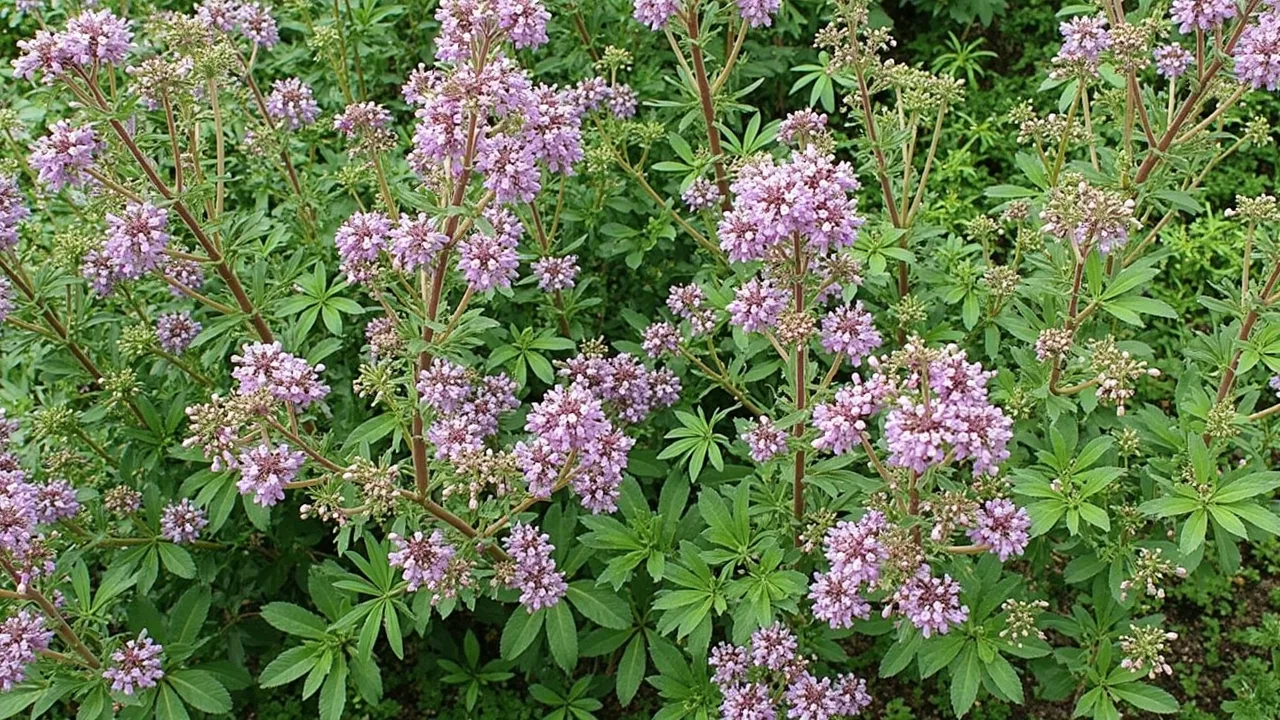
The flowers are borne in loose, branched clusters (technically corymb-like panicles) at the stem tips from midsummer into early autumn. Each individual flower is small, two-lipped and tubular, typically pale to mid pink-purple, though white- and pink-flowered forms exist. The conspicuous papery bracts that subtend the flower clusters are often flushed with purple or green and persist after the flowers fade, extending the plant's ornamental value well into autumn. After flowering, the dried bracts and seed heads retain their structure through winter and are sometimes left standing for their architectural effect. The overall habit is loose and informal, broadening with age as the rhizome extends; established clumps may reach 30 to 60 cm in height with a similar spread, and taller in rich soil. Golden- and variegated-leaved cultivars tend to be slightly smaller and more compact than the species.
Growing Conditions
Oregano performs best in full sun, in poor to moderately fertile, free-draining soil with a near-neutral to mildly alkaline pH. In the United Kingdom, this makes sunny borders, herb gardens, raised beds, gravel gardens and the tops of walls particularly suitable, while heavy, waterlogged or strongly acidic ground generally leads to weak, winter-prone plants. The species is notably drought-tolerant once established and copes well with the dry conditions often found against warm house walls, over paving, or in thin soils over chalk — its native habitat in this country. The RHS rates Origanum vulgare as hardy to H5, meaning it tolerates winter temperatures down to about -10 to -15 °C across most of the UK, including the colder parts of northern England and most lowland Scotland. In cold, wet districts — for example much of western Scotland, high-altitude parts of northern England, and exposed coastal sites — winter die-back can occur on poorly drained ground, and a surface mulch of coarse grit is preferable to organic matter, which can hold damp against the crown. Partial shade is tolerated but produces a leggier plant with weaker flavour and fewer flowers; deep shade is unsuitable. Highly fertile or heavily nitrogen-fed soil encourages lush soft growth that is vulnerable to winter damage and may collapse under its own weight, while producing leaves with a diluted flavour.
Planting and Care
Plant container-grown oregano in spring or early autumn, spacing plants 30 to 45 cm apart for an informal drift, or 30 cm apart for a denser edging. Water in well after planting and keep the soil just moist for the first growing season; thereafter, additional watering is rarely needed except in prolonged drought on very free-draining soil. Feeding should be light: in most UK garden soils a single application of a general-purpose fertiliser in early spring, or an annual top-dressing of garden compost, is sufficient, and overfeeding produces soft, leafy growth with diluted flavour. Pruning is straightforward. Each year in early spring, cut back any remaining top growth to just above the new shoots emerging at the base. After the main flush of flowers fades in late summer, a lighter trim removes spent flower spikes and tidies the clump, though many gardeners leave the dried heads standing for winter structure and for seed-eating birds. Every three to four years, established clumps benefit from lifting in early spring and dividing the rhizome into smaller pieces, replanting the younger, more vigorous outer sections and discarding the woody centre; this keeps plants productive and prevents the centres from dying out. Propagation is straightforward by division, by soft- or semi-ripe cuttings taken in late spring or early summer, or from seed, though seed-raised plants are variable in flavour and colour. Cuttings 5 to 8 cm long root readily in a gritty, free-draining compost under a cold frame, in a shaded corner, or on a bright windowsill. Seasonal care in the UK follows a simple rhythm: light spring tidy and optional feed, minimal summer watering, an optional late-summer trim after flowering, and an autumn mulch of coarse grit rather than organic matter on cold or wet sites.
Common Problems
Oregano is largely trouble-free in suitable British conditions, but a small number of problems recur. The most frequent is winter die-back caused by cold, wet conditions at the crown, particularly on heavy or poorly drained soils; symptoms appear in late winter or early spring as the foliage turning brown and the plant failing to break into new growth from the base, and affected specimens are usually best replaced. Aphids, particularly the mint aphid and the black bean aphid, can colonise the soft shoot tips in late spring and early summer, causing distorted growth; they are usually controlled by natural predators in a diverse garden, or by pinching out affected tips, and severe infestations respond to a soft soap wash. Powdery mildew can appear on plants grown in dry soil at the root but with humid air around the leaves — typical of container-grown specimens in a sheltered patio — producing a white coating on the foliage and reducing vigour; improving air circulation, avoiding overhead watering, and watering at the base of the plant are usually sufficient. Root rot caused by Phytophthora and other oomycetes has been recorded on oregano in waterlogged soil. Foliage occasionally shows minor spotting from Septoria and other fungal leaf spots in wet summers, but these rarely affect the plant's overall health. Poor flavour or sparse flowering is almost always a sign of one of three causes: insufficient sun, over-rich or over-watered soil, or pruning at the wrong time. The plant is not considered toxic to humans and is widely used as a culinary herb; it is generally regarded as non-toxic to dogs and cats, though, as with many non-food plants, ingestion of large quantities may cause mild gastric upset — exact thresholds are not, to the writer's knowledge, well documented in the veterinary literature.
Popular Varieties
Origanum vulgare 'Aureum' is a widely grown golden-leaved form, with bright yellow-green foliage in spring that fades to soft chartreuse by midsummer; it reaches roughly 30 to 40 cm, is slightly less vigorous than the species, and prefers a little light midday shade in the south of England to prevent leaf scorch. 'Gold Tip' is a more compact cultivar with green leaves tipped and flushed with yellow, useful for edging and container work. 'Compactum' is a low-growing, dense selection, typically 15 to 25 cm tall, well suited to the front of borders, paving edges and rock gardens, and holds the RHS Award of Garden Merit. 'Country Cream' ('Variegatum') is a variegated form with leaves edged and splashed with cream, forming a tidy clump to about 30 cm and useful for brightening partly shaded corners. 'Hot and Spicy' is a culinary selection noted for its particularly pungent, peppery flavour, slightly larger-leaved than the species and reaching around 45 cm. White- and pink-flowered forms, sometimes sold as 'Album' and 'Roseum' respectively, are also widely available and provide useful variation in the late-summer border alongside the typical pink-purple of the species. Ornamental hybrids such as Origanum 'Kent Beauty' — a hybrid involving O. rotundifolium rather than the species itself — are popular in containers and dry gardens for their hop-like papery bracts, though they are less hardy than O. vulgare and generally rate only H4 in UK conditions.
Cultivars and Varieties
| Cultivar | Height | Flower | Notes | AGM |
|---|---|---|---|---|
| 'Aureum' | — | — | golden foliage (greener if grown in shade), mild taste: It has gained the Royal Horticultural Society's Award of Garden Merit | |
| 'Gold Nugget' | — | — | RHS AGM (H5) | ✓ |
| 'Greek Kaliteri' | — | — | O. v. subsp. hirtum strains/landraces, small, hardy, dark, compact, thick, silvery-haired leaves, usually with purple undersides, excellent reputation for flavour and pungency, as well as medicinal uses, strong, archetypal oregano flavour (Greek kaliteri: the best) | |
| 'Hot & Spicy' | — | — | O. v. subsp. hirtum strain | |
| 'Nana' | — | — | dwarf cultivar | |
| 'Pink Mist' | — | — | RHS AGM (H4) | ✓ |
Pests and Diseases
| Problem | Symptoms | Management |
|---|---|---|
| wet soil | plants can be killed by overly wet soils | add grit to the planting hole; grow in free-draining soil or compost |
Or browse the full plant problem solver to diagnose an issue by symptom.
Oregano in our guides
Recommended Products
GardenWizz earns a commission from qualifying purchases made through affiliate links on this page (including links within the article) — as an Amazon Associate, and from Thompson & Morgan via the Awin network. This does not affect the price you pay. See our disclaimer for details.