Lemon Balm
Melissa officinalis
The Gardening Year
Best months in UK gardens · full planting calendar →
🖨 Printable care card (PDF)At a Glance
| Botanical name | Melissa officinalis |
|---|---|
| Common name(s) | Lemon balm |
| Family | Lamiaceae |
| Plant type | perennial (The plants live for ten years; the crop plant is replaced after five years to allow the ground to rejuvenate. In mild temperate zones, the plant stems die off at the start of the winter, but shoot up again in spring.) |
| Height × Spread | 100 cm × 10–50 cm |
| Position | Full sun, Partial shade |
| Soil | moist soil; well-drained |
| Flowering | June–August |
| Toxicity | No specific toxicity is listed by the RHS. This is not a guarantee of safety — check with a vet or the ASPCA before pets or children eat any plant. |
| Native range | south-central Europe, the Mediterranean Basin, Central Asia and Iran |
Lemon balm is a herbaceous perennial in the mint family (Lamiaceae), grown across the UK for its strongly lemon-scented foliage and its long use in herbal teas, kitchen garnishes and traditional remedies. It is native to southern Europe and the Mediterranean, but it has naturalised widely in Britain and is regarded as an easy, low-maintenance garden plant. Once established it returns reliably each year, spreads readily from seed, and is attractive to pollinating insects, making it a useful addition to herb gardens, cottage-style borders and kitchen beds alike.
Overview
Lemon balm is grown primarily for its leaves, which release a pronounced citrus scent when bruised. The flavour is milder than true lemon and carries a hint of mint, which is reflected in the genus name Melissa (from Greek for "bee") and the old generic name for mint. It has been cultivated in monastery and cottage gardens for centuries, valued as a culinary herb, a calming tisane and, in earlier periods, a strewing herb. It suits the British climate very well and is fully hardy through all but the most exposed northern or upland sites. Plants are best renewed every few years, as old clumps become woody, sprawling and less productive.
Appearance
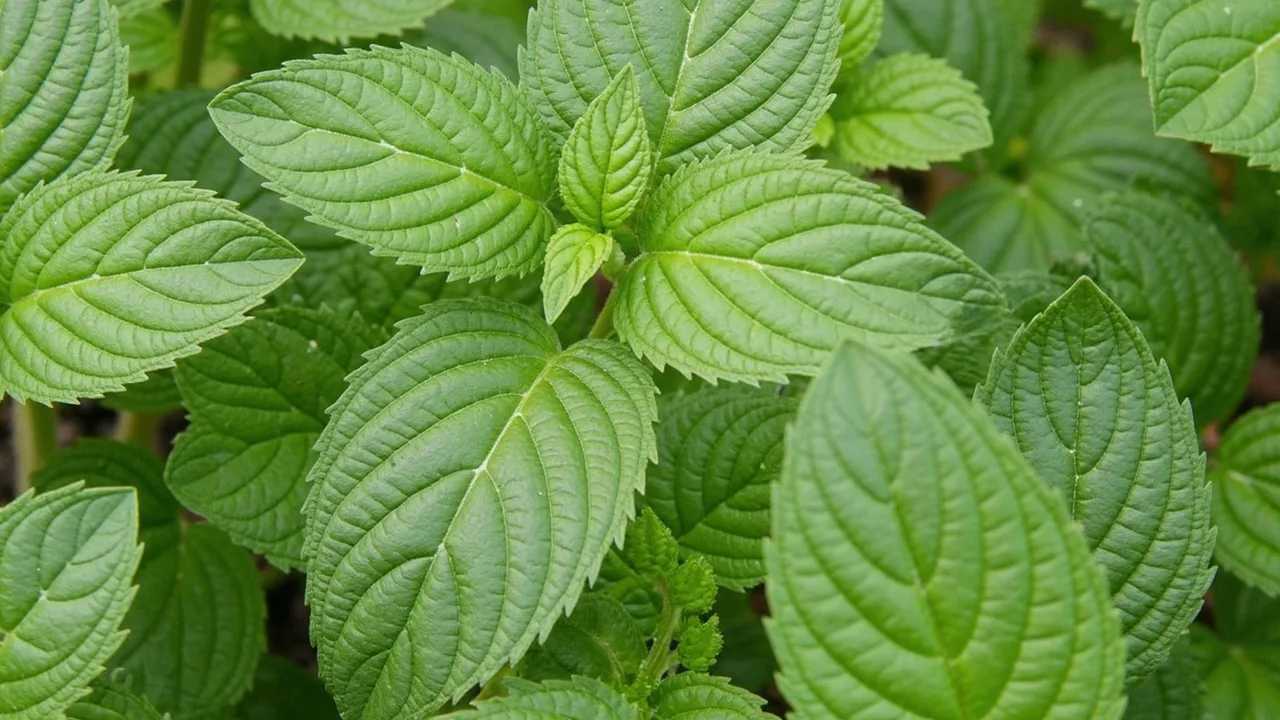
Lemon balm forms a bushy, clump-forming plant with a dense, somewhat sprawling habit. The stems are square and branched, characteristic of the mint family, and they become woody at the base on older plants. Leaves are opposite, broadly ovate to heart-shaped, 3–7 cm long, with crinkled or scalloped edges and prominent veining. The upper surface is bright to mid-green, often slightly paler beneath, and the whole plant carries a fresh lemon fragrance when touched. Small two-lipped white or pale lilac flowers appear in clusters at the leaf axils along the upper stems during midsummer. While individually modest, the flowers are rich in nectar and very attractive to honey bees, bumble bees and hoverflies, which is the source of the plant's traditional association with beekeeping and honey.
Growing Conditions
Lemon balm is one of the least demanding culinary herbs. It grows well in full sun but is one of the few Mediterranean herbs that genuinely tolerates partial shade; in shadier positions the foliage is often lusher, though flowering is reduced. Soil should be moisture-retentive but free-draining, as waterlogged winter ground can kill roots. It is not fussy about pH and grows in anything from mildly acidic to chalky alkaline soils. In heavy clay, working in some garden compost before planting improves drainage and root health. Wind exposure is rarely a problem because the stems are reasonably flexible, though very exposed sites can flatten flowering growth. The plant is generally hardy across the UK, including Scotland and Northern Ireland, though a generous mulch of compost in late autumn is worthwhile in colder inland districts.
Planting and Care
Planting. Container-grown plants can be put out at any time the ground is workable, although spring and early autumn are best. Space plants 45–60 cm apart. Lemon balm can also be raised from seed sown under cover in spring, though named cultivars will not come true from saved seed. A single plant is usually enough for a small garden; given its tendency to self-seed, growers often find additional plants appearing in neighbouring beds within a year or two.
Watering. During the first growing season, water during dry spells to help roots establish. Mature plants are reasonably drought-tolerant but produce better foliage with consistent moisture. Container-grown specimens dry out quickly and benefit from regular watering in summer.
Feeding. Lemon balm is not a heavy feeder. An annual mulch of garden compost in spring is generally sufficient. Plants grown in containers benefit from a light liquid feed every few weeks during the growing season, as nutrients leach through the pot.
Pruning. Pinch out shoot tips through the summer to keep plants compact and to delay flowering; this also gives a succession of fresh, tender leaves for the kitchen. After the main flowering has finished, cut the whole plant back to within a few centimetres of the ground; fresh foliage usually regrows within a few weeks. Old, woody clumps are best lifted and divided, or replaced, every three to five years.
Propagation. Easy by division in spring or autumn, by soft- or semi-ripe cuttings in summer, or by seed. Cuttings root readily in a pot of moist compost placed in a shaded frame.
Seasonal care. Spring: cut back any dead top growth, apply a mulch, and divide congested clumps. Summer: water in prolonged dry spells, pinch back to encourage fresh leaves. Autumn: cut plants back after flowering finishes; apply compost around the crown. Winter: little is required; in colder areas a light mulch of bracken or straw helps protect the crown.
Harvesting. Leaves can be picked at any time once a plant is well established, but the strongest fragrance is carried just before flowering. For fresh use, snip young shoots as needed; for storage, leaves dry reasonably well, though scent fades over several months, and they also freeze successfully chopped into ice-cube trays with a little water. In the kitchen, fresh leaves are commonly steeped as a tisane on their own or blended with mint; they also suit cold drinks, fruit salads, custards, and fish or poultry stuffings. The flavour is delicate, so add leaves near the end of cooking rather than at the start.
Companion planting. In a mixed herb bed, lemon balm sits comfortably alongside chives, parsley, thyme, oregano and the mints, provided each has room to grow. Its flowers are valuable for late-season nectar at a time when many earlier-flowering herbs have finished, which is one reason it is often included in gardens designed to support bees and other pollinators. Because it self-seeds readily, it suits wilder, more naturalistic corners of the garden; in a formal border it is better grown in a container to keep it in check.
Common Problems
Lemon balm is largely trouble-free, but a few issues are worth noting. The most common complaint is a straggly, woody habit in older plants, which is best solved by lifting and dividing or by replacing the plant. Powdery mildew can appear in hot, dry summers, particularly on crowded or shaded plants with poor airflow; improved spacing and an occasional cut-back help. The plant is a member of the mint family and shares its susceptibility to leaf-mining flies, which produce pale blotches and trails in the leaves; this is mostly cosmetic and rarely justifies control. Rust and other fungal leaf spots occur occasionally in damp conditions. Because it self-seeds freely, lemon balm can become a nuisance in neatly maintained borders; removing flowering stems before they set seed, or growing it in a container, prevents unwanted seedlings. Slugs and snails may nibble young growth in damp springs but rarely cause serious damage. With respect to toxicity: lemon balm leaves are widely used in herbal teas and cooking and are generally regarded as safe in normal culinary quantities; however, the Writer has not located a definitive UK-sourced toxicological reference, and readers taking prescribed medicines or who are pregnant should consult a qualified practitioner before consuming it in medicinal quantities.
Popular Varieties
Several named forms of Melissa officinalis are available from British nurseries and herb specialists, including:
- 'All Gold' — a golden-leaved form that brightens partially shaded corners; it tends to scorch in full sun and is best grown in light shade with even moisture.
- 'Aurea' (sometimes sold as golden lemon balm) — leaves variegated or splashed with yellow; slower growing and less vigorous than the species, useful for containers.
- 'Citronella' — selected for a particularly strong lemon scent; otherwise typical of the species in habit and hardiness.
- 'Compacta' — a lower-growing, denser form reaching around 30 cm, well suited to edging paths and the fronts of herb beds.
- 'Variegata' — leaves marked with cream and pale yellow, grown as much for ornament as for kitchen use.
Plain seedling Melissa officinalis is also widely sold and is perfectly adequate for culinary use; named cultivars are the better choice where a particular foliage colour, scent intensity or growth habit is wanted.
Cultivars and Varieties
| Cultivar | Height | Flower | Notes | AGM |
|---|---|---|---|---|
| 'Aurea' | — | — | — | |
| 'Citronella' | — | — | — | |
| 'Lemonella' | — | — | — | |
| 'Lime' | — | — | — | |
| 'Mandarina' | — | — | — | |
| 'Quedlinburger' | — | — | — | |
| 'Quedlinburger Niederliegende' | — | — | bred for higher essential oil content | |
| 'Variegata' | — | — | — |
Pests and Diseases
| Problem | Symptoms | Management |
|---|---|---|
| Sage leafhopper | Leaves show stippling, yellowing, or silvering patches caused by sap-sucking insects. | Monitor regularly and use insecticidal soap or horticultural oil if infestations become severe. |
| Verticillium wilt | Sudden wilting, yellowing, and death of stems despite adequate soil moisture. | Remove and destroy infected plants immediately; avoid replanting mint family members in the same spot. |
| Slugs and snails | Irregular holes chewed into young leaves and silky slime trails on foliage. | Use physical barriers like copper tape or apply iron phosphate-based slug pellets around the base. |
| Powdery mildew | A white, dusty fungal growth appears on leaves and stems, often in humid conditions. | Improve air circulation by thinning dense growth and spray with a bicarbonate solution if needed. |
| Root rot | Stunted growth, yellowing leaves, and mushy roots due to waterlogged soil. | Ensure well-drained soil and avoid overwatering, especially during winter months. |
For step-by-step help, read Dealing with Slugs and Snails and Treating Powdery Mildew. Or browse the full plant problem solver to diagnose an issue by symptom.
Lemon Balm in our guides
Recommended Products
GardenWizz earns a commission from qualifying purchases made through affiliate links on this page (including links within the article) — as an Amazon Associate, and from Thompson & Morgan via the Awin network. This does not affect the price you pay. See our disclaimer for details.