Mint
Mentha
The Gardening Year
Best months in UK gardens · full planting calendar →
🖨 Printable care card (PDF)At a Glance
| Botanical name | Mentha |
|---|---|
| Common name(s) | mint |
| Family | Lamiaceae |
| Plant type | perennial |
| Height × Spread | 10–120 cm × — |
| Position | Full sun, Partial shade |
| Soil | moist soil |
| Flowering | June–August |
| Toxicity | No specific toxicity is listed by the RHS. This is not a guarantee of safety — check with a vet or the ASPCA before pets or children eat any plant. |
| Native range | subcosmopolitan distribution across Europe, Africa, Asia, Australia, North America and South America |
Overview
Mint (Mentha) is a genus of herbaceous perennial plants in the family Lamiaceae, comprising roughly 20 to 25 accepted species and a much larger number of hybrids and named cultivars. Native across temperate regions of Europe, Asia, Africa and North America, mint has been cultivated for culinary, medicinal and aromatic use for at least two thousand years, and naturalised populations are now widespread throughout the British Isles. Most garden mint is grown for its aromatic leaves, which are used fresh or dried in cooking, teas, and traditional remedies, although the genus also includes ornamental and wildlife-friendly forms.
In UK gardens mint is valued for its vigorous growth, reliability in difficult spots, and its long harvest season. It is, however, equally notorious for the speed at which it spreads by underground rhizomes, and the standard horticultural advice is to contain it in a pot, bucket, or raised bed unless a large patch of ground is acceptable. The plant tolerates a wide range of soils and exposures, and most species are fully hardy across the United Kingdom.
Appearance
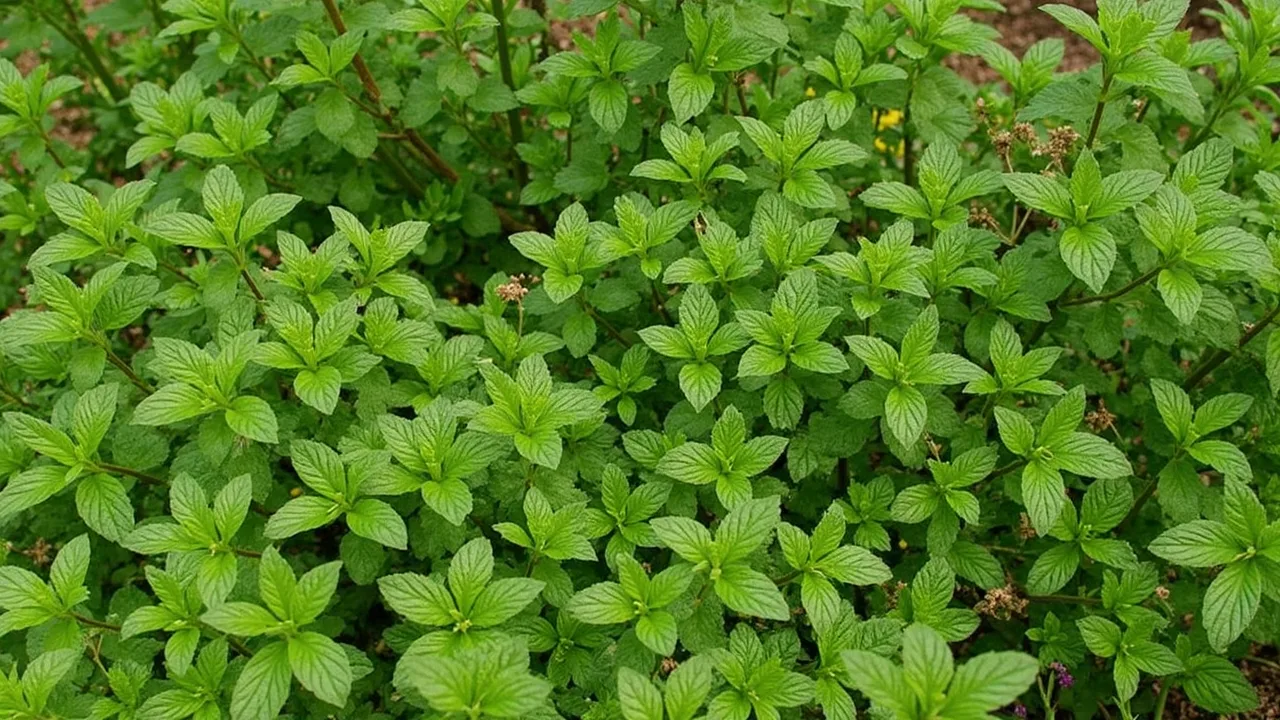
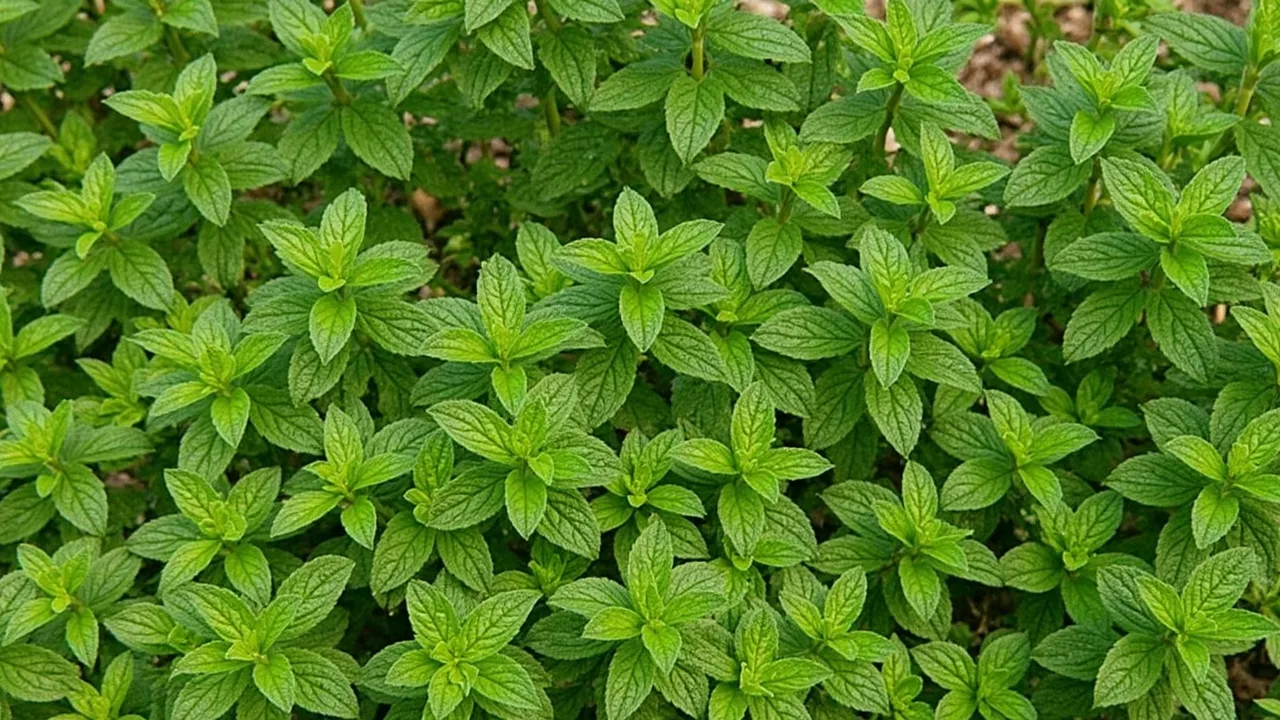
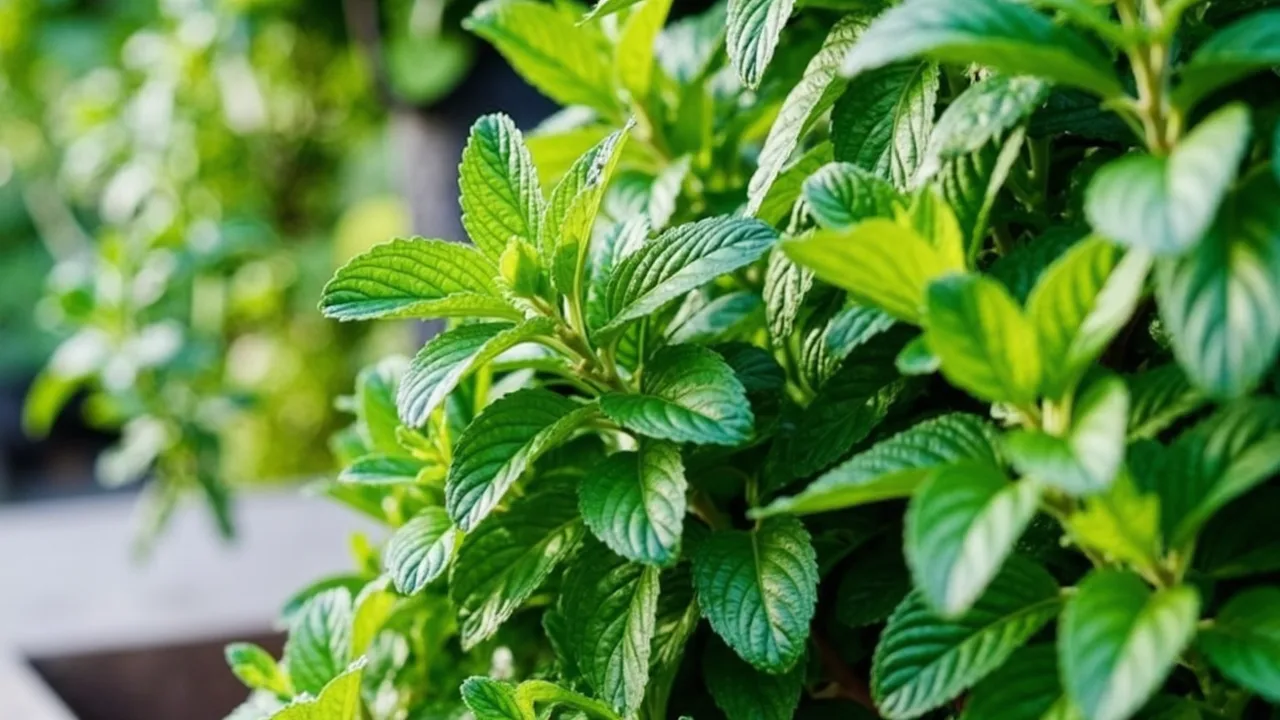
Mint is a creeping, rhizomatous perennial that typically grows 30 to 90 cm tall depending on species and growing conditions. Stems are square in cross-section, a characteristic of the mint family, and bear opposite, decussate leaves. Leaves are simple, ovate to lanceolate, with serrated margins and a pronounced network of veins; the surface may be smooth, lightly hairy, or distinctly downy depending on the species. Crushing or bruising the leaves releases the volatile oils that give the plant its scent.
Flowers appear in summer, usually from June to August in the UK, carried in dense whorls (verticillasters) arranged on terminal spikes. Individual flowers are small, two-lipped, and typically pale lilac, pink, or white. They are highly attractive to bees, hoverflies and other pollinators, and a flowering patch of mint will usually be alive with insect activity in mid-summer. After flowering the spent spikes can be cut back to keep the plant tidy and to encourage a fresh flush of leaf.
The root system is fibrous at the surface but the true spread comes from white or pale pink rhizomes that run horizontally through the upper layers of soil, sending up new shoots at intervals. This rhizomatous habit is the basis for both the plant's usefulness as a ground cover and its reputation as a garden thug.
Growing Conditions
Mint grows well throughout the United Kingdom and is hardy in all but the most exposed or waterlogged sites. The Royal Horticultural Society lists several commonly grown mints, including spearmint and apple mint, in the H6 to H7 hardiness category, which corresponds to tolerating winter temperatures down to roughly -20 °C across most of the British Isles; the precise rating should be checked against the species or cultivar being grown.
The plant prefers a moist but well-drained soil of neutral to slightly acid pH, and tolerates clay, loam and lighter soils provided they do not dry out completely in summer. Sunlight requirements are flexible: full sun produces the strongest aromatic oils, but mint is one of the few culinary herbs that crops reliably in partial or light shade, which is useful on north-facing walls and under established fruit bushes. Avoid planting in boggy ground, where the rhizomes may rot in winter.
For UK growers, mint typically breaks dormancy in March, produces its first substantial flush of usable leaves from late April, and continues cropping into October before dying back with the first hard frosts. Flowering peaks in July.
Planting and Care
Watering. Mint prefers consistently damp soil. Water newly planted specimens two to three times a week during dry spells in their first summer, and mulch with compost or leaf mould to conserve moisture. Established plants in open ground are usually self-sufficient except in prolonged drought, but container-grown mint dries out rapidly and may need watering daily in warm weather. Plants grown in pots benefit from a layer of crocks at the base and a moisture-retentive peat-free compost.
Feeding. Mint is not a heavy feeder. A single top-dressing of well-rotted manure or garden compost in spring is usually sufficient for ground-grown plants. Container-grown mint should be given a dilute liquid feed of a balanced fertiliser every four to six weeks during the growing season, as the limited volume of compost is quickly exhausted. Avoid high-nitrogen feeds, which produce lush leaf at the expense of essential-oil concentration.
Pruning. Cut plants back hard after flowering, typically in late August, removing the spent flower spikes and roughly a third of the top growth. This encourages a fresh flush of leafy growth that can be harvested into autumn. A second, lighter tidy in early spring removes any winter-damaged stems. Regular harvesting by pinching out shoot tips has the same effect and keeps plants compact.
Propagation. Mint is most easily propagated by division in autumn or early spring. Lift an established clump, cut the rootball into sections with a sharp spade, and replant the healthiest pieces. Stem cuttings root readily in water or in a pot of moist compost at almost any time between late spring and early autumn. Seed-raised mint does not come true to type for most cultivars, so division or cuttings are the preferred methods for named varieties. Rhizome cuttings taken in winter and laid horizontally on compost also root successfully.
Seasonal care. In March cut back old growth and apply a mulch. Watch for slug damage on emerging shoots in damp conditions. Lift and divide congested clumps every three to four years to maintain vigour, replanting only the youngest, outermost pieces and discarding the tired centre. Container-grown plants benefit from being knocked out of their pot, divided, and repotted into fresh compost every two years, as the rhizomes quickly fill the available space and starve the plant.
Common Problems
Rust (Puccinia menthae). The most frequently reported disease of mint in the UK. Small orange, brown, or yellow pustules appear on the undersides of leaves in late summer, with corresponding pale spots above. Infected plants should be cut to the ground and the new growth monitored; severely affected specimens are best replaced with rust-resistant cultivars or with fresh stock grown from seed.
Powdery mildew. A white, dusty coating on leaves in dry, crowded conditions, especially on pot-grown plants that have become congested. Improve air circulation, avoid overhead watering, and thin overgrown clumps. Discard badly affected plants.
Slugs and snails. Young spring growth is highly attractive to molluscs, and damage can be severe in damp seasons. The standard controls (night-time hand-picking, beer traps, ferric phosphate pellets, or copper tape around pot rims) are all effective.
Leaf spot. Various fungal leaf spots cause brown or black markings, usually in wet seasons. Remove and destroy affected leaves, water at the base of the plant, and clear away surrounding debris in autumn.
Invasive spread. The single most common complaint about mint is its tendency to colonise beds and paths via underground rhizomes. The reliable long-term solution is containment: grow mint in a large pot, a bottomless bucket sunk into the border, or a dedicated raised bed with a root barrier. Edging inserted at least 20 cm deep around an in-ground planting slows but rarely stops determined rhizomes.
Popular Varieties
Mentha spicata (garden or spearmint). The standard kitchen mint in much of the UK, with bright green, sharply pointed leaves and a clean, sweet flavour. Forms a tidy clump 60 to 90 cm tall and is widely sold in garden centres. The closely related cultivar 'Moroccan' is favoured for tea-making.
Mentha × piperita (peppermint). A naturally occurring hybrid between spearmint and water mint, distinguished by darker, often purple-tinged leaves and a strong menthol aroma. Includes the named clone 'Black Mitcham', an old English variety still grown commercially. Peppermint prefers slightly damper soil than spearmint and is the mint most often used for medicinal teas.
Mentha suaveolens (apple mint). Rounded, softly hairy, grey-green leaves with a mild, fruity scent. The variegated form 'Variegata' (pineapple mint) has cream-and-green leaves and a slightly more delicate flavour; both are popular for ornamental planting and for use with fruit salads and cold drinks.
Mentha × gracilis (ginger mint). A hybrid often sold as 'Variegata', with golden-streaked leaves and a warm, slightly spicy aroma. Useful in Asian cookery and for herbal teas.
Mentha pulegium (pennyroyal). A low-growing, creeping species historically used as a strewing herb. Less common in modern kitchens but still listed by specialist herb nurseries. Note: pennyroyal contains the ketone pulegone, which is toxic in quantity; culinary use is not recommended and it should be kept away from grazing animals.
When selecting plants, buy from a reputable UK herb nursery to ensure correctly named, virus-free stock, as mint is prone to viral degeneration that reduces flavour and vigour over many years of vegetative propagation.
Cultivars and Varieties
| Cultivar | Height | Flower | Notes | AGM |
|---|---|---|---|---|
| 'Mentha arvensis' | — | — | cornmint | |
| 'Mentha × piperita' | 100 cm | white to purple | peppermint, chocolate mint | |
| 'Mentha spicata' | — | — | native spearmint | |
| 'Mentha x gracilis' | — | — | Scotch spearmint, ginger mint |
Pests and Diseases
| Problem | Symptoms | Management |
|---|---|---|
| invasive growth | — | plant in deep, bottomless containers or above ground in tubs and barrels |
| allergic reaction | inducing symptoms such as a rash | — |
Or browse the full plant problem solver to diagnose an issue by symptom.
Mint in our guides
- Container Gardening for Beginners
- How to Create a Windowsill Herb Garden
- How to Grow Broad Beans
- Creating a Herb Garden
- Designing a Wildlife Pond
Recommended Products
GardenWizz earns a commission from qualifying purchases made through affiliate links on this page (including links within the article) — as an Amazon Associate, and from Thompson & Morgan via the Awin network. This does not affect the price you pay. See our disclaimer for details.