Salvia
Salvia nemorosa
The Gardening Year
Best months in UK gardens · full planting calendar →
🖨 Printable care card (PDF)At a Glance
| Botanical name | Salvia nemorosa |
|---|---|
| Common name(s) | Salvia |
| Family | Lamiaceae |
| Plant type | perennial |
| Height × Spread | 50–100 cm × 10–50 cm |
| Position | Full sun, Partial shade |
| Soil | light, moderately fertile, humus-rich, moist but well-drained soil |
| Flowering | June–August |
| Toxicity | No specific toxicity is listed by the RHS. This is not a guarantee of safety — check with a vet or the ASPCA before pets or children eat any plant. |
| Native range | central Europe and Western Asia |
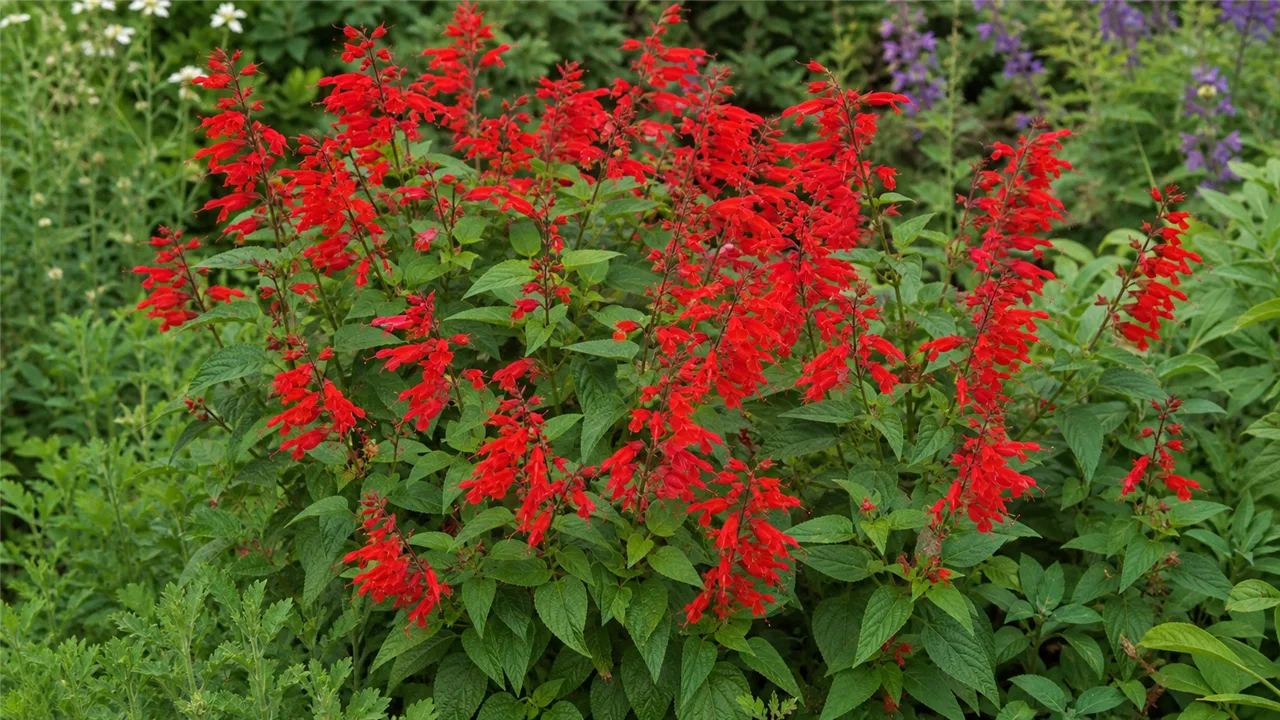
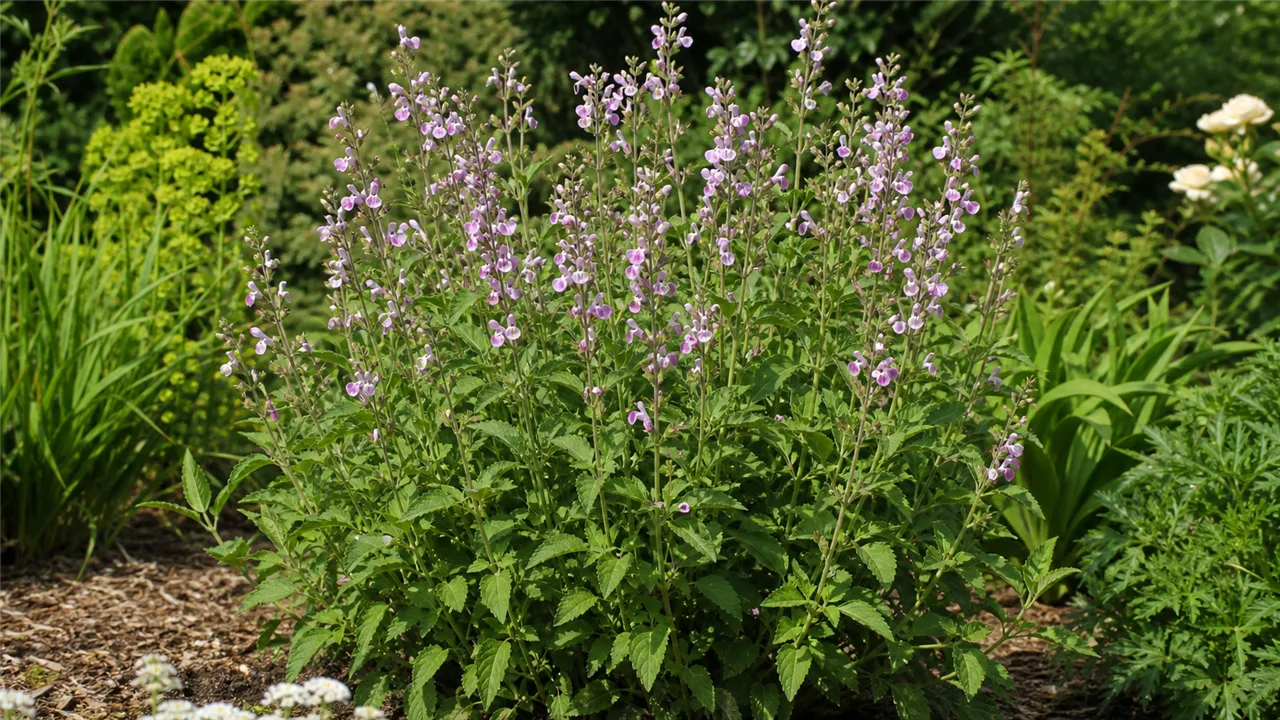
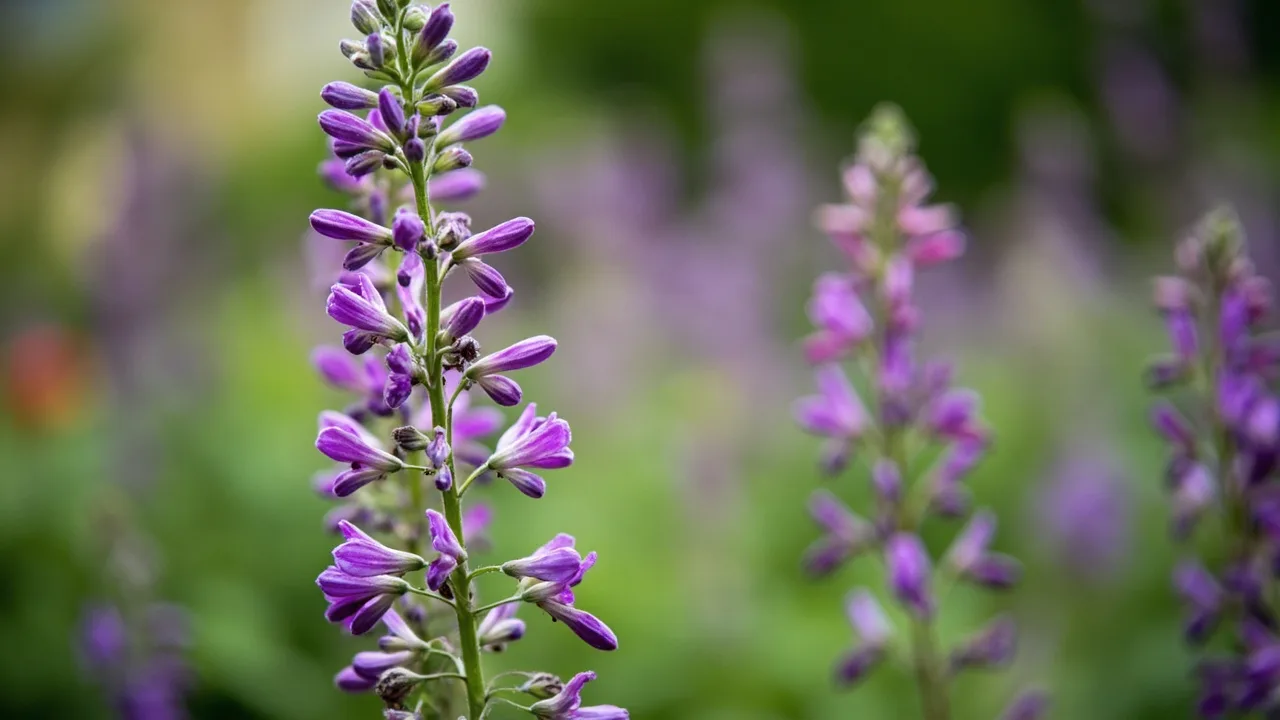
From early summer, Salvia nemorosa sends up dense, upright flower spikes that give a sunny UK border colour, rhythm and a valuable source of nectar. This clump-forming herbaceous perennial is especially effective in repeated groups among ornamental grasses, roses and other drought-tolerant perennials.
Overview
Salvia nemorosa is a deciduous perennial in the mint family, Lamiaceae, native from central Europe into western Asia. It forms a slowly widening crown rather than running through the border, and its combination of aromatic foliage and narrow flower spires suits cottage gardens, gravel gardens, prairie-style planting and formal schemes. The two-lipped flowers occur in close whorls around branching stems and are commonly violet-blue, although cultivated forms extend the palette to pink and white.
Its main flowering display usually begins in June. Cutting off the first faded spikes can prompt fresh growth and a second flush later in summer, keeping the plant useful beyond the brief peak of many early perennials. Bees and other pollinating insects regularly visit the nectar-rich flowers. The upright structure also contrasts well with rounded rose blooms, flat-headed achilleas and the fine foliage of grasses.
The common name woodland sage can be misleading in garden terms: this is not a plant for deep, damp shade. It performs best in an open, sunny position with drainage good enough to prevent water sitting around the crown in winter. Once established, it copes with short dry periods, but newly planted specimens need consistent moisture while their roots develop.
Appearance
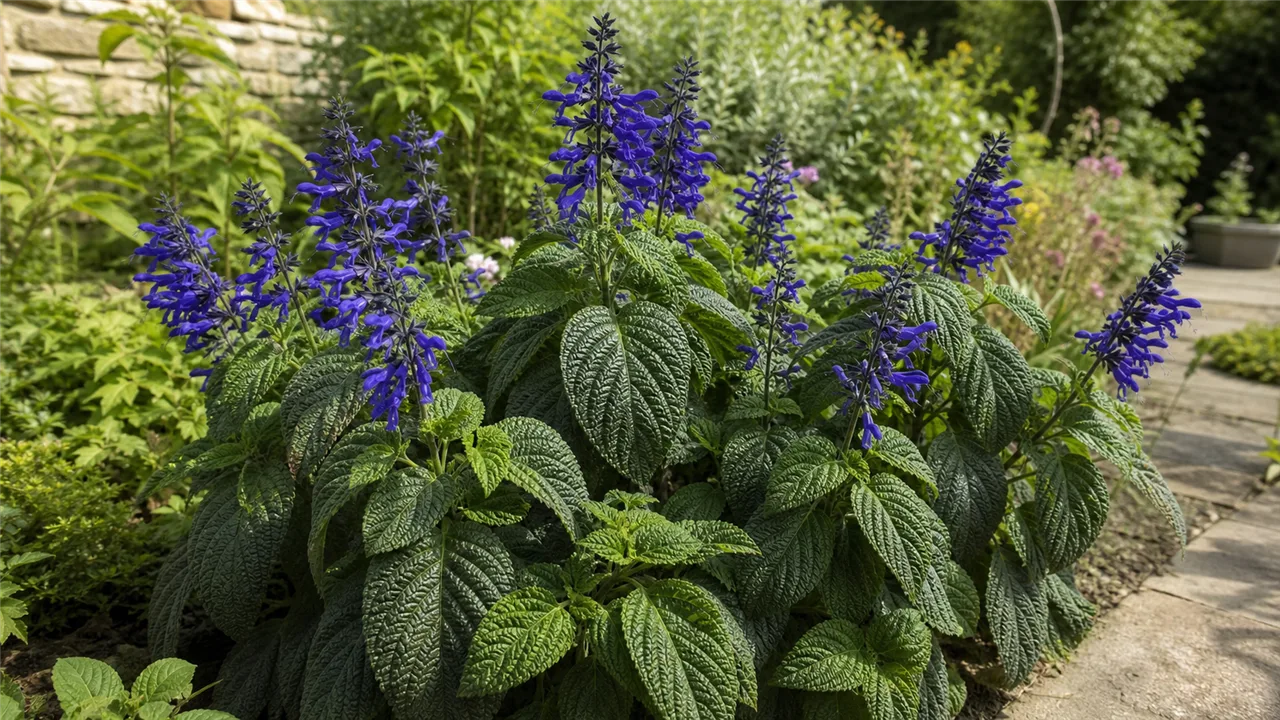
The plant emerges from a compact woody crown in spring, producing a basal mass of rough, grey-green to mid-green leaves. Individual leaves are opposite on the stem, aromatic when rubbed, and usually oblong to lance-shaped with scalloped or finely toothed margins. This low mound of foliage is typically neat enough for the front or middle of a border, although its exact height and spread depend greatly on the cultivar.
From late spring, square stems rise above the leaves and carry slender racemes of small, hooded flowers. Coloured calyces often remain attractive after individual blooms fall, prolonging the visual effect. Purple-stemmed selections such as 'Caradonna' provide particularly strong vertical accents because the dark stems remain conspicuous between flowering flushes.
The first display is generally strongest in June and July. Prompt deadheading can produce further spikes during August and sometimes September, depending on the cultivar, site and weather. Flowers range from deep violet and blue-purple to soft pink and white. Plants are herbaceous: the flowering stems and foliage decline in autumn, leaving a dormant crown below ground until spring.
A mature clump commonly stands between 45cm and 75cm high and spreads 30-60cm. Taller forms and the species can approach 1m, while compact selections remain suitable for border edges and containers. The habit is naturally upright but may become loose or floppy in rich soil, too much shade or after heavy rain. Leaner soil and unobstructed light generally produce stockier growth.
Growing Conditions
Choose a position receiving at least six hours of direct summer sun. Light partial shade is tolerated, particularly in southern England, but plants in shade usually lean towards the light and carry fewer flowers. An open site with reasonable air movement helps wet leaves dry promptly. Shelter from severe, drying winds is useful on exposed northern or coastal plots, especially while plants establish.
Drainage is the key soil requirement. Salvia nemorosa grows in chalk, loam or sandy ground and accepts acid, neutral or alkaline conditions, provided water can escape. Improve heavy clay before planting by opening a broad area with well-rotted organic matter and grit where appropriate; simply filling a small planting hole with grit can create a sump. On persistently wet ground, use a raised bed or mound the soil so the crown sits above the surrounding level.
Moderately fertile soil gives the best balance of foliage and flowers. Very rich ground, or repeated high-nitrogen feeding, encourages soft stems that are more likely to flop and may flower less densely. In poor sandy soil, incorporate garden compost to improve moisture retention without sacrificing drainage. A light spring mulch conserves moisture, but it should not cover the crown.
Spring, from March to May, is the most reliable planting period across the UK because roots can establish before winter. Container-grown plants can also go in during September where soil remains warm and drains freely. Avoid planting into frozen, waterlogged or baked-dry soil. Space most cultivars 35-45cm apart, widening the gap for vigorous forms, so air can circulate through mature clumps.
Established plants tolerate some drought, but prolonged dryness during stem extension can shorten the display. Containers require more attentive watering and should have generous drainage holes. Use a peat-free loam-based compost mixed with coarse grit, and raise pots on feet during wet winter weather.
Planting and Care
Water the pot before planting, then dig a hole roughly twice the width of the root ball but no deeper. Tease out congested outer roots, set the crown level with the surrounding soil and firm gently. Water thoroughly to settle the soil. Keep newly planted salvias evenly moist through their first growing season, checking them during dry spells rather than watering automatically every day.
Once established in open ground, water deeply only during extended dry weather. Allow the surface to begin drying between waterings; permanently wet soil creates a greater risk than occasional dryness. Container plants may need frequent checks in summer. Water at compost level, avoiding a constant spray over foliage and flowers.
Apply a modest layer of well-rotted garden compost around the clump in March or April, leaving the crown uncovered. Plants in ordinary border soil rarely need additional fertiliser. In containers, use a balanced liquid feed at the label rate during active growth; excessive feeding produces leafy, lax plants.
Deadhead as the first spikes fade in July. Cut each spent stem back to a healthy pair of leaves or to fresh basal growth, rather than merely removing its tip. This keeps the clump tidy and often encourages a second display. Do not prune it as a woody shrub. Leave some late stems standing if their structure is wanted over winter, then cut all old growth back close to the crown in February or March before new shoots lengthen.
Divide overcrowded clumps every three to five years, preferably in March or April. Lift the plant, split the crown into vigorous rooted sections with two forks or a clean knife, discard the tired centre and replant promptly. Water divisions well. Basal or softwood cuttings taken in spring are useful for preserving named cultivars: remove non-flowering shoots, trim below a node and root them in a free-draining propagation compost. Seed can be variable and will not reliably reproduce a named cultivar.
In colder or wetter districts, seasonal care chiefly means keeping the crown drained. Remove fallen leaves that form a sodden mat, avoid thick winter mulch directly over the plant, and delay division until spring. In dry eastern gardens, by contrast, a spring organic mulch around rather than on the crown helps retain enough moisture for strong flowering.
Common Problems
Salvia nemorosa is generally trouble-free when planted in sun and free-draining soil. The most serious failures usually result from site conditions rather than a specific pest.
Crown or root rot causes shoots to yellow, collapse or pull away easily from a soft, darkened base. Waterlogging and winter wet are the usual causes. Remove badly affected plants and improve drainage before replanting; moving the replacement to a raised bed is safer than repeatedly treating the same damp spot.
Slugs and snails may graze tender shoots as they emerge in March and April. Check after dark, remove hiding places around the crown and use wildlife-conscious controls where damage is severe. Established plants normally outgrow light grazing, but small spring divisions may need temporary protection.
Powdery mildew appears as a pale, floury coating, particularly where plants are crowded or roots have been dry while the air is humid. Improve spacing, water the soil during prolonged drought and remove the worst affected leaves. Watering at the base and dividing dense old clumps reduces recurrence.
Spittlebugs sometimes leave conspicuous white froth on stems in late spring. The sap-feeding nymph inside rarely causes significant damage to a healthy plant. It can be removed by hand or dislodged with water; insecticide is usually unnecessary.
Flopping or sparse flowers usually indicates shade, excessive fertility or competition for light. Move the plant to a sunnier site during spring, reduce high-nitrogen feeding and cut faded stems promptly. Avoid staking an unsuitable, overfed clump as a permanent solution.
Young foliage may occasionally attract aphids, while capsid bugs can leave small distorted patches or holes. Healthy plants generally tolerate minor damage. Encourage predators, inspect shoot tips regularly and remove heavily infested growth before considering further control.
Popular Varieties
- 'Caradonna' has violet-blue flowers on striking dark purple stems. Its narrow, upright habit works well among grasses and pale roses, and it usually reaches about 50-60cm.
- 'Ostfriesland' (also sold as 'East Friesland') is a compact, long-established selection with rich violet-purple spikes, typically around 45-60cm high. It suits the front half of a sunny border.
- 'Amethyst' produces tall, slender spikes of pinkish-purple flowers, bringing a softer colour than the deep blue cultivars. Allow roughly 45cm between plants.
- 'Caradonna Compact' offers the dark stems and violet flowers associated with 'Caradonna' on a shorter plant, useful for smaller borders and containers.
- 'Sensation White' ('Florsalwhite') forms a compact clump with white summer flowers and grey-green, sage-scented foliage. It is effective against dark-leaved companions.
- 'Pink Beauty' carries rose-pink flower spikes that deepen towards reddish purple, giving a warm alternative to the usual violet-blue forms.
Named cultivars are best propagated by division or cuttings because seedlings may differ in height, habit and flower colour. Availability changes between seasons, so check reputable UK nurseries and confirm the full cultivar name on the label before buying.
Sources & Further Reading
- RHS: Salvia nemorosa plant profile, accessed 22 July 2026.
- RHS: How to grow salvias, accessed 22 July 2026.
- RHS: Salvia cuttings, accessed 22 July 2026.
- RHS: Salvia nemorosa 'Caradonna', accessed 22 July 2026.
- BBC Gardeners' World: Salvia nemorosa 'Ostfriesland', accessed 22 July 2026.
- BBC Gardeners' World: Salvia nemorosa 'Caradonna', accessed 22 July 2026.
Cultivars and Varieties
| Cultivar | Height | Flower | Notes | AGM |
|---|---|---|---|---|
| 'Amethyst' | — | — | RHS AGM (H7) | ✓ |
| 'Caradonna' | — | — | RHS AGM (H7) | ✓ |
| 'Lubecca' | — | — | RHS AGM (H7) | ✓ |
| 'Ostfriesland' | — | — | RHS AGM (H7) | ✓ |
| 'Pusztaflamme' | — | — | RHS AGM (H7) | ✓ |
Pests and Diseases
| Problem | Symptoms | Management |
|---|---|---|
| Powdery mildew | A white, dusty fungal growth appears on leaves and stems, potentially causing distortion. | Ensure good air circulation and apply a fungicide if severe; resistant cultivars are preferred. |
| Vine weevil | Notched leaf margins above ground and root damage below, leading to wilting or collapse. | Check roots when buying potted plants and use biological nematodes in soil during autumn. |
| Slugs and snails | Irregular holes chewed into young leaves and stems, often accompanied by slimy trails. | Use physical barriers like copper tape or apply iron phosphate-based pellets around plants. |
| Root rot | Plants wilt and decline despite moist soil due to waterlogged, heavy conditions. | Plant in well-drained soil and avoid overwatering; improve drainage with grit if necessary. |
| Aphids | Clusters of small soft-bodied insects on new growth, causing sticky honeydew and curled leaves. | Spray off with a strong jet of water or introduce natural predators like ladybirds. |
For step-by-step help, read Controlling Aphids Naturally, Dealing with Slugs and Snails and Treating Powdery Mildew. Or browse the full plant problem solver to diagnose an issue by symptom.
Salvia in our guides
Recommended Products
GardenWizz earns a commission from qualifying purchases made through affiliate links on this page (including links within the article) — as an Amazon Associate, and from Thompson & Morgan via the Awin network. This does not affect the price you pay. See our disclaimer for details.