Sabra Spike Sage
Salvia confertiflora
The Gardening Year
Best months in UK gardens · full planting calendar →
🖨 Printable care card (PDF)At a Glance
| Botanical name | Salvia confertiflora |
|---|---|
| Common name(s) | Sabra spike sage |
| Family | Lamiaceae |
| Plant type | perennial |
| Height × Spread | 100–150 cm × 10–50 cm |
| Position | Full sun |
| Soil | Light, fertile, free-draining soil that retains some moisture |
| Flowering | August–September |
| Toxicity | — |
| Native range | Brazil |
Overview
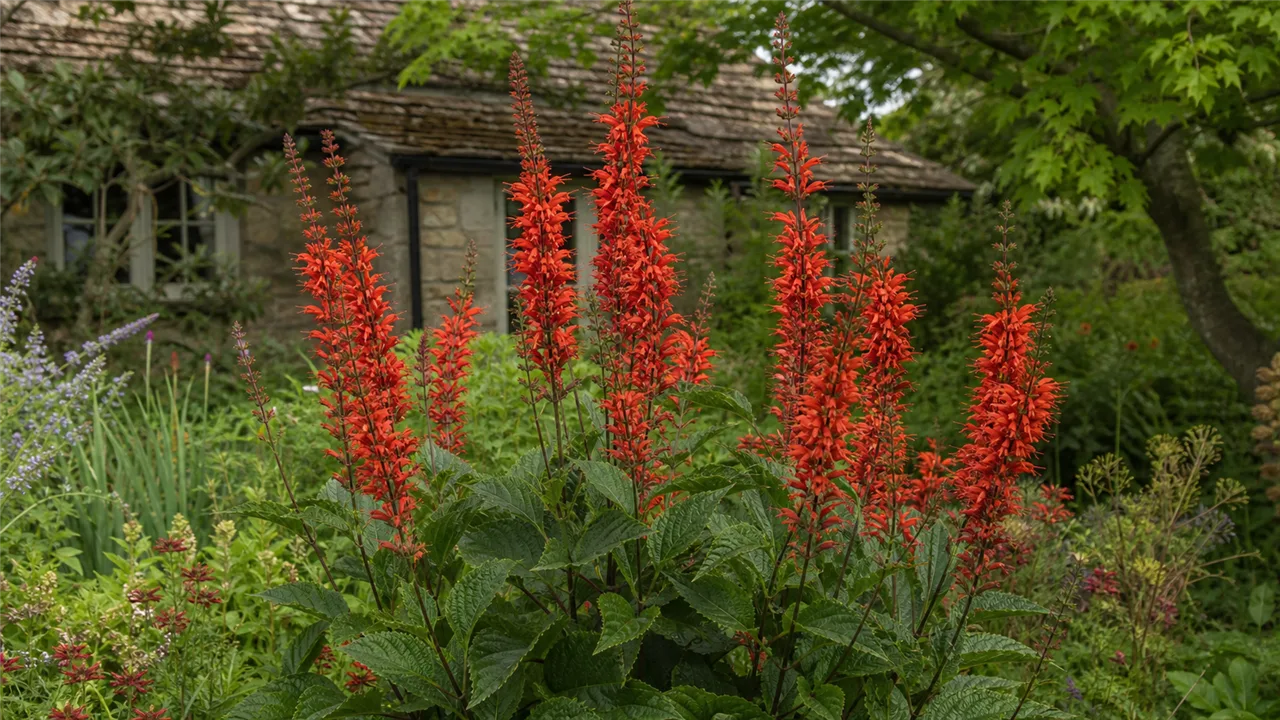
Salvia confertiflora is a dramatic, late-flowering sage grown for its tall stems of closely packed orange-red flowers and large, aromatic leaves. Native to Brazil, it brings warm colour and strong vertical structure to sheltered UK borders from late summer into autumn. It is best treated as a tender perennial: in mild, protected gardens it may survive outdoors with winter protection, while elsewhere it is safer in a container that can be moved under cover or propagated each year as insurance.
This species suits courtyard beds, sheltered mixed borders and large containers. Its scale is important when planning a planting scheme: it can rise above dahlias, cannas and other late-season perennials, and the flower spikes are most effective where they can be seen against dark foliage or a plain wall. It is less suitable for exposed, cold or waterlogged sites.
Appearance
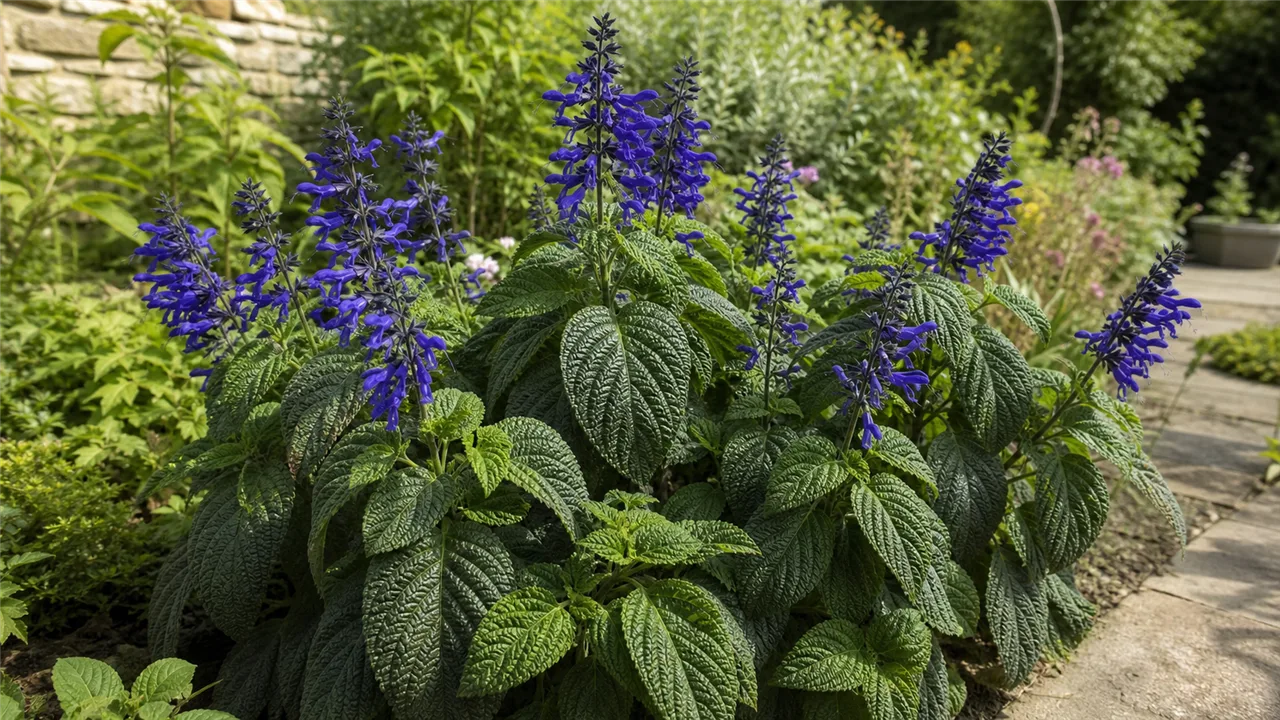
The plant forms a substantial, upright clump with branching, often softly hairy stems. Its leaves are large, broadly ovate to heart-shaped and toothed at the margins. They are medium to dark green, sometimes with a slightly quilted surface, and release the characteristic resinous scent of many salvias when brushed or crushed. The generous foliage gives the plant a lush, almost subtropical presence well before the flowers open.
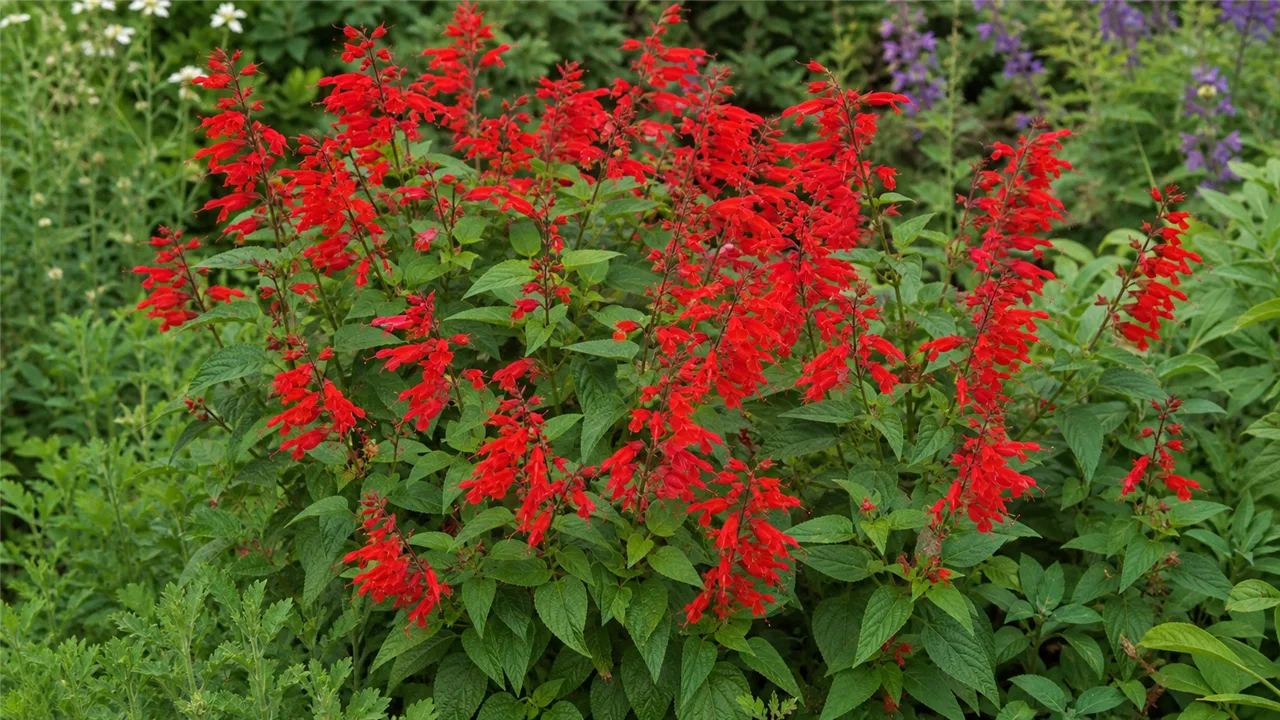
Flowering stems lengthen above the foliage in late summer. Each carries a narrow, crowded inflorescence made up of many small tubular flowers set closely around the stem. The flowers are usually orange-red to scarlet, while the calyces and flowering stems may appear deeper red-brown or rusty, creating a velvety, two-toned effect. The individual blooms are modest, but their number and dense arrangement produce conspicuous spikes.
In a warm season the display can continue into October, particularly in a sheltered urban garden or greenhouse. Cool weather slows growth, and the first significant frost usually ends the outdoor display. The flowers are attractive to bees and other pollinating insects active late in the season, although activity naturally varies with weather and location.
Growth is vigorous when warmth, moisture and nutrients are available. Plants bought or raised early can reach well over head height by autumn. In containers they usually remain smaller, especially if root space or water is restricted. Stems can become top-heavy, so a position protected from strong wind is preferable; discreet supports are useful before the spikes have fully developed.
Growing Conditions
Choose the warmest practical position, ideally in full sun with shelter from cold winds. A south- or west-facing wall stores daytime warmth and can prolong flowering. Light partial shade is tolerated, especially in southern Britain, but deep shade produces softer, less floriferous growth. In exposed northern or upland gardens, growing in a large movable pot is generally more dependable than attempting permanent border cultivation.
The soil should be fertile and moisture-retentive without remaining saturated. Incorporate well-rotted garden compost into light or impoverished ground before planting. Heavy clay needs structural improvement and a planting position that drains freely during winter; persistent cold wet is particularly damaging. A neutral to mildly acidic soil is suitable, but drainage and warmth matter more than a narrowly defined pH.
During active growth, Salvia confertiflora uses considerable water. Border plants benefit from an organic mulch applied in spring after the soil has warmed, leaving a small clear space around the stems. The mulch reduces evaporation and adds organic matter. Container plants require a peat-free multipurpose compost with added loam or fine bark for stability and drainage. A broad, heavy pot helps balance mature top growth.
Plant outdoors only after frost risk has passed and the plant has been hardened off, commonly in late May or early June in much of the UK. In colder districts, wait until early or mid-June. Allow roughly 90–120 cm between plants and neighbouring vigorous perennials. This spacing accommodates the mature spread and permits air movement through the large leaves.
Although the structured hardiness field and badge describe its rating, practical winter performance depends strongly on microclimate, drainage and the duration of cold. Coastal south-west England and sheltered London gardens may offer better prospects than exposed inland sites. Even where a parent plant is left outside, rooted cuttings kept under cover provide sensible backup.
Planting and Care
Water newly planted specimens thoroughly and keep the root zone evenly moist through their first summer. Established border plants tolerate brief dry periods, but prolonged drought causes drooping, scorched leaf margins and fewer flowers. Water deeply rather than applying frequent shallow sprinkles. Pots may need daily attention in warm, windy weather; never leave them standing continuously in a saucer of water.
Feed border plants in spring with a balanced, general-purpose fertiliser if the soil is not already rich. Once buds begin to form, an occasional high-potash liquid feed can support flowering, particularly in containers. Avoid repeated high-nitrogen feeding, which encourages luxuriant leaves and weak stems at the expense of bloom. Refresh the top layer of compost in permanent large pots each spring and repot when roots become congested.
Pinching out the shoot tips of young plants once or twice in late spring encourages branching and creates a fuller specimen, but stop by early summer so flowering is not delayed unnecessarily. This species flowers late, and severe pruning during summer can remove the season’s developing display. Remove broken or wind-damaged stems cleanly. In outdoor plants retained over winter, delay major cutting until spring, when the extent of surviving growth is clear. Cut dead stems back to healthy growth and avoid damaging emerging basal shoots.
Because the plant is tender, seasonal care is central to success. Before the first expected autumn frosts, move container plants to a bright, frost-free greenhouse or conservatory. Reduce watering as growth slows, keeping the compost only lightly moist, and stop routine feeding. Good ventilation helps prevent grey mould and other fungal problems. Large plants can be shortened enough to fit their winter quarters, but retain healthy leafy growth where practical.
For a border specimen, apply a deep, dry mulch over the root area after growth has been checked by cold weather, without packing damp material tightly against the crown. A rain shelter can help in wet districts, provided air continues to circulate. Protection is not a guarantee in severe winters, which is why propagation is valuable.
Softwood or semi-ripe cuttings are the simplest method. From May to August, take non-flowering shoot tips about 7–10 cm long, cutting just below a node. Remove the lower leaves and insert the cuttings around the edge of a pot filled with free-draining propagation compost. Water, cover loosely to maintain humidity, and keep in bright indirect light with gentle warmth. Ventilate regularly and pot each cutting separately after roots have formed. Overwinter young plants in bright, frost-free conditions with restrained watering.
Seed is sometimes available, but named forms do not necessarily come true and plants may flower later than those raised from cuttings. Sow seed under warm cover in spring using fine, free-draining compost; transplant seedlings individually once large enough to handle. Where seed availability or viability is uncertain, vegetative propagation gives a more predictable result.
Common Problems
Slugs and snails can damage young shoots soon after planting. Inspect around pots and dense mulch, and use barriers, traps or other integrated controls before severe injury occurs. Once stems have toughened and risen above ground level, damage is usually less conspicuous.
Aphids may cluster on soft shoot tips and developing flower stems. Small infestations can be removed by hand or with a firm jet of water. Encourage natural predators and avoid unnecessary broad-spectrum insecticides, particularly once pollinators are visiting the flowers. Glasshouse whitefly and red spider mite are possible during warm, dry periods under cover; regular inspection of leaf undersides allows early control.
Grey mould can affect overwintered plants where dead leaves, cool damp conditions and still air coincide. Remove fallen or decaying material promptly, space plants so air can move between them, and water the compost rather than wetting the foliage. Root and crown rots are more likely in saturated winter compost or poorly drained border soil. Affected plants often wilt despite wet ground, and badly rotted roots rarely recover.
Tall growth is vulnerable to wind-rock and snapped stems. Install canes, a support ring or twiggy pea sticks while the plant is still manageable, rather than tying a mature specimen tightly after damage begins. Stems leaning towards light indicate that the site is too shaded or that surrounding plants are competing strongly.
Failure to flower is most often linked to a cool summer, insufficient sun, drought, excessive nitrogen or pruning too late in the season. Starting plants early under cover can extend the UK growing period. Do not, however, place soft greenhouse growth outside abruptly: harden it off gradually over seven to fourteen days to prevent scorch and growth checks.
Yellow lower leaves can result from temporary drought, depleted container compost or waterlogging. Check moisture below the surface before adding water or fertiliser. Some leaf loss in winter quarters is normal as light levels fall, but extensive blackening after cold exposure signals tissue damage. Retain the plant under protection until spring growth shows which stems remain alive.
Popular Varieties
Salvia confertiflora is most commonly sold as the species rather than through a broad range of named cultivars. Three real cultivated forms associated with this species are known, but availability in UK nurseries is variable and names should be checked carefully against current supplier descriptions.
- ‘Burgundy’ is selected for particularly dark, wine-coloured flowering stems and calyces, which intensify the contrast with its orange-red flowers.
- ‘Red Velvet’ is a name used for a rich red-flowered selection with the characteristic long, densely crowded spikes. It may also appear in horticultural listings as a descriptive selection name, so provenance is worth confirming.
- ‘Purple Velvet’ has darker, purplish tones in the calyces and stems, giving the inflorescences a dusky appearance. Stock is uncommon and may be offered only by specialist salvia collections.
As naming and supply are less settled than for many widely cultivated garden salvias, the straight species is often the most reliable purchase. Compare mature size, flower colour and source records rather than assuming similarly descriptive trade names are identical. Whatever form is chosen, the essential treatment is the same: provide warmth, shelter, fertile well-drained soil and protection through the UK winter.
Pests and Diseases
| Problem | Symptoms | Management |
|---|---|---|
| Aphids | Clusters of small soft-bodied insects on new growth causing distorted leaves and sticky honeydew. | Squash by hand or spray with a strong jet of water; use insecticidal soap if infestation is severe. |
| Powdery mildew | White powdery fungal growth on leaves and stems, often in humid conditions with poor air circulation. | Improve airflow by spacing plants; apply a sulphur-based fungicide or neem oil at first sign. |
| Slugs and snails | Irregular holes chewed in leaves and silvery slime trails on foliage and soil surface. | Use beer traps, copper tape barriers, or iron phosphate-based slug pellets around the base. |
| Root rot | Yellowing, wilting leaves despite moist soil, often accompanied by a foul smell from the compost. | Ensure well-draining soil and avoid overwatering; repot in fresh compost if root damage is visible. |
| Red spider mites | Fine webbing on undersides of leaves and stippled yellow spots on foliage, especially in dry indoor air. | Increase humidity around the plant and spray with water or horticultural oil to dislodge mites. |
For step-by-step help, read Controlling Aphids Naturally, Dealing with Slugs and Snails and Treating Powdery Mildew. Or browse the full plant problem solver to diagnose an issue by symptom.
Recommended Products
GardenWizz earns a commission from qualifying purchases made through affiliate links on this page (including links within the article) — as an Amazon Associate, and from Thompson & Morgan via the Awin network. This does not affect the price you pay. See our disclaimer for details.