Leaf-Ring Begonia
Begonia annulata
The Gardening Year
Best months in UK gardens · full planting calendar →
🖨 Printable care card (PDF)At a Glance
| Botanical name | Begonia annulata |
|---|---|
| Common name(s) | Leaf-ring begonia |
| Family | Begoniaceae |
| Plant type | perennial |
| Height × Spread | 10–50 cm × 10–50 cm |
| Position | Partial shade |
| Soil | well-drained growing medium that is neither constantly wet nor allowed to dry out completely |
| Flowering | June–July |
| Toxicity | potentially toxic in large quantities due to the prevalence of oxalic acid |
| Native range | eastern Himalaya, Bangladesh, Assam in India, Myanmar, and Vietnam |
Leaf-ring begonia (Begonia annulata) is a compact, rhizomatous species grown chiefly for its striking silver-banded leaves. Native to wet tropical habitats from the eastern Himalaya into Indo-China, it suits a bright room, heated conservatory or protected greenhouse in the UK. Its combination of patterned foliage, red-hairy leaf stalks and modest size makes it an unusual specimen for a decorative pot.
Overview
Begonia annulata belongs to the Begoniaceae and is an accepted botanical species rather than a horticultural hybrid. Its natural range extends through Assam, Bangladesh, the East Himalaya, Myanmar and Vietnam. There it occupies humid, wet tropical habitats, often in the filtered light and sheltered conditions associated with forest vegetation. Those origins explain its preference for warmth, moderate humidity and protection from intense sunshine.
In Britain, leaf-ring begonia should be treated as a specialist foliage houseplant, not a year-round border plant. A bright east- or north-facing room can work well, as can a heated conservatory or greenhouse with filtered midday sun. It may stand outdoors in sheltered shade during settled warm weather, but avoid rapid temperature changes, strong sun and drying wind. Bring it under cover well before cool autumn conditions develop.
The species has a naturally compact presence and is useful where a large cane begonia would be unwieldy. Its ornamental value comes primarily from the leaves, although the delicate flowers add seasonal interest.
Appearance
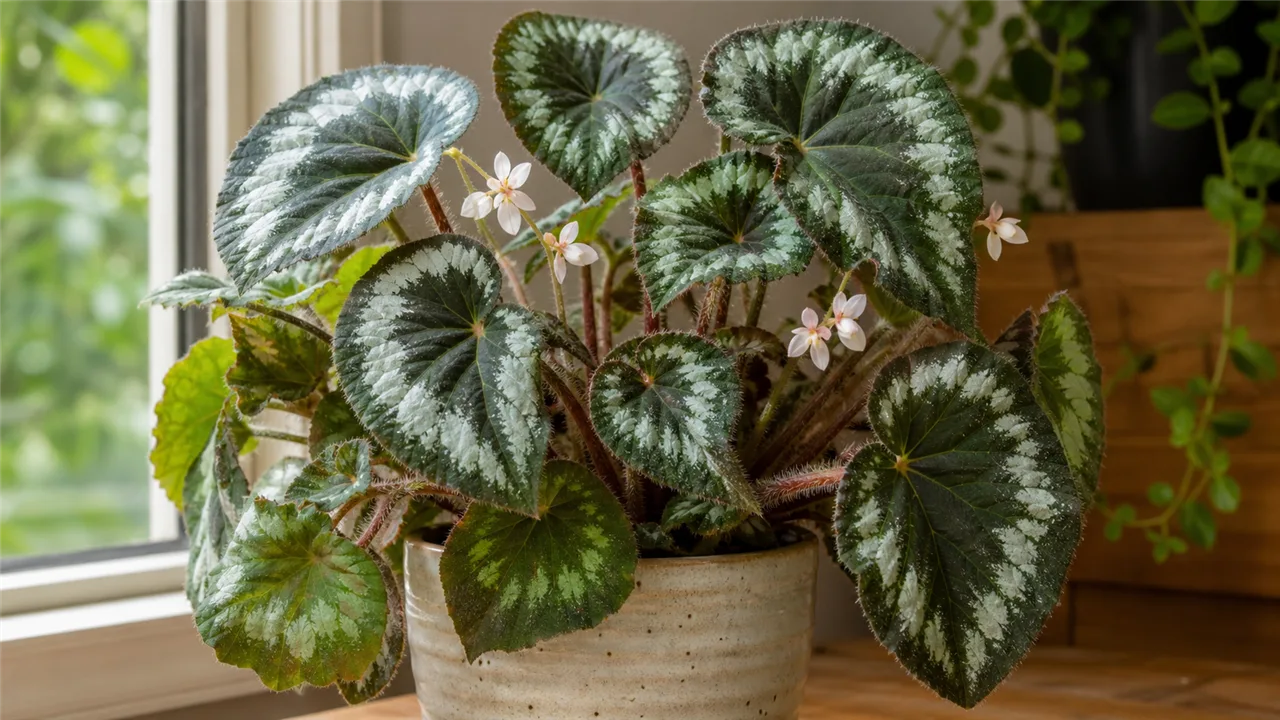
Leaf-ring begonia develops an upright, bushy clump from a rhizomatous base. A mature plant may reach about 30cm in height and spread to approximately 50cm, although container size, light and general care influence its final proportions. The stems, petioles and leaf surfaces are conspicuously hairy. Dense reddish hairs on the leaf stalks are especially distinctive and add colour and texture even when the plant is not flowering.
The asymmetric leaves can grow to around 15cm long. They have wavy margins, dark green upper surfaces and reddish undersides. A broad silver marking follows the form of the leaf to create the ring-like pattern behind the common name. The contrast between the cool silver band, deep green blade and warm red hairs is especially effective at close range.
Loose flower clusters arise from the leaf axils. The individual blooms are small and white to pale pink, and may be produced from late winter into early summer when warmth and light are suitable. Flowering can vary in an indoor environment, so the foliage should be regarded as the dependable feature. Remove collapsed flowers carefully without bruising the hairy leaves or leaving decaying material at the crown.
Growing Conditions
Provide bright, indirect light or partial shade. Strong direct sunshine, particularly through glass around midday, can bleach the silver pattern and cause dry, scorched patches. Very low light is also unsuitable: growth may become weak, new leaves may be smaller, and the compost can remain wet for too long. A sheer curtain or a position set back from a bright window often produces a better balance than an exposed south-facing sill.
Use a light, open and freely drained peat-free houseplant compost. A neutral to slightly acidic mix is appropriate. A container with clear drainage holes is essential. If using a watertight ornamental pot, remove the inner nursery pot for watering and let it drain completely.
Stable indoor conditions around 15–20°C suit active growth. Avoid cold window glass, radiators and sudden draughts. Moderate humidity helps prevent crisp leaf edges, but wet foliage and still air invite fungal disease. Grouping plants or standing the pot above damp aggregate can raise local humidity; keep the pot base above the water. Avoid misting the hairy leaves.
Keep the compost moderately moist while the plant is actively growing, allowing the upper layer to begin drying before watering again. It should never remain saturated. Growth normally slows during the darker UK winter, when evaporation is reduced, so water less frequently while continuing to check the root ball rather than following a fixed timetable.
Planting and Care
Plant or repot in spring. Choose a container only modestly larger than the root ball, because an oversized pot holds excess wet compost around the rhizome. Set the plant at its previous depth. Repot young plants annually if needed; move established specimens only when roots fill the pot or the compost deteriorates.
Water thoroughly during active growth, then let all surplus escape. Watering from below can help keep the hairy leaves dry, but remove the pot from its saucer or basin once the compost has absorbed moisture and allow it to drain. Never leave it standing in water. Reduce both the frequency and quantity of watering in winter, while preventing the rhizome from becoming completely dry for a prolonged period.
Apply a balanced liquid houseplant fertiliser at alternate waterings during active growth, diluted according to the product directions. Do not feed a dry root ball, a newly repotted plant or one that is resting in poor winter light. Excess fertiliser can damage roots and produce soft growth, so more frequent feeding is not beneficial. Resume regular feeding only when healthy new leaves show that active growth has restarted in spring.
No formative pruning is required. Remove yellow, damaged or diseased leaves close to their base using clean, sharp tools, and clear fallen material promptly. If a clump becomes congested, selective removal is safer than cutting the whole plant back. Spring is the best time for this work because wounds dry more readily and the plant can replace lost growth. Clean tools between plants to reduce the risk of carrying disease.
Propagation is by basal softwood cuttings. In spring or early summer, detach a healthy basal shoot with a clean blade and insert it into a small pot of free-draining propagation compost. Keep it in bright filtered light with gentle warmth and moderate humidity. Covering can reduce moisture loss, but ventilate regularly so condensation does not settle on the hairy tissues. Keep the medium lightly moist, not sodden, and pot on only after roots and fresh growth are evident.
Seasonal care is governed by indoor conditions rather than an outdoor gardening calendar. From spring through early autumn, monitor moisture closely, feed during active growth and shade the plant from strengthening sun. In autumn, stop feeding as growth slows and check that its winter position remains bright. Through winter, water sparingly, protect it from cold glass and draughts, and inspect regularly for pests that can multiply in a warm room.
Common Problems
Mealybugs may gather around petioles and the crown, while aphids, mites and thrips feed on young growth or leaf undersides. Sticky deposits, pale stippling, distorted leaves, fine webbing or silvery scarring are warning signs. Inspect carefully, isolate an affected plant, and use an appropriate control approved for houseplants. Caterpillars can chew leaves, and vine-weevil larvae may damage roots.
Grey mould and powdery mildew are favoured by a combination of humidity, wet leaf surfaces and inadequate airflow. Remove affected material, improve spacing and keep water off the foliage. Stem or rhizome rot is more serious: soft, dark tissue, wilting despite wet compost and an unpleasant smell indicate persistently saturated conditions. Remove the plant from standing water immediately and assess whether sound sections can be salvaged for propagation. Cleanliness, a free-draining mix and restrained winter watering are more reliable than attempting to cure advanced rot.
Brown, bleached or papery patches usually indicate excessive direct sun. Move the plant gradually into filtered light. Brown margins can reflect dry air, irregular watering or root stress. Weak, stretched growth points to insufficient light, whereas a plant that stops growing in cold, wet compost risks decline. Fertiliser cannot correct poor light or damaged roots.
Popular Varieties
No established named cultivars or horticultural varieties of Begonia annulata are documented in the supplied research. Plants offered under the species name should therefore be treated as leaf-ring begonia itself, not as unnamed selections that can safely be given cultivar status. The natural species is valued for its silver-banded, dark green leaves, red-hairy petioles and compact habit.
Buy from a reputable specialist nursery and check that the botanical name is clearly shown. Other patterned begonias may have similar common names, but they are not varieties of B. annulata without reliable identification. Natural variation in leaf markings does not by itself create a named cultivar.
Pests and Diseases
| Problem | Symptoms | Management |
|---|---|---|
| Root rot | Leaves turn yellow and drop while stems become soft, mushy, and discoloured at the base. | Water only when the top soil is dry and ensure pots have adequate drainage holes. |
| Powdery mildew | A white, dusty fungal growth appears on leaf surfaces, often causing distortion or yellowing. | Improve air circulation around the plant and treat with a suitable fungicide if severe. |
| Spider mites | Fine webbing is visible between leaves and stems, accompanied by stippled or bronzed foliage. | Increase humidity around the plant and spray affected areas with water or use horticultural oil. |
| Aphids | Small green or black insects cluster on new growth and leaf undersides, leaving sticky honeydew. | Wipe off by hand or spray with a strong jet of water; use insecticidal soap if infestation persists. |
| Leaf drop | Healthy-looking leaves fall off the plant prematurely, often leaving bare stems. | Avoid sudden changes in temperature or humidity and ensure consistent, moderate watering. |
For step-by-step help, read Controlling Aphids Naturally and Treating Powdery Mildew. Or browse the full plant problem solver to diagnose an issue by symptom.
Recommended Products
GardenWizz earns a commission from qualifying purchases made through affiliate links on this page (including links within the article) — as an Amazon Associate, and from Thompson & Morgan via the Awin network. This does not affect the price you pay. See our disclaimer for details.