Blue Allium
Allium cyaneum
The Gardening Year
Best months in UK gardens · full planting calendar →
🖨 Printable care card (PDF)At a Glance
| Botanical name | Allium cyaneum |
|---|---|
| Common name(s) | Blue Allium |
| Family | Amaryllidaceae |
| Plant type | bulb |
| Height × Spread | 25 cm × — |
| Position | Full sun |
| Soil | Fertile, well-drained soil; suitable soil types include chalk, loam and sand |
| Flowering | August–October |
| Toxicity | — |
| Native range | China (Gansu, Hubei, Ningxia, Qinghai, Shaanxi, Sichuan and Xizang provinces), possibly Korea |
Allium cyaneum, commonly called dark blue garlic, is a compact ornamental allium valued for vivid blue flowers in late summer. Its small stature, fine foliage and preference for sharp drainage make it especially useful in UK rock gardens, gravel beds, alpine troughs and the sunny front of a border.
Overview
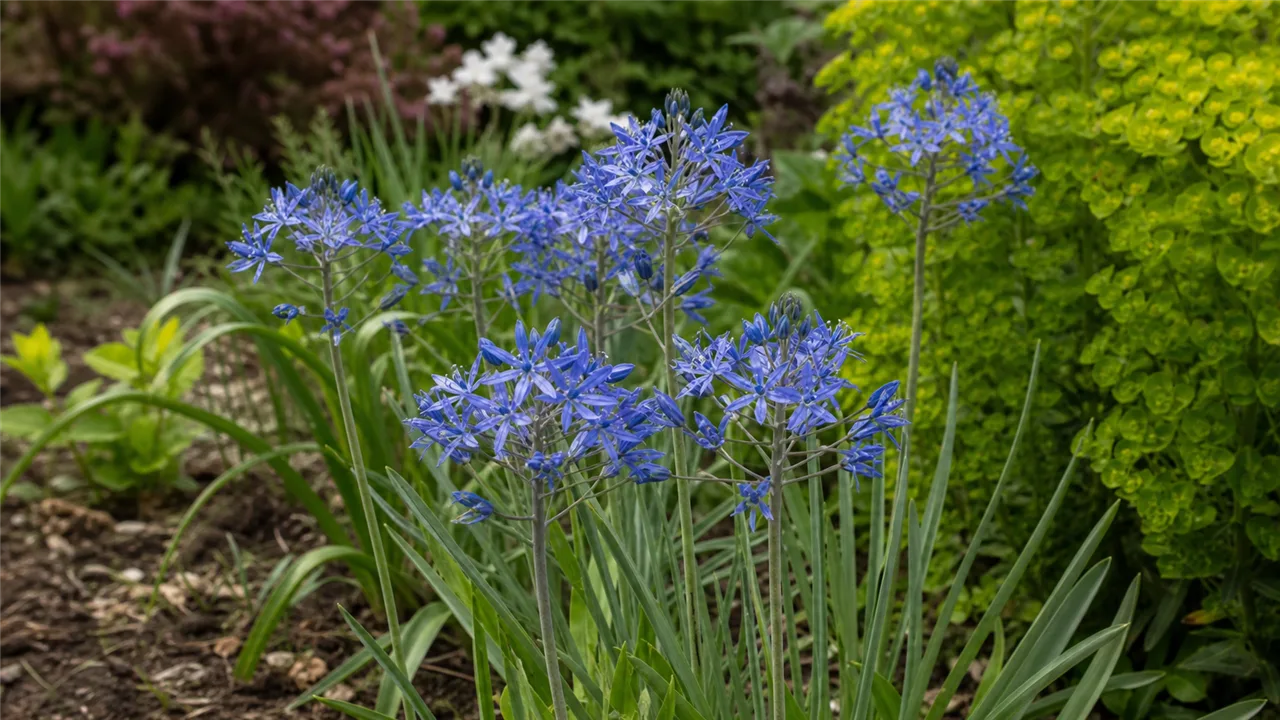
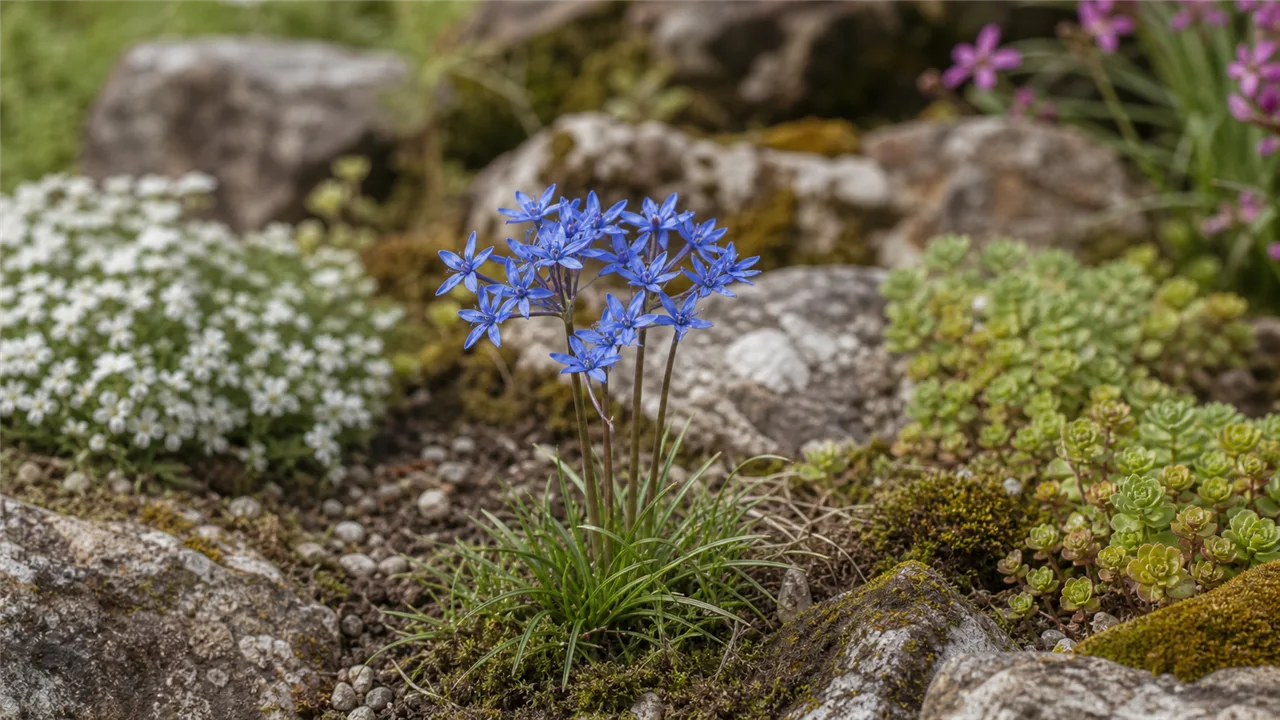
Allium cyaneum is a small, clump-forming member of the onion family, Amaryllidaceae. It comes from mountain habitats in south-western China, where it grows in meadows and rocky places. Unlike edible onions and garlic, it is cultivated chiefly for ornament: the plant's great distinction is the clear gentian-blue to violet-blue colouring of its flowers, an unusual shade among hardy garden bulbs.
The plant spreads slowly through short rhizomes and offsets, eventually making a modest colony. This restrained habit suits small gardens and detailed planting schemes. It can be placed between pale stones, repeated along a gravel-bed edge, or grown in a trough where its flowers can be viewed closely. Several bulbs planted together create a stronger patch of colour than a single specimen.
UK cultivation is generally successful where the soil drains freely. Cold itself is less troublesome than water held around dormant bulbs, so the choice and preparation of the site matter greatly. In wet western districts or gardens with heavy clay, a raised bed, alpine house or generously drained container offers better control. The late flowers are also useful to pollinating insects and extend the ornamental season after many smaller alpines have finished.
Appearance
The narrow, linear leaves are dark to medium green and resemble fine grass. They arise in a sparse tuft and release the characteristic onion or garlic scent of the genus when crushed. Foliage is deciduous, dying back after it has supplied the bulb with energy for the following year. Because the leaves are slender and relatively unobtrusive, they do not produce the untidy mass sometimes associated with larger ornamental alliums.
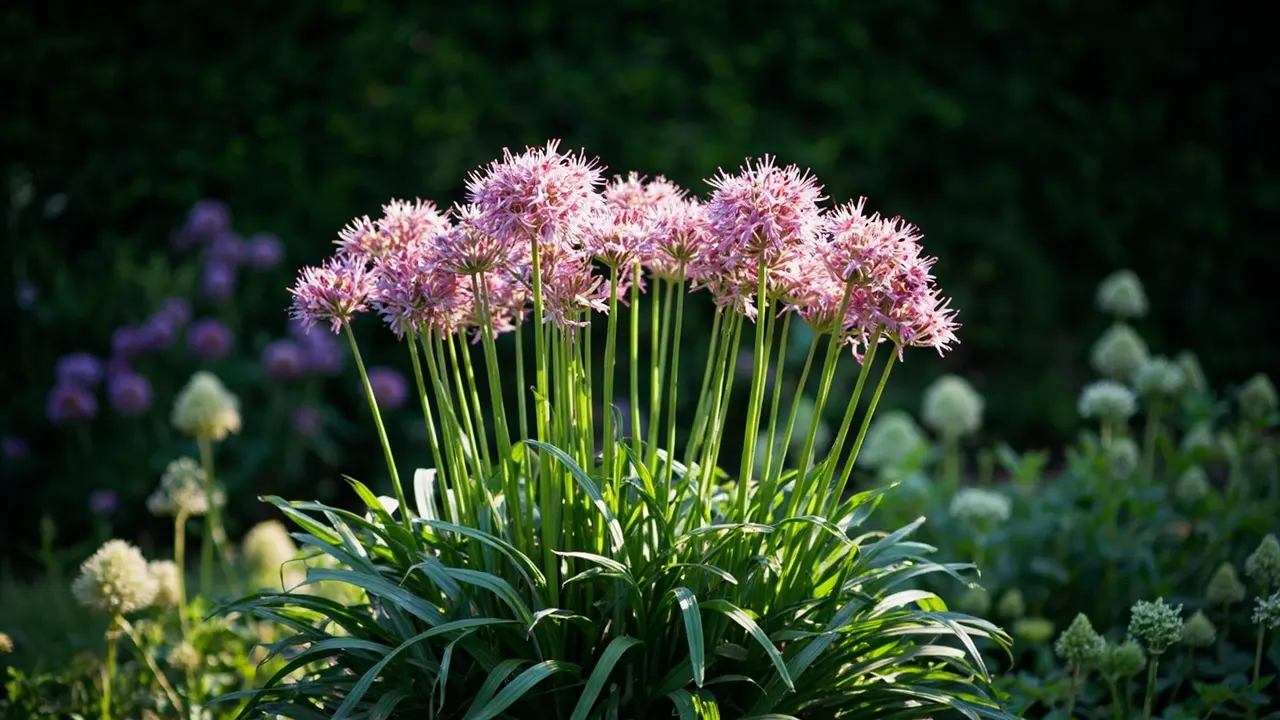
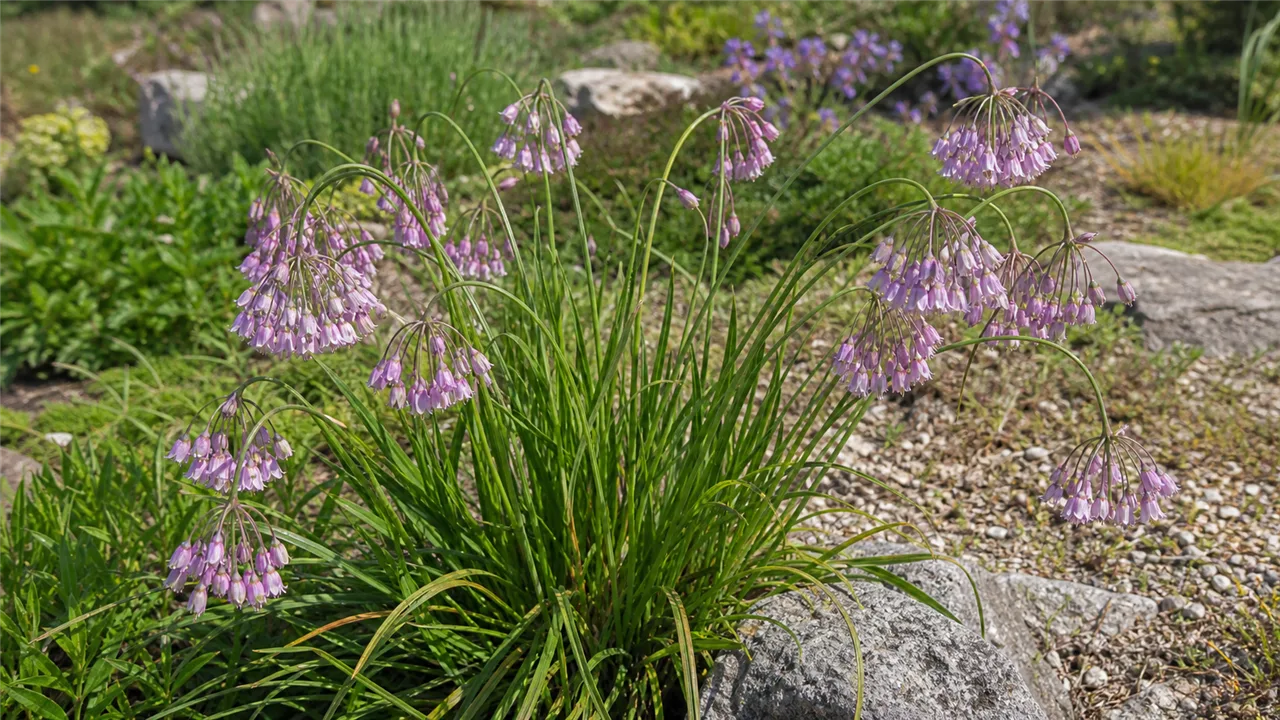
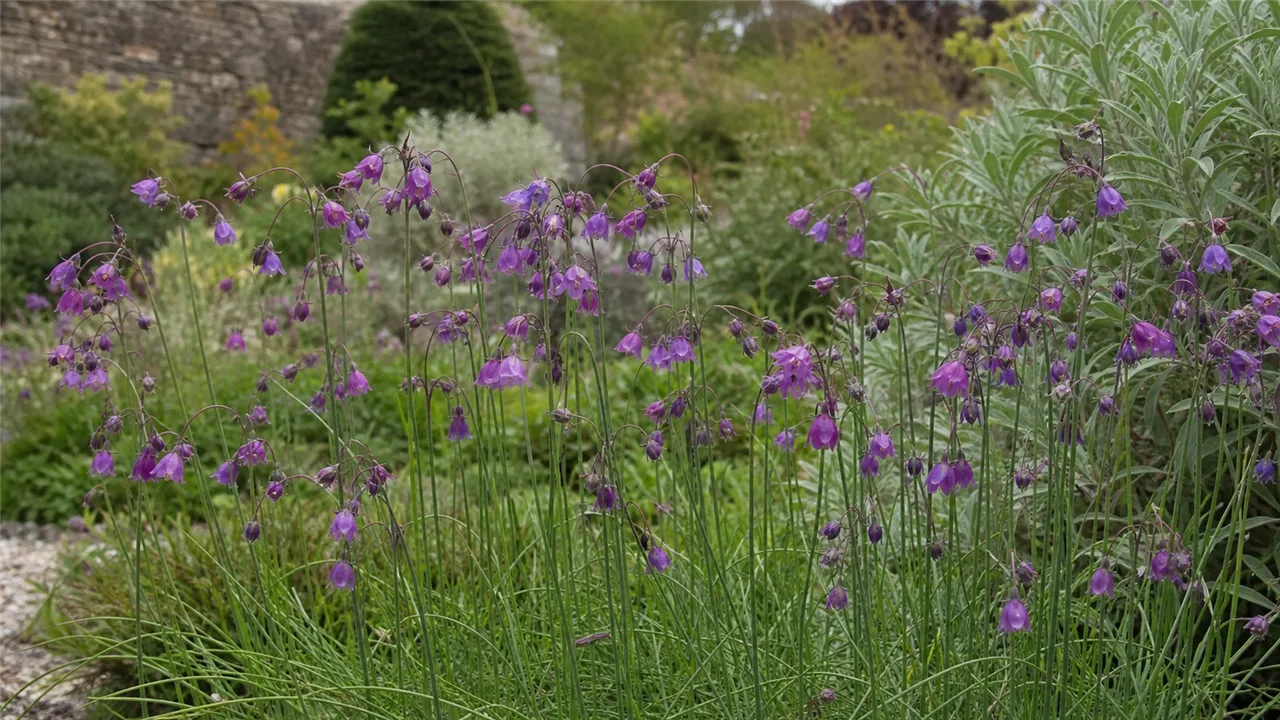
Slender, mostly leafless flower stems rise above the foliage to around 15–30 cm. Each carries a small rounded or hemispherical umbel composed of numerous star-shaped flowers. Their intense blue-purple colour is the main attraction, particularly when seen against light gravel, silver foliage or weathered stone. Flowering normally falls in mid- to late summer, often around July and August in UK gardens, although local climate and spring conditions influence the exact timing.
Growing Conditions
Choose an open position in full sun. Strong light encourages sturdy stems and good flowering, while shade tends to reduce performance and keeps the soil damp for longer. A south- or west-facing site is suitable, particularly if it is sheltered from winds that might flatten the fine stems. The plant can grow in acid, neutral or alkaline conditions, but drainage and soil structure are more important than a precise pH.
A gritty loam, sandy soil or free-draining chalk is ideal. On ordinary garden loam, incorporate coarse horticultural grit through the planting zone if water is slow to clear. Do not simply place a little grit in the bottom of an impermeable clay hole, as this can create a sump. Where the underlying soil remains wet, build a raised bed or use a container rather than relying on local amendment alone.
The bulbs appreciate moisture while leaves and flower stems are actively developing, yet they must never remain saturated. This balance is easiest in a mineral-rich, open compost or soil that holds some moisture between waterings but releases surplus water promptly. In a trough or pot, use a generous drainage hole and a gritty growing medium, then stand the container where winter rain cannot keep it continually soaked. Pot feet can help water escape.
The plant's hardiness information is provided by the structured badge. In practical UK terms, the key winter precaution is to avoid stagnant moisture around dormant bulbs. A gravel mulch keeps the crown clean but cannot compensate for a waterlogged root zone. Under cover, maintain ventilation while protecting plants from persistent rain.
Planting and Care
Plant sound, firm bulbs in autumn, commonly from September to November while the soil remains workable. Set each bulb about two to three times its own depth and allow enough space for offsets to develop. A small group gives a stronger display, but individual bulbs should not touch. On marginal ground, plant into a broad pocket of gritty soil and keep the surrounding bed free of aggressive roots.
Water after planting to settle the soil. Established plants growing in the ground need supplementary water mainly during prolonged dry spells in spring and summer. Containers dry more quickly and should be checked regularly during active growth: water thoroughly, allow the surplus to drain, and wait until the upper compost has begun to dry before watering again. Reduce watering as the foliage yellows and the bulb enters dormancy.
Feeding should be restrained. In poor soil, a light application of a balanced fertiliser as growth begins in spring is sufficient. Container-grown plants may receive a dilute balanced liquid feed during active growth. Avoid rich manure and high-nitrogen fertilisers, which promote soft leaves at the expense of flowers and can leave growth more susceptible to disease. Refresh the top layer of gritty compost in established pots rather than repeatedly applying strong feed.
No formative pruning is required. Spent flower stems may be removed after flowering if seedlings are not wanted, although leaving some heads can provide seed for propagation. Allow every healthy leaf to yellow and die naturally before removing the fully dead material; cutting green foliage early weakens the bulb. Clear fallen debris in late summer or autumn so damp matter does not accumulate over the resting clump.
Propagation by division is the quickest way to retain the characteristics of a named selection. Once a clump becomes congested, lift it after flowering and foliage dieback, separate healthy offsets carefully, and replant them promptly at the original depth. Discard any soft or damaged bulbs and avoid moving soil from a bed affected by white rot. Division is occasional maintenance, not an annual requirement.
Seed can be sown as soon as it is ripe or in spring in pots of free-draining seed compost. Keep the compost evenly moist rather than wet and protect young seedlings from competition. Seed-raised plants take longer than offsets to reach flowering size and may vary, particularly if other alliums flower nearby. During winter, inspect containers after heavy rain, clear blocked drainage holes and move pots under rain shelter if the compost remains saturated.
Common Problems
Bulb rot is the principal cultural problem. Leaves may yellow prematurely, growth may collapse, and the bulb may become soft when soil stays cold, airless and wet. Prevention is more reliable than rescue: improve drainage before planting, water according to active growth, and never leave a container standing in a water-filled saucer. Remove badly rotted bulbs and replace exhausted, contaminated potting compost.
Allium white rot can cause yellowing, wilting and decay at the base. Affected bulbs may show white fungal growth and small dark resting bodies. There is no simple garden cure, and the organism can persist in soil, so lift and dispose of affected material carefully. Do not compost it or carry contaminated soil and tools into clean growing areas. Avoid replanting susceptible alliums in an affected patch.
Onion fly larvae can tunnel into and damage bulbs, while allium leaf miner may scar leaves and feed within plant tissue. Fine insect-proof mesh can protect valued container or trough collections during periods of adult activity, provided it is installed before eggs are laid. Buy clean stock, examine bulbs before planting and remove severely affected material promptly.
Slugs and snails sometimes graze tender emerging shoots, especially in damp spring weather. Hand-picking, reducing nearby hiding places and protecting vulnerable pots can limit damage. Aphids may collect on soft shoots or flower stems; small colonies can be rubbed off or washed away. Onion downy mildew is favoured by prolonged leaf wetness and poor air movement, producing pale or distorted foliage. Wider spacing, morning watering at soil level and removal of infected debris help reduce pressure without keeping the bulbs excessively dry during active growth.
Failure to flower is often linked to insufficient sun, immature bulbs, premature foliage removal or excessive nitrogen. Newly divided offsets and seedlings need time to build reserves. Move shaded plants during dormancy, allow leaves to complete their cycle and use only modest feeding before assuming that the stock is defective.
Popular Varieties
Named selections of Allium cyaneum are far less numerous and less consistently documented than those of larger ornamental alliums. Availability changes between specialist nurseries, and labels should be checked carefully.
- Allium cyaneum — the species is the standard and most reliably documented form, with intense violet-blue flowers, fine leaves and a compact clumping habit. It is usually the best choice for a naturalistic alpine or gravel planting.
- Allium cyaneum 'Cobalt Blue' — a recognised named selection offered for especially strong cobalt-blue colouring. Its cultivation needs are essentially those of the species: full sun, sharp drainage and protection from persistent winter wet.
- Allium cyaneum album — this white-flowered name occurs in horticultural listings, but its botanical status is unresolved and it should not be treated as a securely established cultivar without supporting provenance. Plants sold under the name merit buying from a specialist nursery that can verify the stock.
No further cultivar names should be assumed from colour descriptions in catalogues. Where a nursery offers an unnamed pale or deep-blue seedling, it is more accurate to regard it as variable A. cyaneum unless a published cultivar name and dependable history are supplied.
Pests and Diseases
| Problem | Symptoms | Management |
|---|---|---|
| Slugs and snails | Irregular holes in leaves and flower heads, often accompanied by slimy trails. | Use copper tape barriers, beer traps, or iron phosphate-based pellets to control populations. |
| Powdery mildew | White, dusty fungal growth on leaves and stems, potentially causing distortion. | Ensure good air circulation and apply a sulphur-based fungicide if infection is severe. |
| Bulb rot | Bulbs become soft, mushy, and may emit a foul odor, often leading to plant collapse. | Plant in well-draining soil and avoid waterlogging to prevent fungal or bacterial decay. |
| Vine weevil | Notched edges on leaves above ground and root damage below, causing wilting. | Apply nematode treatments in autumn or use systemic insecticides to target larvae. |
For step-by-step help, read Dealing with Slugs and Snails and Treating Powdery Mildew. Or browse the full plant problem solver to diagnose an issue by symptom.
Recommended Products
GardenWizz earns a commission from qualifying purchases made through affiliate links on this page (including links within the article) — as an Amazon Associate, and from Thompson & Morgan via the Awin network. This does not affect the price you pay. See our disclaimer for details.