Star Of Persia
Allium cristophii
The Gardening Year
Best months in UK gardens · full planting calendar →
🖨 Printable care card (PDF)At a Glance
| Botanical name | Allium cristophii |
|---|---|
| Common name(s) | Star of Persia |
| Family | Amaryllidaceae |
| Plant type | bulb |
| Height × Spread | 50–60 cm × 20–50 cm |
| Position | Full sun, Partial shade |
| Soil | fertile well-drained soil |
| Flowering | May–June |
| Toxicity | toxic to cats and dogs |
| Native range | Iran, Turkey, Turkmenistan |
Overview
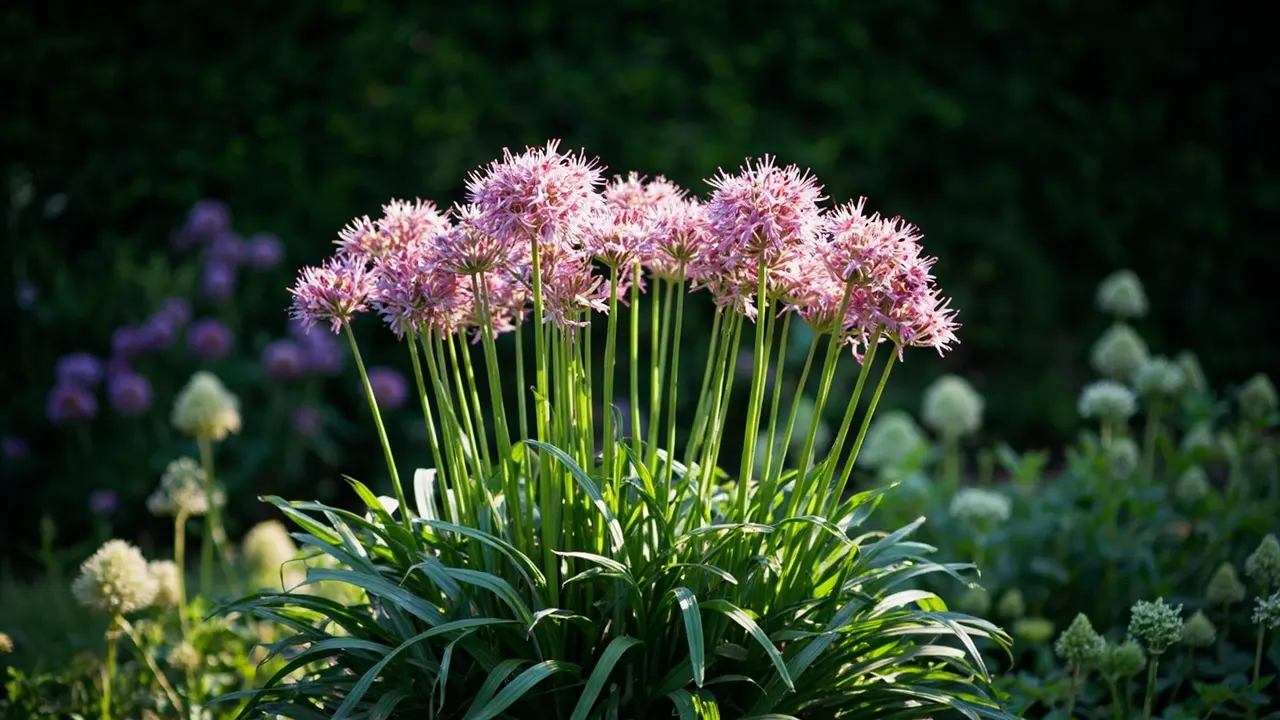
Allium cristophii is a deciduous, bulbous perennial in the family Amaryllidaceae, native to the dry, rocky slopes of Turkey, Iran and Turkmenistan. It is grown almost exclusively for its enormous, perfectly spherical flower heads, which can reach 20–25 cm across and are composed of many dozens of individual star-shaped florets in metallic violet-purple. The species sits alongside A. hollandicum 'Purple Sensation' and A. giganteum as one of the three large-flowered alliums most commonly used in UK ornamental borders, but it is distinguished from those by the much larger, looser globe and the way each floret carries a clear, pointed star.
The common name Star of Persia refers to the sharply pointed, six-rayed shape of each tiny flower in the sphere, which becomes more pronounced as the head matures and the individual segments separate slightly. In the UK it is reliably hardy and widely available as dry bulbs in autumn; in milder parts of the country it has naturalised in old gardens and on road verges.
Appearance
The plant grows from a stout, grey-brown bulb roughly 6–8 cm across, producing a basal rosette of broad, strap-shaped, grey-green leaves. These leaves are unmistakably allium: fleshy, slightly channelled, with parallel veins and a faintly oniony scent when bruised. The foliage reaches 30–45 cm in length but its ornamental life is short — it commonly starts to yellow at the tips as the flower stem is still rising, and is largely spent by the time the bud opens.
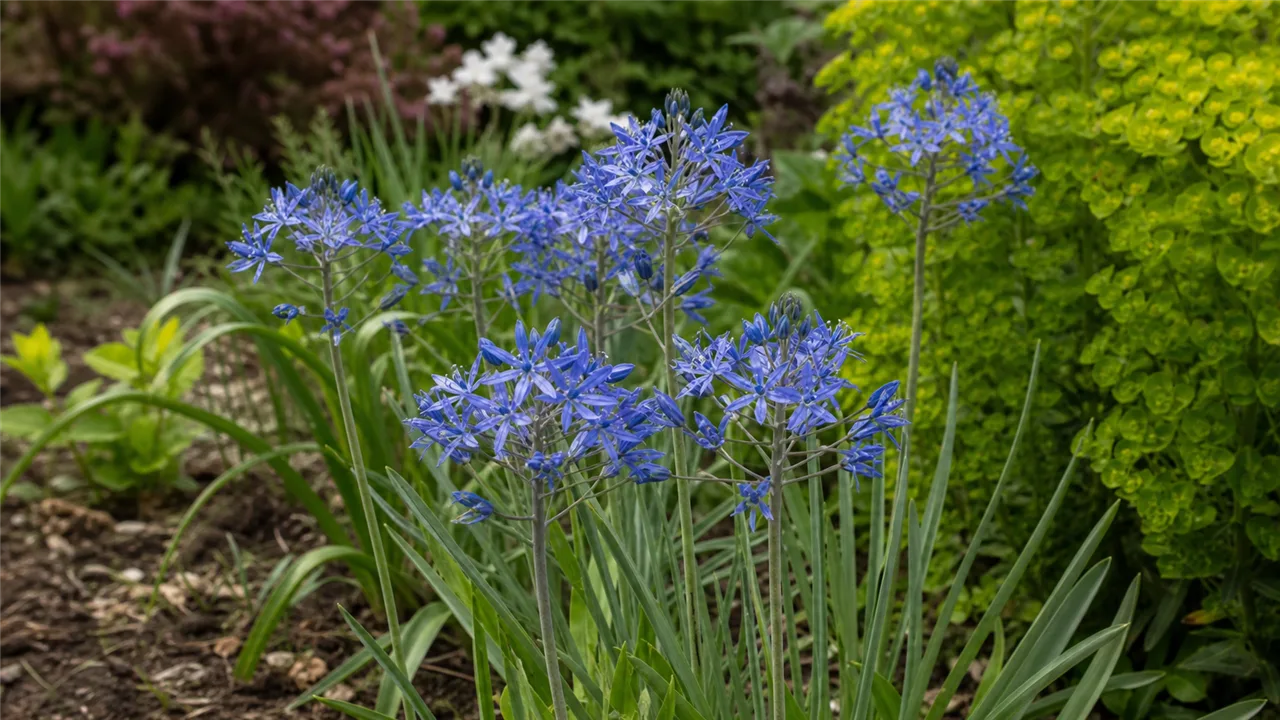
From the centre of the rosette a single, robust, ridged flower stem (sometimes two) pushes up to 40–60 cm. It is noticeably stouter than the leaves and carries a bud sheathed in a papery, pale green spathe that splits and falls away as the inflorescence expands. The mature flower head is a near-perfect sphere, 20–25 cm in diameter, made up of between 100 and 200 individual florets arranged in a loose umbel. Each floret is roughly 1.5–2 cm across, with six pointed tepals of a metallic, pinkish-violet colour and a raised, darker central staminal cone that gives the head its characteristic metallic sheen in bright sun. Bees and hoverflies visit heavily during the peak flowering window.
After pollination the tepals fade to a pale buff colour, and the seed head dries into a papery, architectural globe that persists on the stem into autumn and well into winter. The exact timing of this depends on whether spent heads are removed (for bulb strength) or left (for display). Plants are self-fertile and will set viable seed if pollination has occurred, producing the small black seeds typical of the genus.
The bulbs themselves are easy to recognise when lifted: round, whitish, with a fibrous tunic and a strong onion smell when cut.
Growing Conditions
Allium cristophii wants the same treatment as a Mediterranean herb: maximum sun, very free-draining soil, and a dry rest in summer. In the UK that means an open, south- or west-facing border, a raised bed, a gravel garden, or a hot pocket against a sunny wall. Siting is the single biggest determinant of success; in heavy clay or low-lying ground the bulbs tend to rot during the dormant period.
Sun: Full sun is essential. Anything less than six hours of direct light in midsummer produces leggy stems, smaller heads and a sharply reduced flower count, and prolongs the soil-wet period around the bulb in autumn — which is when losses occur.
Soil: Light, well-drained and not too rich. The species tolerates alkaline, neutral and mildly acidic soils, and grows well on the chalky and limy substrates found across much of southern and central England. Sandy loam is ideal; clay is hostile unless substantially improved with grit and organic matter, or planted on in a raised bed. Avoid freshly manured ground: bulbs in over-rich soil produce lush leaf at the expense of flower.
Moisture: Drought-tolerant once established. The critical period is summer dormancy, when the bulbs prefer to be dry rather than damp. In damp western districts, growing on a slope, in a raised bed, or at the top of a rock garden is more important than the precise soil texture.
Position in the border: Mid-border works well; the foliage is largely gone by flowering time, so neighbours — hardy geraniums, salvias, ornamental grasses, nepeta, alchemilla — should knit in and hide the yellowing leaves without smothering the airy flower heads.
Planting and Care
When to plant: Dry bulbs are sold in late summer and should be in the ground by October or November. Earlier autumn planting gives the bulbs time to establish a root system before winter. Late winter or early spring planting (March–April) is also acceptable but produces a smaller first-year display; many growers wait a full season for bulbs to settle.
Depth and spacing: Plant bulbs roughly three times their own height deep — about 15–20 cm below the soil surface — and the same distance apart. Deeper planting is preferable to shallower on heavy soils, as deeper bulbs sit in better-drained ground and are less prone to rot. Always set the bulb with the pointed growing tip upwards and the basal plate (where the roots emerge) firmly on undisturbed soil below.
Watering: Once planted, rainfall usually suffices. Water only during prolonged drought in the growing season; do not water dormant bulbs in summer.
Feeding: A light top-dressing of bone meal or a low-nitrogen, high-potash fertiliser in early spring helps build up bulb size for the following year, but is not essential on reasonably fertile garden soil. Over-feeding promotes soft growth more vulnerable to wind.
Pruning and tidying: No routine pruning is required or appropriate. As the foliage yellows in June–July, it should be cut back at the base and removed cleanly — this tidies the border and reduces habitat for slugs and snails around the bulb. Seed heads can be left on the plant for architectural effect, or removed promptly after flowering if the goal is to maximise bulb size rather than display; removing the head before seed set channels the plant's energy back into the bulb.
Propagation: Established clumps can be lifted and divided in late summer or early autumn, once the foliage has fully died back. Bulblets forming around the mother bulb separate readily and flower in two to three seasons. Seed propagation is straightforward but slow: surface-sow fresh seed in autumn in a cold frame, keep cool and moist, and expect leaves the first spring, with first flowers typically in the third or fourth year. Hand-pollination or isolation is not necessary — the species comes reasonably true from seed.
Cut flowers and dried heads: The fresh-cut stems last for two to three weeks in a vase if the water is changed regularly. The dried seed heads keep their shape and form for months indoors and are popular in late-season arrangements.
Common Problems
Allium leaf miner (Phytomyza gymnostoma) is the most damaging specific pest. Symptoms are serpentine pale mines tracking through the leaves in spring, and, in heavy infestations, distorted or split flower stems. Damage is worst in gardens where leeks, onions or garlic are grown nearby. Prevention is more effective than cure: cover emerging shoots with fine insect mesh from late February to mid-May, and remove and bin (do not compost) affected foliage immediately.
Onion fly and, less commonly, slugs and snails may damage young foliage but rarely kill established plants in open ground.
Of the diseases, downy mildew (Peronospora destructor) shows as pale, downy patches on the leaves in cool, damp weather; botrytis (grey mould) affects the flower stem in persistently wet conditions. Both are managed by cultural means: better spacing, more sun, and not watering overhead. White rot (Sclerotium cepivorum) is rare in ornamental plantings but devastating where it occurs; the only response is to avoid growing alliums in the affected ground for many years.
Failure to flower in an established plant is most often caused by bulbs sitting too shallow, by waterlogging during dormancy, by overcrowding, or by premature removal of the foliage before the bulb has replenished its reserves.
Yellowing foliage that is otherwise normal — that is, yellowing starting at the leaf tip and progressing cleanly down — is not a problem; it is the natural lifecycle of the plant and the reason for siting alliums behind later-leafing perennials.
Popular Varieties
The species itself is most often sold and grown true to type, as the wild form is already exceptionally ornamental. The cultivar most widely used in the trade is A. cristophii 'Star of Persia', which is treated as a selected, vigorous form of the species rather than a separate botanical entity. Beyond this, the species is generally sold simply as Allium cristophii without a cultivar name; named selections appear only inconsistently across UK bulb catalogues, and buyers comparing offers should expect the unselected species stock to be reliable and uniform where it is well kept.
The species is widely available in autumn from UK bulb suppliers as dry bulbs. It is less commonly sold as a potted plant in growth because it resents root disturbance during the growing season.
Pests and Diseases
| Problem | Symptoms | Management |
|---|---|---|
| Onion white rot | Foliage turns yellow and wilts while the bulb rots, often revealing white fungal growth at the base. | Avoid planting in infected soil for several years and ensure excellent drainage to prevent saturation. |
| Allium leaf miner | Leaves develop brown streaks or holes as larvae tunnel through the tissue, causing premature collapse. | Remove and burn affected foliage immediately after flowering to break the life cycle before eggs hatch. |
| Onion downy mildew | A greyish-purple fuzzy mould appears on leaves and flower stems, often in humid conditions. | Improve air circulation around plants and avoid overhead watering to keep foliage dry. |
| Onion fly | Young shoots wilt and turn yellow as larvae feed on the bulb, potentially killing the plant. | Use insect-proof netting over young plants in spring or apply nematodes to control soil-dwelling larvae. |
| Bulb rot | The bulb becomes soft and mushy with a foul smell, often accompanied by general plant decline. | Plant in well-drained soil or containers to prevent waterlogging, especially during winter. |
For step-by-step help, read Treating Powdery Mildew. Or browse the full plant problem solver to diagnose an issue by symptom.
Recommended Products
GardenWizz earns a commission from qualifying purchases made through affiliate links on this page (including links within the article) — as an Amazon Associate, and from Thompson & Morgan via the Awin network. This does not affect the price you pay. See our disclaimer for details.