Blue Garlic
Allium caesium
The Gardening Year
Best months in UK gardens · full planting calendar →
🖨 Printable care card (PDF)At a Glance
| Botanical name | Allium caesium |
|---|---|
| Common name(s) | Blue Garlic |
| Family | Amaryllidaceae |
| Plant type | bulb (herbaceous perennial) |
| Height × Spread | 30–65 cm × 0–10 cm |
| Position | Full sun, Partial shade |
| Soil | moist but well-drained or well-drained; chalk, loam, sand; acid, alkaline, or neutral pH |
| Flowering | June–August |
| Toxicity | — |
| Native range | central Asia (Xinjiang, Kazakhstan, Kyrgyzstan, Tajikistan, Uzbekistan) |
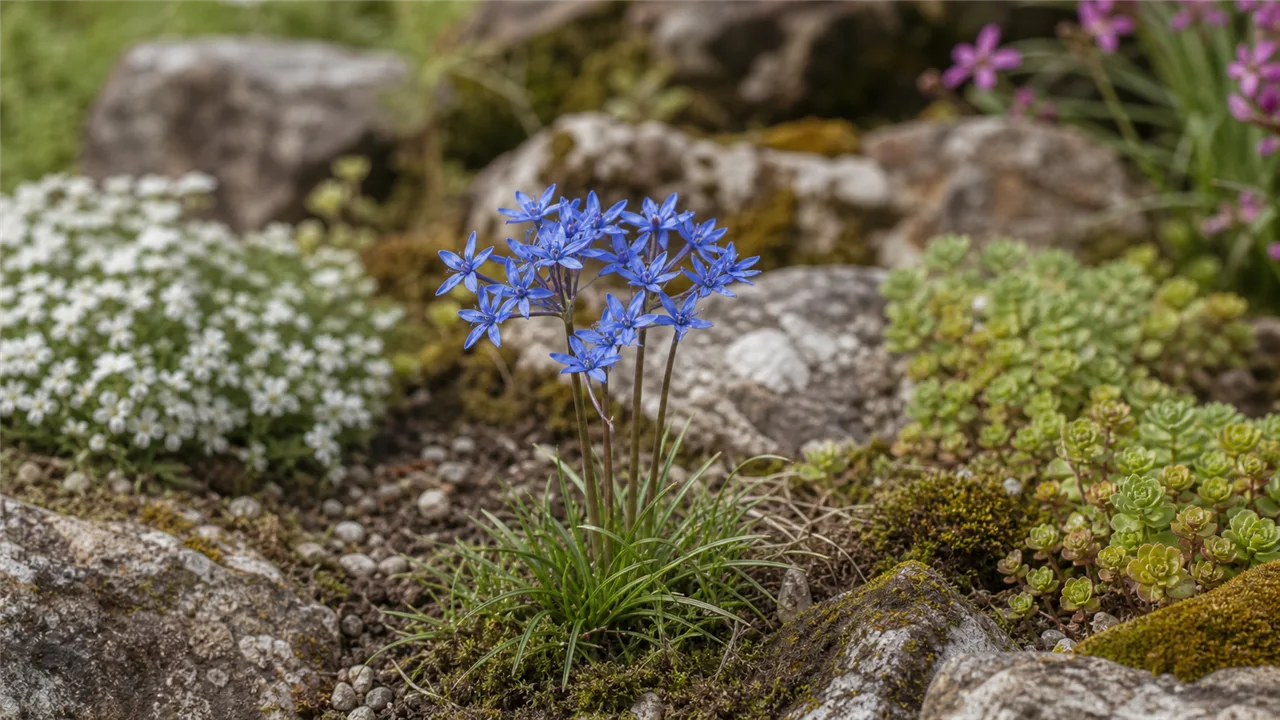
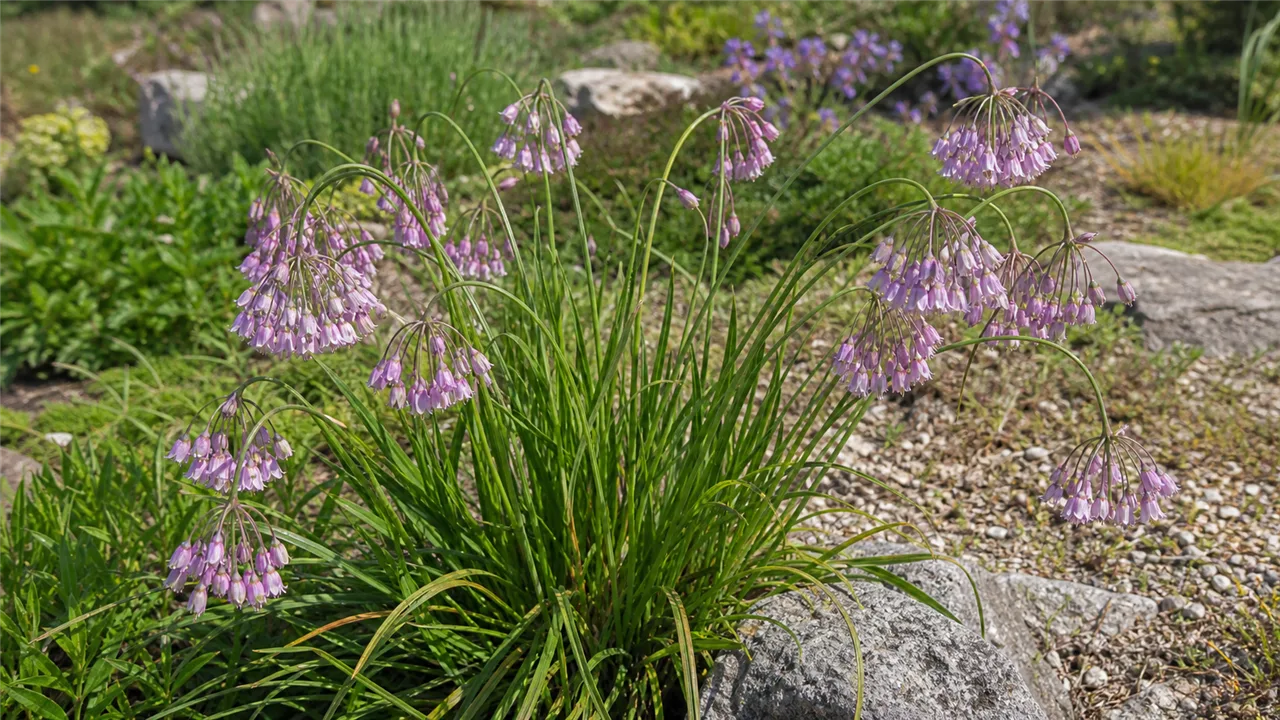
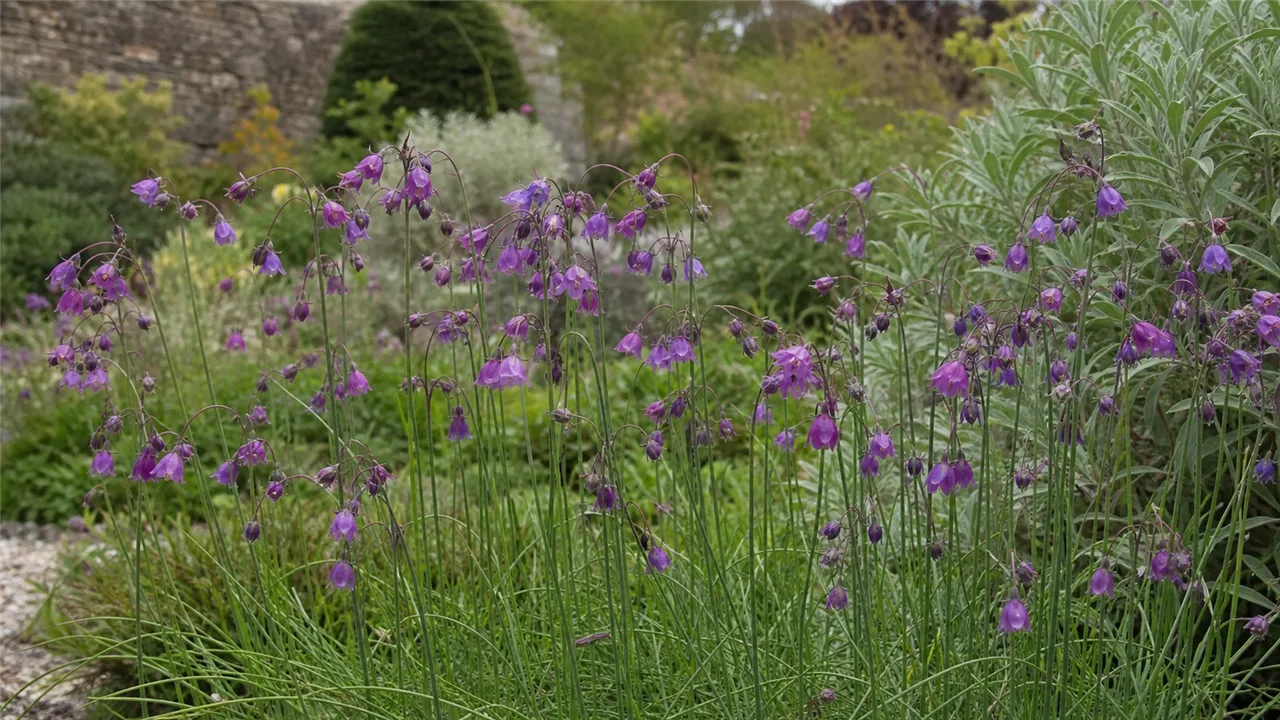
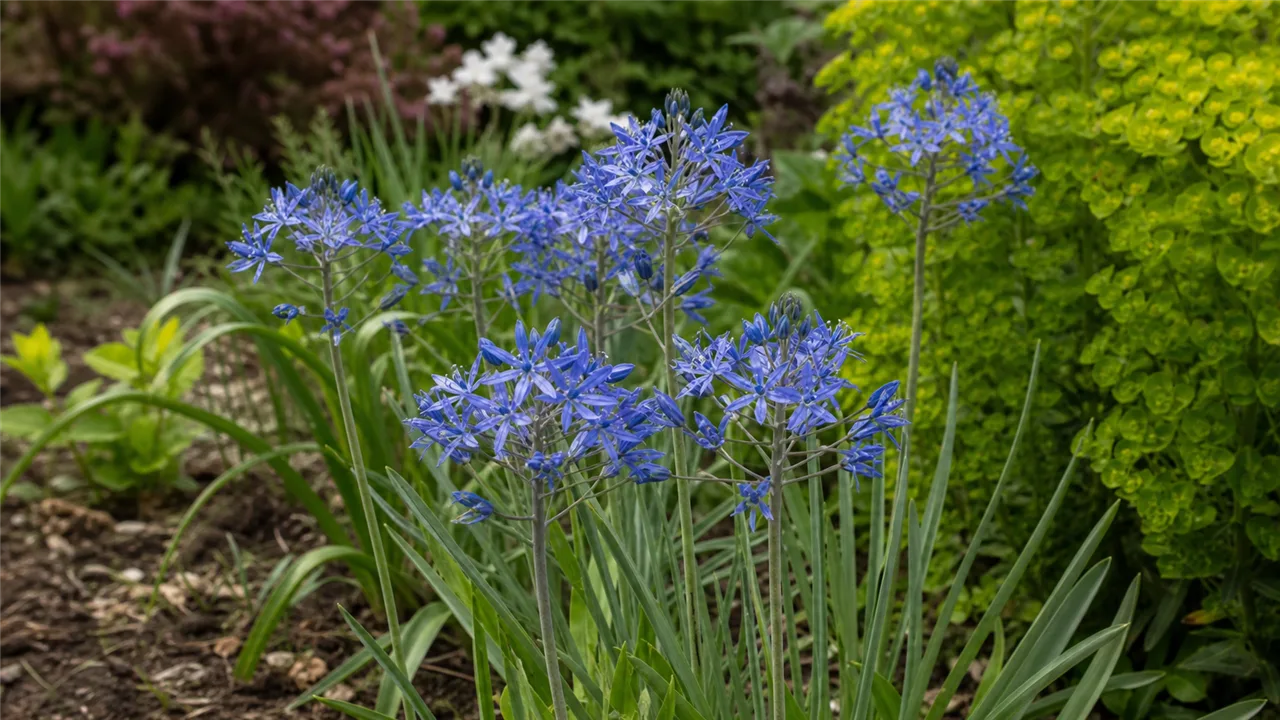
Allium caesium, often called blue garlic, is a compact ornamental onion grown for its unusual pale to mid-blue summer flowers. It suits sunny borders, gravel gardens and rock gardens, where its slender foliage and rounded flower heads rise neatly among low-growing perennials. For UK gardeners, the essentials are straightforward: give it plenty of light, sharply drained soil and a position that does not remain wet in winter.
Why grow Allium caesium?
True blue is uncommon among ornamental onions, making this species useful where cooler flower colours are wanted. The flower heads are smaller and less architectural than those of large ornamental alliums, so the plant works best near the front of a border or woven through a naturalistic planting. It combines well with silver foliage, small grasses and drought-tolerant perennials without overwhelming them.
The flowers are attractive to bees and other pollinating insects. After flowering, the drying seed heads can provide light structure, although they are less dramatic than those of the largest alliums. Plant several bulbs together for a convincing display rather than relying on a single isolated specimen.
Appearance and habit
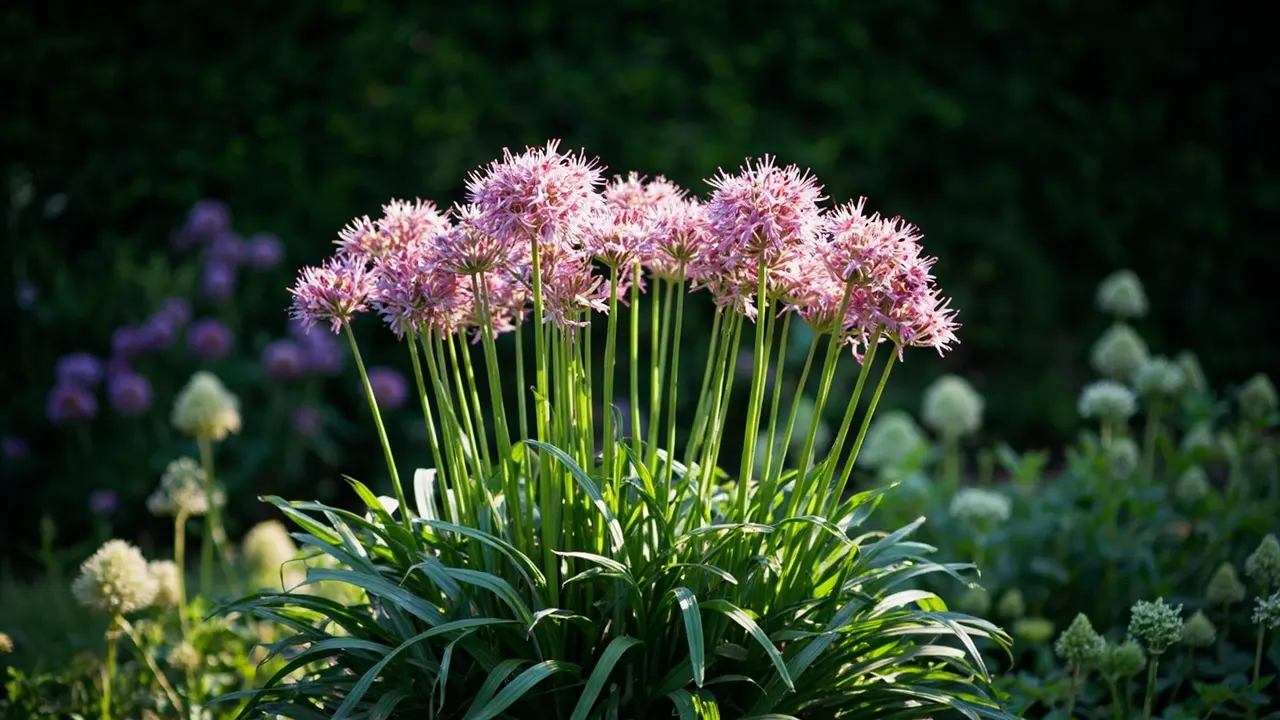
This bulbous perennial produces narrow, linear, greyish-green leaves and upright flowering stems. In summer, each stem carries a rounded cluster of star-shaped blue flowers. Mature height is usually around 30–65 cm, while the clump remains comparatively narrow. The foliage may begin to fade as flowering develops, which is normal for many ornamental onions.
The plant dies back after its growing season and returns from the bulb. Mark the position or grow it among low companions so the dormant space does not look bare and the bulbs are not accidentally disturbed.
Where to grow it
Choose an open position in full sun. Light partial shade may be tolerated, but flowering and stem strength are best where the plant receives direct light for much of the day. Shelter is useful if the site is exposed to strong winds, although the stems are not usually as top-heavy as those of giant ornamental onions.
Drainage is the most important soil requirement. A sandy, gritty or stony soil is ideal. On heavier ground, improve the wider planting area with grit and organic matter or use a raised bed; avoid creating a small amended pocket surrounded by water-retentive clay. A neutral to alkaline soil is generally suitable, but good structure matters more than making small adjustments to pH.
Planting and care
Plant firm, healthy bulbs in autumn, normally at a depth of roughly three times the bulb's height. Space them closely enough to form a group while leaving room for each clump to develop. Water after planting if the soil is dry, but established bulbs in open ground rarely need routine watering except during prolonged spring drought.
Apply a light general-purpose feed in spring on poor soil. Avoid heavy feeding, which can encourage soft growth. Allow the leaves to yellow naturally after flowering because they return energy to the bulb for the following season. Remove spent stems when they become untidy, or retain a few seed heads if their appearance suits the planting.
Congested clumps can be lifted and divided while dormant. Separate sound offsets and replant them promptly at the original depth. Seed can also be collected, but seedlings take longer to reach flowering size and may vary.
Common problems
Bulb rot is the main risk and is usually associated with poorly drained winter soil. Soft growth, failure to emerge or bulbs that decay below ground indicate that conditions are too wet. Improve drainage before replacing plants. Allium leaf miner, onion fly and fungal diseases may occasionally affect plants, but ornamental clumps in a mixed border are often trouble-free.
Slugs and snails may damage emerging shoots. Protect new growth where these pests are active, while avoiding dense, wet debris around the crown. Weak or leaning stems usually indicate insufficient light, overcrowding or overly rich conditions.
Design and seasonal interest
The blue flowers are most effective when seen against foliage rather than a similarly coloured background. A gravel edge, raised bed or sunny path allows the small flower heads to be appreciated at close range. Plan for a short gap after the foliage dies back by placing evergreen or late-emerging companions nearby, but avoid plants that create dense shade or trap winter moisture.
Buy bulbs from a reputable specialist because uncommon ornamental onions can be incorrectly labelled. Firm bulbs should show no mould, soft patches or strong odour. Once established in suitable soil, a group can remain in place for several years and gradually increase without demanding regular intervention.
Good planting partners
Use Allium caesium with compact salvias, hardy geraniums, catmint, thyme, low ornamental grasses and silver-leaved plants that enjoy similar drainage. Position companions so they disguise fading allium foliage without shading the bulbs heavily. Repeating small groups through a border creates a more natural result than one large block.
Pests and Diseases
| Problem | Symptoms | Management |
|---|---|---|
| Allium leaf miner | White blotches on leaves followed by wilting, twisting, and rotting of foliage and stems. | Cover plants with fine insect-proof mesh during peak fly activity in spring and autumn. |
| Onion white rot | Yellowing leaves and a white, powdery fungal growth at the base of the bulb. | Remove affected plants immediately and avoid replanting alliums in that soil for many years. |
| Onion fly | Leaves turn yellow and wilt as maggots tunnel into the bulb from the base. | Use insect-proof netting to exclude adult flies during their spring emergence period. |
| Downy mildew | Yellowish patches on leaves that develop into a fuzzy grey-green mould in humid conditions. | Improve air circulation and avoid overhead watering to keep foliage dry. |
| Slugs and snails | Irregular holes chewed into young shoots and leaves, often accompanied by slime trails. | Use physical barriers like copper tape or apply iron phosphate-based pellets around the base. |
For step-by-step help, read Dealing with Slugs and Snails and Treating Powdery Mildew. Or browse the full plant problem solver to diagnose an issue by symptom.
Recommended Products
GardenWizz earns a commission from qualifying purchases made through affiliate links on this page (including links within the article) — as an Amazon Associate, and from Thompson & Morgan via the Awin network. This does not affect the price you pay. See our disclaimer for details.