Nodding Onion
Allium cernuum
The Gardening Year
Best months in UK gardens · full planting calendar →
🖨 Printable care card (PDF)At a Glance
| Botanical name | Allium cernuum |
|---|---|
| Common name(s) | Nodding Onion |
| Family | Amaryllidaceae |
| Plant type | bulb |
| Height × Spread | 10–50 cm × 0–10 cm |
| Position | Full sun |
| Soil | moist but well-drained |
| Flowering | July–August |
| Toxicity | Toxic to cats, dogs, and horses |
| Native range | North America (United States, Canada, Mexico) |
Nodding onion (Allium cernuum) is a compact bulbous perennial valued for its gracefully drooping clusters of pink flowers. Native to North America, it fits readily into sunny UK borders, gravel gardens and naturalistic planting, where its midsummer flowers provide nectar and pollen for visiting insects.
Overview
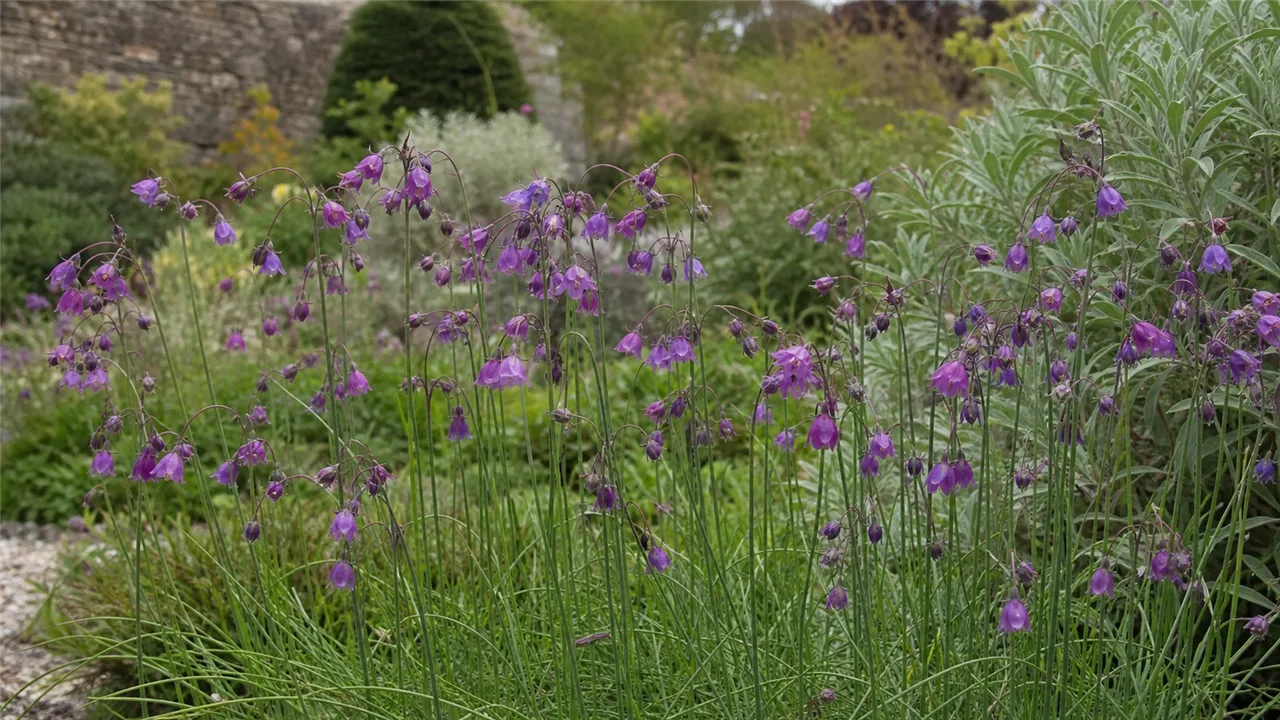
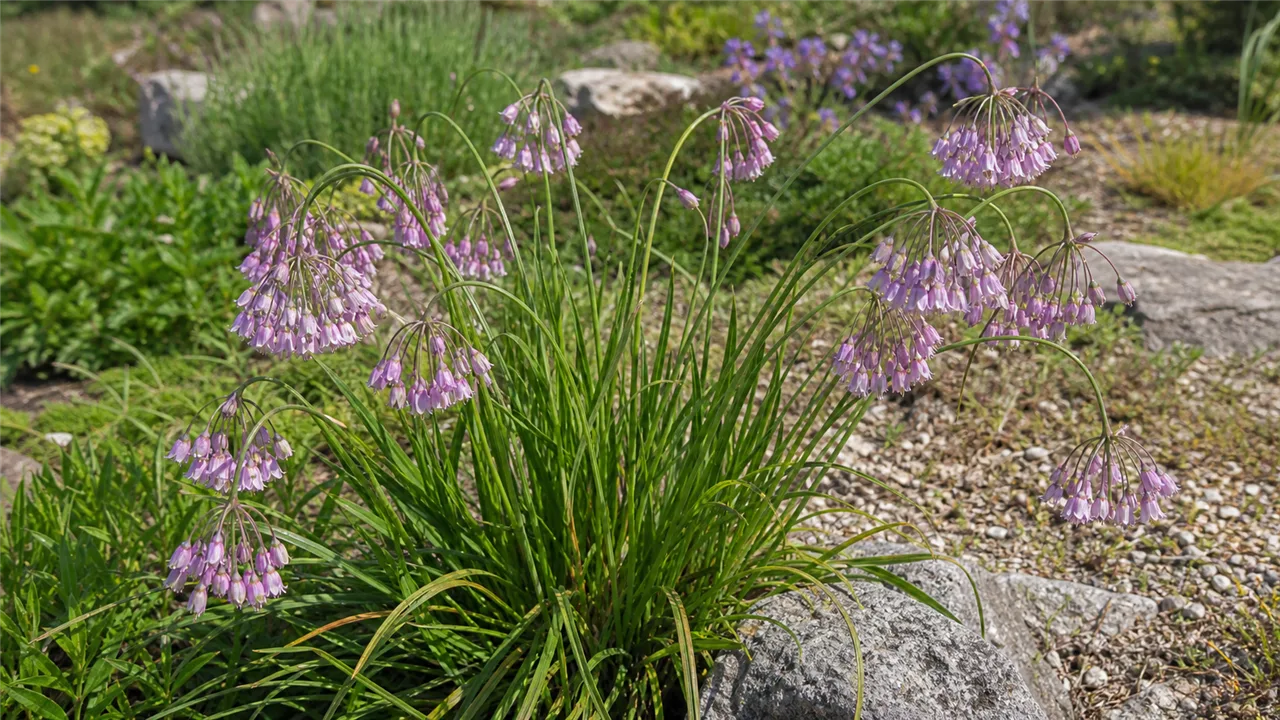
Allium cernuum is a distinctive ornamental onion whose flowering stem bends close to its tip, causing the umbel to face downwards. This nodding habit gives the species both its English name and its botanical epithet: cernuum means inclined, stooping or nodding. Unlike the rigid, spherical heads of many familiar ornamental alliums, its loose, pendant flowers have a delicate, informal quality.
The species belongs to the Amaryllidaceae family and is native across a broad area of North America. In the wild it occurs in rocky prairies, limestone glades, open woodland and dry meadow margins. These habitats help explain its preference for open conditions and free-draining ground. It is not native to Britain, but it grows successfully in much of the UK when protected from winter waterlogging.
Nodding onion works particularly well in gravel gardens, rock gardens, prairie-style borders and sunny mixed beds. Its relatively modest height allows it to be planted near the front or middle of a border, while its slender leaves mix easily with low grasses and fine-textured perennials. The flowers attract bees, butterflies and other pollinating insects. Although the leaves and bulbs have traditionally been used for their mild onion flavour, positive identification is essential before any plant is eaten, and plants treated with unsuitable garden chemicals should never be consumed.
This is a long-lived perennial rather than a plant grown for one brief display. Individual bulbs form small clumps, which increase gradually through offsets. Seed may also be allowed to ripen where a more natural colony is wanted, though establishment from seed is slow.
Appearance
The plant develops from a small, grey-white, ovoid bulb, usually about 10–20 mm across. Bulbs may occur singly at first but gradually form modest clusters. The foliage arises from the base in spring and consists of narrow, bright green, linear leaves. These are commonly 3–6 mm wide and have a slightly keeled rather than flat profile, giving each clump a neat, grassy appearance.
Flowering stems rise above the leaves to approximately 30–50 cm. Each stem is upright through most of its length, then curves near the top so that the flower cluster hangs down. The arch is a natural feature, not a sign that the plant requires staking or is short of water. Mature clumps generally spread to 15–30 cm, remaining compact enough for small gardens and raised beds.
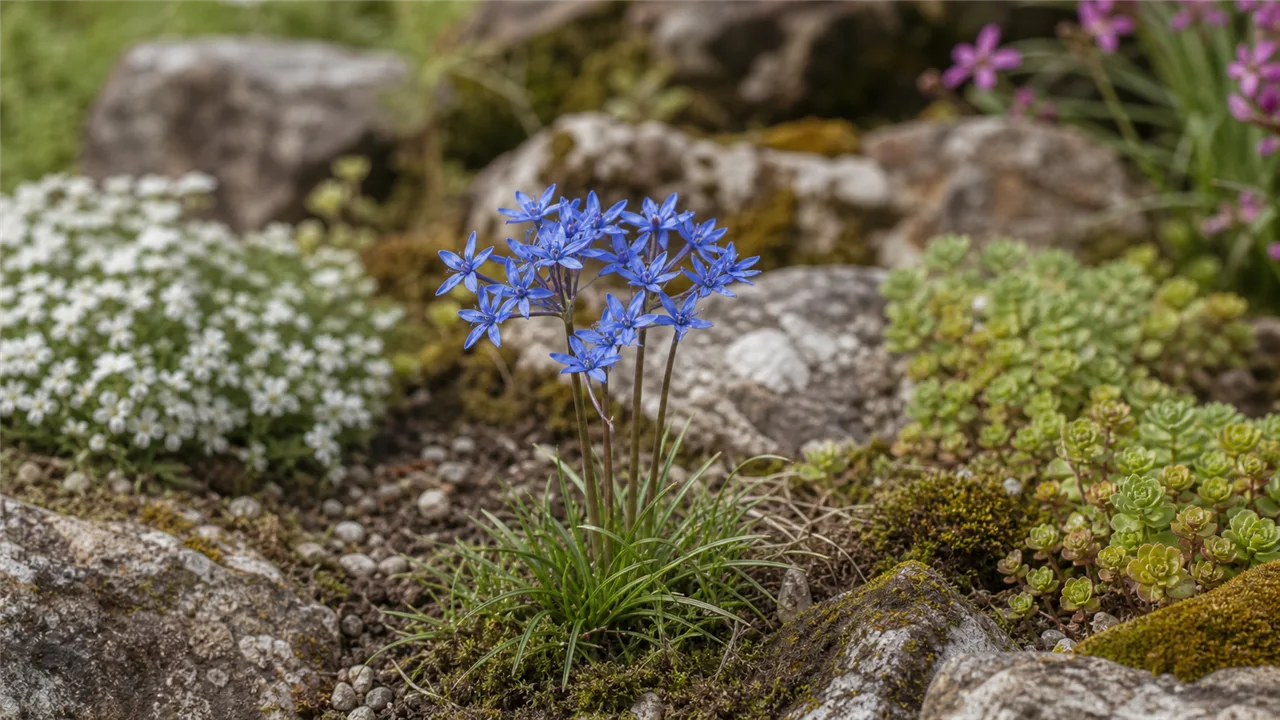
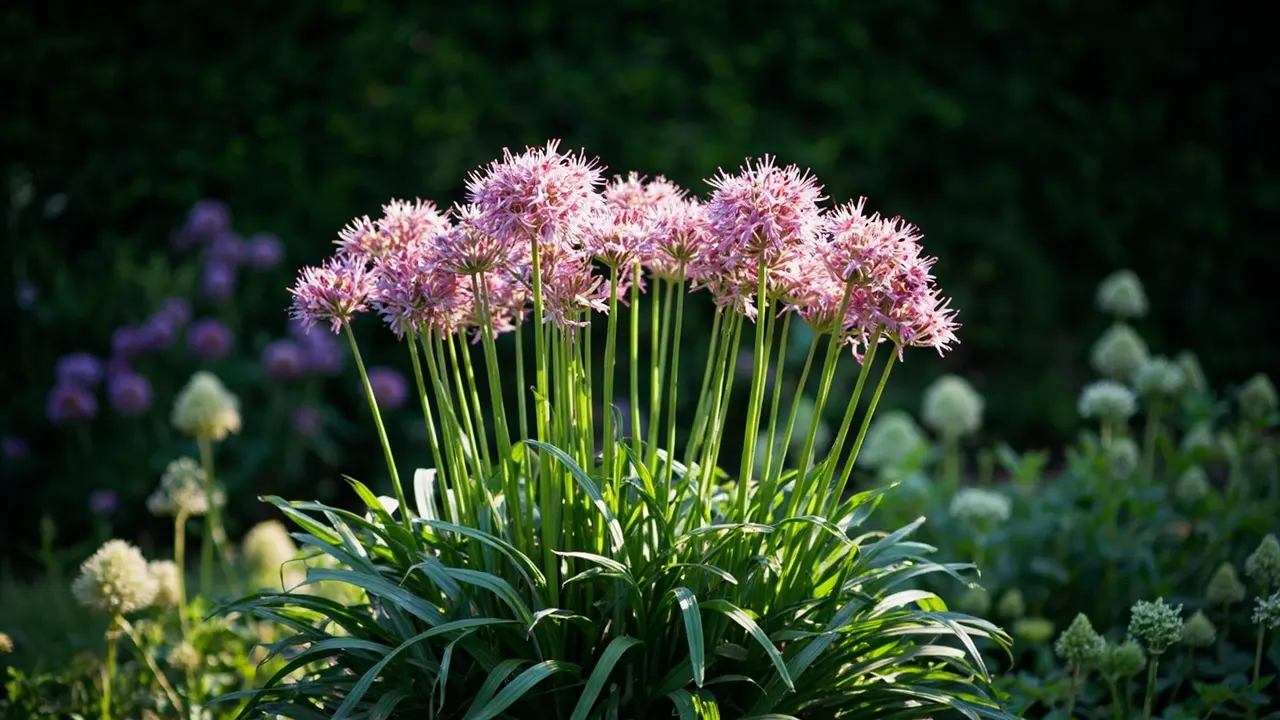
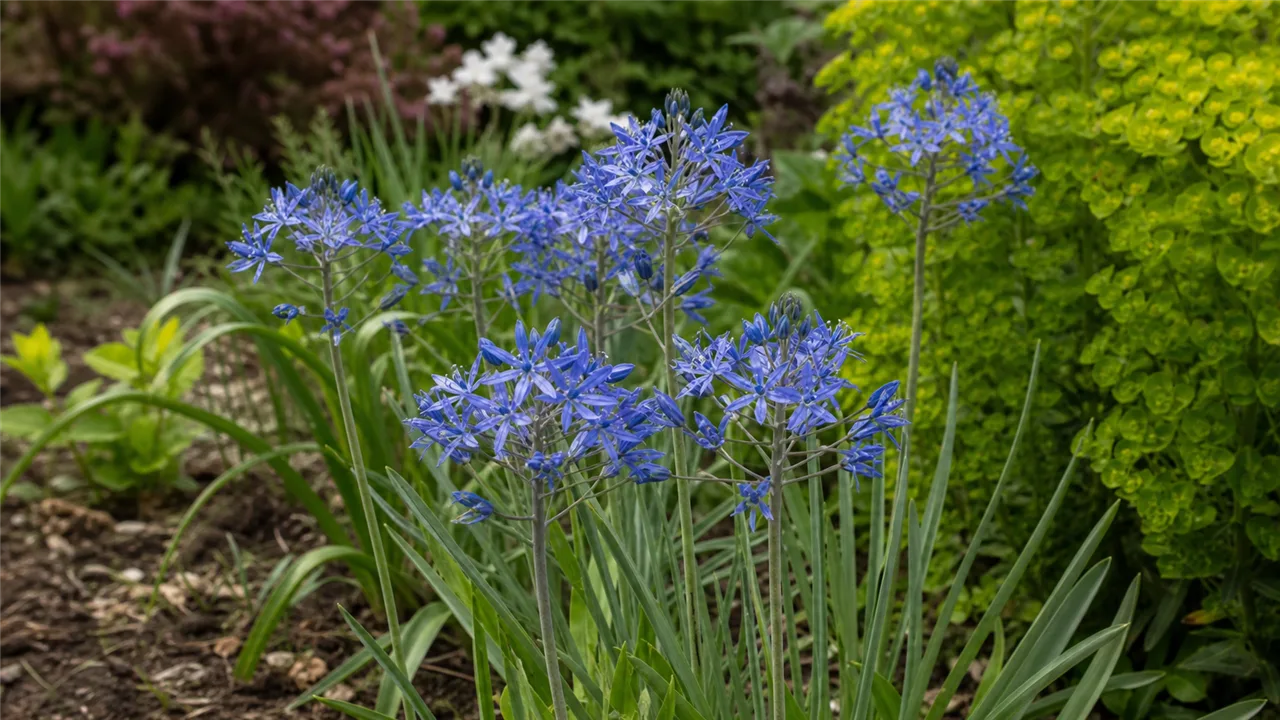
From July into August, each stem carries a loose umbel of roughly 10–20 pendant flowers. Individual blooms are small, bell-shaped and usually pink to pale lilac, with six tepals around 6–8 mm long. Their slender stalks radiate from the downward-facing centre, creating a fountain-like silhouette. The effect is most clearly appreciated when plants are placed where the flowers can be viewed from the side rather than hidden behind taller neighbours.
After pollination, the flowers give way to seed capsules. The drying heads retain some structure and may be left in place if seed is wanted. The foliage eventually yellows and dies back as nutrients return to the bulb. In hotter parts of its native range summer dormancy can be pronounced; under typical UK conditions the transition is often less abrupt, although dry weather can hasten it.
Growing Conditions
Choose a site in full sun for the strongest stems and most abundant flowering. Light partial shade is tolerated, especially where the plant receives direct sun for a substantial part of the day, but dense shade can result in weaker growth and fewer flowers. An open position also encourages foliage to dry after rain, reducing conditions favourable to fungal disease.
Drainage is the most important soil requirement. Nodding onion grows in average to moderately fertile soil and does not need rich ground. Neutral to alkaline conditions suit it particularly well, reflecting its occurrence in limestone habitats, though a mildly acidic soil can be acceptable if drainage is good. Heavy clay should be improved with grit and organic matter, or the bulbs can be grown in a raised bed or container rather than in a wet pocket.
In UK gardens, winter wet is generally a greater threat than summer drought. Established plants cope with dry periods because their bulbs store reserves, but they flower and establish best when the soil does not remain completely parched throughout active growth. Avoid low-lying sites where rainwater collects, impermeable compacted soil and containers without clear drainage holes.
A sunny gravel garden or rockery can provide ideal conditions. In a conventional border, combine the bulbs with plants that enjoy similarly free-draining soil and will not smother their narrow spring foliage. Low ornamental grasses make effective companions, as do drought-tolerant perennials with contrasting flower forms. Leave sufficient open space around young clumps so that air can circulate and the bulbs can increase.
Container cultivation is possible using a peat-free, free-draining compost with added grit. A terracotta pot helps excess moisture escape, but containers dry faster than open ground and need closer attention in spring and early summer. Raise the pot on feet during prolonged wet weather and avoid leaving it in a water-filled saucer.
Planting and Care
Plant bulbs in autumn, from September to November, or in March and April if autumn planting was missed. Set them about 10–15 cm deep and 10–15 cm apart, with the pointed end uppermost. In dense soil, place a shallow layer of grit beneath the bulbs and improve the surrounding planting area rather than creating an isolated pocket that can fill with water. Groups of several bulbs give a more immediate display, while generous spacing allows each clump to expand.
Water newly planted bulbs to settle the soil, then keep it lightly moist rather than saturated while roots establish. Established plants usually need little supplementary water in open ground. During a prolonged dry spell in spring or early summer, water thoroughly and less frequently, allowing moisture to penetrate to root depth. Container-grown specimens require more regular checks; water when the upper layer of compost has begun to dry.
Feeding should be restrained. Apply a light dressing of balanced granular fertiliser in early spring if growth is weak or the soil is poor. Plants in reasonably fertile borders may need no annual feeding. Excess nitrogen can encourage soft leaves at the expense of flowers and may make growth more vulnerable to disease. Container plants can receive a modest balanced liquid feed during active growth, following the product rate.
Routine pruning is neither required nor appropriate for this bulbous perennial. Dead flower heads may be removed for neatness, but leaving some to mature supplies seed and prolongs structural interest. Do not remove green leaves after flowering: allow them to turn yellow and die down completely so the bulbs can replenish their reserves. Once dry, the old foliage can be pulled or cut away. Marking the clump can prevent accidental damage while it is dormant.
Propagation by division is the quickest way to obtain plants that match the parent. Lift an established clump in September or October, gently separate the bulbs and offsets, then replant promptly at their original depth. Division is useful when flowering declines through crowding, but the plants do not require annual disturbance. Small offsets may take time to reach flowering size.
Seed propagation is slower and germination can be irregular, sometimes extending over two years. Collect ripe seed from dry capsules and sow it in a free-draining compost. Keep pots outdoors in a sheltered position so the seed receives natural seasonal temperature changes, while protecting seedlings from waterlogging and slugs. Grow young plants on until bulbs are large enough to transplant; flowering may take several seasons.
For seasonal care, check for emerging shoots and slug damage in March and April, feed lightly if needed, and water only during sustained dry weather. Flowers appear in July and August. Plant or divide in autumn, then keep the site free-draining through winter. In pots, shelter from persistent rain rather than moving plants into warm indoor conditions.
Common Problems
Bulb rot is the principal problem. Affected plants may fail to emerge, collapse despite moist soil or reveal soft, discoloured bulbs when lifted. Waterlogged, compacted ground is the usual cause. Remove decayed bulbs and contaminated compost, improve drainage and avoid replanting susceptible bulbs immediately into the same wet conditions. Watering more often will worsen symptoms caused by rot.
Allium rust produces orange or brown pustules on the leaves and is more likely during damp weather. Remove badly affected foliage once it is no longer contributing significantly to the bulb, clear dead material at the end of the season and avoid crowding. Water the soil rather than wetting leaves. Powdery mildew may create a pale, dusty coating during humid or poorly ventilated conditions; wider spacing and balanced watering help reduce stress and improve airflow.
Allium leaf miner can damage cultivated and ornamental onions. The adult fly lays eggs on leaves, and larvae tunnel through foliage towards the bulb. Pale mines, distorted leaves and declining growth may indicate an attack. Remove heavily infested material rather than composting it, and avoid moving affected bulbs around the garden. Fine insect mesh can protect small groups during adult flight periods where the pest is locally troublesome.
Slugs and snails sometimes graze tender shoots as they emerge in spring. Check plants after mild, wet nights, remove hiding places close to vulnerable clumps and use wildlife-conscious controls where damage is persistent. Container rims and raised positions can make monitoring easier, though neither guarantees protection.
Poor flowering is commonly linked to insufficient light, overcrowded clumps, premature foliage removal or overly rich feeding. Move shaded plants during dormancy, divide congested groups in autumn, and let leaves die naturally. A bent flower stem alone is not a disorder: the characteristic downward curve is the defining feature of nodding onion.
Popular Varieties
Named cultivars of Allium cernuum are not widely standardised in UK horticulture, and listings may differ between nurseries. The straight species is therefore the most dependable choice. It has pink to pale lilac flowers and retains the characteristic loose, downward-facing umbels.
A white-flowered form is sometimes sold as Allium cernuum ‘Album’ or under the descriptive name A. cernuum f. album. Naming and availability are inconsistent, so buyers should check the nursery's description and plant label rather than assuming every white selection represents a formally established cultivar.
Plants labelled Allium cernuum ‘Hidcote’ have also appeared in horticultural trade and collection records, generally associated with a selected ornamental form. Availability is limited, and details can vary between sellers. Source it from a specialist nursery able to confirm the plant's identity and distinguishing features.
The name ‘Major’ is occasionally encountered for a more vigorous or larger-flowered selection, but it is not consistently offered and documentation is limited. It should not be confused with a separate botanical variety merely because the epithet suggests larger growth. For reliable garden performance, prioritise healthy, correctly identified bulbs of the species from a reputable supplier; natural variation in flower colour and stature can still provide an attractive display.
Cultivars and Varieties
| Cultivar | Height | Flower | Notes | AGM |
|---|---|---|---|---|
| 'Hidcote' | — | — | RHS AGM (H6) | ✓ |
Pests and Diseases
| Problem | Symptoms | Management |
|---|---|---|
| Allium leaf miner | White blotches or tunnels appear on leaves, causing them to wither and collapse. | Remove affected foliage immediately after flowering to break the life cycle. |
| Onion white rot | Bulbs rot and produce white, cottony fungal growth with tiny black specks. | Avoid planting alliums in infected soil for at least 10 years; ensure good drainage. |
| Onion fly | Young shoots turn yellow and wilt as larvae feed on the bulb base. | Use insect-proof netting from early spring to protect emerging foliage. |
| Onion downy mildew | Yellowish patches develop on leaves, followed by grey-purple fuzzy mould. | Improve air circulation and avoid overhead watering to keep foliage dry. |
| Slugs and snails | Irregular holes are eaten in young leaves and emerging shoots. | Apply slug pellets or use beer traps around the base of plants. |
For step-by-step help, read Dealing with Slugs and Snails and Treating Powdery Mildew. Or browse the full plant problem solver to diagnose an issue by symptom.
Recommended Products
GardenWizz earns a commission from qualifying purchases made through affiliate links on this page (including links within the article) — as an Amazon Associate, and from Thompson & Morgan via the Awin network. This does not affect the price you pay. See our disclaimer for details.