Digenous Sage
Salvia digenea
The Gardening Year
Best months in UK gardens · full planting calendar →
🖨 Printable care card (PDF)At a Glance
| Botanical name | Salvia digenea |
|---|---|
| Common name(s) | Digenous Sage |
| Family | Lamiaceae |
| Plant type | perennial |
| Height × Spread | 50–100 cm × 10–50 cm |
| Position | Full sun, Partial shade |
| Soil | light, moderately fertile, humus-rich, moist but well-drained soil; Chalk Loam Sand; Acid or Alkaline or Neutral pH |
| Flowering | July–August |
| Toxicity | — |
| Native range | — |
Salvia digenea is a late-season herbaceous perennial from Mexico and Central America, increasingly grown in UK gardens for its showy spikes of violet-blue flowers, aromatic foliage, and reliable value to pollinators. Plants form upright, leafy clumps and flower from midsummer into early autumn, bridging the gap between the main flush of border perennials and the late asters and dahlias. Although still relatively uncommon in British cultivation, it sits comfortably alongside more familiar salvias and rewards a sheltered, sunny spot with weeks of colour.
Overview
Salvia digenea belongs to the Lamiaceae, or mint, family — a vast group that includes familiar culinary herbs as well as a large proportion of today's ornamental "salvia" border plants. Within the genus it sits among the Mexican and Central American species that have driven much of the modern salvias wave, sharing their preference for warm, sunny summers and freely drained soil. In the UK it is grown as a border perennial for its flowers rather than as a culinary herb, and it is most at home in a sunny, sheltered bed where the soil does not sit wet through the winter.
Gardeners tend to value Salvia digenea for three qualities: an unusually long flowering season, fragrant foliage that holds from spring until the first hard frost, and an open flower form that draws in bees, bumblebees, and hoverflies. Because it flowers into September, it is a useful source of nectar late in the season when many other border perennials are finishing. Its habit is clump-forming rather than invasive, so it coexists well with neighbouring plants in mixed borders.
UK suitability is best in the south and west, in mild coastal or urban gardens, and in any sheltered courtyard or wallside border. In colder inland districts it benefits from a dry winter mulch, and in the coolest areas growth can be slower to start in spring. The plant holds a hardiness rating which is displayed alongside this article; readers in colder parts of the country should check their local conditions against that rating before planting out.
Appearance
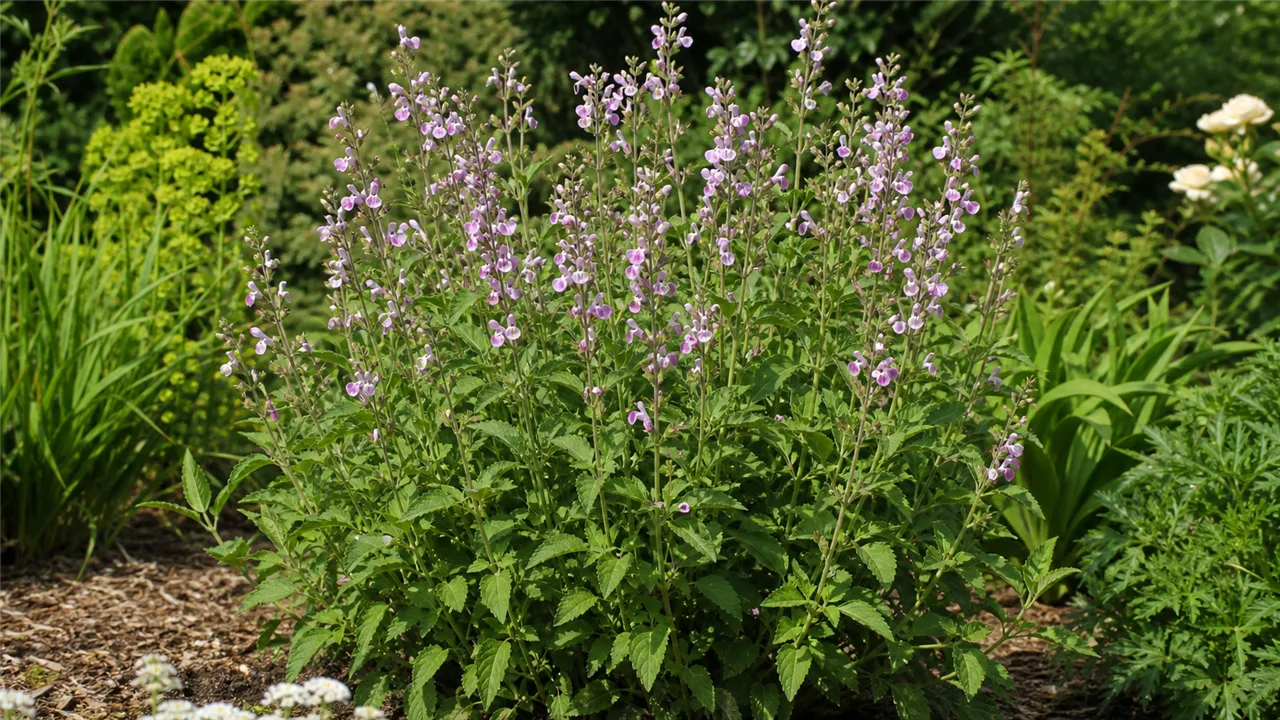
Salvia digenea is an upright, clump-forming perennial that typically reaches 60–90 cm in height with a spread of 45–60 cm. Established plants develop a tidy basal rosette of leaves from which the flower stems rise in mid- to late summer. The overall effect is of an airy, vertical spike rising above the foliage, with flowers carried in tiered whorls up the upper portion of each stem.
The stems are square in cross-section, as is characteristic of the mint family, and they branch gently above to carry several flowering spikes per plant. Stems are largely herbaceous through summer but develop slightly woody bases on older plants, giving them a small sub-shrubby character at ground level.
Leaves are opposite, lance-shaped to broadly ovate, with finely serrated margins. They are mid-green and softly hairy on the upper surface, paler beneath, and release a strong, pleasant aroma when brushed or crushed — a typical sage-family scent, though not generally used in cooking for this species. Leaves are carried from spring until the first hard frost of autumn.
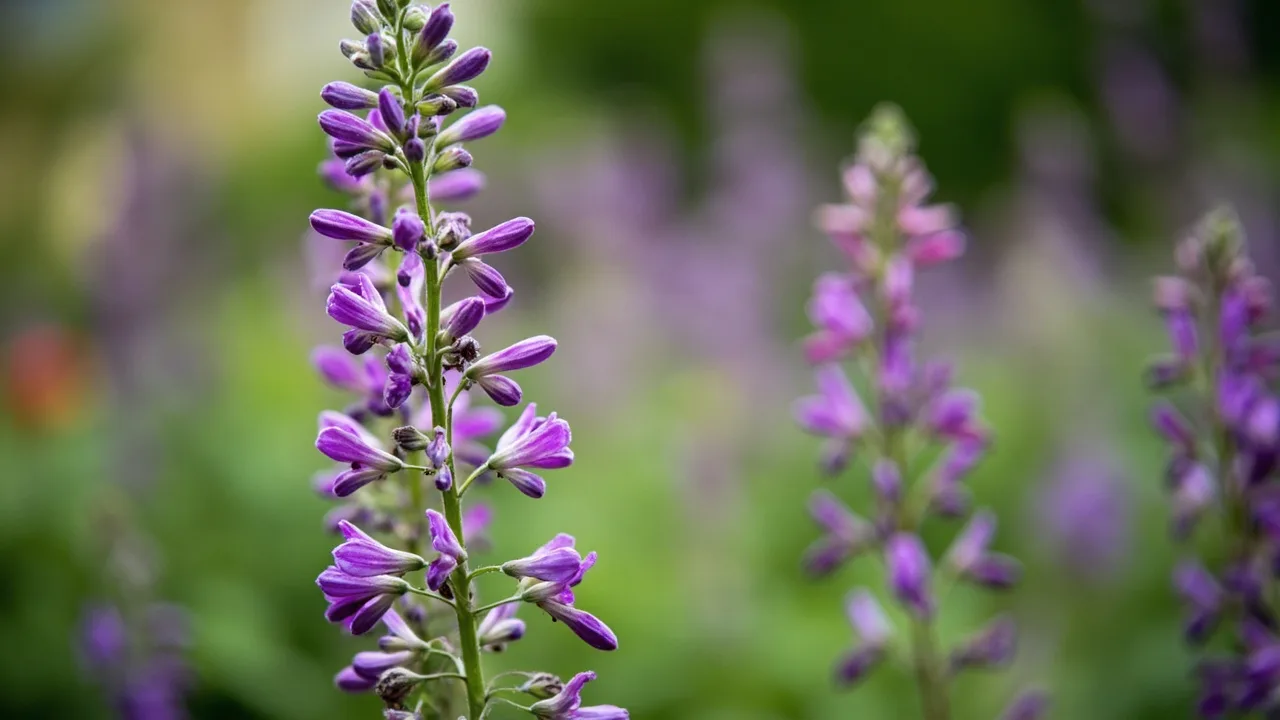
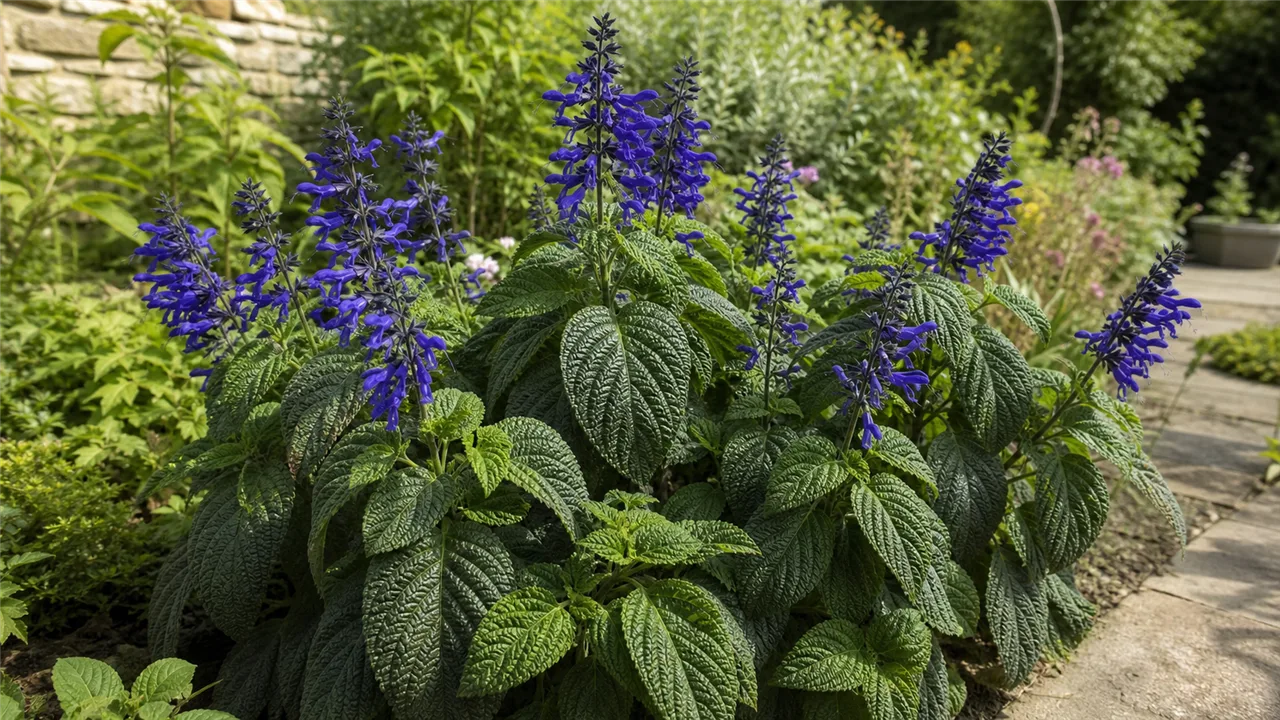
The flowers are the main ornamental feature. Each bloom has the classic two-lipped sage form: a hooded upper lip and a broader, spreading lower lip that acts as a landing platform for pollinators. Colour is a clear violet-blue to soft purple, and the flowers are arranged in whorls along the terminal spikes, opening progressively from the base of the spike upwards. UK flowering runs from July into September, with the peak display typically in August.
The root system is fibrous and spreading rather than tap-rooted. Established clumps can be lifted and divided every few years to maintain vigour.
Growing Conditions
Salvia digenea thrives in a sunny, sheltered position with freely drained soil. Full sun gives the strongest flowering and the most compact growth, though the plant will tolerate light dappled shade, particularly in the hottest part of the day during an average UK summer. South-facing and east-facing borders are ideal; west-facing sites can work but tend to be cooler and slower to dry in winter. A position sheltered from cold, drying winds helps young spring growth establish without setback.
Soil should be well-drained and moderately fertile. The plant grows well in average garden loam and tolerates a range of pH, though very acidic or very chalky soils benefit from added organic matter. The single most important soil requirement is sharp winter drainage. Salvia digenea dislikes cold, wet ground, and losses over winter are far more often caused by waterlogged roots than by cold air temperatures alone. Incorporating grit or sharp sand into heavy clay and, if necessary, planting on a low mound will markedly improve survival. Container culture is also successful provided the pot has free drainage and is not left standing in a saucer of water through the winter months.
The plant holds an RHS hardiness rating that is displayed via this article's badge field; gardeners in the colder end of the UK should take that rating into account when choosing a site and consider a mulch of bracken or straw around the crown once top growth has died back in autumn.
Planting and Care
Plant Salvia digenea in spring, from March to May once the risk of hard frost has passed, or in early autumn in milder areas where the soil still holds summer warmth. Spring planting gives the longest establishment period before the first winter and is generally the safer choice across most of the UK. Space plants 45–60 cm apart to allow the clumps to develop fully without becoming congested.
Water regularly during the first growing season to help roots establish; once established the plant is reasonably drought-tolerant and only needs supplementary watering during prolonged dry spells in summer. A light dressing of a general-purpose fertiliser in spring is sufficient. Avoid heavy nitrogen-rich feeds, which push leafy growth at the expense of flowers and can make stems floppy.
Tidy the plant in spring rather than autumn: cut back the dead top growth to near ground level in March, when the worst of the winter weather has passed but before new shoots emerge strongly. In autumn, simply tidy spent flower spikes; leaving the stems in place over winter helps protect the crown from the worst of the weather and provides a small amount of shelter for overwintering insects. In colder districts, apply a dry mulch of bracken, straw, or bark chips around the crown after cutting back.
Propagation is straightforward. Established clumps can be divided in March or April, lifting the plant and teasing apart sections of rooted growth before replanting. Soft-tip cuttings can be taken in late spring or early summer and rooted in a free-draining mix under cover. Seed can also be sown in spring, though named forms are not commonly available and seedlings will vary.
Across the calendar, the key windows for this species are: divide in March or April (or September to October in milder districts as a secondary window); cut back in March; expect flowers from July through September.
Common Problems
The most common problem with Salvia digenea in the UK is winter loss caused by cold, wet soil rather than by cold air alone. Improving drainage and avoiding low-lying planting positions is the single most effective preventative measure. Young spring growth can be blackened by late frosts; affected shoots usually regrow from the crown once conditions improve.
Powdery mildew can appear on the leaves in warm, dry summers when plants are crowded and air circulation is poor. Give plants their full recommended spacing and avoid overhead watering late in the day to reduce the risk. Aphids may cluster on young shoot tips and developing flower spikes; they are usually easy to manage by washing off, pinching out affected tips, or by encouraging natural predators in a diverse border. Slugs and snails can damage young seedlings and fresh spring growth, so protect new growth in damp conditions.
Verticillium wilt is uncommon but possible; affected plants wilt, yellow, and fail to recover with watering. Such plants should be lifted and disposed of rather than composted, and the site should not be replanted with another susceptible perennial for a season or two.
Popular Varieties
Salvia digenea is a relatively uncommon species in UK cultivation and is most often grown as the species type without a separate cultivar name. Named selections and cultivars are not widely listed in mainstream British plant catalogues at present, so the following entry describes the typical species form rather than separate varieties.
- Salvia digenea (species form) — upright clumps 60–90 cm tall with violet-blue flowers in whorled spikes from July to September, and aromatic mid-green foliage. The form most commonly offered by specialist salvia nurseries in the UK.
- Salvia digenea 'Pale Form' — occasionally offered by a small number of specialist nurseries, with flowers in a softer, paler blue than the typical species. Availability is limited; check with salvia specialists rather than expecting to find it in a general garden centre.
- Salvia digenea seed-raised strain — sold by some seed merchants as a mixed colour strain, where individual seedlings vary slightly in flower colour and plant size from the typical violet-blue. Best treated as a population rather than a uniform cultivar.
Because named cultivars are scarce and the species itself is not as widely grown as its relatives such as Salvia 'Amistad' or Salvia guaranitica, gardeners seeking a particular form should buy from specialist salvia nurseries where the available stock is labelled accurately to species or selection.
Cultivars and Varieties
| Cultivar | Height | Flower | Notes | AGM |
|---|---|---|---|---|
| 'Rubin' | — | — | RHS AGM (H7) | ✓ |
Pests and Diseases
| Problem | Symptoms | Management |
|---|---|---|
| Powdery mildew | A white, dusty fungal growth appears on leaves and stems, often causing distortion or yellowing. | Improve air circulation, avoid overhead watering, and apply a suitable fungicide if severe. |
| Slugs and snails | Irregular holes in leaves and silvery slime trails on foliage and soil surface. | Use physical barriers like copper tape or eggshells, or apply iron phosphate-based pellets. |
| Root rot | Plants wilt despite moist soil, with yellowing leaves and potentially blackened, mushy roots. | Ensure well-drained soil and avoid overwatering; remove affected plants to prevent spread. |
| Verticillium wilt | Sudden wilting and browning of leaves on one side of the plant, often with internal stem discoloration. | Remove and destroy infected plants; avoid replanting salvias in the same spot for several years. |
| Sage leafhopper | Leaves show stippling, yellowing, or silvering damage, sometimes with small white nymphs visible. | Monitor regularly and use insecticidal soap or horticultural oil for heavy infestations. |
For step-by-step help, read Dealing with Slugs and Snails and Treating Powdery Mildew. Or browse the full plant problem solver to diagnose an issue by symptom.
Recommended Products
GardenWizz earns a commission from qualifying purchases made through affiliate links on this page (including links within the article) — as an Amazon Associate, and from Thompson & Morgan via the Awin network. This does not affect the price you pay. See our disclaimer for details.