Ninebark
Physocarpus opulifolius
The Gardening Year
Best months in UK gardens · full planting calendar →
🖨 Printable care card (PDF)At a Glance
| Botanical name | Physocarpus opulifolius |
|---|---|
| Common name(s) | Ninebark |
| Family | Rosaceae |
| Plant type | shrub |
| Height × Spread | 1–3 m × 1–2 m |
| Position | Full sun, Partial shade |
| Soil | acidic, moderately fertile, humus-rich; tolerates alkaline but chlorosis may occur on shallow chalk; moist but well-drained |
| Flowering | May–June |
| Toxicity | — |
| Native range | eastern North America |
Overview
Ninebark (Physocarpus opulifolius) is a deciduous flowering shrub native to eastern North America, widely grown in British gardens for its foliage, clusters of late-spring flowers and peeling winter bark. It belongs to the rose family (Rosaceae) and takes its common name from the layered, papery strips of bark that peel away from mature stems in winter, traditionally said to provide nine distinct layers. In UK cultivation it is valued chiefly for its coloured-leaved cultivars, which hold their bronze, copper, purple or near-black colour from spring through to autumn, and for its tolerance of cold winters, exposed sites and a wide range of soil types.
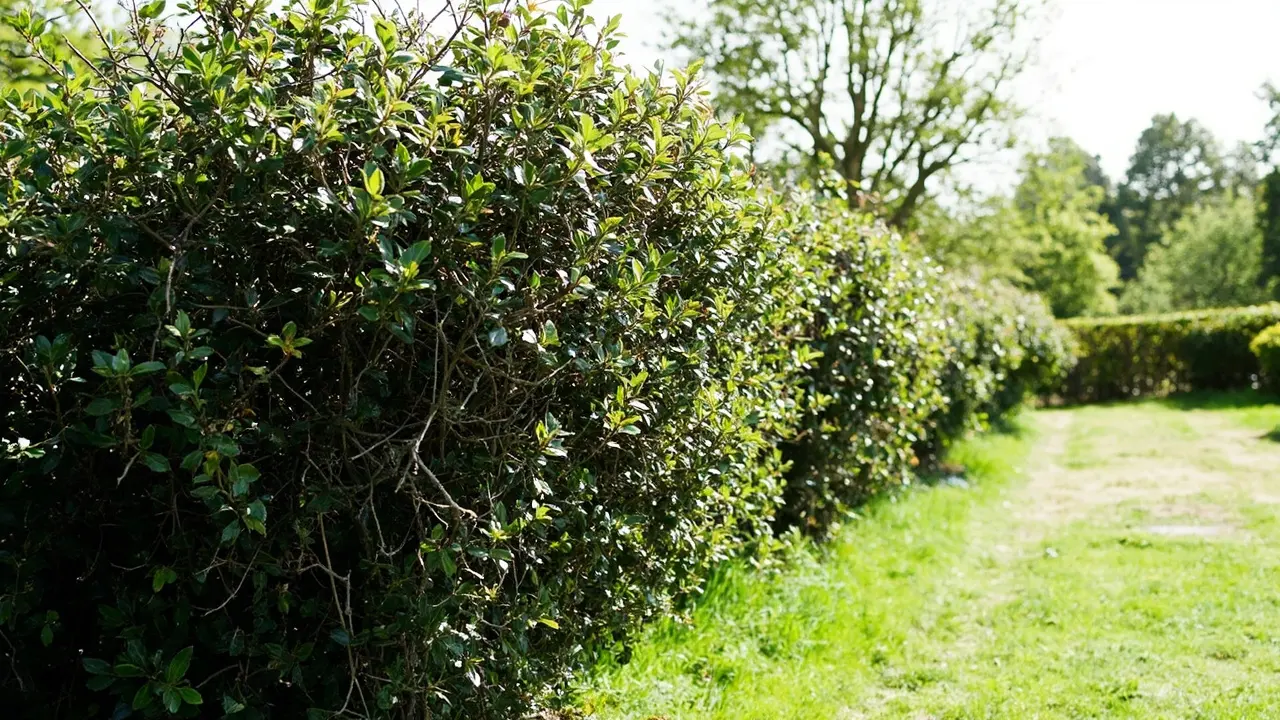
The shrub is hardy across most of the UK and is straightforward to grow, suiting mixed borders, informal hedging and wildlife-friendly planting. It flowers on the previous season's wood, carries attractive seed heads through autumn and tolerates hard renovation pruning when needed.
Appearance
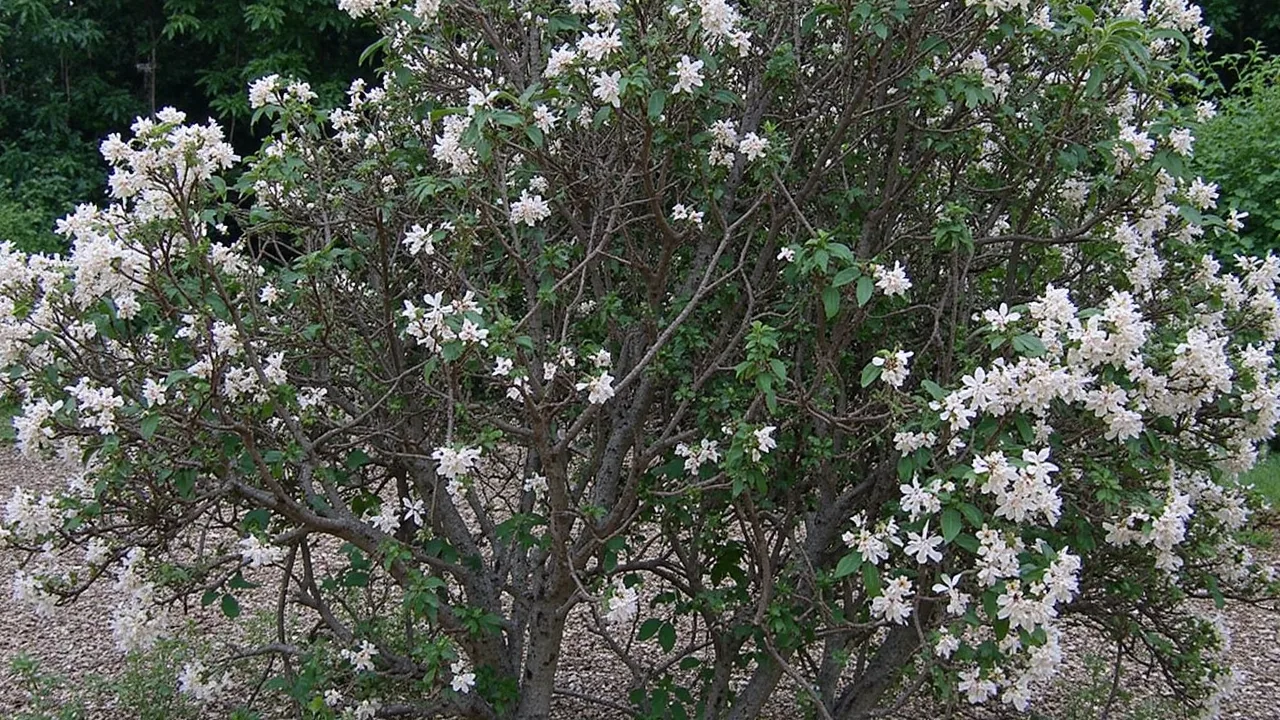
Ninebark forms a dense, mounded or upright shrub with arching branches. Mature height and spread depend on cultivar and pruning; most commonly grown forms reach around 2–2.5 m in both directions after five or six years, with dwarf cultivars staying closer to 1–1.2 m. The growth habit is multi-stemmed, with new shoots emerging from low on the plant, particularly after pruning or coppicing.
The leaves are the main ornamental feature in most cultivars. They are broadly ovate, three- to five-lobed with serrated edges, and arranged alternately along the stem. Leaf size ranges from roughly 3 cm across on dwarf forms to 8–10 cm on vigorous plants. Foliage colour varies by cultivar: the species type is a fresh mid-green, while named cultivars may be bright golden-yellow, lime, coppery orange, deep purple, or a very dark burgundy that reads almost black in shade. Many coloured-leaved forms flush brightest in spring, deepen through summer, and take on red or bronze tints before leaf fall in autumn.
Flowers appear in dense, rounded corymbs (dome-shaped clusters), typically 3–5 cm across, made up of small five-petalled blossoms in white or pink-tinged white. In the UK, the main flowering flush is late May into June. The blooms are followed by inflated, bladder-like seed pods that turn from green to reddish-brown and persist on the plant through summer and into autumn, often alongside the developing foliage display.
Bark is smooth and reddish-brown on young stems, becoming grey-brown with age. From the third or fourth year onwards the outer bark sheds in thin papery strips, a feature that gives the plant its winter interest. On coppiced specimens the new straight rods carry particularly vivid bark colour.
Growing Conditions
Ninebark performs reliably across most of the UK, including cooler northern regions and exposed gardens. It tolerates frost, wind and short periods of summer drought once established, although foliage colour is best where the plant does not suffer prolonged dryness.
It grows best in full sun, where coloured-leaved cultivars develop the strongest tints — golden forms turn deeper amber and purple forms deepen to near-black. Light, dappled shade is acceptable, particularly in the south of England where very hot afternoon sun can scorch the youngest leaves in midsummer, but heavy shade reduces flowering and tends to wash out foliage colour. A position with good air movement helps reduce the risk of powdery mildew in still, humid summers.
Soil requirements are modest. Ninebark grows well in loam, clay-loam and sandy soils provided drainage is reasonable; it does not thrive in ground that waterlogs for long periods in winter. It tolerates a range of pH from mildly acidic to mildly alkaline. Mulching in spring with compost or leaf mould conserves moisture and keeps the root run cool, which is particularly beneficial on thin, free-draining soils.
UK seasonal guidance: plant container-grown specimens in autumn or spring; expect the main flush of new growth in April, flowering in late May and June, seed heads developing through July and August, and attractive autumn tints in October before leaf drop in November. The peeling bark then provides structure from December through to March.
Planting and Care
Planting. Container-grown ninebark can be planted at any time between autumn and spring when the ground is workable and not frozen. Bare-root stock, less commonly offered, is best planted from October to November. Dig a hole roughly twice the width of the rootball and the same depth, loosen the base, and set the plant so the soil mark on the stem sits level with the surrounding ground. Backfill with the excavated soil, firm in well, water thoroughly and apply a 5–7 cm mulch of compost or bark, keeping the mulch clear of the stems. For a hedge, space plants about 60–90 cm apart.
Watering. During the first growing season, water deeply once a week in dry spells to encourage roots to establish. After that, ninebark is reasonably drought-tolerant, although a soak during prolonged dry periods in July and August will keep foliage looking fresh and reduce stress that can predispose plants to powdery mildew.
Feeding. A single annual feed in early spring is sufficient. Apply a balanced general-purpose fertiliser, or top-dress with a 5 cm layer of well-rotted garden compost or manure around the root area. On very poor sandy soils an additional light feed in June can be useful, particularly for coloured-leaved cultivars that lose intensity in thin ground.
Pruning. Ninebark flowers on wood produced the previous year, so routine pruning is timed to preserve the flowering framework. The simplest approach is to remove one in three of the oldest stems at ground level each year, immediately after flowering in June or July. This keeps the plant productive and showcases younger, more brightly coloured stems. An alternative, used where the strongest foliage colour is wanted, is hard coppicing: cut all stems back to within 10–15 cm of the ground in late winter (February or March). Coppiced plants produce vigorous straight shoots with the largest, most intensely coloured leaves, but flowering that year is sacrificed. Renewal pruning on a three- or four-year cycle keeps larger cultivars within bounds.
Propagation. Semi-ripe cuttings root reliably in summer. Take shoots of about 10–15 cm from the current season's growth, trim below a leaf joint, remove the lower leaves and insert into a 50:50 mix of peat-free compost and perlite. Keep cuttings under a clear cover in a shaded cold frame or propagator; rooting usually occurs within six to eight weeks. Hardwood cuttings taken in late autumn also root successfully, though more slowly. Named cultivars should always be propagated vegetatively, as seed will not come true.
Seasonal care. In November collect and dispose of any fallen leaves around the base if powdery mildew was a problem the previous year, to reduce overwintering spores. Check the base of multi-stemmed specimens after gales in late winter and firm back any plants rocked loose in soft ground.
Common Problems
Powdery mildew is the most frequently reported issue on ninebark in the UK. A white, dusty coating appears on the upper surfaces of leaves, particularly in warm, dry summers following humid spells, and is most severe on plants in shade or with poor air circulation. Mild cases are largely cosmetic; severe infections can distort new growth. Cultural measures — siting in sun with good airflow, avoiding overhead watering, mulching to reduce stress, and pruning to open the plant — are usually sufficient. Resistant cultivars are now widely available.
Aphid colonies, particularly of the rose aphid, can build up on soft new shoots in late spring and early summer. They rarely cause lasting damage but can be controlled by spraying with water, encouraging natural predators, or treating with a soft soap-based insecticide if numbers are high.
Leaf scorch on the palest golden cultivars is possible in strong midday sun, particularly on dry or sandy soils; this can be mitigated by ensuring adequate moisture and a mulch.
Ninebark is generally unaffected by honey fungus and is rarely browsed by rabbits or deer, although young shoots may be vulnerable in rural gardens.
Popular Varieties
'Diabolo' (also sold as 'Monlo') is a widely grown cultivar with deep purple-burgundy foliage that holds its colour well through summer and turns reddish in autumn. It reaches around 2–2.5 m and produces the usual pink-tinged white flowers. It has become a parent of several newer cultivars.
'Lady in Red' is an upright, more compact form with reddish-bronze new growth that matures to deeper burgundy. It typically reaches around 1.5–2 m and is well suited to smaller gardens.
'Dart's Gold' carries bright, lime-yellow foliage that bronzes slightly in autumn and is one of the most reliable golden-leaved forms in UK cultivation, reaching roughly 1.5–2 m.
'Little Devil' (also sold as 'Donna May') is a dwarf selection, generally staying under 1.2 m, with dark purple foliage similar in tone to 'Diabolo' but on a much smaller plant, making it suitable for containers and the front of borders.
Other cultivars that appear in UK nursery catalogues include 'Midnight', 'Amber Jubilee', 'Center Glow' and the Coppertina ('Mindia') group. Availability varies year to year, and not every cultivar is in production at any given time; specialist shrub nurseries are the best source for less widely grown forms.
Cultivars and Varieties
| Cultivar | Height | Flower | Notes | AGM |
|---|---|---|---|---|
| 'Burning Embers' | — | — | RHS AGM (H7) | ✓ |
| 'Dart' | — | — | RHS AGM (H7) | ✓ |
Pests and Diseases
| Problem | Symptoms | Management |
|---|---|---|
| Honey fungus | General decline, wilting foliage, and dieback of stems often accompanied by white fungal growth under the bark. | Improve drainage and avoid planting in soil previously infected; remove affected plants carefully to prevent spread. |
| Chlorosis | Yellowing of leaf blades with green veins, particularly on alkaline or shallow chalk soils. | Apply ericaceous compost or chelated iron fertiliser to correct nutrient availability in high-pH soils. |
| Powdery mildew | White, dusty fungal growth on leaves and young shoots, potentially causing distortion. | Ensure good air circulation by thinning dense growth and water at the base to keep foliage dry. |
| Slugs and snails | Irregular holes chewed in young leaves and seedlings, often with slimy trails visible. | Use physical barriers like copper tape or apply organic slug pellets around the base of the shrub. |
| Vine weevil | Notched edges on leaves and root damage leading to wilting, particularly in potted specimens. | Apply systemic insecticide drenches or biological controls like nematodes to the soil. |
For step-by-step help, read Dealing with Slugs and Snails and Treating Powdery Mildew. Or browse the full plant problem solver to diagnose an issue by symptom.
Recommended Products
GardenWizz earns a commission from qualifying purchases made through affiliate links on this page (including links within the article) — as an Amazon Associate, and from Thompson & Morgan via the Awin network. This does not affect the price you pay. See our disclaimer for details.