Japanese Barberry
Berberis thunbergii
The Gardening Year
Best months in UK gardens · full planting calendar →
🖨 Printable care card (PDF)At a Glance
| Botanical name | Berberis thunbergii |
|---|---|
| Common name(s) | Japanese Barberry |
| Family | Berberidaceae |
| Plant type | shrub (deciduous) |
| Height × Spread | 90–100 cm × 0.9–2.5 m |
| Position | Full sun, Partial shade |
| Soil | well-drained soil; most soils |
| Flowering | April–June |
| Toxicity | All parts of the plant, especially the berries, are toxic to humans if ingested. |
| Native range | Japan and eastern Asia |
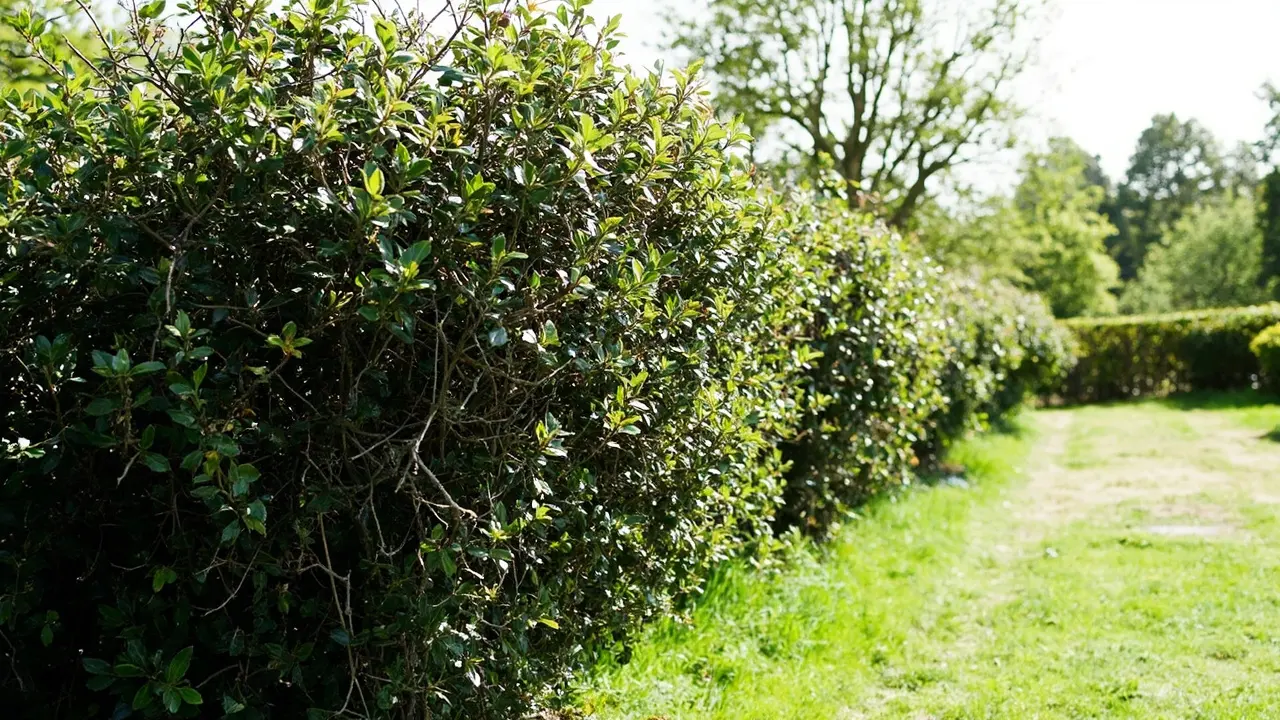
Japanese barberry (Berberis thunbergii) is a dense, deciduous shrub grown in British gardens primarily for its foliage, its compact habit and its tolerance of difficult sites. Native to Japan, it has been cultivated in the UK since the late nineteenth century and remains widely available from mainstream garden centres and specialist shrub nurseries. It is often chosen where a tough, low-maintenance shrub is needed for hedging, ground cover, or as a specimen in mixed borders.
A note on status in the UK: in England and Wales, Berberis thunbergii is listed on Schedule 9 of the Wildlife and Countryside Act as a non-native invasive plant, and it is an offence to plant it in the wild or to allow it to escape into the surrounding countryside. Garden cultivation is not prohibited, but gardeners should site it carefully, dispose of prunings and seed responsibly, and consider sterile cultivars where available.
Overview
Japanese barberry belongs to the Berberidaceae family and is closely related to the common European barberry (Berberis vulgaris) and to hybrid cultivars bred from crosses between the two. It forms a rounded to arching shrub, typically 0.6–1.5 m tall depending on cultivar, with fine, twiggy growth. In the UK it is fully hardy across most regions, holds an RHS hardiness rating shown on the plant badge, and is grown primarily as a foliage plant rather than for its flowers. Red- and purple-leaved forms provide strong summer colour and good autumn tints, while dwarf cultivars are widely used as informal edging or as low alternatives to box hedging (Buxus sempervirens).
In British gardens, B. thunbergii has several practical advantages. It tolerates a wide range of soils, including thin chalky and clay soils; it grows in sun or partial shade; it is largely unbothered by deer and rabbits; and it copes well with exposed sites and urban pollution. It is, however, thorny, and is one of the shrubs most often planted at the base of vulnerable windows for that reason.
Japanese barberry is widely used in UK amenity planting, from supermarket car parks to country gardens, because it establishes quickly from container stock, holds its shape without frequent trimming, and recovers well from the occasional accident with a strimmer. Its tolerance of reflected heat makes it a reliable choice for paved courtyards and south-facing front gardens, where many softer shrubs struggle. The dense, twiggy interior also provides useful nesting cover for robins, dunnocks and wrens during the breeding season, which is one reason it is often included in wildlife-friendly planting schemes alongside native species such as hawthorn and hazel.
Appearance
The leaves are small, spatula-shaped, and arranged in clusters along the arching stems. They are typically 1–2 cm long, smooth-edged, and borne on short side shoots that emerge from the previous year's wood. Spring and summer foliage ranges from mid-green through bronze and deep purple, depending on cultivar, and turns vivid orange, scarlet and crimson before leaf fall in October and November. A few cultivars hold their colour well into winter and may remain semi-evergreen in mild coastal districts.
Flowering occurs in late April and May, when clusters of small, pale yellow, pendant flowers appear along the stems. Individual blooms are around 8–10 mm across, with six petals and a reddish tinge on the outside of the bud. They are followed by glossy, oblong red fruits roughly 7–10 mm long that ripen from late summer and often persist on the plant well into winter, providing useful food for garden birds.
The stems are pale brown to reddish-brown, distinctly grooved, and carry sharp, single thorns at each leaf joint. Mature plants develop a dense, twiggy framework that makes them effective as a barrier or informal hedge.
Growing Conditions
Japanese barberry grows well across most of the UK, including northern England and Scotland, and it performs reliably on exposed sites. Its preferred conditions are:
- Sun: full sun produces the richest foliage colour, particularly in purple-leaved forms. Partial shade is tolerated but tends to dull the leaf colour and reduce flowering.
- Soil: any well-drained garden soil is suitable, including loam, chalk, sandy soils and reasonable clay. It tolerates a pH range from mildly acid to mildly alkaline, roughly 5.5 to 7.5.
- Moisture: established plants tolerate dry periods well and are often used on free-draining banks. They dislike waterlogged ground, particularly in winter.
- Exposure: it tolerates wind, including coastal winds, and urban pollution, making it useful in town gardens and on busy roadside sites.
- Aspect: east, south or west aspect all work. A sheltered north-facing position is acceptable but produces looser growth.
When planting in heavy clay, improve the planting hole with a few handfuls of coarse grit and, if available, well-rotted garden compost to aid drainage around the rootball in the first year.
Planting and Care
Plant bare-root shrubs between November and March, while the plants are dormant, and container-grown stock at any time the ground is workable, provided the soil is not waterlogged or frozen. Soak the rootball of container-grown plants in a bucket of water for an hour before planting, particularly if the compost has dried out. Dig a hole roughly twice the width of the rootball and the same depth, fork over the base, and mix a spadeful of well-rotted garden compost into the backfill. Set the plant so the soil mark on the stem sits level with the surrounding ground, backfill, firm in with your heel, and water thoroughly even in damp weather. For an informal hedge, space plants 45–60 cm apart; for a denser barrier hedge, 30–40 cm apart. After planting, water in well and apply a 5 cm mulch of composted bark or well-rotted leaf mould, keeping the mulch clear of the stems to prevent rot at the base.
Watering: water new plants regularly through their first growing season, particularly during May to July, until they show strong new extension growth. Established plants in normal British summers rarely need supplementary watering except on very free-draining sandy soils during prolonged dry spells.
Feeding: a single annual application of a balanced general-purpose fertiliser, such as blood, fish and bone or a slow-release shrub fertiliser, applied in March and lightly worked into the soil surface, is sufficient. Mulching annually with compost provides most of what an established plant needs.
Pruning: Japanese barberry needs little routine pruning. The best time to prune is in mid- to late summer, immediately after flowering, which avoids disturbing nesting birds and lets the plant set fruit for autumn. Cut back wayward or crossing stems to a healthy outward-facing bud, and remove any damaged or dead wood. For a hedge, lightly trim the new growth once or twice between June and August. Plants can be rejuvenated by cutting one in three of the oldest stems back to within 10 cm of the ground in late winter; this is preferable to hard pruning the whole plant in one go.
Propagation: take semi-ripe heel cuttings 8–10 cm long in July or August, insert them into a 50:50 mix of peat-free compost and sharp sand, and keep them in a cold frame or shaded propagating case. Rooting usually takes six to ten weeks. Cuttings root readily without rooting hormone. Alternatively, layer a low flexible stem in autumn by pegging it into the soil where it touches the ground; it should be rooted and ready to sever and lift by the following autumn.
Seasonal care: in spring, watch for any frost-damaged tips and trim them back to healthy growth. In summer, dead-heading is unnecessary; the small flowers give way to decorative berries that are best left for the birds. In autumn, clear fallen leaves from around the base if they are heavy enough to smother young stems, and top up the mulch. Container-grown specimens benefit from being moved to a sheltered corner in winter in cold districts, as the compost in pots is more vulnerable to freezing than garden soil.
Common Problems
Japanese barberry is generally pest- and disease-free in the UK, which is one of the reasons it remains popular. The few issues that do occur are mostly cosmetic.
- Aphids: greenfly occasionally cluster on the soft new growth in May and June. They rarely justify treatment; a strong jet of water or encouragement of natural predators is usually enough. Heavy infestations on specimen plants can be controlled with a fatty-acid insecticidal soap.
- Powdery mildew: a white, dusty coating on the leaves can appear in dry summers, particularly on plants in shaded or drought-stressed positions. Improving air circulation, watering during dry spells and clearing fallen leaves at the base reduces the problem.
- Honey fungus: B. thunbergii is reported as susceptible, and mature plants in gardens known to have honey fungus (Armillaria) in the soil may fail suddenly. There is no chemical control; infected plants should be removed along with as much root material as possible.
- Berberis sawfly: the larvae of this sawfly can skeletonise leaves in summer in some districts, though it is more commonly reported on Berberis vulgaris and Mahonia than on B. thunbergii. Pick off colonies by hand on smaller plants; on larger specimens a contact insecticide based on pyrethrin can be considered where the infestation is severe.
- Verticillium wilt: occasional reports link Japanese barberry with verticillium wilt in garden settings, particularly on heavy clay soils following a wet winter. Affected plants show sudden wilting and yellowing on one side of the plant; there is no cure, and infected specimens should be removed and not replaced with another susceptible shrub in the same spot.
Toxicity: there is no widely accepted, authoritative source stating that Berberis thunbergii fruits or foliage are toxic to humans or to dogs and cats. As with most ornamental shrubs, it is sensible to discourage children and pets from eating the berries, but the plant is not generally regarded as hazardous. If in doubt, consult a current veterinary or medical source for the latest position.
Popular Varieties
The following cultivars are widely available from UK nurseries and are recognised by the Royal Horticultural Society. Names and descriptions are taken from established horticultural references; specific RHS Award of Garden Merit status should be checked against the current RHS plant finder, as awards are reviewed periodically.
- 'Atropurpurea Nana' — a compact dwarf form, typically 60 cm tall and slightly wider, with deep reddish-purple foliage that turns bright scarlet in autumn. Widely used for low edging, parterre work and as a small-scale box substitute.
- 'Rose Glow' — a medium-sized cultivar reaching around 1.2–1.5 m, with young foliage mottled pink and cream on a purple background, maturing to deeper purple. One of the most popular Japanese barberries in British garden centres.
- 'Aurea' — a yellow-leaved form of similar size to the species, with bright lime-yellow spring foliage that fades to green in partial shade. Best planted in light shade, where the leaf colour does not scorch.
- 'Admiration' — a recent dwarf cultivar with small leaves edged in orange-red on a gold background, reaching roughly 40–50 cm. Useful in containers and at the front of borders.
- 'Orange Rocket' — an upright, columnar form reaching around 1.2 m tall with vivid orange new growth maturing to green and red. A good vertical accent plant, often sold as a contemporary alternative to upright conifers.
For gardeners concerned about invasiveness, sterile or low-fruiting cultivars such as 'Orange Rocket' and some of the dwarf pigmented forms set relatively little viable seed and are a more cautious choice for sites near rough ground or open countryside, though no cultivar can be guaranteed seed-free.
Cultivars and Varieties
| Cultivar | Height | Flower | Notes | AGM |
|---|---|---|---|---|
| 'Admiration' | — | — | RHS AGM (H7) | ✓ |
| 'Atropurpurea Nana' | — | — | RHS AGM (H7) | ✓ |
| 'Concorde' | — | — | RHS AGM (H7) | ✓ |
| 'Dart' | — | — | RHS AGM (H7) | ✓ |
| 'Fireball' | — | — | RHS AGM (H7) | ✓ |
| 'Golden Ring' | — | — | RHS AGM (H7) | ✓ |
| 'Harlequin' | — | — | RHS AGM (H7) | ✓ |
| 'Maria' | — | — | RHS AGM (H7) | ✓ |
| 'Rose Glow' | — | — | RHS AGM (H7) | ✓ |
Pests and Diseases
| Problem | Symptoms | Management |
|---|---|---|
| Berberis sawfly | Caterpillar-like larvae skeletonise or completely defoliate leaves from May to October. | Hand-pick larvae if few, or apply a biological insecticide like spinosad for severe infestations. |
| Powdery mildew | A white, dusty fungal growth appears on leaves and shoots, potentially causing distortion. | Improve air circulation by pruning and apply a fungicide if infection is severe. |
| Aphids | Small soft-bodied insects cluster on new growth, causing leaf curling and sticky honeydew. | Encourage natural predators like ladybirds or use a strong jet of water to dislodge them. |
| Honey fungus | Plant decline with wilting, dieback, and possible white fungal growth at the base. | Improve drainage and remove infected roots; severe cases may require removing the plant. |
For step-by-step help, read Controlling Aphids Naturally and Treating Powdery Mildew. Or browse the full plant problem solver to diagnose an issue by symptom.
Recommended Products
GardenWizz earns a commission from qualifying purchases made through affiliate links on this page (including links within the article) — as an Amazon Associate, and from Thompson & Morgan via the Awin network. This does not affect the price you pay. See our disclaimer for details.