
How to Grow Runner Beans in the UK
Three 2.4 m bamboo canes tied at the top, six scarlet flowers per truss, and a child tugging the first pod off in July — runner beans are the vegetable most UK gardeners learn on, and the one that…
At a Glance
| Sow | Late April (pots) or May (direct) |
|---|---|
| Sun | Full sun |
| Soil | Fertile, moisture-retentive |
| Spacing | 15 cm apart in 45 cm double rows |
| Hardiness | H2 — tender, killed by frost |
| Difficulty | Easy |
| Time to harvest | Crops from July to October |
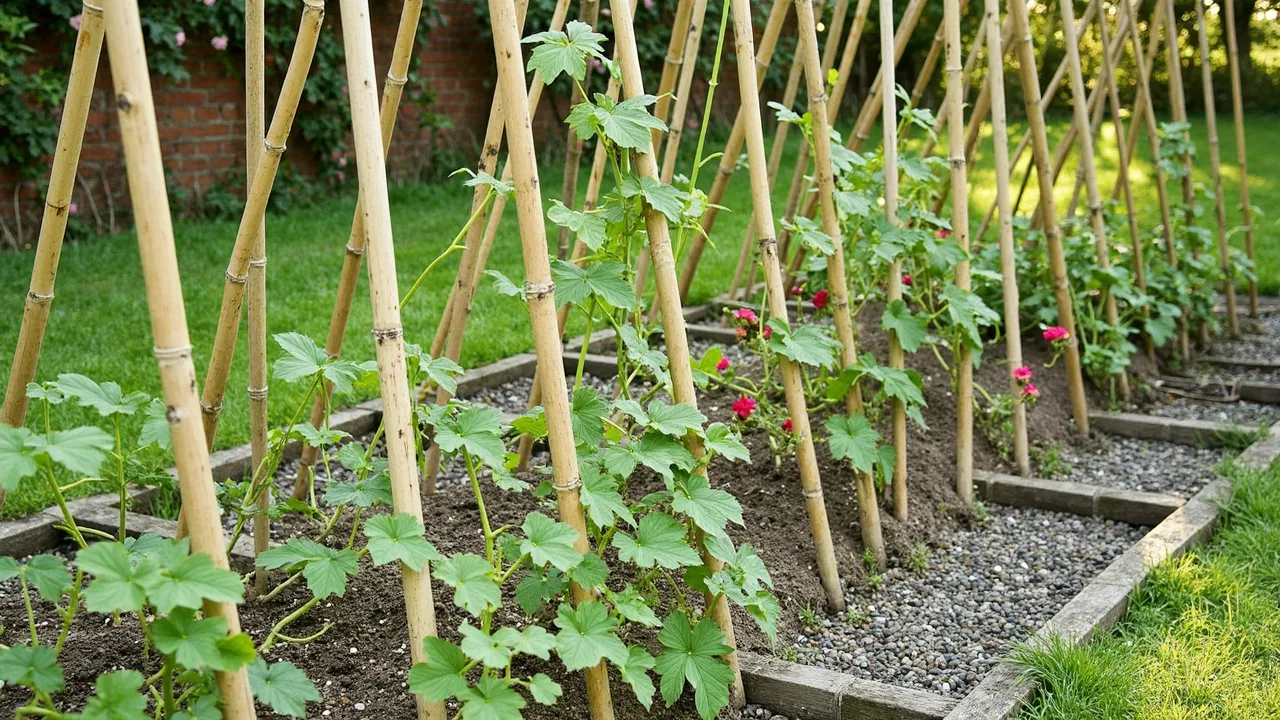
Three 2.4 m bamboo canes tied at the top, six scarlet flowers per truss, and a child tugging the first pod off in July — runner beans are the vegetable most UK gardeners learn on, and the one that earns the longest row in the allotment. They crop heavily through the cool, damp UK summer when French beans sulk, and a single well-tended row will feed a family from late July into October.
Quick Answer: Yes — runner beans are one of the easiest and most productive vegetables for UK gardens. Sow indoors in April or May, plant out after the last frost from late May, and grow them up 2.4 m bamboo canes in a tepee or row. Pick pods young and often from July to October.
Overview
This guide covers how to grow runner beans (Phaseolus coccineus) the traditional British way — up tall bamboo canes in a tepee or row, in a sheltered sunny spot with deep, moisture-retentive soil. It is aimed at UK home gardeners and allotment holders, from first-time growers wanting a reliable crop to experienced plot-holders chasing exhibition-long pods. Everything below assumes UK climate, UK seed catalogues, and UK timing. If you have a south-facing fence and a packet of 'Painted Lady', you have everything you need.
When to Start in the UK
Runner beans are tender: a late frost kills them outright, and cold soil below 12 °C rots the seed. Timing your sowing to your region is the single biggest decision you will make.
South UK (Midlands, southern England, coastal Wales). Sow indoors in pots from mid-April through early May. Plant out from late May, once the last frost date has passed and the soil has warmed. Direct sowing outdoors is reliable from mid-May in mild districts.
North UK (Scotland, northern England, higher ground). Hold indoor sowing until late April or the first week of May — earlier sowings sit sulking on a cool windowsill. Plant out from early to mid-June. Direct sowing is risky north of the border; if you try it, wait until the first week of June and pre-warm the ground with a sheet of clear polythene for two weeks.
Soil temperature trigger. Aim for 12 °C at 10 cm depth before sowing direct. A cheap soil thermometer takes the guesswork out — push it in first thing in the morning for three days running and sow when the readings climb consistently.
For a full month-by-month sowing calendar see our April sowing guide and May sowing guide.
I learned this the hard way after a May cold snap wiped out a row I'd direct-sown too early in Sheffield — twenty years on I still wait for the second week of June up there.
What You'll Need
- A packet of UK-grown runner bean seed (start with 'Painted Lady' or 'Scarlet Emperor' — both AGM winners from any UK seed merchant)
- 9 cm pots or deep modular trays, one per plant
- Multipurpose compost for sowing; well-rotted manure or garden compost for the bed
- 2.4 m (8 ft) bamboo canes — six to eight per tepee, or one per 20 cm of row
- Strong garden twine for tying the tepee tops and training the plants in
- A dibber for planting out
- Slug pellets (ferric phosphate) or beer traps — essential from day one outside
- A 9 l watering can and a rose attachment
- A mulch — grass clippings or compost in late June
- Horticultural fleece, for an unexpected late frost in late May
- A high-potash liquid feed (tomato feed is perfect) from flowering onwards
Step-by-Step Guide
- Prepare the bed in late autumn or early spring. Dig a trench 30 cm deep where the row will go and fill it with two bucketfuls per metre run of well-rotted manure or home compost. Backfill and leave the worms to work it in over winter. Runner beans are greedy feeders and will out-crop a hungry plant two to one.
- Sow indoors in 9 cm pots. Push two seeds pointy-end down, 5 cm deep, into moist multipurpose compost. Keep at 18–21 °C on a bright windowsill or in a heated propagator. Germination takes 7–10 days. Pinch out the weaker seedling at the base once both are up — do not pull it, or you disturb the roots of the keeper.
- Harden off for a week before planting out. Once the first true leaves have formed (about three weeks after sowing), put the pots outside by day and bring them in at night for seven days. Cold-frame hardening is even better.
- Erect the cane support before you plant. Push 2.4 m bamboo canes 30 cm into the ground at 20 cm intervals along the row, leaning each cane inwards at the top. Tie them all to a horizontal ridge cane for an A-frame, or push eight canes into a circle 1.2 m across and tie them firmly at the apex for a tepee. A well-built structure will hold a full row of laden plants in a July gale.
- Plant out after the last frost. Wait until late May in the south, early to mid-June in the north. Plant one bean per cane, water the pot, tap it out, and settle it against the cane at the same depth it was in the pot. Firm in and water generously — a full 9 l can per six plants.
- Water consistently from the start. Soak the row twice a week in dry weather rather than a little every day. Irregular watering is the main reason flowers drop without setting pods.
- Pinch out the growing tips once they reach the top of the canes. When the leading shoot passes the top of its support, snip it off with secateurs. This concentrates the plant's energy into the lower pods and stops the top flopping over.
- Mulch thickly in the second half of June. Spread a 5 cm layer of grass clippings or compost around the base, keeping it clear of the stems. This keeps roots cool and moist through July — the month that decides your crop.
- Feed every fortnight from first flower. Switch from plain water to a high-potash liquid feed (tomato feed at the maker's recommended rate). Continue until the end of cropping. Stop high-nitrogen feeds — they grow leaves, not pods.
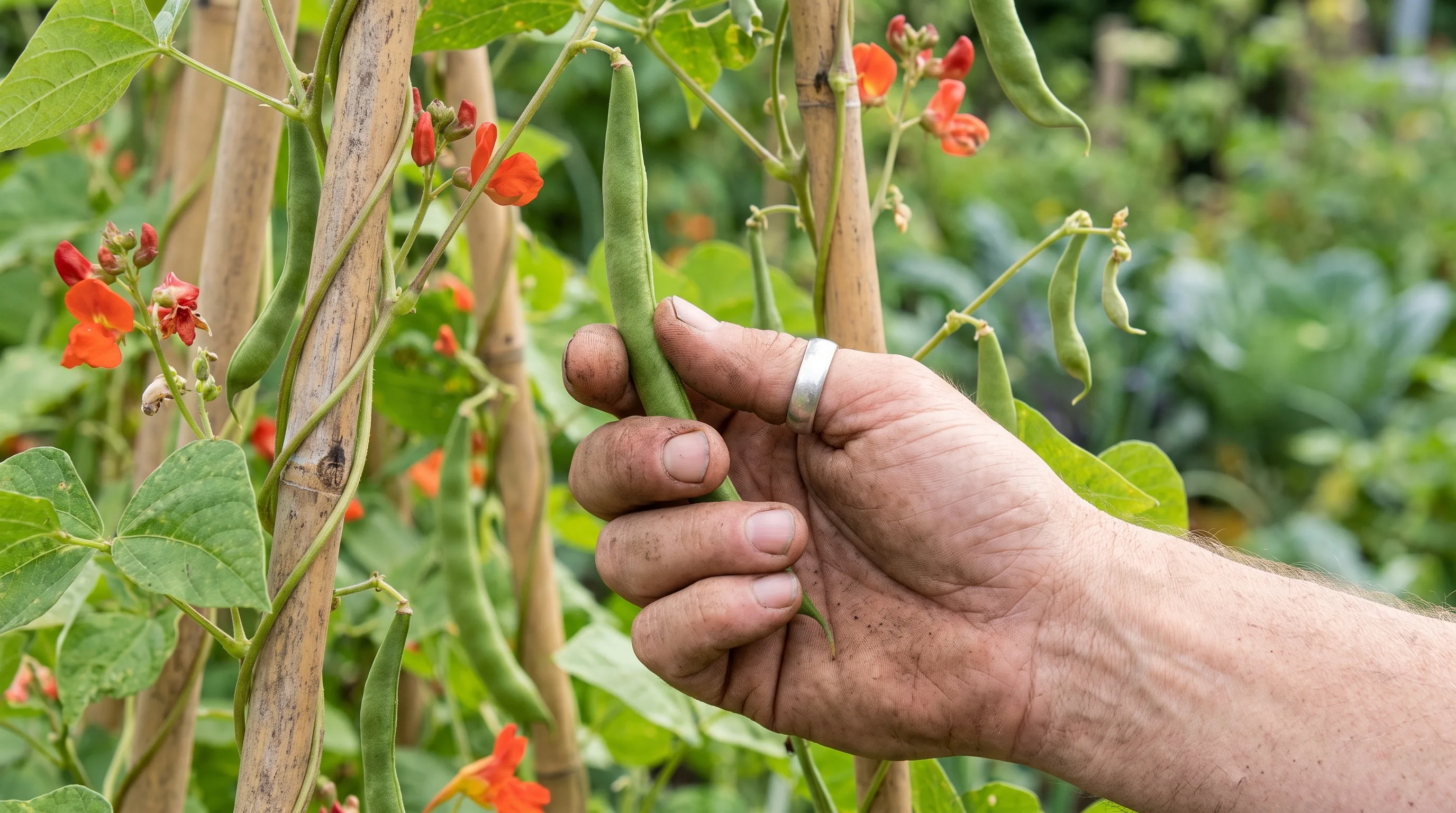
- Pick pods young and pick them every 2–3 days. The moment they hit 15–20 cm long, snap them off. If you leave them to mature, the beans inside swell, the pods turn stringy, and the plant stops producing. In peak season, a missed picking means 30 % less crop the following week — that's not a guess, that's what my allotment-neighbour Ron has logged for ten years.
- Clear the plants after the first hard frost in autumn. Cut the stems at ground level (don't pull — the nitrogen-fixing root nodules feed next year's crop), chop the foliage roughly, and add it to the compost heap. The ground will be in fantastic heart for the brassicas that follow.
Common Problems
Runner beans are robust once they get going, but a handful of pests and disorders reliably show up on UK plots every year. Most are easy to manage if you spot them early, and many clear up on their own once the plant is established. I've listed the five that crop up most often on UK allotments and in gardens.
Blackfly on growing tips
- Symptom: Clusters of small black or green aphids on the shoot tips and flower trusses from late May onwards. Sticky honeydew on the leaves below.
- Cause: Blackfly (aphids) breed explosively on the soft new growth. They peak in warm, dry Junes.
- Fix: Squish by hand on small plants. On larger plants, spray with a strong jet of water in the evening to knock them off, or use an insecticidal soap approved for edibles. Ladybirds and hoverfly larvae do most of the work for you if you stop spraying — I once counted 30+ ladybirds on a single 2 m row in late June. For more on aphid control see our blackfly problem-solver page.
Flowers but no pods
- Symptom: Plenty of scarlet flowers in July, but they drop without forming pods.
- Cause: Hot, dry weather above 25 °C sterilises the pollen; cold nights below 10 °C stop bees from working the flowers. Inconsistent watering makes it worse.
- Fix: Mulch thickly, water deeply twice a week, and spray the foliage with water in the evening of a hot day to cool the plants and lift humidity. Pod set usually returns within a week of cooler weather.
Slugs and snails on seedlings
- Symptom: Seedlings vanish overnight, or the stems are severed at soil level.
- Cause: Slugs and snails find the soft new growth irresistible, especially after rain.
- Fix: Use ferric phosphate slug pellets from the day you plant out, or set beer traps at the ends of the row. Pick over the plants after dark with a torch if you want to avoid pellets entirely. Many gardeners find a 5 cm ring of crushed eggshell or horticultural grit around each stem deters the worst of the damage for the first 10 days.
Pods are stringy and tough
- Symptom: The pods are fibrous, with tough strings down the seam, even when young.
- Cause: The pods were left on the plant too long, or the variety is a stringy heritage type. Hot dry weather stresses the plant and toughens the pods.
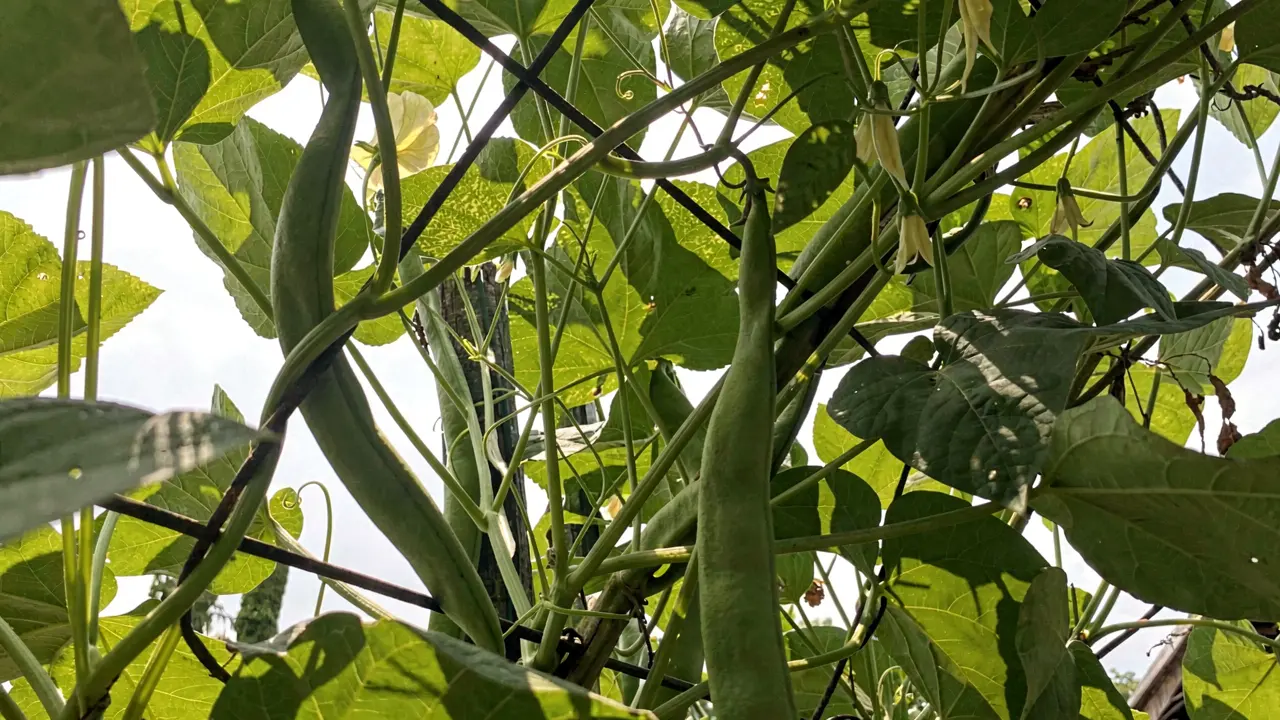
- Fix: Pick every 2–3 days without fail. Next year, try a stringless variety such as 'Polestar' or 'Tenderstar'.
Birds pecking the flowers
- Symptom: Petals torn off, immature pods pecked.
- Cause: Sparrows and other small birds strip the flowers for nectar, particularly in dry springs.
- Fix: Drape fleece or fine bird netting over the row for a week or two until the plants are established and the bird pressure drops.
Expert Tips
- Pre-warm the soil by laying a sheet of clear polythene over the row for two weeks before direct sowing. Soil temperature under the sheet climbs 3–4 °C above the surrounding ground, and you will see germination up to a week earlier.
- Add a handful of crushed eggshells or calcified seaweed to each planting hole. Runner beans prefer a slightly alkaline soil (pH 6.5–7.0) and a calcium boost reduces pod disorders such as blossom end rot.
- Companion plant sweet peas at the base of the tepee. They attract pollinators, don't compete for the same nutrients, and you get a bonus cut-flower crop. Nasturtiums work too, but allow them space — they ramble. For more pairings see our companion planting guide.
- Save your own seed by leaving one or two pods on the strongest plant to mature fully in September. Let them dry on the vine, shell them, and store in a paper envelope in a cool, dry place. You'll have seed for next year — and a free packet to swap at the allotment shed. Our seed-saving guide walks through the same method for French beans, tomatoes and lettuce.
- Sow a second, small batch in early June if you want pods into October rather than stopping in mid-September. A short row of four canes planted late will crop from late August until the first frost — useful if you are following on from an early broad bean crop.
FAQ
When should I sow runner beans in the UK? Sow indoors in 9 cm pots from mid-April (south) to early May (north). Plant out after the last frost — late May in the south, early to mid-June further north. Direct sowing outdoors is reliable only from mid-May in mild districts; elsewhere wait until early June and pre-warm the soil.
How long do runner beans take to germinate? At 18–21 °C indoors, expect 7–10 days. Outside in cool soil, germination can take 14–21 days, and the seed is liable to rot below 12 °C. If nothing has appeared after three weeks, resow — the first batch has probably failed.
Why are my runner beans flowering but not setting pods? Hot dry weather above 25 °C sterilises the pollen, and cold nights below 10 °C keep the bees away. Mulch heavily, water deeply twice a week, and mist the plants in the evening of hot days. Pod set normally recovers within a week of cooler weather.
Can I grow runner beans in pots? Yes, if the pot is at least 30 cm wide and deep and the plants have a 2 m cane to climb. Use a peat-free multipurpose with added John Innes No.3 for stability, and water daily in summer — pots dry out fast. Expect a smaller crop than from the open ground, but a worthwhile one on a sunny patio. Our container vegetable guide covers the principles in detail.
What are the best companion plants for runner beans? Sweet peas and nasturtiums draw in pollinators without competing for nutrients. Marigolds (Calendula) help deter aphids. Avoid alliums — onions, garlic, and leeks stunt bean growth. See the full companion planting chart for what to grow next to each vegetable.
Varieties to Try
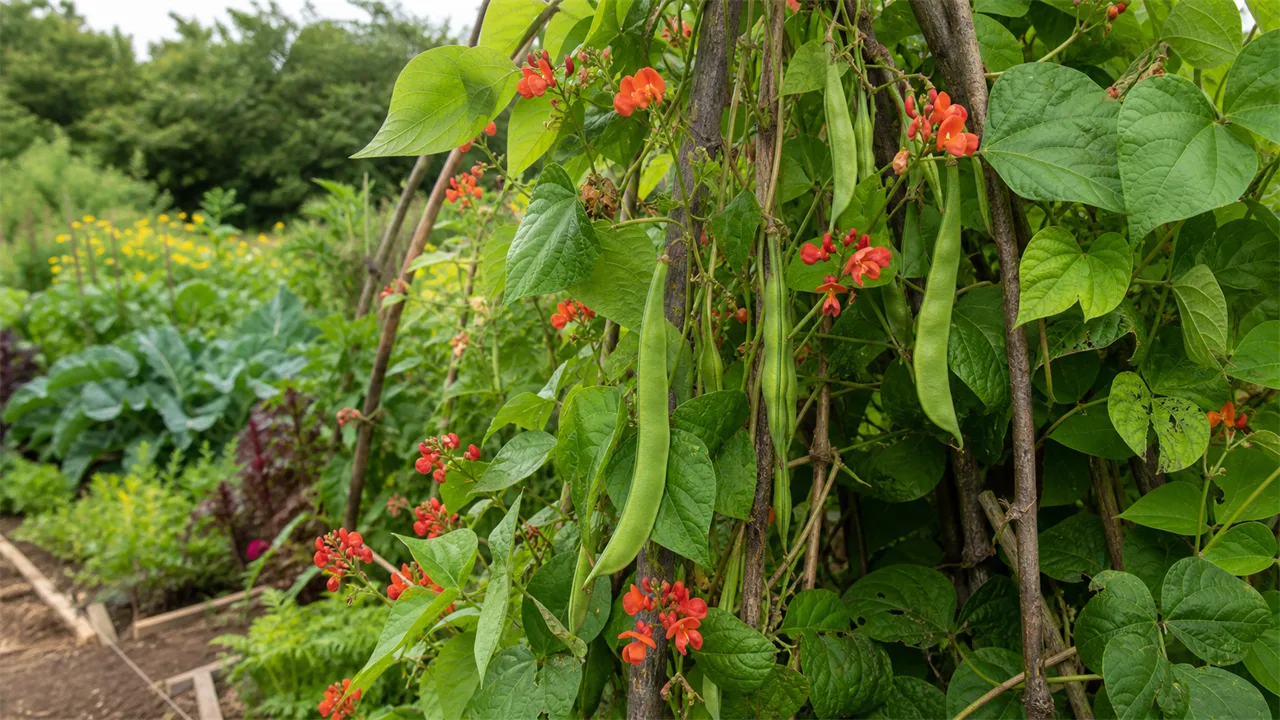
- 'Painted Lady' — The heritage UK classic. Bicolour red and white flowers, heavily scented, and an AGM from the RHS. Reliable cropper on a typical British summer. Widely available from Suttons, Mr Fothergill's, and Kings Seeds.
- 'Scarlet Emperor' — The benchmark red-flowered variety, and another AGM winner. Heavy crops of long, straight pods over a long season. The first choice for an exhibition-length bean. Stocked by every UK seed merchant.
- 'White Lady' — White flowers, and the modern pick for cool summers — sets pods at lower temperatures than the red-flowered types. Stringless when young. AGM. Available from Marshalls and Thompson & Morgan.
- 'Enorma' — The exhibition variety, producing pods up to 50 cm long on vigorous plants. Needs rich soil and steady watering to perform. Best for the show bench rather than the kitchen, but a thrill to grow. Sold by Kings Seeds and Medwyn's.
- 'Polestar' — A modern stringless red-flowered variety, bred in the UK. Easier on the teeth than heritage types, and the pods stay tender even if you miss a picking by a day. Widely available from Mr Fothergill's and Dobies.
- 'Tenderstar' — A cross between runner and French bean from the Tozer breeding programme. Pink bicolour flowers, stringless pods with a milder, sweeter flavour than classic runners. AGM. Available from Suttons and Plants of Distinction.
Sources & Further Reading
- Royal Horticultural Society — Phaseolus coccineus (runner bean) growing guide
- Garden Organic — Runner beans fact sheet
- Gardeners' World — How to grow runner beans
- RHS Award of Garden Merit (AGM) listings for runner beans
- Kitchen Garden magazine — Runner bean sowing and harvesting calendar
- Allotment & Gardens — Runner bean problems and solutions
Plants in this guide
Recommended Products
GardenWizz earns a commission from qualifying purchases made through affiliate links on this page (including links within the article) — as an Amazon Associate, and from Thompson & Morgan via the Awin network. This does not affect the price you pay. See our disclaimer for details.
Related Articles
More →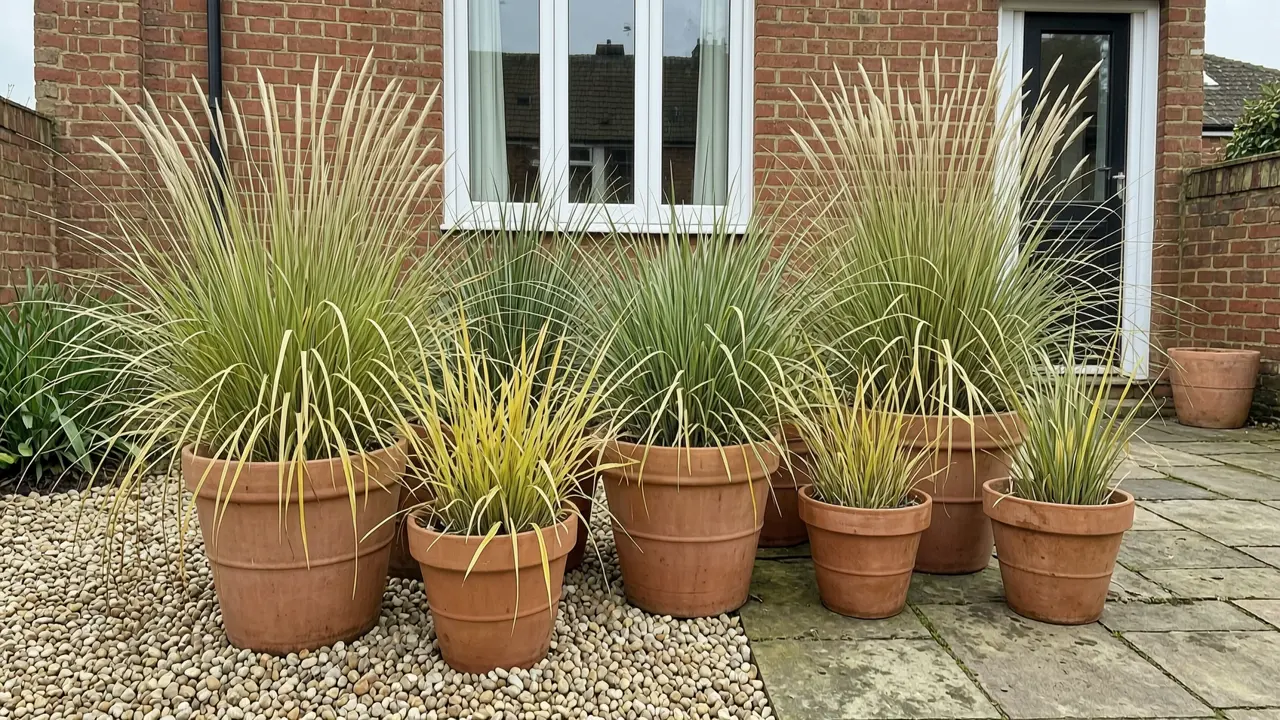 Growing Guide
How to grow ornamental grasses in pots
5 August 2026Grow ornamental grasses successfully in containers with advice on pot size, compost, watering, feeding, winter care and long-term maintenance.
 Growing Guide
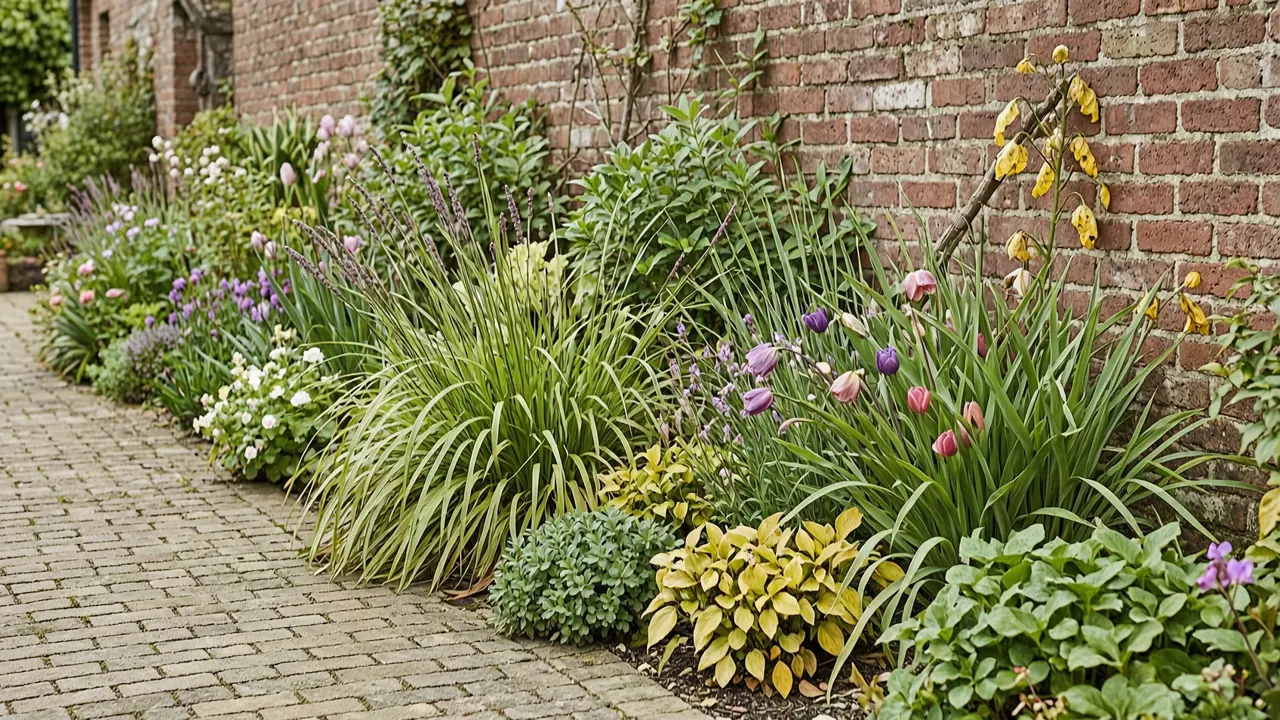
How to plan a perennial border
5 August 2026Plan a balanced perennial border with practical guidance on position, colour, height, spacing, flowering succession and year-round structure.
 Growing Guide
How to take hardwood cuttings
29 July 2026Take hardwood cuttings from suitable dormant shrubs and climbers with this step-by-step guide to timing, preparation, rooting and aftercare.